A simple introductory guide to read for anyone curious about Qubic, its Useful Proof of Work, and its on-chain Academy that turns newcomers into seasoned contributors.
While many projects chase ephemeral attention through quick contests, copy-pasted influencer partnerships, or hype-based campaigns, few take the time to build real sustainable community foundations. This is where Qubic breaks the mold. Rather than relying on superficial tactics, Qubic has designed a structured, long-term ambassador program, a true engine of growth, collaboration, and impact. It’s not just about accumulating followers but empowering builders, creators, and leaders to shape the future of decentralized AI.
Global cybersecurity is facing an unprecedented challenge: organizations must simultaneously comply with NIS2, prepare for post-quantum migration (NIST 2030-2035 deadlines), and implement a truly operational zero-trust. This convergence of constraints creates a unique window of opportunity for solutions that solve multiple problems at once.
American Senator Cynthia Lummis officially introduced the 21st Century Mortgage Act, a groundbreaking legislation that would require government-sponsored enterprises to consider digital assets when assessing eligibility for single-family mortgage loans.
Bybit, the world’s second largest crypto exchange by volume, reaches a new milestone in Europe. The platform has just announced the launch of spot margin trading on Bybit.eu, offering European users leverage of up to 10x under a strict regulatory framework.
August 14, 2025 marks a historic milestone for the European crypto ecosystem: XION officially becomes the first Launchpool project on the newly licensed Bybit EU platform under MiCA. This strategic alliance perfectly illustrates the growing maturity of the blockchain sector in a strict regulatory environment.
The asset tokenizer Brickken and the decentralized credit protocol Credefi announced, on July 28, 2025, a strategic partnership marking a major breakthrough in the convergence between regulated tokenization and decentralized finance. From now on, holders of shares or bonds tokenized via Brickken can use these securities as collateral to borrow USDC directly on Credefi, through a permissionless, peer-to-peer, and non-custodial mechanism.
The tokenization of real assets (RWA) is no longer a laboratory experiment: it is a global undertaking that, quietly, is rewriting the way we own a building, a government bond, or a corporate debt. The idea is simple: to represent an economic right (rent, coupon, dividend) by a token registered on a blockchain, exchangeable at any time and, above all, programmable. But behind the apparent simplicity hides a legal, technical and financial mechanism that is refined month after month.
The demand for computing power, autonomous agents, and open markets for models is exploding, while centralized players (Big Tech & Clouds) concentrate the supply. The crypto market tries to respond with decentralized architectures that reward resource contributions (GPU, models, data, security) and align incentives via a token.
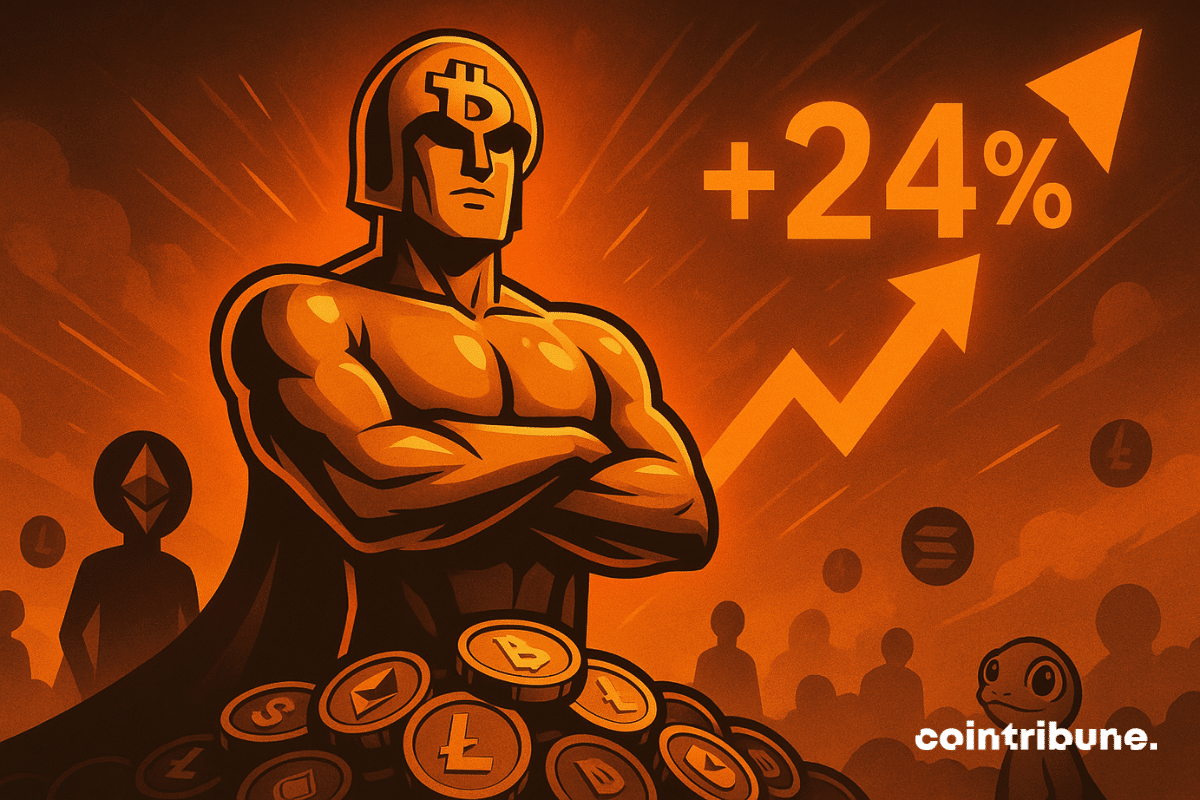
The second quarter of 2025 will go down in history as a major turning point for the cryptocurrency market. After a gloomy start to the year marked by geopolitical tensions and regulatory uncertainty, the crypto ecosystem once again demonstrated its spectacular resilience capacity. The CoinGecko quarterly report, an essential reference for crypto analysis, reveals numbers that speak for themselves: 24% growth and an unprecedented resurgence of institutional confidence.
Kraken unfolds its roadmap and makes its own tour of France. Heading to marketplaces, village halls and provincial media libraries. The idea is simple, almost obvious: go where the French live, to talk crypto without filter or jargon, face to face. No cold keynote or impersonal livestream: a physical presence, concrete demonstrations, Q&A at eye level.
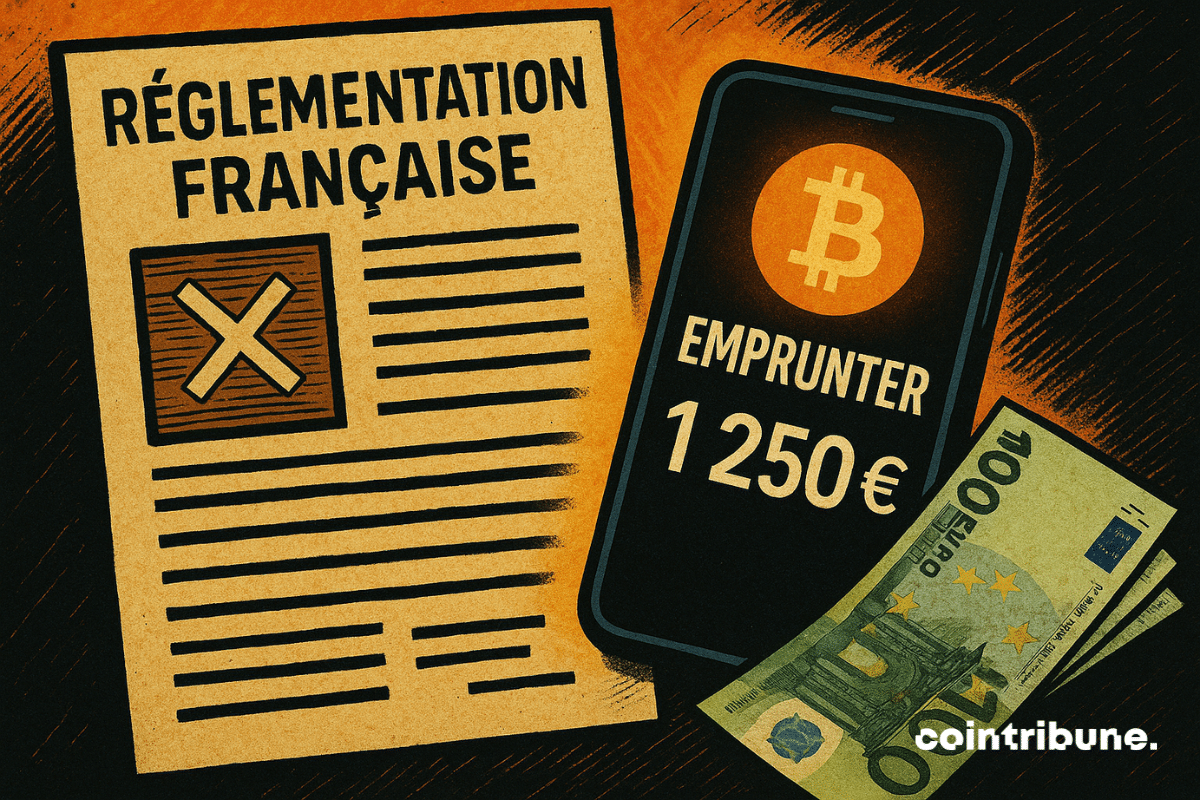
A law passed unnoticed allows borrowers to mobilize their digital assets as collateral. A discreet but symbolic turning point for the integration of cryptos into traditional finance.
Credefi announces a partnership with Vayana, described as the largest TradFi platform in India, to deploy tokenized debt instruments in a fully compliant framework and open them to DeFi investors. Beyond the marketing signal, the agreement marks a regulated channel between crypto capital and real financing needs (SMEs, supply chains) in one of the fastest growing economies.
There has been a lot of talk about RWAs in the last two years. Among them, real estate ticks all the boxes for a “mainstream” asset: predictable cash flows (rents), a tangible underlying asset, and the possibility to buy fractions rather than a whole property. The promise is simple: turning…
Crypto in France is starting a decisive turning point. OKX, one of the most influential Asian leaders in the global ecosystem, announces its official launch in the Hexagon, in accordance with the MiCA regulatory framework. With its experience in international markets, OKX arrives with a clear ambition: to offer French users a platform that is both modern, ultra-secure, with some of the lowest fees on the market and fully aligned with the new European requirements. This establishment symbolizes the entry into a new era, where transparency, performance and trust become the norm. As an exchange, OKX has an innovative vision of Web3 designed for Europe and supported by proven technology.
With the launch of Bybit EU, a fully MiCA compliant platform operated from Vienna, the exchange now combines a unified regulatory framework and market depth, two important signals for users seeking robust and liquid access. In brief Bybit EU combines MiCA regulation and global liquidity. High…
The $NAORIS token debuted yesterday afternoon on multiple exchanges simultaneously: Binance Alpha opened trading, followed by a NAORISUSDT perpetual contract on Binance Futures. MEXC launched the spot market, Bitget listed NAORIS/USDT, and LBank opened within the same window.
The digital landscape is evolving within an increasingly complex, interconnected, and vulnerable environment. The emergence of quantum technologies, the rise of AI, and the proliferation of connected devices amplify existing vulnerabilities. Web2 and Web3 infrastructures still rely on centralized models that cannot withstand new threats. This centralization creates single points of failure and weakens overall system resilience. In light of this reality, a new approach becomes necessary. Naoris Protocol introduces the Cyber Physical Trust Mesh (CPTM), a decentralized, post-quantum infrastructure solution. It surpasses traditional DePIN by establishing a trust mesh designed to validate, secure, and continuously reinforce every digital layer.
Web2 enterprises today are on the brink of an extinction-level event. 'We've entered what I call the quantum danger zone,' states Dr. Richard Feynberg, Chief Science Officer at Quantum Shield Technologies. 'What was projected as a 2030 problem is now at our doorstep. I would be shocked if current encryption standards survive beyond mid-2026.' Their centralized infrastructures, already buckling under targeted attacks and invisible vulnerabilities, face imminent obliteration from quantum systems that are evolving at an exponential pace far exceeding even the most alarming predictions from just months ago. Traditional approaches are no longer sufficient to protect interconnected, complex, and critical systems. To address this challenge, Naoris Protocol offers a compelling alternative: a post-quantum, decentralized infrastructure designed to integrate seamlessly with existing environments. Operating above DePIN, it provides a continuous, distributed layer of security with no single point of failure. This article explores how Web2 enterprises can adopt this approach through practical, real-world integrations.
The cryptocurrency market continues to attract a growing number of investors seeking innovation and returns. Yet, each new attack or exploited vulnerability highlights the fragility of the ecosystem. Security remains a non-negotiable condition for sustaining trust and enabling mass adoption. A new vertical is emerging in response to these challenges: cybersecurity cryptocurrencies. These assets combine utility, resilience, and direct responses to the structural weaknesses of Web3. Among them, Naoris Protocol stands out for its infrastructure-first, decentralized, and post-quantum approach. This article explores current market risks, the importance of native security, and Naoris’s strategic role in this transformation.
The arrival of quantum computers isn't just shaking the foundations of global cybersecurity, it's triggering a seismic collapse that could happen any day. These machines, advancing at a pace that has shocked even the most conservative experts, now threaten to obliterate classical cryptographic systems within months, not years. 'The quantum earthquake is no longer a distant rumble, the ground beneath crypto is already cracking,' declares Professor Wei Chang of the Quantum Security Alliance. 'By this time next year, we could witness the complete compromise of blockchains, digital identities, and sensitive data on a scale unprecedented in digital history.' The window to prepare is closing with alarming speed. Centralized architectures, still dominant, show their limits when faced with these emerging risks. They concentrate vulnerabilities and lack both continuous validation and true resilience. In this context, a new generation of infrastructure is required. Naoris Protocol embodies this shift, going beyond traditional DePIN by introducing a post-quantum infrastructure layer called Sub-Zero. This architecture sits beneath Layer 0 and secures the entire digital ecosystem, from Web2 to Web3, through an autonomous, resilient mesh.
Web3 is expanding at breakneck speed, even as it races headlong toward a quantum cliff edge. 'The Web3 ecosystem is like a magnificent castle built on sand, with a tsunami visible on the horizon,' warns Dr. Samantha Torres, Director of the Quantum Cryptography Institute. 'Quantum systems capable of devastating current blockchain security could emerge as soon as Q3 2025, perhaps even sooner.' This imminent threat makes today's sophisticated attacks look like child's play. Smart contracts, bridges, and DEXs aren't just vulnerable targets, they're primed for complete compromise within months, not years, as quantum computing progress has shattered all previous timelines. Current cybersecurity solutions fail to offer long-term protection, relying on periodic audits and tools poorly suited for decentralized environments. To enable mass adoption, Web3 must integrate native, continuous, and future-proof security. Naoris Protocol offers a structural solution. It deploys a post-quantum, decentralized, verifiable infrastructure that goes beyond traditional DePIN. It introduces security embedded directly into the core architecture of Web3.
The transition to post-quantum cryptographic standards is becoming a global imperative. In the United States, authorities are mandating a migration by 2030, followed by the complete removal of current algorithms by 2035. In the face of this deadline, centralized infrastructures are showing their limits. It is in this context that Naoris Protocol stands out by proposing the first decentralized post-quantum infrastructure.
Ultra has positioned itself as a bold challenger in the gaming and Web3 industry, determined to disrupt the established order dominated by platforms like Steam. Since Gus van Rijckevorsel took the reins as CEO in December 2024, Ultra has shifted from seven years of R&D to an aggressive commercial expansion strategy, positioning itself as a gaming distribution platform equipped with the most advanced technology available. This article explores the key milestones of this transformation and highlights the ambitious vision that will guide Ultra in its quest to become the "Netflix of gaming."
Cyber threats are multiplying in a digital world where everything is becoming interconnected. Web2 and Web3 now share the same vulnerabilities: centralized cloud infrastructures, poorly secured connected devices, and cryptographic algorithms that are becoming obsolete in the face of quantum computing. Traditional solutions are no longer sufficient. They fail to monitor, protect, and validate in real time. Naoris Protocol offers a new approach. Its Decentralized Post-Quantum Infrastructure operates beneath blockchain layers to secure both Web2 and Web3 at their core. This article explores today’s cybersecurity challenges, explains the concept of decentralized security, and details the technical pillars and strategic advantages of the Naoris Protocol model.
Cyber threats are multiplying in a world where digital systems are becoming increasingly interconnected. Traditional architectures, based on implicit trust and centralized points of control, are no longer sufficient to protect data and critical infrastructures. The Zero Trust model emerges as a clear response to these flaws: it relies on continuous verification, granting no user or device default trust. To go further, blockchain offers an ideal foundation. With its Sub-Zero architecture, Naoris Protocol turns this promise into reality. It creates a decentralized, post-quantum, self-validating infrastructure capable of securing both Web2 and Web3 systems in real time, without a single point of failure.
The next bullish cycle ("bull run") is already attracting new investors. Market indicators (Bitcoin at $120,000, Ethereum at $3,800, rising volumes, new ATHs on several altcoins, return of liquidity) show that the impulse phase has started: it is time to position oneself wisely.
Imagine the Louvre Carousel filled with computers, post-its, and high-fives among coders: that’s how the RaiseHack finals took place on July 8-9, in parallel with the RAISE Summit, the main European gathering dedicated to AI. The 2025 edition truly earned its title of the world’s largest AI hackathon: over 6,000 developers registered across all Tracks, a record certified by the organizing foundation.
When Bitcoin flirts with unprecedented highs, the spotlight once again shines on the crypto universe. This spectacular rebound, fueled by ETFs and growing institutional adoption, coincides with the emergence of another phenomenon: the tokenization of real-world assets (Real World Assets or RWA). These hybrid instruments, halfway between traditional finance and Web3, attract a new wave of investors seeking stability and diversification.
The explosive rise of the HYPE token is shaking up traders and reinventing automated strategies. This native token of the Hyperliquid perp-Dex has seen its trading volume increase tenfold in just three months. Listed on several major exchanges, it offers exploitable volatility for those who know how to take advantage of it. The good news: coding is no longer required to build an effective bot. Thanks to Runbot, you can automate a trend-following strategy in a simple, fast, and visual way. Here's a step-by-step guide to create, test, and deploy a HYPE strategy using the most powerful no-code tools available today.