While Google drowns AI in a rain of dollars, a small Chinese genius tinkers in his garage and shakes Silicon Valley. Butterfly effect or storm to come?
The EU, always quick to unleash paperwork before innovation, will implement its AI Act this Sunday: spectacular bans, imposed transparency, massive sanctions... AI had better watch out.
Artificial intelligence has become a major strategic issue. From the United States to China, passing through Europe, economic powers are competing to dominate this key sector. Far from standing on the sidelines, India has just announced the development of its own generative AI model, scheduled for 2025. With a massive acquisition of graphics processors and a $20 billion investment plan in infrastructure, the country shows a clear ambition: to strengthen its digital sovereignty and assert its technological autonomy. This initiative comes as technological tensions between Washington and Beijing are escalating and as American restrictions on Nvidia chips complicate access to cutting-edge technologies. At the same time, the emergence of open-source models like DeepSeek R1 is shaking up the rules of the game, proving that it is possible to develop a high-performing AI without having the same resources as the industry giants.
OpenAI recently signed an agreement with the United States national laboratories to deploy its most advanced artificial intelligence (AI) models for scientific research. This collaboration aims to strengthen the technological leadership of the United States and contribute to major advancements in several scientific disciplines.
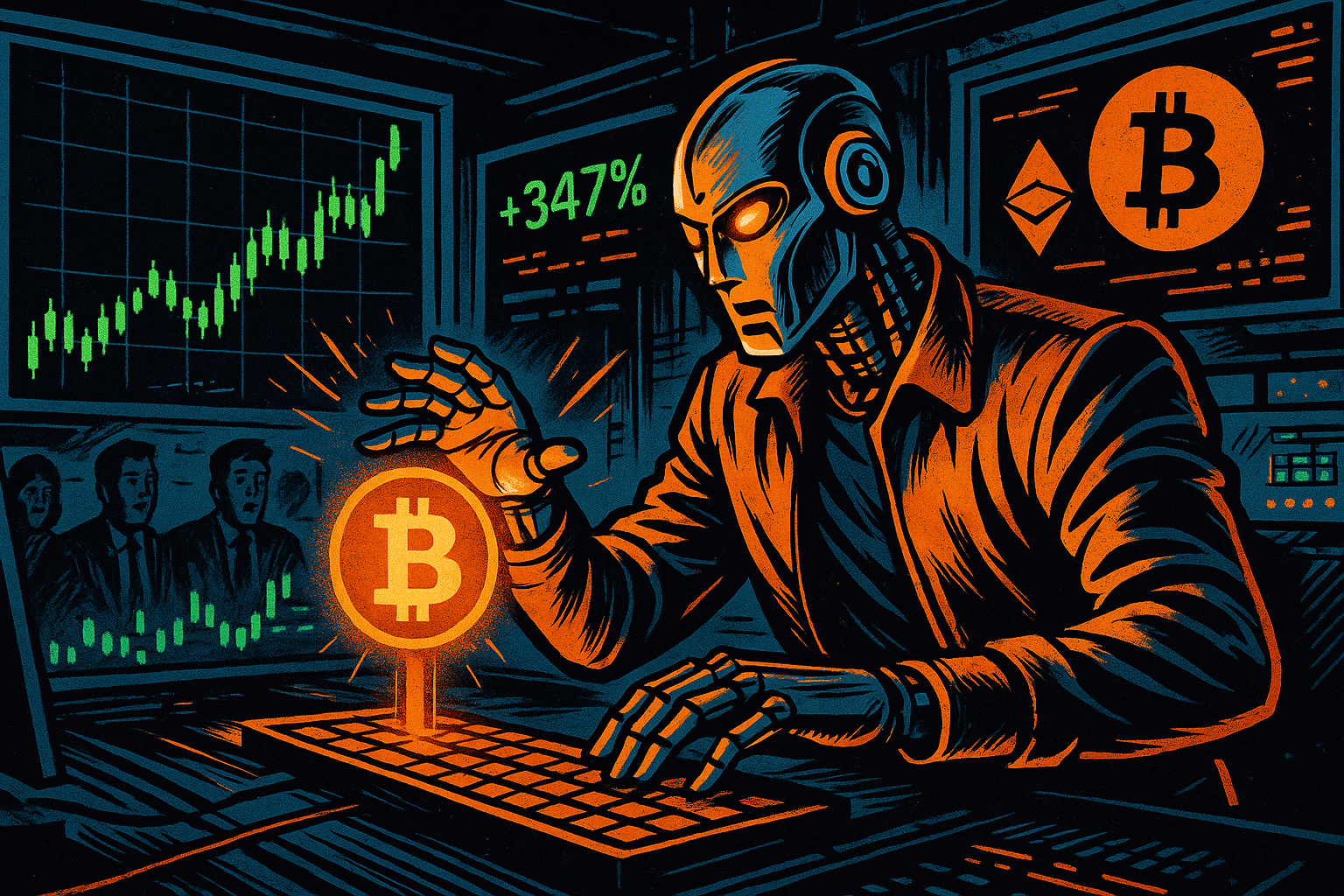
AI trading agents are revolutionizing the crypto world by automating and optimizing transactions. Using advanced algorithms, these agents analyze markets in real time, identify opportunities, and execute trades—offering traders increased efficiency and precision in their investments. Here’s how you can leverage AI agents to enhance your crypto trading experience.
The Chinese AI DeepSeek has caused an earthquake within American tech. The geopolitical power dynamics have just changed.
The semiconductor industry has become the battleground of a technological war between the United States and China. Washington, concerned about preserving its strategic advantage in artificial intelligence, has already imposed several restrictions on the export of high-performance chips. Despite these measures, China has continued to make progress, prompting Donald Trump to consider further tightening the limitations aimed at Nvidia. This project could reshape the balances of the global AI market and weaken American companies. Between national security imperatives and economic stakes, this decision fits into a strategy aimed at curbing Beijing's technological rise. However, the effectiveness of these restrictions remains uncertain, as Chinese companies double down on efforts to circumvent these sanctions and develop their own alternatives.
When DeepSeek is siphoning the neurons from OpenAI, Microsoft cries foul, and the US Navy barricades its servers. The digital cold war is in full swing.
Nvidia stumbles, Bitcoin shudders. When 600 billion goes up in smoke, the flagship crypto feels the change in the wind. And if the golden future of BTC were to emerge from the ashes of tech?
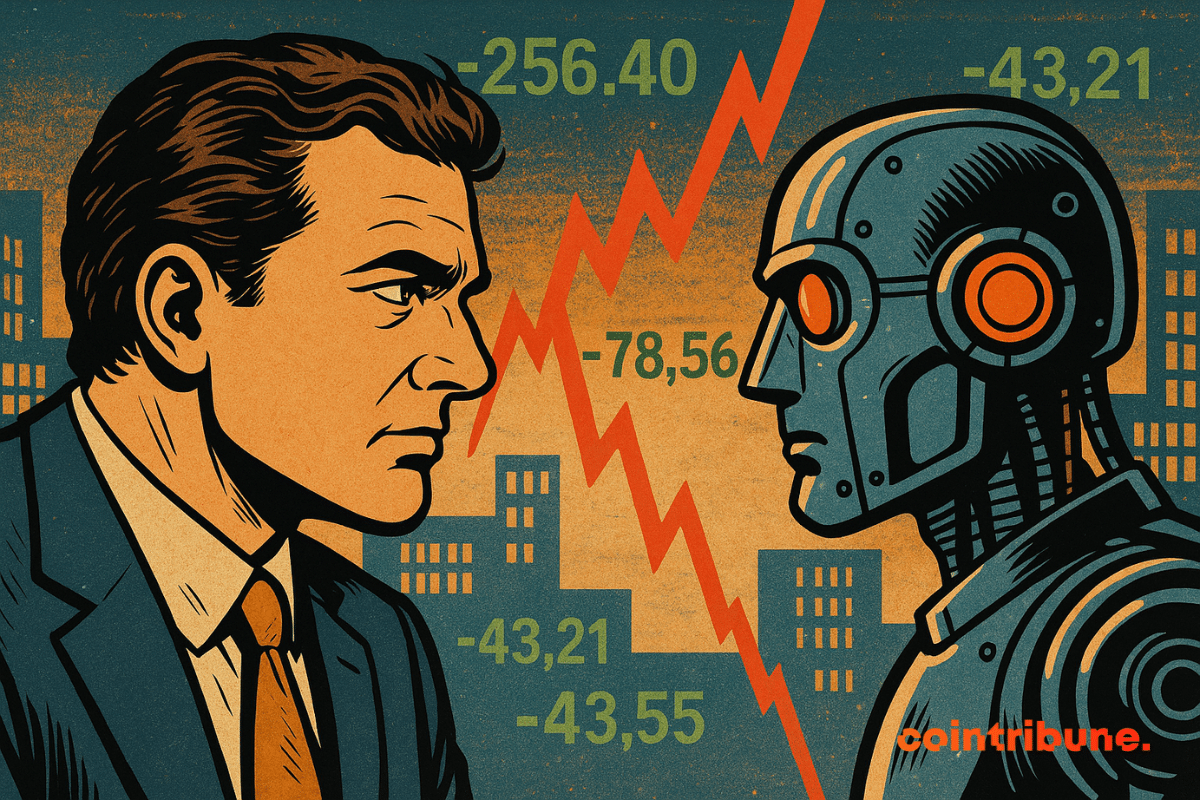
A Chinese startup is redefining the stock market and AI, causing Nvidia to drop by 17%. Details in this article!
The world of crypto, known for its excitement and technological advancements, is once again confronted with a wave of sophisticated scams. Currently, the rapid rise of DeepSeek AI, a Chinese artificial intelligence application that went viral after its launch on January 20, marks a turning point. This popularity, which has propelled the app to the top of the App Store downloads, has also attracted the interest of fraudsters. In just 24 hours, no fewer than 75 fraudulent tokens have been created, exploiting DeepSeek's notoriety to target unsuspecting investors. This phenomenon illustrates how quickly scammers adapt their methods to take advantage of emerging technological trends.
Sam Altman, the CEO of OpenAI, recently praised DeepSeek's R1 model, a Chinese startup specializing in artificial intelligence, calling it "impressive." This recognition comes after DeepSeek revealed that training its R1 model cost less than $6 million, a fraction of the cost of equivalent models in the United States. However, this development could be fatal to the crypto market.
The world of artificial intelligence is buzzing with the arrival of DeepSeek R1, a revolutionary open-source model developed in China. This bold project challenges the dominance of established leaders like OpenAI, thanks to remarkable technical performance and unprecedented accessibility. Indeed, unlike proprietary models, DeepSeek R1 relies on the complete openness of its code and reduces usage costs to a fraction of those offered by its competitors. As the boundary between closed innovation and open-source solutions blurs, this advancement raises many questions: does it mark a sustainable democratization of AI or a disruption of the economic balances in the sector?
As artificial intelligence and cryptocurrencies are shaking up the global economy, Donald Trump seized the opportunity at the World Economic Forum in Davos to outline an ambitious vision. The American president declared his intention to make the United States the global leader in these strategic technologies. This announcement fits into a broader desire to re-industrialize the country by leveraging its vast energy resources. However, these promises raise many questions, both about their implementation and the forthcoming economic and geopolitical implications.
Artificial intelligence is establishing itself as a driving force for transformation in fields as varied as health, security, and defense. Yesterday, the President of the United States, Donald Trump, took a historic step by announcing a massive investment plan of 500 billion dollars. This project, designed to place the United States at the forefront of global technological innovation, is based on a strategic alliance with OpenAI, Oracle, and SoftBank, three pillars of the industry. With this unprecedented initiative, Washington aims to consolidate its leadership amid increased international competition, with a view to paving the way for major technological advancements.
Semiconductors have become an essential pillar of the global economy and technological security. In this context, China announced an unprecedented investment of 37 billion euros to accelerate its technological autonomy, which has so far been hindered by the dominance of Europe and the United States. This strategic sector, embodied by players such as ASML, the world leader in photolithography equipment, is now at the heart of fierce competition. Beijing is not only looking to bridge its gap but to redefine the balance of power with the aim of achieving complete independence. This initiative could reshape the contours of global innovation and intensify tensions in an already high-pressure market.
While the American economy soars like a star, Europe gets lost in a maze of rules and bitter regrets.
On the crypto market, AI tokens are stumbling: billions evaporate, and artificial intelligence reveals a very human limit, that of rampant speculation.
Artificial intelligence is progressing at a rapid pace, making the distinction between humans and machines increasingly difficult. In response to this evolution, Worldcoin, now rebranded as World, aims to establish a universal proof of humanity through a biometric identification system based on iris recognition. The company has just announced that it has surpassed the milestone of 10 million verified users, a benchmark that signifies its massive adoption and fuels growing controversy. Indeed, the project relies on a network of orbs tasked with scanning the users' ocular data to assign them an unforgeable digital identity. According to its creators, this technology would secure digital interactions and ensure that only genuine humans access online services. Nevertheless, several governments and data protection authorities are concerned about the potential pitfalls of this model. Between technological promise and regulatory resistance, Worldcoin is part of a debate on digital identity and personal data governance. Its success or failure could shape the future of online authentication in a world where AI challenges the foundations of digital trust.
Artificial intelligence is reshaping the technological and economic power dynamics, propelling certain nations into becoming new nerve centers of innovation. Indeed, India, with its rapidly expanding market and substantial talent pool, is attracting tech giants in a race for sector dominance. Microsoft has recently made a decisive move by announcing a $3 billion investment to develop its cloud and AI capabilities in India. This ambitious initiative includes the construction of new data centers, the deployment of cloud infrastructure, and especially a large training program aimed at 10 million Indians by 2030. Far from being just an economic bet, this investment is part of a long-term strategy to anchor Microsoft at the heart of India's digital transformation. With the support of the government, the multinational aims to stimulate the AI startup ecosystem and accelerate the adoption of cutting-edge technologies on a large scale.
In 2025, venture capital in the crypto sector will continue to grow. According to experts, venture capital investors will focus on three burgeoning areas in the cryptocurrency industry, likely attracting nearly 18 billion dollars in investments.
Under the scorching sun of 2025, AI cryptos shine, but their reign is fragile. Memecoins, relics of the past, may be awaiting a return to the firmament.
The world of crypto is set to experience a decisive year, driven by promising innovations and growing threats. Indeed, the potential approval of an ETF based on Solana could mark a significant advancement, providing institutional investors with new access to cryptocurrencies. Meanwhile, the rapid progress of artificial intelligence is redefining trading practices, while similar technologies fuel unprecedented cyberattacks. In this context of upheaval, 2025 stands out as a pivotal year for the industry, where the promises of increased adoption must contend with increasingly complex security risks.
The year 2024 will go down in history as a decisive milestone for Nvidia, an emblematic figure of technological innovation in the era of artificial intelligence. Thanks to visionary investments and strategic advances, the company has reached an unprecedented market capitalization of $3 trillion, consolidating its role as a global leader. This success largely relies on its chips, which equip leading global data centers, and on its CUDA ecosystem, favored by developers. However, this triumph comes with increasing challenges. The rise of ambitious competitors, such as AMD and Broadcom, intensifies the pressure. Moreover, key clients, including Google and Amazon, are actively exploring alternatives to reduce their reliance on Nvidia. These contrasting dynamics place the company at a strategic turning point, where the slightest misstep could redefine the balance of power in the market.
In a world where technology is evolving at a breakneck pace, artificial intelligence (AI) and blockchain are emerging as pillars of innovation. Their convergence paves the way for profound transformations in key sectors such as finance, logistics, and entertainment. These advancements are attracting growing interest from investors and developers, who are always on the lookout for disruptive solutions. Currently, several AI-based cryptocurrencies, notably TAO, FET, and Render, have dominated the rankings of the most active projects on social media. Such a trend, illuminated by data from LunarCrush, illustrates their growing popularity as well as the impact of these technologies on the blockchain ecosystem. These projects, thanks to their ability to generate massive interactions, reflect a positive dynamic that could redefine priorities within the crypto industry.
Cryptos based on artificial intelligence, long perceived as a revolution in the sector, are currently facing a major crisis. At the beginning of December, their market capitalization reached an impressive peak of $70.4 billion, reflecting investors' enthusiasm for this new technological niche. However, within a few weeks, this valuation has dropped by 28%, now standing at $50.5 billion. This decline is explained both by a general downturn in the crypto markets and by declining interest from investors, hindered by the lack of concrete use cases for AI tokens. Such a correction, while critical for some, fits into a cycle where altcoins could soon regain popularity. Experts remain optimistic about a potential rebound of these assets in 2025, thanks to a more favorable expected environment, particularly with altcoin season.
Crypto, AI, and hybrid worlds: Buterin, like a digital alchemist, presents us with a vision where blockchain and biotechnology intersect to ward off threats from another century.
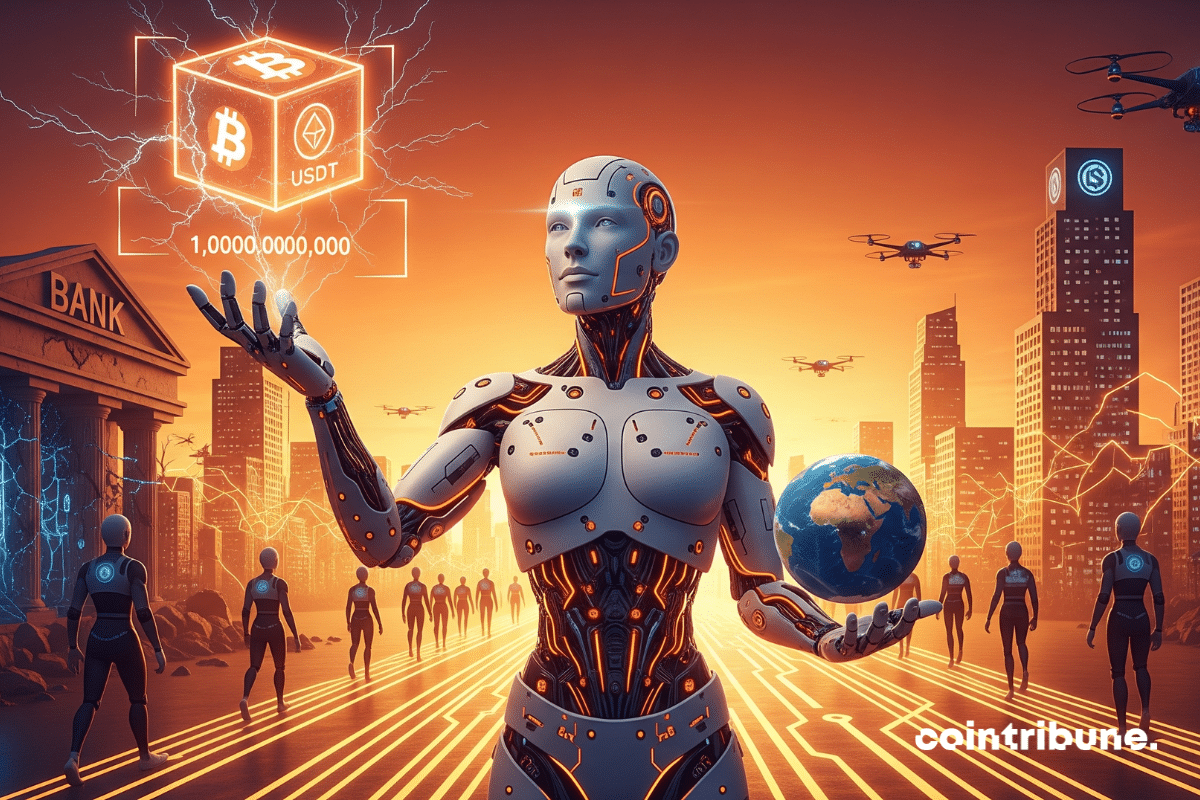
Global economic uncertainties are forcing institutions to thoroughly rethink their investment strategies. In this context, decentralized finance (DeFi) is emerging as a credible and visionary alternative for reinventing traditional financial models. In recent years, major advancements have transformed DeFi into a sophisticated ecosystem, far beyond early technological experiments. Thus, the development of bitcoin staking, the tokenization of real assets, and the integration of autonomous artificial intelligences herald a new era for this rapidly expanding sector.
Under the spotlight of speculation, memecoins attract and terrify. Solana leads the dance, Coinbase follows, while traders oscillate between golden dreams and cold sweats.
Tether is the crypto version of 2025: BTC for real life, private AI for discretion, and Rumble to dethrone YouTube. That’s all there is to it!