Blockchains can prepare for the quantum era. But the BNB Chain report shows a less comfortable reality: the real wall is not just cryptographic. It is also logistical, because data becomes much heavier to transport.
Derivatives markets now serve as the backbone of the cryptocurrency industry, shaping how you interact with digital assets on a global scale. As trading volumes surge, the underlying infrastructure must evolve to handle continuous price discovery and complex execution. Consequently, this environment has bridged the gap between centralized exchange (CEX) expertise—particularly from platforms like Binance Futures—and decentralized finance (DeFi). Within this transition, StandX emerges as a prime example, translating the high-performance environments of centralized platforms into a permissionless, decentralized exchange (DEX) ecosystem.
While bankers and regulators count their bolts, CZ is quietly preparing talkative machines fueled directly by global automated crypto payments, with Binance transformed into a giant algorithmic financial supermarket.
La prochaine grande vague crypto ne viendra pas seulement des traders. Binance estime que les paiements, les stablecoins, l’IA, les rendements et les actifs tokenisés pourraient pousser l’adoption vers près de 2 milliards d’utilisateurs d’ici 2030. C’est un changement de récit important : la crypto ne veut plus seulement être un marché, elle veut devenir une couche financière du quotidien.
Ethereum experiences an explosion of buying pressure on derivatives, with a 72% increase in aggressive traders. Investors now target $2,600, a key liquidity zone. Does this dynamic signal a historic rally for ETH?
Polymarket and Kalshi launch crypto perpetual futures with 10x leverage. Everything you need to know about this revolution here.
Perpetual contracts from traditional finance are exploding. In a few months, their volumes have tripled, driven by continuous and flexible trading. At the heart of this dynamic, Binance establishes itself as a key player, capturing a large share of liquidity and redefining market rules.
Crypto trading is changing dimension. Binance introduces prediction markets directly into its wallet, opening the way to a new form of speculation based on the outcome of real events. Accessible from its application, this feature allows users to buy and sell probabilities in a few clicks, without going through external interfaces. By integrating these on-chain mechanisms in a centralized environment, the exchange redefines uses and accelerates the convergence between finance, information, and blockchain.
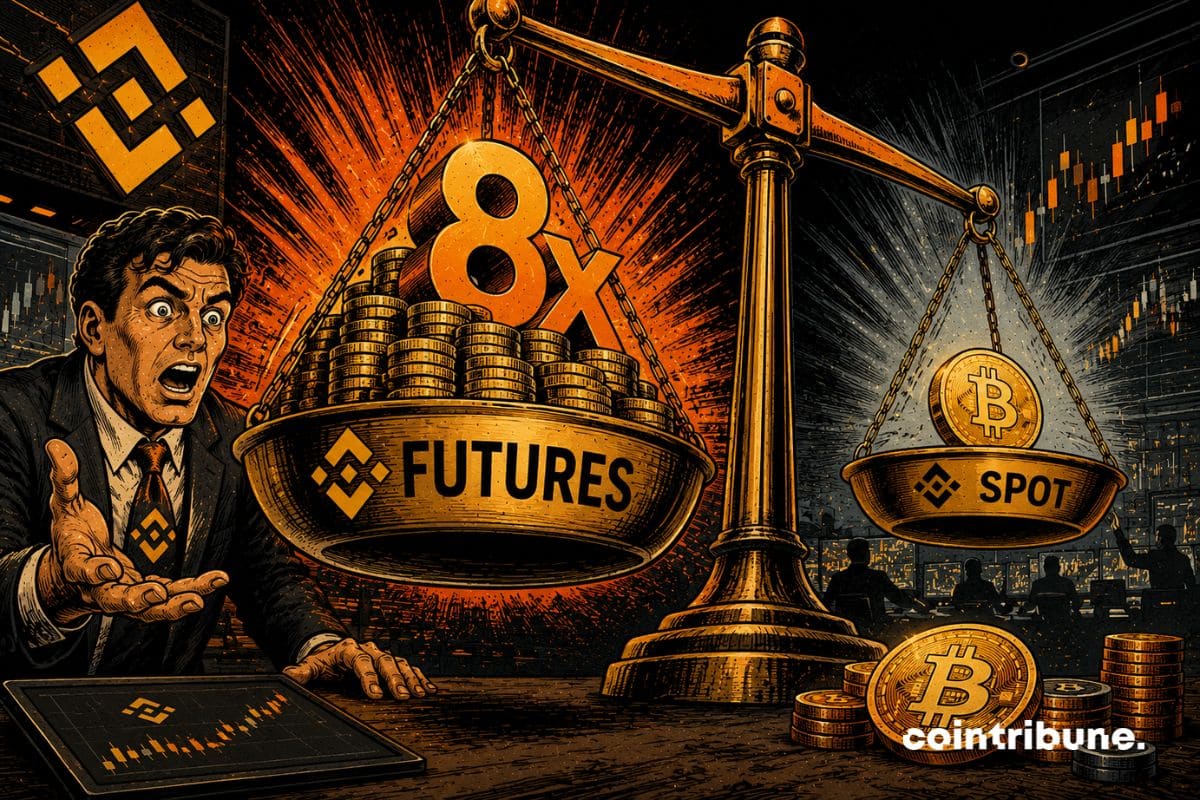
In the first quarter of 2026, derivatives overwhelmingly outrank spot, revealing a heightened concentration of volumes on a few dominant platforms. Meanwhile, new players are emerging and beginning to establish themselves in a landscape previously locked down. Between persistent domination by leaders and the gradual rise of DeFi, the industry is entering a phase of restructuring.
The tokenization of real-world assets has shifted from experimental pilot to institutional reality. On-chain RWA value surpassed $12 billion in March 2026, more than doubling from the start of 2025, according to data from RWA.xyz. From tokenized U.S. Treasuries to private credit and equities, the race to bridge traditional finance and blockchain accelerates at breakneck speed. For investors seeking exposure to this booming sector, the choice of CEX (centralized exchange) matters more than ever. Not all platforms offer the same depth of RWA token listings, regulatory compliance, or trading infrastructure. Here are five platforms that stand out in 2026.
At Binance, OTC activity accelerates while the crypto spot market loses momentum. This contrast does not necessarily tell a story of capital fleeing crypto. Rather, it tells of flows shifting to more discreet channels, better suited for large orders, and probably closer to institutional habits.
The crypto market often shifts without warning, and Ethereum provides a new demonstration of this. After a period of massive liquidations, a signal from Binance now captures the attention of the most seasoned traders. Behind this movement, one question arises: is a new liquidity cycle taking shape? Between leverage recovery and renewed activity, recent data outline a potential turning point for the market's second largest capitalization.
Address poisoning attacks on Ethereum have already caused losses exceeding 80 million dollars. CZ, the head of Binance, accuses Etherscan of not protecting crypto users enough. Who is responsible? Discover the solutions to avoid becoming the next victim.
The US midterm elections could well provide a new breath to the crypto and stock markets, and give wings back to bitcoin. This is at least what Binance Research states in a report published this week. However, before reaching that point, the path remains littered with geopolitical pitfalls.
In 2026, centralized exchanges still dominate the crypto market, despite the gradual rise of decentralized solutions. Among the major players, Binance, Coinbase, and OKX concentrate a large share of exchange volumes and user trust. These three platforms embody very different approaches. Binance favors massive access to a wide range of products, Coinbase focuses on regulation and ease of use, while OKX seeks a balance between security, technological innovation, and price competitiveness. This comparison aims to determine which of these crypto platforms best meets the expectations of traders, investors, and users seeking a reliable tool.
Binance takes legal action. The world's leading crypto platform filed, on March 11, 2026, a defamation lawsuit against Dow Jones, publisher of the Wall Street Journal, following the publication of a sensitive article discussing possible flows linked to Iran and the internal handling of this case. This procedure marks a turning point, as the exchange no longer limits itself to public denials, but now asks the US justice system to resolve a dispute with significant reputational and regulatory stakes.
Address poisons have stolen 500 million. Trust Wallet responds with an anti-copy-paste shield. Finally some good news.
The leader in crypto exchanges Binance sees its BTC, ETH and USDT reserves collapse! 307,000 ETH, 8,000 BTC and 360 million USDT withdrawn in one month, causing billions $ in losses. Market capitulation or confidence crisis?
Political pressure is mounting around Binance in the United States. The world’s leading crypto platform breaks its silence and openly contests a US Senate investigation into alleged financial links with Iran. Media accusations, international sanctions issues, and power rivalries in Washington: this sensitive case places the exchange at the heart of the standoff between the crypto industry and regulators.
Centralized crypto markets are under sustained pressure amid ongoing spot trading contraction. For five consecutive months, volumes across major exchanges have declined, signaling weaker participation and a clear reduction in speculative appetite. A large liquidation event in October accelerated this slowdown, impacting both spot and derivatives markets. Although January saw a brief rebound, overall activity remains far below prior cycle highs.
Binance, the world leader in cryptocurrencies, is at the center of a political scandal. 11 U.S. senators demand a federal investigation into suspicious transactions linked to Iran. With $1.7 billion at stake, the crypto exchange faces historic sanctions.
Binance is under pressure following revelations of $1.7 billion transfers to Iran, involving Hexa Whale and Blessed Trust. The platform denies the allegations and emphasizes the reduction of its exposure to Iranian entities. However, the case highlights the compliance and risk management challenges in the crypto sector.
February 2026 marks a strategic intensification of competition among centralized exchanges. Between Kraken's exceptional deposit bonus, Binance's loyalty programs, and the aggressive offers of OKX and Bybit EU, users have unprecedented opportunities. Comparative analysis of the four major platforms and their current campaigns.
Tensions are escalating around Nasdaq-listed CEA Industries (BNC), a company closely linked to the Binance ecosystem through its sizable BNB treasury. Binance-affiliated investment firm YZi Labs has publicly accused asset manager 10X Capital of failing to comply with U.S. securities disclosure rules. The allegations surface amid active negotiations over BNC’s asset management structure, turning what began as a regulatory dispute into a broader governance confrontation.
One billion to Tehran via Binance? Investigators fired for seeing too much? The giant swears all is false. But the shadow of the past looms.
A massive deposit of 260,000 ETH on Binance in record time shakes the crypto market. Garrett Jin, a historic figure of Bitcoin, could be behind this move? Between selling pressure and whale accumulation, Ethereum is at a decisive turning point.
The crypto market sends contradictory signals. Indeed, investor sentiment has just reached a historic low, reflecting a strong distrust towards bitcoin. At the same time, some data from Binance indicate a slowdown in selling pressure. This discrepancy between market psychology and real flows raises a central question: are we witnessing a simple technical lull or the beginnings of a lasting rebalancing?
In trouble? Binance allegedly lost 17 billion. The exchange thanks its detractors, calls them friends, and offers them a holiday to withdraw their stakes. Clever.
I'm shocked! A Korean exchange mistakenly offers 44 billion in bitcoin. The price plummets. Regulators choke. And trust? Evaporated.
While Bitcoin collapses below $65,000, Binance surprises the market by investing $233 million in 3,600 BTC. A bold decision that divides experts: some see it as a strong signal of confidence, while others believe the disappearance of Bitcoin would make the world better. Between opportunity and risk, how should investors react?