Bitcoin continues to gain, but 87% of its supply is already in profit. The temptation to sell is great, but demand could still support the crypto. Tensions are rising.
While the crypto market oscillates without a clear direction, some internal dynamics are stirring tensions. This month, the Pi Network project is preparing to inject a massive amount of tokens into the market. This operation is being closely watched, as its scale could worsen the selling pressure on the price of Pi, an already fragile asset. The chosen timeline, combined with alarming technical signals, outlines a scenario to be monitored very closely.
As uncertainty grips global markets, a strong signal emerges from the Bitcoin network: more than 170,000 BTC, nearly 14 billion dollars, have left dormant wallets. Such a rare and massive movement reactivates the specter of high volatility. In response to this on-chain shock, investor strategies are fragmenting between distrust and accumulation.
Against all odds, the crypto market started 2025 in decline, catching investors off guard. Bitcoin and Ether, usually strong performers in the first quarter, recorded their worst historical performances during this period. This sharp reversal, breaking with known seasonal dynamics, reignites debates about a potential rebound in the second quarter, while economic uncertainties weigh on all risk assets.
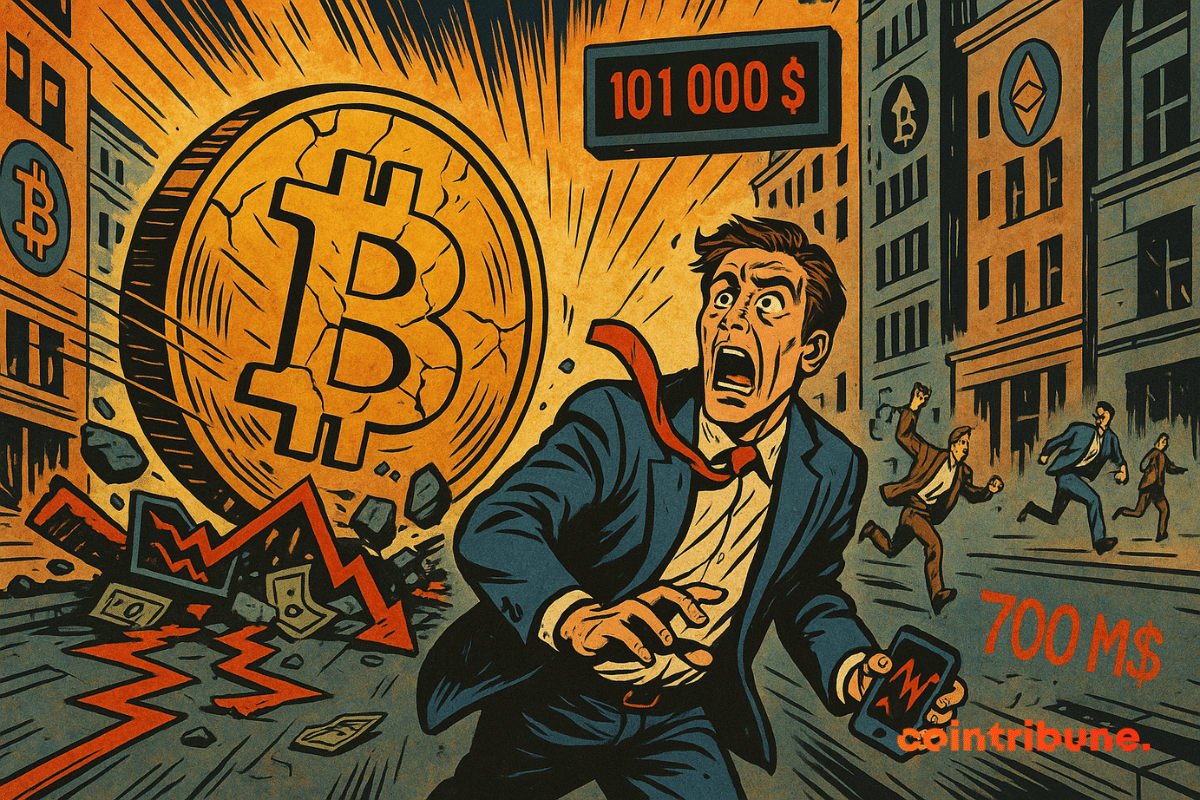
On April 13, Bitcoin surpassed $86,000 before plunging below $84,000, without any macroeconomic alerts or exogenous factors. This abrupt reversal can be explained by an unprecedented imbalance in liquidations: $52 million in long positions against only $15 million in short positions, representing a gap of 346%. This anomaly reveals a structural tension related to leverage, where excessive speculative optimism makes markets particularly sensitive to internal corrections.
XRP finds itself at a strategic turning point, facing technical resistance that could redefine its market trajectory. Since the settlement of the dispute between Ripple and the SEC, the asset has gained renewed confidence, but investors remain cautious. The crossing of this decisive threshold is being closely watched: a failure could stifle the current momentum, while a breakthrough would pave the way for new highs. Thus, it is now a time for confirmation for supporters of the bullish scenario.
Ethereum is wobbling, and the shadow of previous bear cycles resurfaces. In just three months, ETH has lost more than 65% of its value, bringing speculators and investors to a major psychological threshold: $1,000. This drop would not be a simple correction but an echo of the crashes of 2018 and 2022. As indicators slide into panic zones, the prospect of a definitive floor fuels both the hope of a rebound and the fear of prolonged capitulation.
While stock markets are experiencing a historic loss, Bitcoin is losing ground and has fallen below 80,000 dollars. This decline, far from being trivial, reignites the debate about its safe haven function. At a time when trade and political tensions are reshaping the global economy, the line between traditional assets and cryptocurrencies is blurring. A moment of truth is therefore approaching for BTC and for investors' allocation strategies.
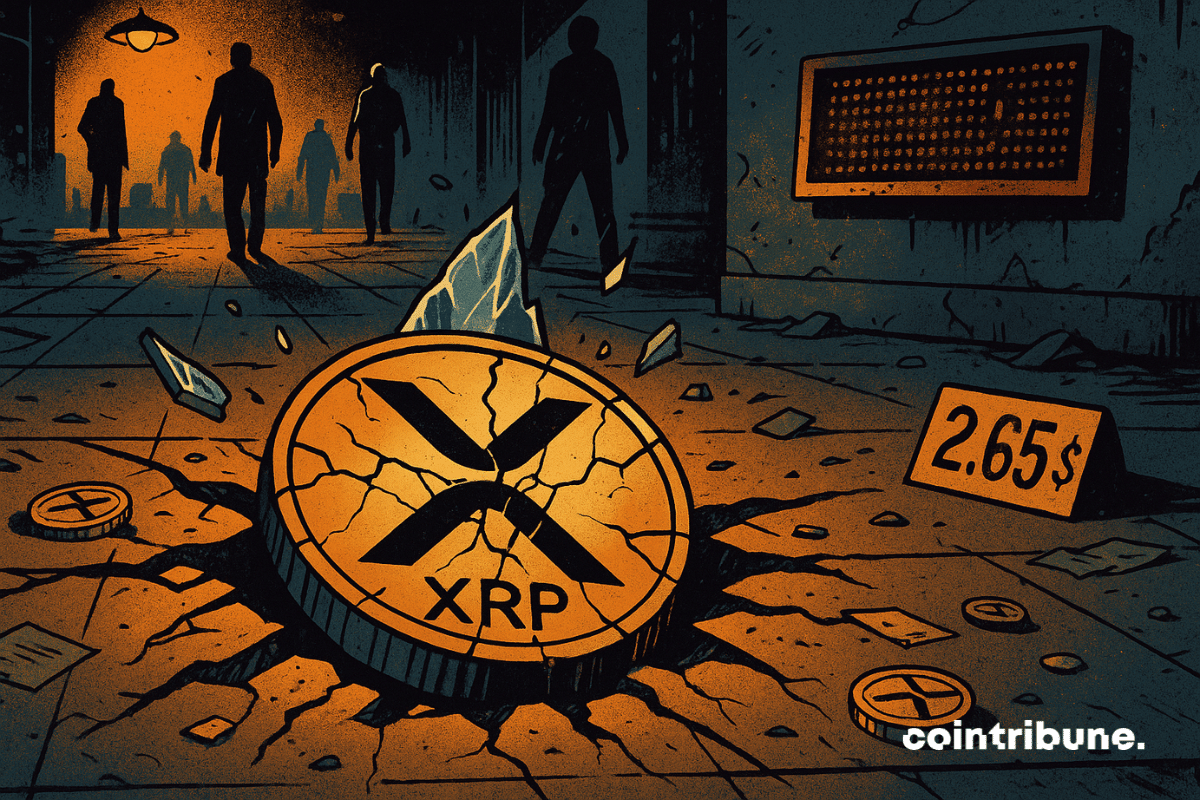
While the crypto market seeks new breath after a dynamic start to the year, XRP is sinking into a bearish spiral. Ripple's asset has already lost more than 35% since its peak in January, and technical indicators point to a possible worsening. An unfavorable chart setup could lead to an additional drop of 25% this month. In this climate of uncertainty, XRP appears to be one of the most fragile assets at the moment, exposed to increasing selling pressure and disengagement from major investors.
Bitcoin shows a surprising resilience in the face of market collapse. While gold retreats, it rises alone toward $100,000, fueled by a breakthrough narrative.
While Bitcoin has retreated by 25% from its all-time high of over $109,000, an unexpected movement is emerging: whales are returning to their purchases. These large wallets, often seen as market barometers, are marking their first real return to accumulation since August 2024, according to Glassnode. In a context dominated by distribution and a sentiment reminiscent of the lows of 2022, this strategic signal could disturb the prevailing bearish consensus and reignite investor attention on current levels.
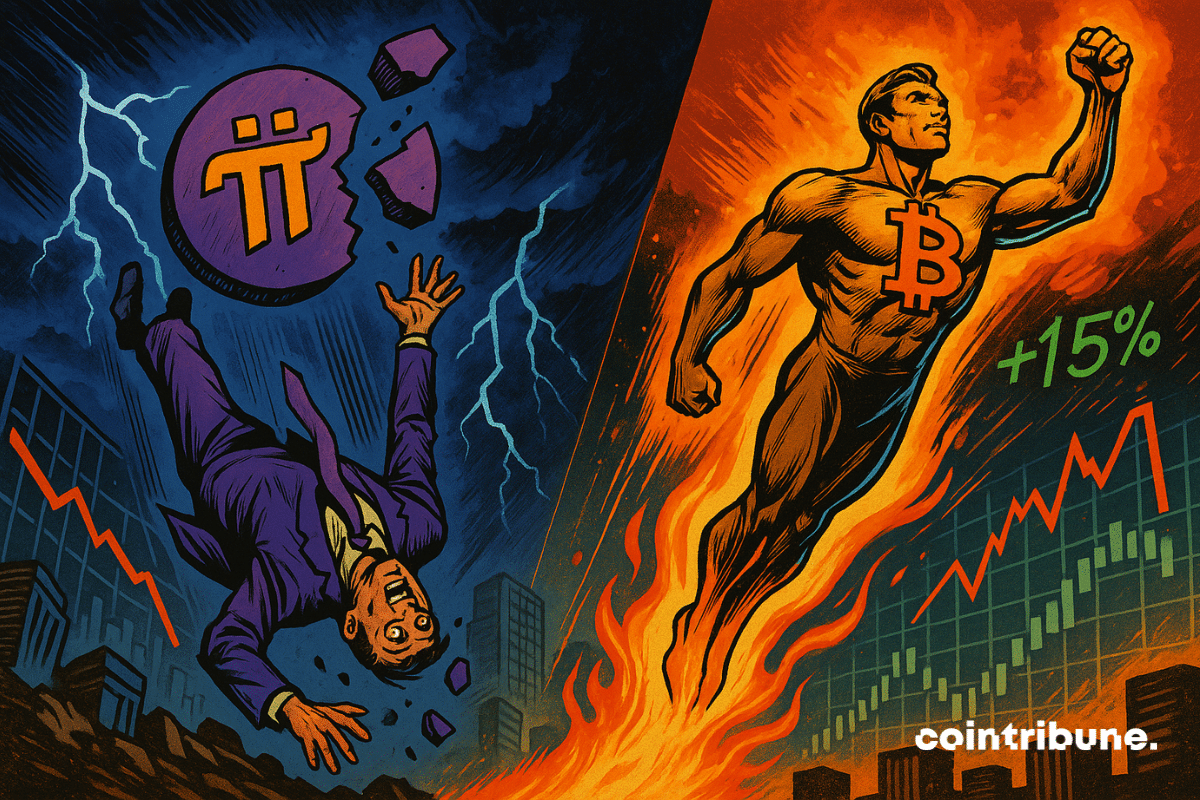
Launched as a promise of crypto democratization via mobile, Pi Network is now facing its biggest turbulence zone. As its Pi token dangerously approaches its historical lows, over 126.6 million new tokens are set to be released in April. This adds extra pressure on an already fragile asset, despite a massive community and stated ambitions. In an increasingly ruthless market, the illusion of success is no longer enough: the Pi ecosystem is wavering, and doubts are settling in.
The price of XRP intrigues, worries, and brings back bad memories. While some see it as the beginning of a new rise, a recent analysis reveals familiar patterns, those that preceded the collapses of 2018 and 2021. As technical signals turn orange, the threat of a denial scenario (a key step before each past crash) resurfaces. In a climate charged with expectations, on-chain data imposes a serious reminder of reality.
Is Bitcoin at $80,000 out of reach? For some analysts, it's quite the opposite: this threshold could represent a buying opportunity. While the market oscillates between bullish enthusiasm and fears of a correction, several fundamental indicators suggest it's time to revisit certainties. Behind the numbers, a different underlying dynamic is emerging, one that is quite distinct from past cycles. Far from a peak, Bitcoin may still have room to grow.
Announced as a strategic turning point, the integration of Pi Network into the Telegram wallet provided an unprecedented showcase for a project that already boasted a massive community. In an ecosystem where visibility can skyrocket an asset, PI seemed to be in a strong position. However, contrary to expectations, the token collapsed. The promise of accelerated adoption collided with the reality of the market. How can such a dissonance between the potential of an announcement and the brutality of a fall that raises questions about the project's solidity be explained?
Bitcoin is dropping, but the real movement might come from elsewhere. While the market is taking a rapid downturn, some analysts are already betting on another engine: the massive return of liquidity from central banks. Behind the numbers, a global monetary dynamic is emerging, far more decisive than the ongoing correction. BTC is wavering, but the incoming capital flow could rewrite everything.
The volatility of Bitcoin is resurfacing. After a peak above $84,000, the cryptocurrency fell by 3.5% within a few hours. This decline fuels fears of a return to $72,000, a scenario that seemed unthinkable not long ago. The cause? Uncertain macroeconomic liquidity conditions, which undermine risky assets. Some analysts believe that the market could enter a critical phase, where the evolution of monetary policies and investors' appetite for risk will be decisive.
The crypto market is wavering, and XRP finds itself on the front line. After a phase of technical instability, the situation deteriorated with the announcement of new customs tariffs by Donald Trump on automotive imports. A double blow, amplified by the lowered expectations for a monetary easing from the Fed. In this uncertain climate, analysts fear a 40% drop, threatening to plunge XRP into a downward spiral. Amid alarming technical signals and macroeconomic tensions, the market is holding its breath.
In the crypto market, where turbulence is common, some declines stand out more than others. Pi Network, once seen as a promising project, has seen its price collapse to a historic low, shaking investor confidence. As the token struggles to gain ground on major exchange platforms, its trading volume is dropping, a sign of growing disinterest. Can Pi still rebound, or are we witnessing the collapse of a promise never fulfilled?
Under the neon lights of Wall Street, History seems to stutter. The stock market stumbles, drunk on speculation, while the old crashes smile in the wings, ready to take the stage again.
Bitcoin gets a breather: crossing the $85,000 threshold with panache pushes the abyss away. A relief? Or the calm before the next storm?
Bitcoin is wavering, experiencing a loss of over 20% since its all-time high, reviving fears of a sharp reversal. However, some see it as merely a pause in an ongoing cycle. For Timothy Peterson, this decline remains moderate compared to previous bear markets and fits into a classic consolidation phase rather than a structural collapse.
The crypto market is once again in a period of uncertainty, suspended on a single question: what will be the next decision of the American Federal Reserve? While bitcoin fluctuates below $85,000 and the crypto market's fear and greed index collapses to 23, investors hold their breath. The Federal Open Market Committee (FOMC) meeting concludes today, and all eyes are on Jerome Powell.
Is the bitcoin market entering a phase of prolonged retreat? This is the question that is stirring the crypto community after the shocking statement from Ki Young Ju, CEO of CryptoQuant. Indeed, known for his precise on-chain analyses, he claimed on the social network X (formerly Twitter) that the bitcoin bull cycle is over. This radical shift in rhetoric is all the more surprising given that he asserted as recently as early March that the bull run was still in place, although slowed down.
Financial markets are wobbling, investors are worried, and cryptocurrencies are undergoing another unstable period. At the heart of this turmoil, one name keeps coming up: Donald Trump. According to several analysts and market observers, the American president is allegedly pursuing a strategy aimed at deliberately weakening financial markets in order to pressure the Federal Reserve (Fed) to lower interest rates. A hypothesis that, while dramatic, is based on public statements and concerning economic signals.
The crypto market is going through a turbulent period marked by a brutal correction of bitcoin and massive capital outflows. With a decline of over 18% from its historic peak of $106,000 in December 2024, some investors are already talking about the most painful cycle in bitcoin's history. However, for seasoned players in the industry, this scenario is nothing new. Even darker periods have marked the evolution of the crypto market, and many see this correction as a temporary adjustment rather than a lasting collapse.
In a constantly shifting crypto market, Pi Network is at a decisive turning point. While investors were waiting for signs of stabilization, the asset is facing a concerning downward trend, fueled by increased selling pressure. The expiration of the migration period to the Mainnet, combined with technical indicators in the red zone, is fostering growing uncertainty.
Financial markets have their own memory, and cryptocurrencies are no exception. Thus, when an asset shows alarming similarities to a past crash, analysts sound the alarm. Ethereum, the second largest crypto on the market, sees its price plummet, reviving the specter of the March 2020 crash. Trader Ted Pillows claims that the current behavior of the ETH market almost mirrors the capitulation of that dark period, suggesting a scenario where the asset could drop to as low as 1400 dollars.
In the arena of Bitcoin, the giants play at their discretion while the newcomers flee. Binance watches, powerless, this grand ball of decentralized finance. End of the game or just an intermission?
A bitcoin at $70K? Nothing to faint over! The market dances, retracts, but doesn't stumble. Those who wait will see the next act of the show.