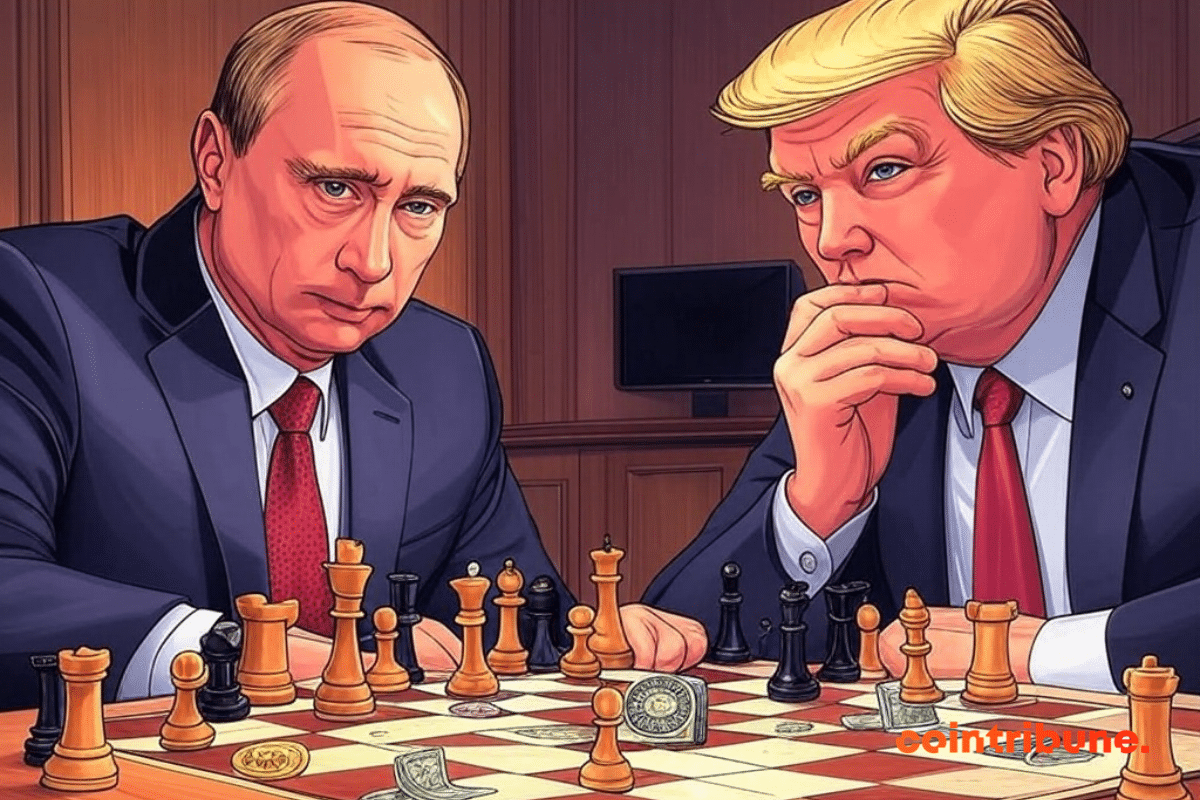
Moscow opens the golden cage: billions of Russian assets finally released, but under conditions. A masterstroke before a call where Trump will play the geopolitical illusionist.
The USA-Ukraine summit was recently held in Riyadh and resulted in more ambitious ceasefire proposals than expected. "The ball is now in Russia's court" has become the American talking point on this issue. Meanwhile, Europe appears to be accelerating its military reassertion in an increasingly tense geopolitical context.
Financial markets are wobbling, investors are worried, and cryptocurrencies are undergoing another unstable period. At the heart of this turmoil, one name keeps coming up: Donald Trump. According to several analysts and market observers, the American president is allegedly pursuing a strategy aimed at deliberately weakening financial markets in order to pressure the Federal Reserve (Fed) to lower interest rates. A hypothesis that, while dramatic, is based on public statements and concerning economic signals.
The shadow of an economic storm looms, tinged with bright red and unpredictable pragmatism. The "Trumpcession" – this neologism that sounds like a warning – encapsulates the growing concern over a trade war with unforeseen consequences. Caught between stimulus and restriction, the Fed and the Bank of England are stuck between rates to adjust and a threatening inflation. How to avoid the domino effect? The answer requires more than an economics manual: a tactical boldness.
Bitcoin, fueled by post-election euphoria, reached a peak of $108,000 before falling below $80,000. Global economic instability and rising trade tensions contribute to increased volatility. Despite pro-crypto rhetoric, Donald Trump is adopting a protectionist policy that worries investors. Amid fears of recession and monetary uncertainty, the crypto market wavers in the face of macroeconomic turmoil.
Trade wars are reshaping the global economy. They impact entire industries and reconfigure strategic balances. Among the companies directly affected, Tesla finds itself on the front line facing the new tariff measures imposed by Donald Trump. Tesla, for which China is the second-largest market after the United States, could pay a heavy price for this economic escalation.
A wind of dissent is blowing over Washington. A legislator is directly confronting Donald Trump's initiative to create a strategic reserve of Bitcoin and other cryptocurrencies. For him, this project is nothing visionary: it is more of a dubious maneuver, built on unstable ground where private interests and public funds intertwine.
Elon Musk wanted to conquer the stars, but his empire is wobbling on Earth. Tesla is falling, Trump is getting involved, and Wall Street is watching, skeptical, this great balancing act.
According to the latest financial statements made public, at least six members of Donald Trump's presidential cabinet hold investments in bitcoin, with a combined total value reaching several million dollars. This revelation aligns perfectly with the president's promise to make the United States the "global superpower of Bitcoin."
In the trade tug-of-war between the United States and the European Union, a new episode has rekindled tensions. Indeed, Donald Trump, true to his protectionist approach, is once again wielding the threat of massive tariffs, this time on European wines and champagnes. The announcement of a 200% tax on these products follows Brussels' decision to increase tariffs on American whiskey to 50%.
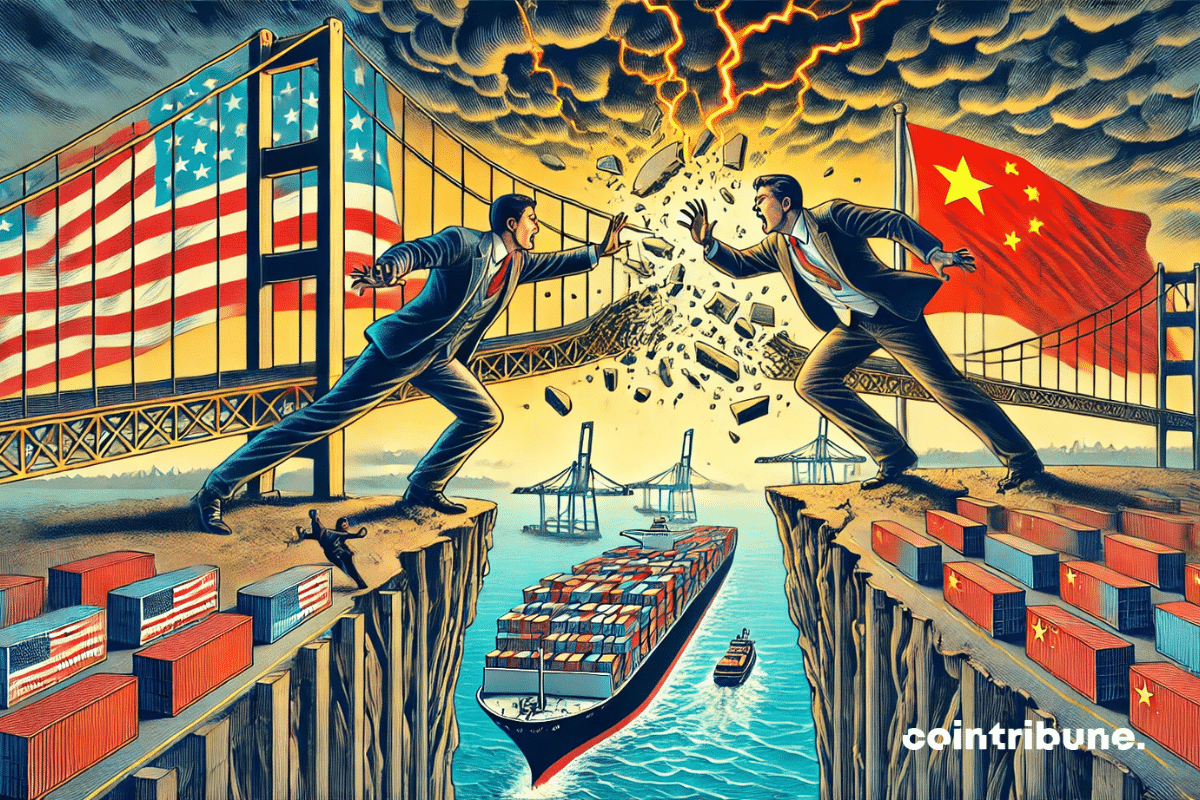
The financial systems encountered significant disturbances at the start of 2025 after President Donald Trump enacted extensive import tariffs affecting Canada, Mexico, and China. President Trump initiated the new trade regulations, which imposed 25% duties on products from Canada and Mexico and 10% duties on Chinese exports to safeguard domestic businesses and correct commercial discrepancies. The tariffs caused disruptive effects throughout world markets, particularly in the cryptocurrency industry.
Peter Schiff, a well-known advocate for gold and a fierce critic of Bitcoin, did not miss the opportunity to mock crypto investors following the recent drop in prices. As Bitcoin lost nearly 30% of its value in just a few weeks, the economist threw out a provocative jab on social media.
The crypto market has just undergone a heavy correction, losing 440 million dollars in capitalization. Several poor decisions made recently by American President Donald Trump have negatively affected investors. Amid geopolitical tensions and economic uncertainties, the crypto market is experiencing a significant phase of turbulence.
The financial story of the United States may well be on the brink of a major turning point. As the national debt reaches new heights and economic tensions escalate, a key player in the crypto sector, Michael Saylor, proposes a bold strategy: to make bitcoin a national strategic asset. At a summit held at the White House, the founder of Strategy advocated for massive investment by the U.S. government in bitcoin, suggesting that the United States should acquire up to 25% of the total supply by 2035. This proposal, as ambitious as it is controversial, relies on a long-term vision in which bitcoin would become a pillar of American economic prosperity. In response to this announcement, the White House has already taken a first step by signing a decree that establishes a strategic reserve of bitcoin.
The American economy is going through a turbulent phase. Between rising inflation and a marked slowdown in growth, a long-forgotten specter resurfaces: stagflation. This phenomenon, which combines economic stagnation and rising prices, evokes the crises of the 1970s. Today, Donald Trump's new tariff policies rekindle fears of a return to that time when growth was stalled and purchasing power was eroding rapidly. The American president's decision to impose heavy taxes on Chinese, Mexican, and Canadian imports raises many questions about their real effects on the economy. As the Federal Reserve is pushed to its limits, markets are wavering, and businesses are concerned about the repercussions on their profitability.
Political decisions shape the future of cryptocurrencies, and the crypto summit organized by the Trump administration at the White House on March 7 is a glaring proof of this. This event, which aimed to establish a new posture for the United States towards the blockchain industry, sparked mixed reactions. While some observers see it as an institutional recognition of Bitcoin and a strategic turning point, others denounce it as a mere political stunt without concrete measures. This meeting, which coincided with the announcement of the creation of a strategic reserve of Bitcoin, had an immediate impact on the markets, leading to a 7.3% drop in BTC and massive outflows from Bitcoin ETFs. So, real progress or just a publicity stunt?
Scott Bessent, U.S. Treasury Secretary, announced yesterday at the White House crypto summit that Washington plans to use stablecoins to strengthen the dollar's position as the dominant reserve currency.
On the crypto scene, Trump plays the alchemists: he transforms tokens into gold… but the magic primarily works for those around him.
On Friday, March 7, 2025, the President of the United States, Donald Trump, welcomed leading figures from the crypto industry to the White House for an unprecedented summit. The main objective of this meeting was to discuss the creation of a strategic reserve of cryptocurrencies, a bold project that could redefine the role of digital assets in the American economy. Here’s what really happened!
The global economic scene is in full turmoil. In just a few months, trade tensions between China and the United States have reached a new level, severely impacting the foreign trade of the Asian giant. Official figures released by Chinese customs indicate a brutal slowdown, much more pronounced than expected, in exports and imports. In the background, a declining internal consumption and an uncertain economic climate amplify concerns. As Beijing sets an ambitious growth target, this halt raises many questions about the country's ability to maintain its dynamism in the face of repeated attacks from Washington.
The fragile balance of the conflict in Ukraine has just experienced a new twist. Donald Trump, the American president, discussed the possibility of imposing massive bank sanctions and high tariffs against Russia. This statement comes as Moscow intensifies its strikes on Ukrainian infrastructure, while Washington's position wavers between conditional support for Kiev and seeking a diplomatic solution. However, this posture of firmness is accompanied by contradictory decisions, raising questions about Trump's true intentions in foreign policy.
Donald Trump is hosting over 20 leaders of the crypto industry at the White House tonight for an unprecedented summit. This meeting, scheduled from 6:30 PM to 10:30 PM UTC, comes on the heels of the signing of a presidential decree establishing a Strategic Reserve of Bitcoin.
The excitement around memecoins has significantly cooled in recent weeks, after having reached a historic peak. According to Bobby Ong, founder of CoinGecko, while these meme-based cryptos may seem temporarily "dead", their cyclical nature suggests an inevitable return to the market.
The flagship cryptocurrency experienced a significant decline following the official signing of the U.S. presidential decree establishing a strategic reserve of Bitcoin. While investors hoped for massive purchases by the government, the reality proved to be less ambitious, causing a market correction.
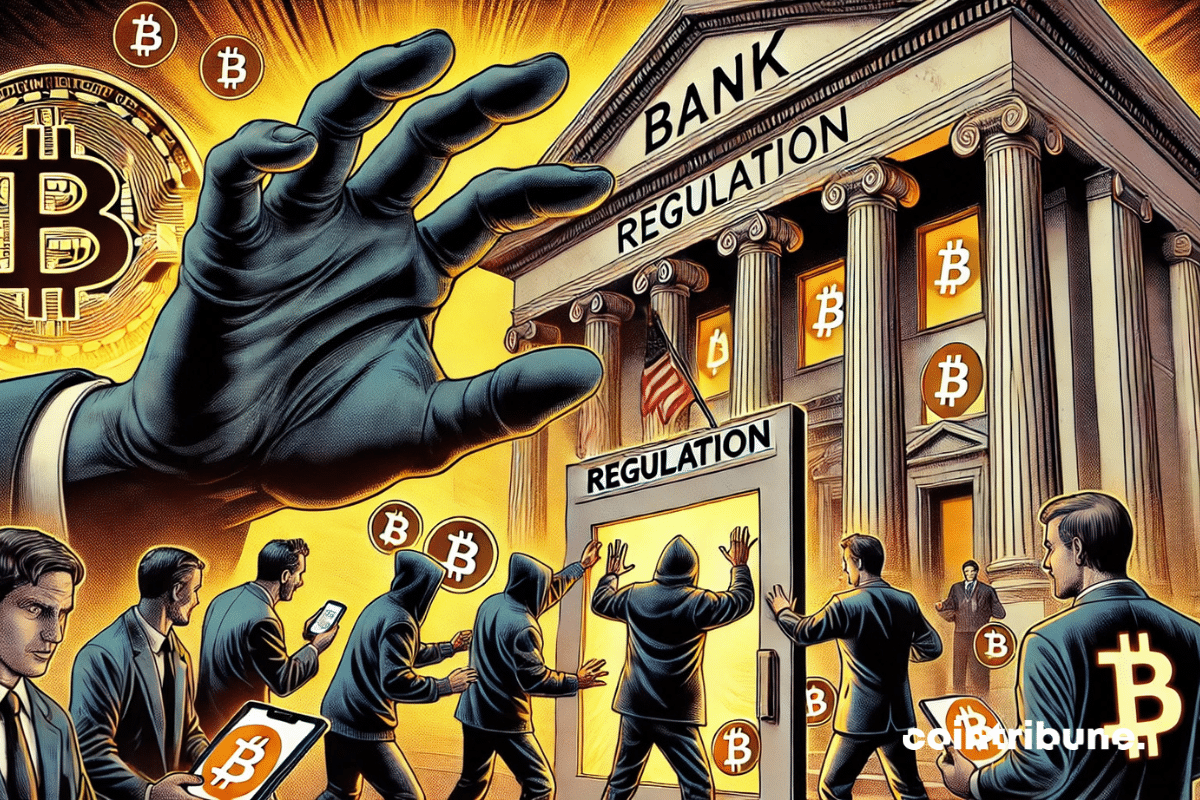
Between ideology and regulation, the debanking war rages: a battle where crypto and "risky" industries fight for their survival.
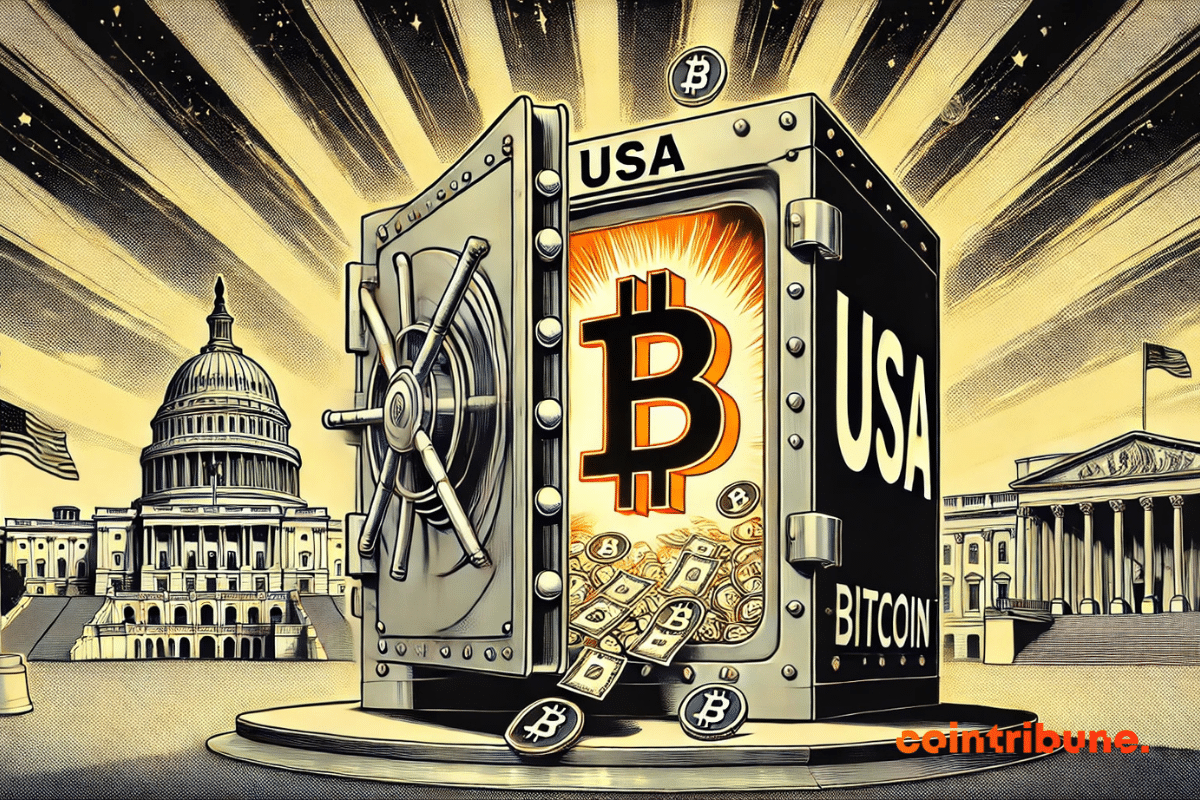
The Trump administration has just taken a new step in the regulation and integration of cryptocurrencies in the United States. President Donald Trump signed a presidential decree late last night that establishes a Strategic Bitcoin Reserve and a Digital Asset Stockpile, an initiative that transforms the American approach to cryptocurrencies.
On the eve of the Crypto Summit at the White House scheduled for March 7, 2025, World Liberty Financial, a decentralized finance platform linked to the Trump family, has significantly increased its cryptocurrency holdings. According to recent data, the company has injected 25 million dollars into its reserves by acquiring several major cryptocurrencies. What is behind this initiative?
Michael Saylor dropped some crumbs on the Fox News microphone on the eve of the roundtable organized by the White House with leaders of the crypto community.
On March 5, 2025, major news shakes the crypto world: U.S. Secretary of Commerce, Howard Lutnick, hinted that the Trump administration is preparing to unveil an ambitious strategy concerning a reserve solely of bitcoin. This announcement, scheduled for the inaugural crypto summit at the White House on March 7, is sure to mark a potential turning point in the economic policy of the United States and their approach to digital assets.
The United States has taken the bull by the horns both economically and geopolitically. Many things are going to change and, in the end, bitcoin will find its way.