Solana, a pioneer trapped in the courts, sees its ETFs muzzled. But in the meantime, the promises still shine.
Coinbase Premium Index rises: Discover the key factors and the impacts for the future of the flagship cryptocurrency Bitcoin!
Bitcoin could reach $249,000 in 2025. Discover the factors behind this bullish crypto forecast.
The United States is facing a historic budget deficit, reaching $711 billion in just three months, an increase of 39% compared to the previous year. This explosion in public spending, coupled with a decline in tax revenues, is straining federal finances. Donald Trump, poised to return to the White House, will have to reconcile his promises of tax cuts with the necessity of controlling the debt. To assist him, Elon Musk has been appointed to lead a commission dedicated to government efficiency. His ambition: to reduce federal spending by $2 trillion, even if a halfway goal would already be a "super result." Between budgetary discipline and economic imperatives, the future administration finds itself faced with a perilous equation, where each decision could redefine the country's financial stability.
The 2024 American presidential election has sparked numerous debates, particularly regarding the potential influence of crypto. Gary Gensler, the outgoing chairman of the Securities and Exchange Commission (SEC), recently stated that cryptocurrency did not play a decisive role in the outcome of this election. Therefore, will it be abandoned by the Trump administration?
In its latest blockchain letter, Pantera Capital states that Donald Trump's upcoming inauguration should propel Bitcoin to new heights. The asset manager refutes the application of the stock market adage "buy the rumor, sell the news" to the crypto market, as Bitcoin currently hovers around $95,000.
Bitcoin has risen by 120% in 2024, significantly outperforming other major asset classes. 2025 is shaping up to be another exceptional year.
Bitcoin (BTC) recently fell below its 20-day exponential moving average (EMA) after reaching a peak of $94,000 a few days ago. This decline signals a strong period of correction as investors prepare for Donald Trump's inauguration.
A new era seems to be opening up for American financial advisors. According to a recent survey conducted by Bitwise, 56% of them say they are more inclined to invest in cryptocurrencies after Donald Trump's victory. Such enthusiasm is as intriguing as it is fascinating, especially when we know that crypto markets evolve at lightning speed. Some professionals see it as a favorable wind, ready to propel traditional finance towards new horizons. Others, more cautious, detect a landscape still riddled with uncertainties. However, one thing is certain: the dynamics around Bitcoin and other digital assets continue to strengthen.
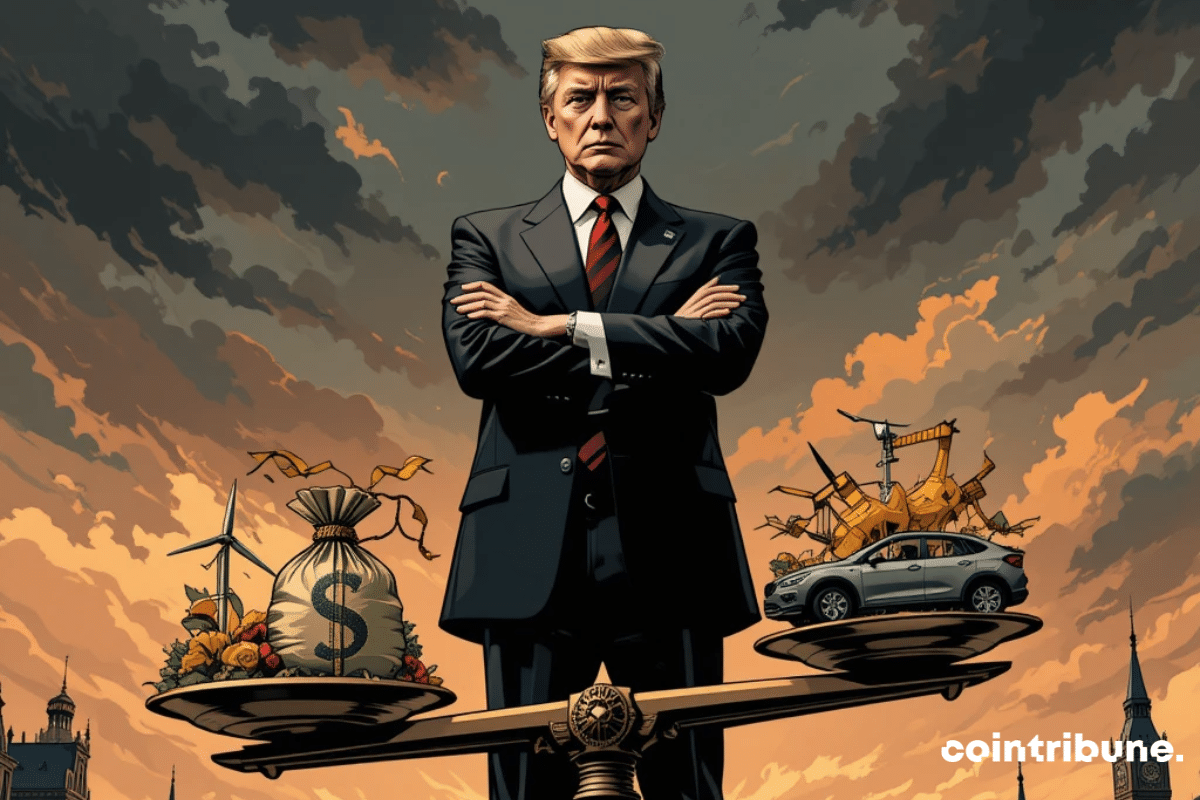
The American Federal Reserve is divided over the potential inflationary consequences of the tariff increases promised by Donald Trump. While some officials downplay the risks, others fear a resurgence of inflation in an already strained economic context.
Crypto industry experts doubt Trump’s commitment to keep all his promises: "It is clear that the Republican Party has relied on a pro-crypto political position to gather votes from citizens holding crypto assets." And what about bitcoin… what will become of it?
In the digital arena, punters are getting excited: 4% for SBF, 2% for Ulbricht. Will Biden, the last emperor of crypto-miracles, decide?
The evolution of the price of bitcoin in 2025 will depend on three main parameters: macroeconomics, geopolitics, and bitcoin's ability to attract investors.
The American stock market plunged into the red this Wednesday, as Donald Trump considers declaring a national economic emergency to impose universal tariffs. This prospect reignites fears of a new trade war, overshadowing mixed data on American employment.
As the U.S. dollar index (DXY) reaches new highs, bitcoin struggles to maintain its critical support. Investors are closely watching the movements of the DXY and the monetary policies of the Federal Reserve, anticipating a short-term target of $80,000 for the queen of crypto.
Donald Trump's statements just days before his return to the White House have reignited tensions on the international stage. During a press conference, the elected president mentioned the possibility of annexing the Panama Canal and Greenland, strategic territories whose geopolitical significance far exceeds American borders. Far from being content with a mere statement of intent, he refused to rule out the use of force, provoking immediate reactions from the countries involved. As the world faces increasing geopolitical tensions, these stances raise many questions. Is Trump seeking to reshape international power dynamics, or is this a communication strategy aimed at influencing future diplomatic negotiations? What are the implications for relations between the United States and its partners? A look back at an announcement that certainly reignites fears of a return to an unpredictable American policy.
The year 2025 could mark a turning point for Ether (ETH), the second largest cryptocurrency by market capitalization. According to Dr. Sean Dawson, head of research at Derive, Ether could reach a peak of $12,000 this year, thanks to Trump, representing a 257% increase from its current price.
Bitcoin is facing significant downward pressure as markets react to uncertainties in U.S. politics. A sharp drop of $5,000 in a single day suggests a possible test of $88,000 in the coming weeks, according to analysts.
A few statements are enough to shake the markets, and Donald Trump has once again demonstrated this. An article in the Washington Post suggested that his team was exploring a more nuanced approach to tariff policy. This single premise was enough to push stock indices higher, with investors betting on a relaxation of trade tensions. However, the former president was quick to respond. In a message posted on social media, he firmly denied this information, calling it yet another attempt at media manipulation. This sudden about-face triggered a shockwave in the financial markets.
Between Trumpian euphoria and the cold mechanics of the Fed, bitcoin swings, a fragile king of a kingdom of uncertainties.
Between a provocative Trump and an inflexible Fed, the economy wobbles. Interest rates rise, prices soar, and nerves fray.
Taiwanese youth are enjoying life as if nothing were happening. Yet, the threat of a Chinese invasion has never been more present. And when the Chinese Communist Party launches the offensive, we will officially enter a 3rd world war.
Bitcoin, the weary hero, struggles against fierce illiquidity. In January, analysts are gazing at the stars: $105,000 or false hope?
In 2025, China continues to demonstrate its resilience under international economic pressures, particularly those exerted by the future Trump administration. Despite attempts by the new American president to hinder China's economic rise, it persists in its openness, marking a significant victory in the war between the two superpowers.
Bitcoin, fallen hero or reborn phoenix? 2025, the year of all crypto promises, where altcoins could shine with unexpected brilliance.
Bitcoin is stagnant, investors are softly dozing. But beware: Trump in January could very well add some spice to this lukewarm crypto soup.
As the inauguration of Donald Trump approaches on January 20, 2025, observers are closely examining his economic policies, particularly their potential impact on bitcoin. According to Ki Young Ju, founder of CryptoQuant, Trump's policies may depend on the balance between dollar supremacy and the opportunities presented by cryptocurrencies. This analysis sheds light on the issues related to the hegemony of the dollar, which continues to dominate global trade despite losing over 90% of its value since 1913. While some countries are adopting digital solutions to escape monetary crises, such as the rise of stablecoins in emerging economies, the role of bitcoin remains ambiguous. This topic, at the intersection of traditional finance and disruptive technologies, raises questions about the future of cryptocurrencies in an economic system where U.S. policies still influence the rest of the world.
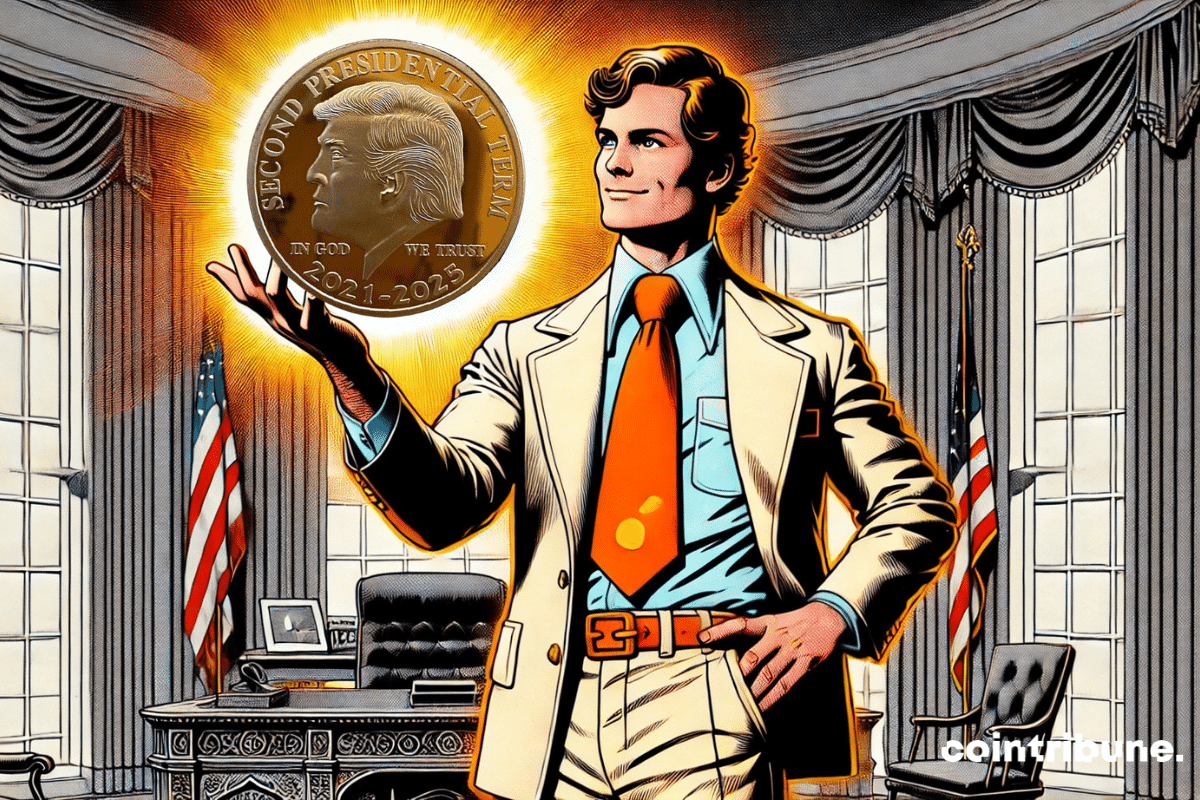
The world of crypto could experience a historic change with Donald Trump's return to the White House. Indeed, the elected president, already known for his divisive stances, has placed crypto at the heart of his economic priorities. He aims to propel the United States to the status of a global leader in this rapidly expanding sector. Among his promises are the creation of a strategic reserve of bitcoins and the establishment of policies favorable to crypto businesses. These initiatives, which demonstrate a desire for a break from the previous administration, evoke a mix of hope and skepticism within the industry. While his supporters praise a bold vision for the future of crypto, observers remind us of the many obstacles that will arise in the realization of these projects, whether political, economic, or regulatory. Donald Trump's next term could thus mark a decisive turning point in the evolution of cryptocurrencies in the United States and on the international stage.
On Wall Street, the rumor is growing: 2049, Bitcoin soars, the debt collapses. A grand bet, a shaken America.
International economic dynamics always attract marked interest, particularly when coalitions like the BRICS are perceived as a threat to the hegemony of the American dollar. However, the recent statements from Russia, India, and South Africa have clarified their position. Indeed, these countries assert that no plan aims to weaken the American currency. They firmly reject the accusations of "de-dollarization" and emphasize their willingness to maintain stable relations with the United States.