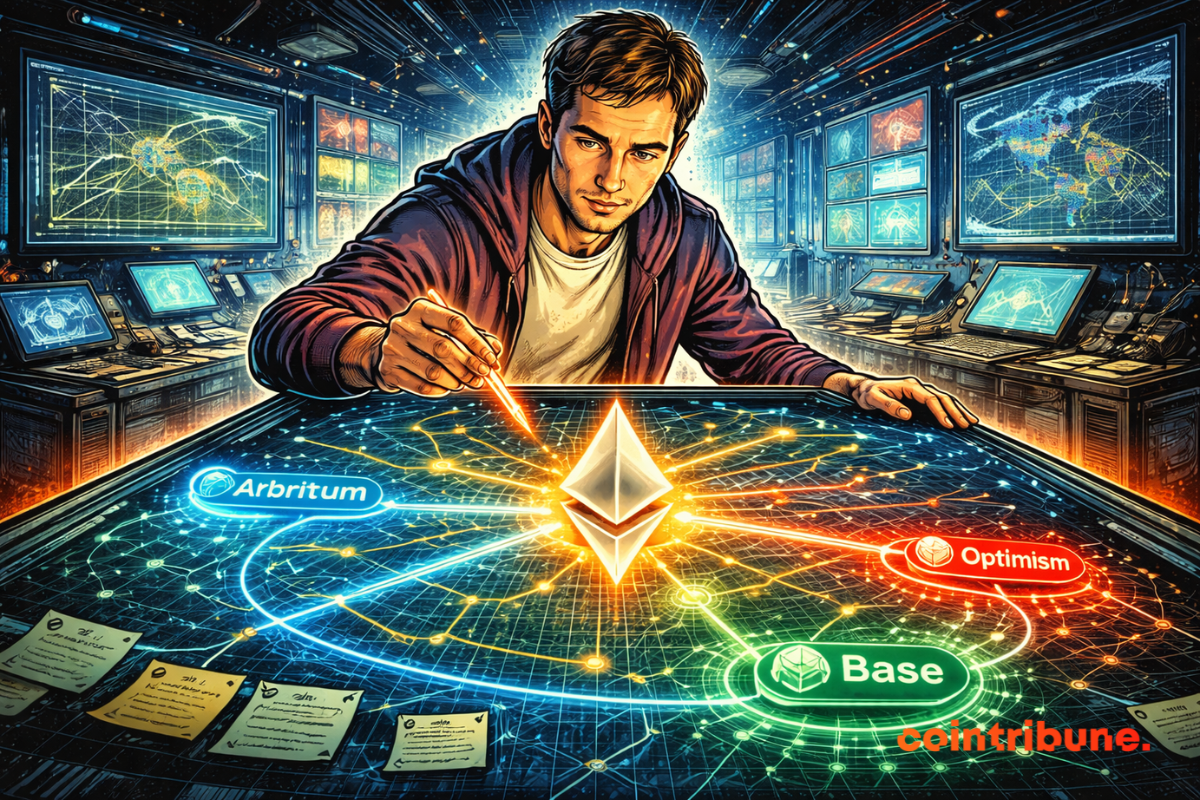
When Vitalik scolds his L2 children, Arbitrum, Optimism and Base reply: "Papa Ethereum is aging, but we remain indispensable!" A technical... and existential dispute.
Vitalik Buterin turns a page in Ethereum's history. In a published post, the protocol's cofounder calls into question the strategic vision of Layer 2, long considered the key to the network's scalability. For him, the rollup-centric model no longer delivers on its promises. As Ethereum continues its transformation, Buterin calls for a profound rethinking of the role of second-layer solutions. This stance could well redefine the future of the ecosystem.
Crypto: a forgotten Ethereum hack becomes a secret weapon against cyber threats. We bring you all the details in this article.
Vitalik Buterin has just reminded us of something the crypto industry forgets too quickly: being open does not mean saying yes to everything. In a fairly broad interview, the Ethereum founder sets a clear limit. A community that applauds everything that drives the price up ends up shooting itself in the foot. Not immediately. But surely.
While quantum computers sharpen their circuits, Ethereum brings out the heavy artillery: cryptographers, millions, and devnets. The blockchain wants to last a hundred years, even if it ages before us.
At the Devconnect conference in Buenos Aires, Ethereum's co-founder issued an unprecedented warning: the elliptic curves securing Bitcoin and Ethereum 'are going to die.' With a 20% probability that quantum computers could break current cryptography before 2030, the crypto industry has less than four years to migrate to quantum-resistant systems.
Faced with rising tensions around information control, Vitalik Buterin takes a stand. The Ethereum co-founder makes decentralized social networks his priority for 2026, calling for an open, interoperable model free from commercial logics. This choice marks a strategic and ideological turning point, supported by concrete actions and a frontal critique of dominant platforms. Buterin no longer just codes the Web's infrastructure but now wants to rethink how we exchange, debate, and share online.
While DAOs were meant to embody the promise of decentralized governance, Vitalik Buterin today delivers a harsh assessment: their current model is exhausted. In a widely shared post, the Ethereum co-founder denounces rigid structures, dominated by large holders and unable to address complex coordination challenges. His call for a new design marks a pivotal moment for DAOs, urging them to move beyond simple voting logic to become true on-chain infrastructures.
As the year 2026 is just beginning, Ethereum is already breaking transaction records and showing negligible fees. Analysis!
Ethereum, the engine of blockchain innovation, faces a major challenge: its growing complexity. Vitalik Buterin, co-founder of the network, warns about protocol congestion, an excess of complexity that threatens Ethereum's efficiency and security. To address this, he proposes a radical solution: simplifying the code by removing superfluous elements. However, this approach raises questions: can Ethereum be lightened without compromising its core principles of decentralization and trust?
Vitalik Buterin, co-founder of Ethereum, sounds the alarm: current stablecoins threaten the stability of the crypto ecosystem. Discover the 3 critical flaws he has identified and why they could trigger a systemic crisis. Do solutions exist? The future of DeFi is at stake.
Vitalik Buterin draws a parallel between Ethereum and Linux. Goal: to revolutionize digital governance. Details here!
Buterin claims that Ethereum has broken the blockchain trilemma. Discover why this change disrupts the future of crypto assets.
Ethereum is about to enter a new era. In a message published on X, Vitalik Buterin announces a major technical upheaval: zk-EVMs could become, by 2027, the main block validation mechanism. A profound transformation of the protocol, which would mark one of the most ambitious turning points since the creation of the network. Performance, decentralization, scalability... Buterin claims the trilemma is "solved" in practice. One challenge remains: ensuring security.
A simple technical incident was enough to paralyze a large part of the crypto ecosystem. In November 2025, an outage at Cloudflare took offline Coinbase, BitMEX, Blockchain.com, Ledger, and many others. Within hours, the promise of Web3 resilience clashed with a brutal reality. Behind the smart contracts, the infrastructure remains vulnerable. Dependent on centralized Web2 services, many so-called decentralized projects expose a critical flaw. Vitalik Buterin sees this as a warning sign and a call to action.
Regulation sometimes looks like a room too neatly arranged. Nothing sticks out. Not a draft. And that's precisely what Vitalik Buterin criticizes about the European Union: wanting a "clean" internet, without rough edges, to the point of reducing the oxygen available for crypto innovation. In a long message posted on X, the Ethereum co-founder points to the sore spot: the Digital Services Act (DSA) wouldn't just try to contain the damage, it seeks to eliminate the very space where controversial ideas are born.
Ethereum’s long-term strength may depend on more than scaling and security. According to co-founder Vitalik Buterin, true trust in the network also requires a broader understanding of how it works. He argues that simplifying Ethereum’s protocol is essential. Without it, users must rely on a small group of experts rather than verify the system themselves.
Algorithms decide what we see, but according to which rules? Vitalik Buterin, co-founder of Ethereum, directly challenges Elon Musk and denounces the opacity of X (ex-Twitter). In a context of mistrust towards centralized platforms, he proposes a radical alternative: auditing X’s algorithm thanks to blockchain and ZK-proofs. A strong stance that revives the debate on the governance of social networks in the Web3 era.
A bug, a tweet, and here is Vitalik philosophizing while Ethereum wavers: could decentralization be a disguised monoculture? Prysm coughs, the blockchain sneezes... and doubt sets in.
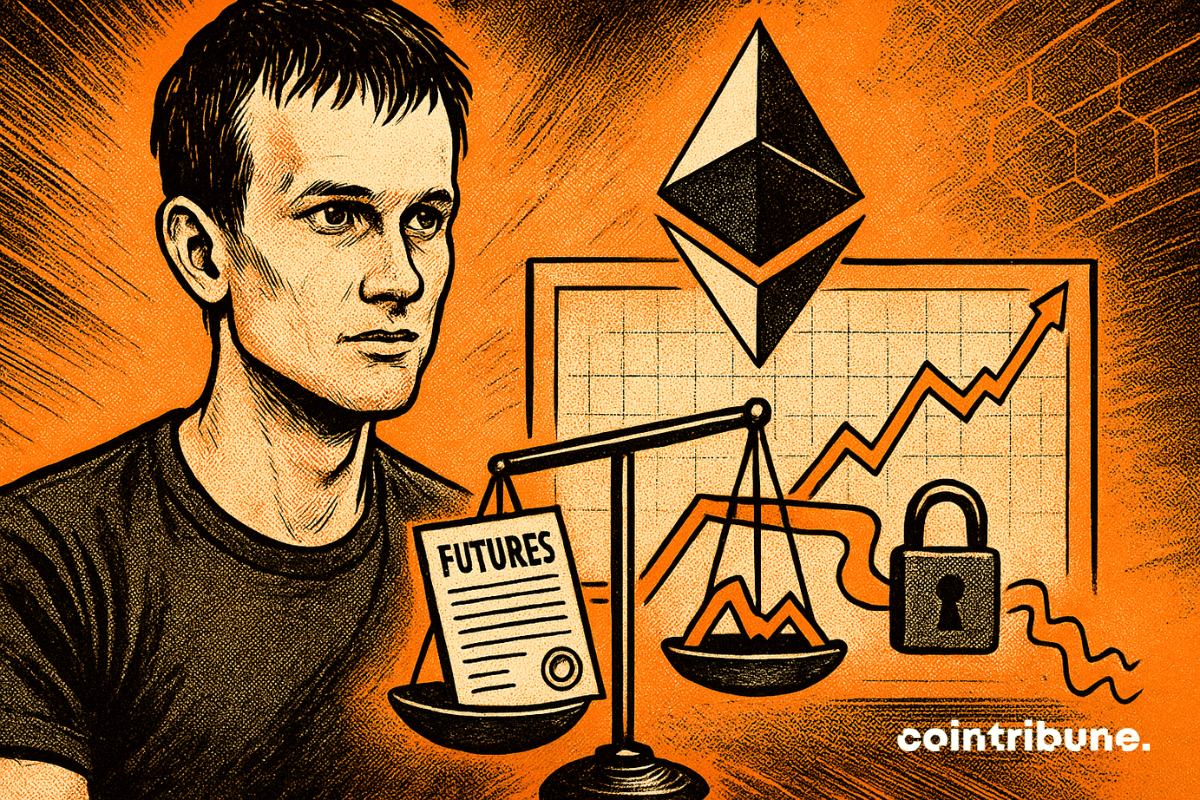
What if Ethereum users could lock in the price of their future transactions in advance? This is the bold path opened by Vitalik Buterin. Facing the persistent volatility of network fees, Ethereum's co-founder envisions the creation of gas futures contracts, a hedging mechanism that could revolutionize economic planning on the blockchain.
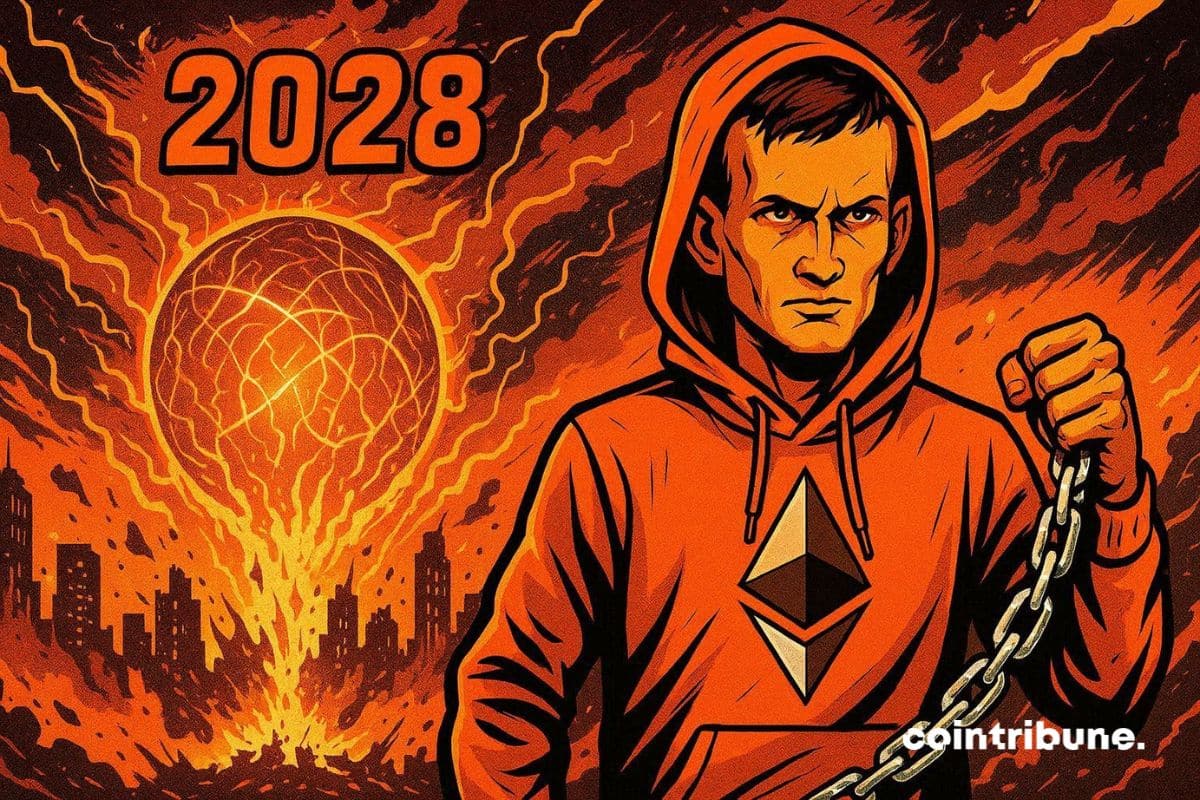
Quantum computers could cause the collapse of the crypto ecosystem as early as 2028. Vitalik Buterin sounds the alarm and proposes radical solutions. Will crypto survive this imminent threat? Discover the stakes and the answers that could change everything.
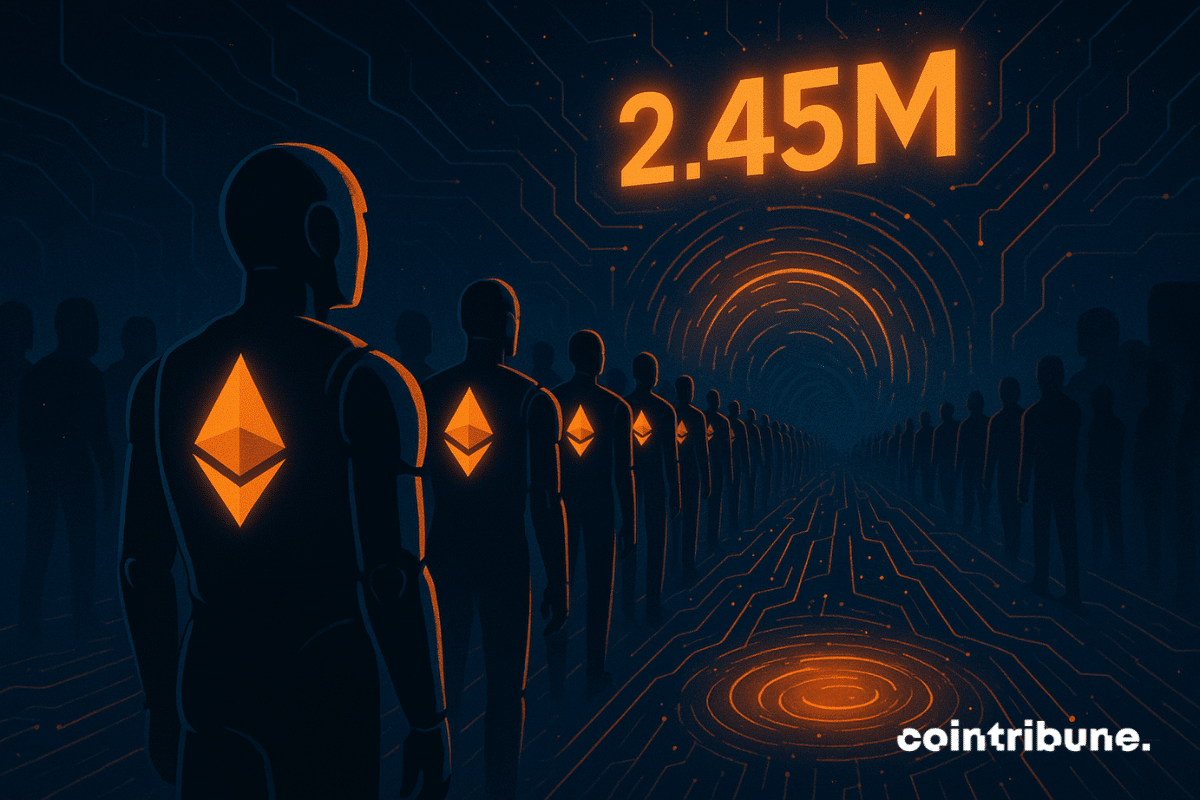
Growing interest in Ethereum’s long-term outlook has pushed validator queues higher for both entry and exit. Recent data indicate that roughly 1.5 million validators are waiting to join the staking system, while approximately 2.45 million ETH are in the exit queue. These conditions mark a busy period for participants who choose native staking over liquid staking alternatives.
Ethereum has just reached a spectacular milestone in scalability. On November 4, 2025, the network recorded a record throughput of 3,453 transactions per second, shattering its usual performance. Vitalik Buterin, co-founder of the blockchain, was quick to praise this major advance. But does this technical feat finally signal the end of the congestion problems that have long hampered the network?
Ethereum plays its big game on December 3. With Fusaka, goodbye slowness, hello performance! An update to follow... except for those who like high fees.
When a zen kingdom digitizes its papers on Ethereum, Vitalik applauds, miners meditate, and tech giants… go offline. Bhutan, or the art of chaining blockchain to happiness.
The battle around "Chat Control" goes far beyond a simple technical issue. Behind this controversial law that the European Union is trying to pass is the very definition of digital privacy at stake. Vitalik Buterin, a major figure in crypto, has chosen to oppose it head-on, warning of a project with potentially explosive consequences.
Vitalik Buterin considers the Fusaka upgrade and its PeerDAS technology as a decisive turning point for the future of Ethereum. By revolutionizing blockchain data management, this innovation could well solve the complex equation between scalability and decentralization.
Vitalik Buterin warns that closed systems in healthcare, finance, and governance threaten trust and urges open, verifiable, and privacy-focused technology.
What if Ethereum abandoned speculation to bet on stability? Vitalik Buterin proposes an unexpected strategic shift: making low-risk DeFi the main economic driver of the network. This is a sober vision, far from memecoins and NFTs, but potentially structuring. Like Google, whose search finances the ecosystem, Ethereum could find in this discreet but steady DeFi a durable foundation. This assumed disruption could redefine the priorities of the entire ecosystem.
Ethereum staking promises regular returns. But withdrawals are not instantaneous. Vitalik Buterin reminds why this delay is not a bug, but an essential safeguard for network security.