The European Union and Mexico tighten the noose on illicit crypto flows
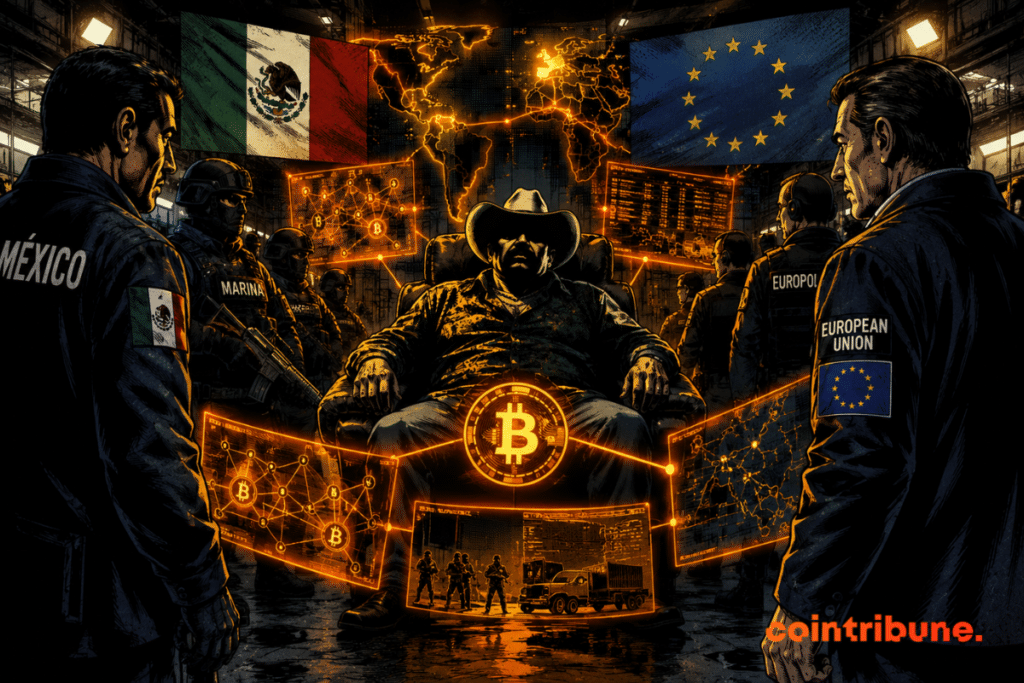
Europe and Mexico have reached a new milestone this week, far from simple diplomatic handshakes. Facing the American giant, the two partners are now seeking other economic clearings. Then crypto joined the table, like a fresh path in a still poorly mapped financial jungle.
In brief
- Europe and Mexico strengthen their cooperation against crypto flows linked to international criminal networks.
- The Sinaloa cartel now symbolizes new concerns about complex global cross-border blockchain transactions.
- Brussels also seeks to gradually reduce its strategic economic dependence on the currently weakened United States.
- The EU-Mexico trade agreement now turns crypto monitoring into a true modern geopolitical diplomatic tool.
Europe and Mexico install their financial radars
The eighth EU-Mexico summit did not just modernize a long-stalled trade agreement. It also opened a dialogue on global crypto money laundering, with Roberto Velasco Álvarez and Kaja Kallas in the front line. The objective is clear: better track suspicious digital flows between jurisdictions, especially when they serve transnational criminal networks.
Europe wants to strengthen information exchange with Mexico. Mexico also wants to better trace financial circuits that escape traditional controls. The issue becomes sensitive because cryptocurrencies sometimes allow moving funds without going through traditional banking channels.
Ursula von der Leyen summarized the economic ambition of the rapprochement:
The goal is simple: we want to create more jobs and generate more value on both sides of the Atlantic.
Source: DW
Crypto, cartels, and money laundering: the hunt scales up
The fight does not only target isolated fraudsters behind a few anonymous wallets. Discussions also mention groups like the Sinaloa cartel, suspected of using crypto flows to launder funds internationally. This reality forces states to change methods. They no longer just track bank accounts, shell companies, or suitcases of cash.
Now, they analyze blockchain addresses, split movements, and digital routes.
The legal framework remains simple in principle. If a digital asset is used to hide the origin of illicit funds, it falls within the scope of financial cooperation. However, execution becomes more complex. Transactions can cross several countries, platforms, and technical layers.
Claudia Sheinbaum placed this cooperation in a broader context:
We are going through complex times on the international stage, but it is precisely in these moments that we must act with more cooperation, dialogue, and a humanistic vision. Future prosperity must be shared, or it will not last.
Source: DW
Trade becomes a diplomatic shield against the United States
The new EU-Mexico agreement removes almost all remaining barriers to trade and investment. It expands the old 2000 pact, which mainly covered industrial goods. Now, agricultural products also enter the game more. According to the Mexican Ministry of Economy, exports to the EU could rise from about 24 billion to 36 billion dollars by 2030.
This strategy also responds to growing American pressure. Mexico still sends nearly 80% of its exports to the United States. The EU has been hit by new American tariff offensives. In this dense geopolitical vegetation, Brussels and Mexico are therefore looking for stronger vines.
Antonio Costa spoke of a “true geopolitical declaration.” The phrase carries weight. It means that the agreement goes beyond customs, market rights, and trade volumes. It also establishes security cooperation where crypto monitoring becomes a diplomatic tool.
The strong signals of the EU-Mexico rapprochement
- Modernized trade agreement after several years of long negotiations;
- Suspect crypto flows become a priority diplomatic issue;
- Mexican exports to the EU could reach 36 billion;
- About 80% of Mexican exports go to the United States;
- The Sinaloa cartel illustrates the risks of cross-border money laundering.
For a long time, crypto was described as a simple refuge for money laundering. Under Joe Biden, the U.S. Treasury even hardened this narrative against digital assets. Europe and Mexico now choose a more targeted approach: monitoring predators without burning the entire blockchain forest.
Maximize your Cointribune experience with our "Read to Earn" program! For every article you read, earn points and access exclusive rewards. Sign up now and start earning benefits.

La révolution blockchain et crypto est en marche ! Et le jour où les impacts se feront ressentir sur l’économie la plus vulnérable de ce Monde, contre toute espérance, je dirai que j’y étais pour quelque chose
The views, thoughts, and opinions expressed in this article belong solely to the author, and should not be taken as investment advice. Do your own research before taking any investment decisions.