Vitalik Buterin Calls For More Transparency On X
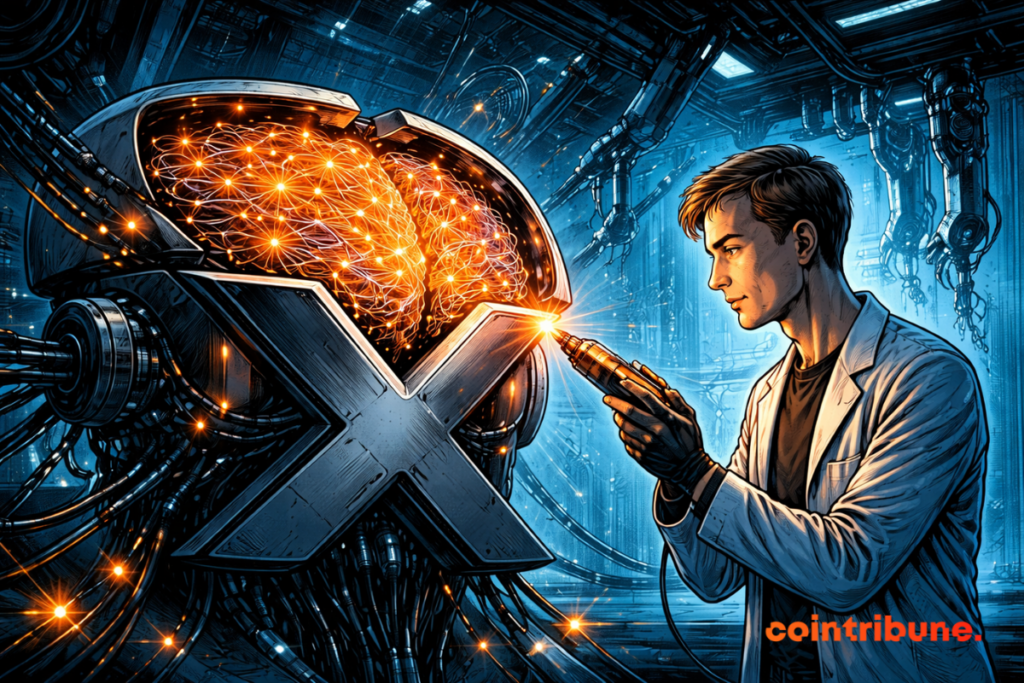
Algorithms decide what we see, but according to which rules? Vitalik Buterin, co-founder of Ethereum, directly challenges Elon Musk and denounces the opacity of X (ex-Twitter). In a context of mistrust towards centralized platforms, he proposes a radical alternative: auditing X’s algorithm thanks to blockchain and ZK-proofs. A strong stance that revives the debate on the governance of social networks in the Web3 era.
In Brief
- Vitalik Buterin directly criticizes Elon Musk for the centralized management of X (formerly Twitter).
- He accuses the platform of diverting freedom of expression for opaque and potentially abusive mechanisms.
- To remedy this, Buterin proposes using blockchain and zero-knowledge proofs (ZK-proofs) to audit the ranking algorithm.
- His proposals include timestamping interactions and delayed publication of the algorithm code.
Buterin challenges Musk and X on the issue of transparency
In a message published on X, Vitalik Buterin strongly criticized the way Elon Musk uses his platform, right after he presented a new solution for fee volatility on Ethereum.
He denounces a dangerous drift under the banner of freedom of expression : “Elon Musk, I think you should consider that making X a global totem for freedom of expression, then turning it into a death star for coordinated hate sessions, is actually harmful to the cause of freedom of expression“, he declared. This statement marks a turning point, as it is not a trivial criticism but a public disavowal of the current governance of X.
Indeed, Buterin did not just point out abuses. He also made a structured technical proposal aimed at making X’s ranking algorithm both transparent and tamper-proof, through cryptography and blockchain. He notably suggests :
- The use of ZK-proofs (zero-knowledge proofs) to prove that decisions made by the algorithm respect certain rules, without revealing users’ personal data ;
- Timestamping each post, like, and retweet on a public blockchain, to prevent any posterior manipulation or invisible censorship ;
- Delayed publication of the ranking algorithm’s code, with an announced delay of one to two years, to allow verification without immediately compromising internal mechanisms.
This vision was publicly supported by Davide Crapis, AI lead at the Ethereum Foundation, who stated : “if you want to claim that X is a platform for freedom of expression, you must disclose the optimization goals of your algorithm“.
He adds : “it must be readable by users, and adjustable“. A message that reinforces the idea that the Ethereum ecosystem now advocates for programmable transparency, based on technical mechanisms rather than blind trust in a centralized actor.
When centralized social networks show their limits
If Buterin’s intervention caused such a resonance, it is because it fits into a global context of distrust towards centralized social platforms.
Earlier this year, Meta blocked all links pointing to Pixelfed, a decentralized alternative to Instagram. These links were automatically marked as “spam” and removed, causing an uproar in the Web3 community.
The same treatment was reportedly reserved for other competitors like Mastodon. These decisions reinforce the feeling within the crypto ecosystem that web giants seek to neutralize all decentralized competition by unilaterally exerting their power.
In this climate, X’s policy to promote content judged “educational” or “informed” only amplified doubts. The measure, announced by Musk in early January, was criticized for its vagueness : who determines what is “informative”? Some users also accused the platform of restricting premium features for accounts expressing dissenting opinions.
Already in 2024, Buterin had called on Musk to respect freedom of expression and avoid suspending accounts for simple disagreement. These events add to recent revelations about the harmful effects of social networks on mental health. According to a study, Meta reportedly stopped internal research after finding correlations between Facebook use and increases in anxiety, depression, and feelings of loneliness.
By placing blockchain at the heart of the debate on algorithmic transparency, Vitalik Buterin sketches a convergence between social networks and Web3. Although his proposal remains theoretical, it highlights the urgency of rethinking digital governance. In the face of centralized abuses, the idea of distributed control of algorithms could well become one of the major challenges.
Maximize your Cointribune experience with our "Read to Earn" program! For every article you read, earn points and access exclusive rewards. Sign up now and start earning benefits.
Diplômé de Sciences Po Toulouse et titulaire d'une certification consultant blockchain délivrée par Alyra, j'ai rejoint l'aventure Cointribune en 2019. Convaincu du potentiel de la blockchain pour transformer de nombreux secteurs de l'économie, j'ai pris l'engagement de sensibiliser et d'informer le grand public sur cet écosystème en constante évolution. Mon objectif est de permettre à chacun de mieux comprendre la blockchain et de saisir les opportunités qu'elle offre. Je m'efforce chaque jour de fournir une analyse objective de l'actualité, de décrypter les tendances du marché, de relayer les dernières innovations technologiques et de mettre en perspective les enjeux économiques et sociétaux de cette révolution en marche.
The views, thoughts, and opinions expressed in this article belong solely to the author, and should not be taken as investment advice. Do your own research before taking any investment decisions.