What Solution Do We Have in the Face of a $128 Million Hack and Growing Threats?
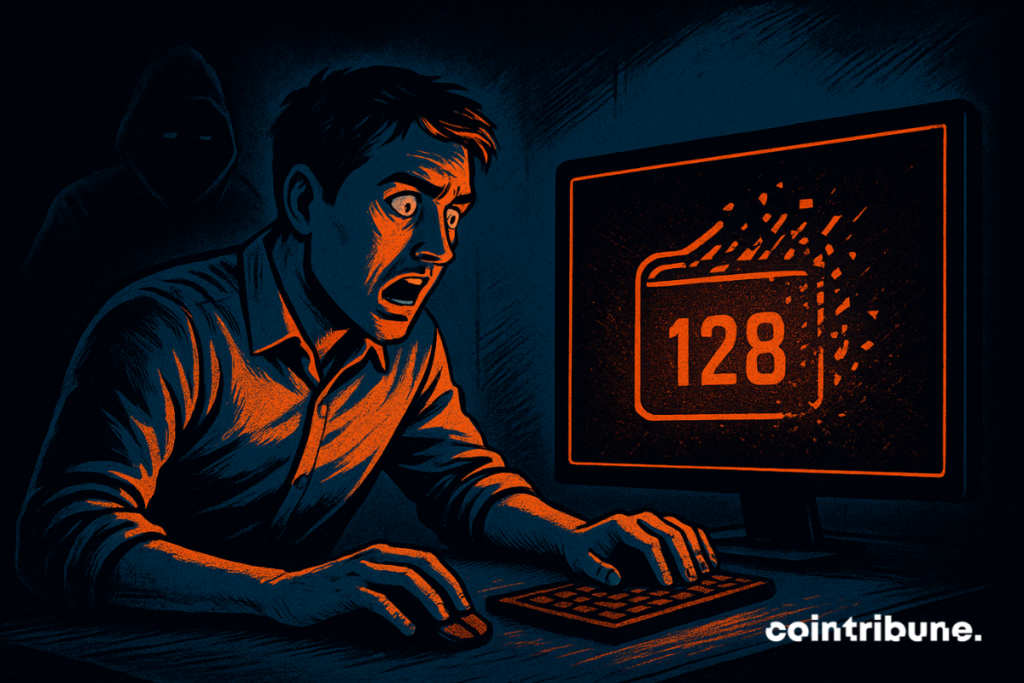
As the DeFi protocol Balancer suffers a devastating $128 million hack in less than 30 minutes on November 3, 2025, the crypto industry faces an existential question: how can blockchain infrastructure defend against both today’s sophisticated exploits and tomorrow’s quantum threats? With DeFi protocols losing over $3.1 billion in 2025 alone, Naoris Protocol emerges as a pioneering solution, having processed over 98 million post-quantum transactions and mitigated 463 million cyber threats on its testnet. The protocol’s innovative Sub-Zero Layer architecture and Dilithium-5 cryptography represent a fundamental shift in how the industry approaches security, transforming every device into a defensive node rather than a potential vulnerability.
In Brief
- The $128M Balancer hack exposes the limits of today’s DeFi security.
- Naoris Protocol delivers real-time, post-quantum protection with its Sub-Zero Layer and dPoSec consensus.
- With 98M post-quantum transactions and 463M threats blocked, Naoris proves quantum-safe defense is already possible.
Anatomy of a $128 Million Exploit: The Balancer Case
A Microscopic Vulnerability with Macroscopic Consequences
The root of the attack lay in an arithmetic precision loss in the _upscaleArray function, which scales token balances during invariant calculation. When balances were reduced to 8-9 wei, Solidity’s integer division logic caused rounding discrepancies that could reach ten percent per operation. This seemingly minor flaw transformed into a formidable weapon in the hands of sophisticated attackers.
The exploitation unfolded in three atomic phases within a single batchSwap call. The attackers first adjusted token balances near the rounding boundary to create a precision vulnerability, then triggered precision loss through micro-swaps that miscalculated invariants, and finally exploited price suppression to mint undervalued BPT tokens and redeem them for full-value assets.
The Multi-Chain Impact of a Unified Architecture
The attack affected Balancer on Ethereum, Base, Arbitrum, Avalanche, Optimism, Gnosis, Polygon, Berachain, and Sonic. This rapid propagation illustrates the systemic risk inherent in shared DeFi architectures. Balancer’s TVL (Total Value Locked) collapsed from $442 million to $214 million in 24 hours, ultimately reaching $182 million.
The stolen assets primarily comprised Ethereum derivative tokens: 6,850 osETH, 6,590 WETH, and 4,260 wstETH. The attacker demonstrated remarkable sophistication, using Tornado Cash to launder funds and avoiding any operational leaks that could reveal their identity.
A Coordinated but Partial Response
Facing this crisis, the DeFi ecosystem mobilized its resources. StakeWise DAO recovered approximately $19 million in osETH and $1.7 million in osGNO. The Berachain Foundation executed an emergency hard fork to trap stolen funds, while Sonic Labs froze the attacker’s wallets. Despite these efforts, the majority of funds remain unrecoverable, highlighting the limitations of current defense mechanisms.
How Naoris Protocol Could Have Prevented the Balancer Attack
Real-Time Threat Detection Through Swarm Intelligence
The Balancer hack exploited a subtle rounding error that accumulated through multiple transactions—exactly the type of attack that Naoris Protocol’s Decentralized SWARM AI is designed to detect and prevent. Naoris’s system would have identified the anomalous pattern of micro-swaps and precision manipulations in real-time, as its AI models continuously monitor for transaction patterns that deviate from normal behavior.
With Naoris’s dPoSec consensus, the first detection of unusual rounding patterns would have triggered an immediate network-wide alert, potentially pausing the affected pools before $128 million could be drained. The protocol’s continuous immutable verification ensures that every transaction, API connection, and process is measured under post-quantum backed consensus—making silent exploits virtually impossible.
The Browser Extension Defense Layer
Interestingly, Naoris offers a unique first line of defense through its Browser Security Node Extension, which transforms users’ devices into security validators. During the testnet phase ending November 12, 2025, this extension has already demonstrated its capability to detect and block malware, browser threats, and vulnerabilities at the user level—creating an additional defensive perimeter that traditional DeFi protocols lack.
The Quantum Threat: A Countdown for Crypto
The Acceleration of Quantum Capabilities
Beyond traditional vulnerabilities, an existential threat looms over the blockchain ecosystem: quantum computing. New research by Craig Gidney, a researcher at Google Quantum AI, shows that breaking widely used RSA encryption could require 20 times fewer quantum resources than previously believed.
Gidney now estimates that a quantum computer with fewer than one million noisy qubits could factor a 2048-bit RSA integer in less than a week—a drastic revision from his 2019 estimate that required 20 million qubits. While current machines like IBM’s Condor only have 1,100 qubits, the trajectory is clear and concerning.
The Impact on DeFi Protocols
The consequences of a successful quantum attack on blockchain would be catastrophic. If AI infiltrates blockchain systems, hacks could be invisible, stealthy, and systemic. Agents with fake memories could illegitimately move funds, compromise contract security, or corrupt DeFi protocols.
The danger is particularly acute for Bitcoin and Ethereum, which use elliptic curve cryptography (ECC). Only a few blockchains, such as Sui, Ethereum, and Algorand, are actively developing and testing post-quantum algorithms. This widespread inaction creates a vulnerability window that is rapidly narrowing.
Naoris Protocol: The Revolutionary Post-Quantum Defense Layer
Beyond Traditional Security: The Sub-Zero Layer Innovation
While traditional security solutions operate at the application layer, Naoris Protocol (NAORIS) has fundamentally reimagined blockchain security by creating the industry’s first Sub-Zero Layer. Following its successful $3 million strategic funding round led by Mason Labs and backed by Tim Draper of Draper Associates, the protocol launched its $NAORIS token on July 31, 2025, with a fully diluted valuation of $500 million on major exchanges including Binance Alpha, MEXC, and Gate.io.
What sets Naoris apart is its operation beneath all existing blockchain layers (L0 to L3), providing quantum-resistant security without requiring any hard forks or disrupting existing operations. This seamless integration means that any EVM-compatible blockchain can immediately benefit from Naoris’s protection—a critical advantage as the quantum threat accelerates.
The Revolutionary dPoSec Consensus Mechanism
Naoris’s groundbreaking Decentralized Proof of Security (dPoSec) consensus represents a paradigm shift from traditional centralized security models. Unlike conventional systems where adding more devices creates more vulnerabilities, Naoris’s approach creates a “security hive mind” where each additional node strengthens the entire network.
The mechanism works through continuous, real-time validation where every device monitors and validates every other device in the network. When one node detects a threat, it instantly updates and protects the entire mesh, creating collective defense through shared knowledge. This distributed intelligence has already proven its effectiveness, with the testnet blocking over 463 million cyber threats and processing 98 million post-quantum transactions.
Military-Grade Standards Meet Blockchain Innovation
Naoris Protocol’s post-quantum technology aligns with the most stringent international standards—NATO NCIA, ETSI, and NIST post-quantum cryptography standards—delivering military-grade validations for all on-chain transactions. The protocol uses Dilithium-5, one of the NIST-approved algorithms, creating an unbreakable signature system that will remain secure even when quantum computers achieve cryptographic relevance.
This isn’t theoretical—the U.S. government has already mandated that all digital systems transition to post-quantum cryptography, and Naoris was recently cited in a research submission to the SEC as the reference model for quantum-resistant blockchain infrastructure in the Post-Quantum Financial Infrastructure Framework (PQFIF).
Real-World Adoption and Strategic Partnerships
Naoris’s impact extends far beyond crypto. The protocol has won 12 out of 16 top-tier incubators and accelerator programs it participated in, competing against countries like South Korea, Austria, and Chile. These programs required custom Web3-based solutions tailored to specific industries with stringent security standards.
In October 2025, Naoris launched Naoris Ventures, a dedicated venture arm driving adoption of decentralized, post-quantum security infrastructure across critical global systems, including robotics, smart cities, energy, finance, defense, and AI systems. The company’s leadership team, including former IBM CTO David Holtzman as Chief Strategy Officer and former NATO Intelligence Committee Chairman Kjell Grandhagen, brings unparalleled expertise in cybersecurity and defense.
Transforming Web2 and Web3 Security Simultaneously
Unlike solutions that focus solely on blockchain, Naoris protects both Web2 and Web3 systems. The protocol secures:
- 3G, 4G, LTE, and 5G networks through real-time detection and remediation
- Smart devices and IoT ecosystems enhancing data protection and regulatory compliance
- Enterprise systems and cloud platforms without requiring infrastructure changes
- Blockchain validators, bridges, and DEXs with quantum-resistant protection
With 31 active projects under development across finance, telecom, energy, defense, and IoT sectors, Naoris is proving that post-quantum security isn’t a future concern—it’s a present necessity.
Artificial Intelligence: The New Frontier of DeFi Security
AI as Weapon and Shield
AI is already being used in advanced forms of cybercrime, capable of performing sophisticated attacks such as deepfake-based phishing, wallet key guessing, and automated smart contract exploitation. A report from Chainalysis revealed that AI-related scams increased by 300% in 2025.
However, AI also offers promising defensive solutions. Projects like Forta and OpenZeppelin deploy neural networks trained on past hacks to identify critical bugs in real time. On-chain analytics providers are integrating anomaly detection algorithms to flag suspicious wallet activity before losses accumulate.
Adoption Challenges
Despite these advances, no AI model yet claims to stop all protocol exploits. False positives, adversarial evasion, and on-chain composability remain open challenges. Effective integration of AI into DeFi security will require industry-wide coordination and substantial R&D investments.
Outlook: Naoris Protocol Leading the Quantum-Safe Revolution
The Urgency of Post-Quantum Transition
New migration guidance from NIST warns agencies that cryptographic upgrades will take years, not months, prompting early action on critical systems. Naoris Protocol has already solved this challenge, offering immediate integration without hard forks—a critical advantage that positions it as the go-to solution for protocols seeking rapid quantum-resistant upgrades.
A recent forecast from Market.US projects the quantum-safe encryption market will approach $10 billion by 2034, with a CAGR of 39.5%. With its first-mover advantage and proven technology, Naoris is positioned to capture a significant share of this explosive growth. The protocol’s mainnet launch planned for Q4 2025 will mark the transition from impressive testnet metrics to full-scale production deployment.
Naoris’s Competitive Advantages
What sets Naoris apart in the post-quantum race:
- Proven Scale: With over 3.3 million wallets already onboarded and 1 million security nodes active, Naoris has demonstrated production readiness far beyond theoretical proposals
- Institutional Validation: Being cited by the SEC as the reference model for quantum-resistant infrastructure provides unmatched credibility with regulators and enterprises
- Cross-Industry Application: From securing 5G networks to protecting IoT devices, Naoris’s versatility extends far beyond pure crypto applications
- Economic Incentives: The $NAORIS token creates a self-sustaining ecosystem where security contributions are rewarded, ensuring continuous network growth and strengthening
Recommendations for the Ecosystem
Facing these converging challenges, the industry must adopt a multi-layered approach:
- Immediate Audit: All protocols derived from or forking Balancer V2 must conduct a comprehensive review, focusing on swap logic, invariant calculations, and authorization/callback mechanisms
- Post-Quantum Transition: Protocols must begin planning for the integration of quantum-resistant algorithms, even if the threat seems distant
- AI-Based Defense: Invest in real-time anomaly detection systems and automated audits
- Ecosystem Coordination: Establish threat information sharing frameworks and coordinated response protocols
Naoris Protocol Points the Way Forward
The Balancer hack starkly illustrates the inadequacy of current security measures, while the approaching quantum threat demands immediate action. Naoris Protocol stands as the most comprehensive response to these converging challenges, having already demonstrated its capability through 98 million post-quantum transactions and 463 million blocked threats.
What makes Naoris particularly compelling is its immediate applicability—no hard forks required, seamless EVM integration, and protection that extends from blockchain to IoT devices. With backing from industry leaders like Tim Draper, recognition from the SEC as a reference model for quantum-resistant infrastructure, and a growing ecosystem of 31 active projects, Naoris isn’t just preparing for the future—it’s actively securing the present.
The industry faces a clear choice: continue with incremental security improvements that leave systems vulnerable to both current exploits and future quantum attacks, or embrace the paradigm shift that Naoris represents—where every device becomes a defender, every transaction is quantum-secure, and security grows stronger with scale rather than weaker. For protocols still using traditional security models, the question isn’t whether to adopt post-quantum defenses like Naoris, but whether they can afford to wait. As the $128 million Balancer hack demonstrates, the cost of inaction is measured not in years, but in minutes.
Maximize your Cointribune experience with our "Read to Earn" program! For every article you read, earn points and access exclusive rewards. Sign up now and start earning benefits.

The Cointribune editorial team unites its voices to address topics related to cryptocurrencies, investment, the metaverse, and NFTs, while striving to answer your questions as best as possible.
The views, thoughts, and opinions expressed in this article belong solely to the author, and should not be taken as investment advice. Do your own research before taking any investment decisions.