Ledger Expands Probe Into Suspicious Wallets in Berlin and Dubai
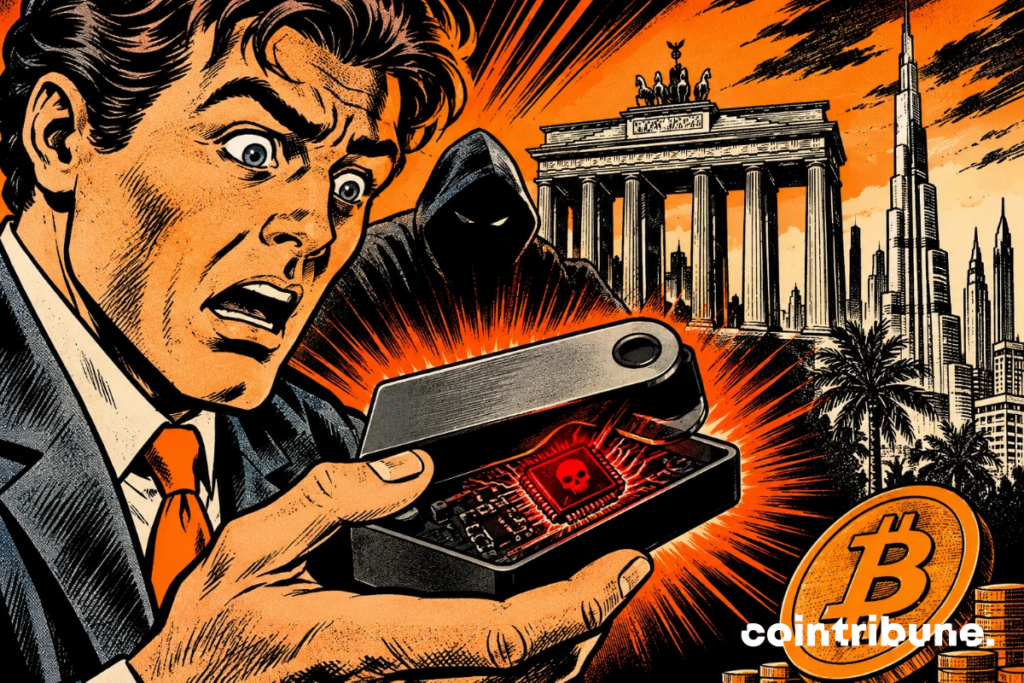
Ledger announced on November 18 that it had identified new tampered wallets in Berlin and opened an investigation into two reports in Dubai. All confirmed devices show the same physical modification, intended to steal the recovery phrase during their installation. In short, the problem does not come from the software, but from what is hidden inside the case.
In brief
- All confirmed devices show the same physical modification. No case involves a wallet purchased directly on ledger.com.
- In October, a Berlin customer had already pushed MediaMarktSaturn to suspend sales of these devices in Germany.
- Since January 2026, Ledger offers a physical inspection, including X-ray examinations, at its factory in Vierzon for purchases made through third-party resellers.
Ledger Wallets, the danger comes from the distribution chain
Ledger’s position is unambiguous. The company insists on the absence of a software flaw. “There is no flaw in the secure chip or the operating system, and no confirmed case involving a device purchased on ledger.com“, it states.
All compromised devices exhibit the same physical modification. The scenario is therefore particularly worrying: individuals open authentic wallets, add a malicious component, then put them back into circulation. The secure chip is not at fault. It is rather the product’s path before reaching the customer that is problematic.
Ledger currently speaks of a limited number of cases but expects to discover other devices. Its team examines each report and checks distribution records with its partners and law enforcement agencies.
In Dubai, a first case already has public traces. Mark Karpeles’ tracker, former Mt. Gox leader, lists a confirmed implant in a Ledger Flex purchased in the city. His report is dated November 16. Ledger is now trying to trace the journey of these devices with its distributors.
CryptoBilis, the reseller at the heart of suspicions
Investigations point to a common intermediary: CryptoBilis, a Southeast Asian distributor. According to its founder Arravind Prabu, the company changed ownership in March. This change occurred a few months before the discovery of the first tampered devices.
On its side, Trezor also traced the CryptoBilis trail. Its investigation on the Safe 5 revealed implants in three devices from this reseller.
On November 12, Trezor therefore reduced its distributor network by about 80% and published firmware designed to block identified implants.
The two manufacturers chose different responses. Trezor sharply tightened its commercial network and strengthened its software protections. Ledger, on the other hand, maintains its distribution channels while multiplying physical inspections. The question remains which approach will reassure users best.
What to do if your Ledger wallet seems suspicious?
Ledger first recommends a simple measure: immediately stop using the suspicious device. It should definitely not be used to create or restore a wallet.
Next, users must transfer their funds to a new wallet, created with a device purchased directly from Ledger’s official site. They should not reuse their old recovery phrase nor associated passwords. The company also recommends reporting the case to local authorities.
Moreover, customers who purchased their device from a third-party reseller since January 2026 in Berlin, Southeast Asia, or Dubai can request a physical inspection at the Vierzon factory. Ledger notably offers X-ray examinations, but this option remains limited in time.
Finally, the company recalls an essential rule: its support will never ask for the 24 recovery words. Neither a technician, nor an inspection, nor even a refund procedure justifies providing this information. If someone asks you for it, it’s probably not to help you.
This case reminds us that the security of a hardware wallet does not depend solely on its chip or software. It also relies on the entire distribution chain. After all, a device may leave the factory intact and have some shady adventures before reaching its owner. And unlike an ordinary package, this one potentially carries all your savings.
Maximize your Cointribune experience with our "Read to Earn" program! For every article you read, earn points and access exclusive rewards. Sign up now and start earning benefits.

Passionné par le Bitcoin, j'aime explorer les méandres de la blockchain et des cryptos et je partage mes découvertes avec la communauté. Mon rêve est de vivre dans un monde où la vie privée et la liberté financière sont garanties pour tous, et je crois fermement que Bitcoin est l'outil qui peut rendre cela possible.
The views, thoughts, and opinions expressed in this article belong solely to the author, and should not be taken as investment advice. Do your own research before taking any investment decisions.