Americans Embrace AI Tools But Fear The Risks
Artificial intelligence has settled into the digital daily life of Americans at a breakneck speed. Work, research, content creation: its uses are multiplying and reshaping habits. However, this massive adoption does not equate to endorsement. A new survey reveals a striking gap between use and perception, as a majority of Americans continue to view AI with suspicion. This gap, at a time when regulators and tech giants are accelerating on the subject, reveals a lasting tension around this technological revolution.
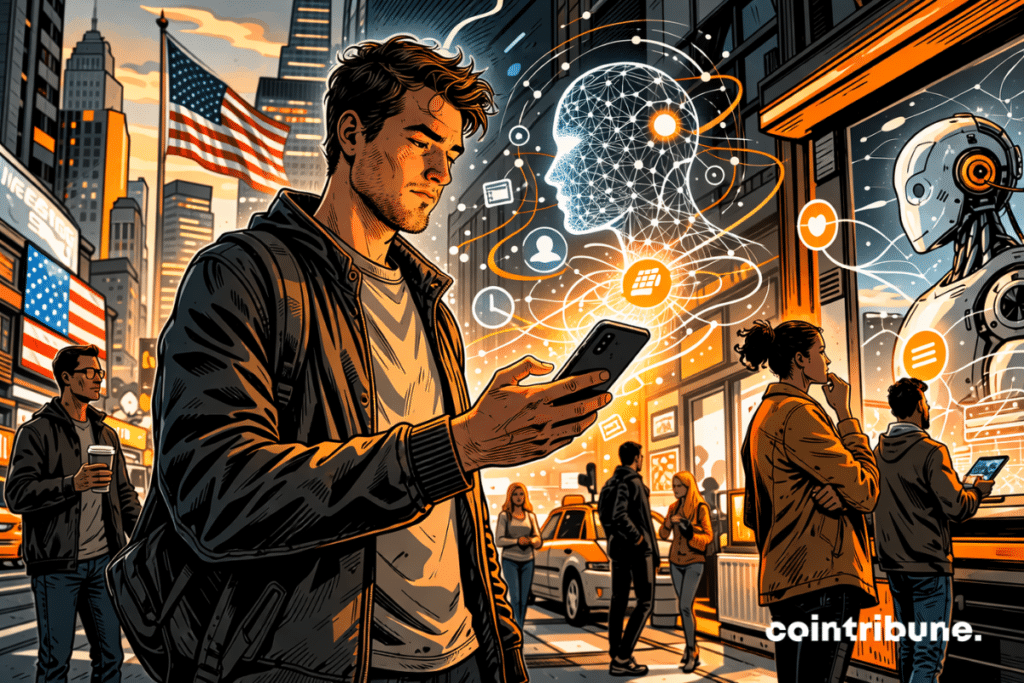
In Brief
- Artificial intelligence is establishing itself in the digital daily life of Americans with rapidly increasing adoption.
- A national survey however reveals a marked gap between the massive use of AI and a largely negative perception.
- The data show a majority of citizens believing the risks of AI outweigh its benefits.
- The level of trust in these technologies remains low, including in sensitive sectors such as health and finance.
Growing adoption, but negative perception of AI
The survey conducted from February 27 to March 3, 2026, by NBC News, in partnership with Hart Research Associates and Public Opinion Strategies, among 1,000 registered voters, reveals a mixed dynamic around artificial intelligence in the United States. The study observes a clear increase in the use of AI tools in daily life, a sign of rapid integration of these technologies into the public’s digital habits.
At the same time, this rise in use is not accompanied by equivalent enthusiasm. Opinion indicators reveal a generally unfavorable perception of AI, with a level of skepticism surpassing the positive opinions expressed by respondents.
The main quantified findings of the survey are :
- “56 % of respondents said they had used an AI platform such as ChatGPT, Microsoft Copilot, or Google Gemini in the past few months”, a figure up from 48 % in December 2024 and 53 % in August 2025 ;
- “Only 26 % of surveyed voters view AI positively”, compared to “46 % who have a negative perception”, resulting in a net favorability score of -20 points ;
- The survey highlights that this level of unpopularity places artificial intelligence behind several political personalities and institutions traditionally viewed unfavorably by public opinion ;
- A majority of respondents (57 %) believe that “the risks of artificial intelligence outweigh its benefits”, while 34 % hold the opposite view.
Deep concerns
Beyond raw numbers and on-chain data, other studies offer a more nuanced perspective on the reasons for skepticism. A YouGov poll conducted at the end of 2025 indicates that only 5 % of American adults say they “have a great deal of trust in AI”, while 41 % express a high level of distrust toward these technologies. This trust deficit is particularly marked in sensitive sectors such as health and finance, where a majority of respondents state they would never trust an AI system to act on their behalf without human supervision.
These feelings are not limited to specific domains. A significant portion of the population also fears that AI could generate misleading content or deepfakes, with 58 % of those surveyed saying they are “very concerned” about the spread of AI-manipulated videos or audios. These concerns reflect a structural skepticism toward AI applications, which goes beyond simple technological tools to touch on social, political, and ethical issues.
Between massive adoption and persistent mistrust, artificial intelligence is settling in without yet convincing. Use is advancing faster than trust, fueling a public debate set to intensify. Some experts even warn of an unexpected risk: intensive AI use could cause brain wiring issues, a symbol of the concerns surrounding this technological revolution.
Maximize your Cointribune experience with our "Read to Earn" program! For every article you read, earn points and access exclusive rewards. Sign up now and start earning benefits.

Diplômé de Sciences Po Toulouse et titulaire d'une certification consultant blockchain délivrée par Alyra, j'ai rejoint l'aventure Cointribune en 2019. Convaincu du potentiel de la blockchain pour transformer de nombreux secteurs de l'économie, j'ai pris l'engagement de sensibiliser et d'informer le grand public sur cet écosystème en constante évolution. Mon objectif est de permettre à chacun de mieux comprendre la blockchain et de saisir les opportunités qu'elle offre. Je m'efforce chaque jour de fournir une analyse objective de l'actualité, de décrypter les tendances du marché, de relayer les dernières innovations technologiques et de mettre en perspective les enjeux économiques et sociétaux de cette révolution en marche.
The views, thoughts, and opinions expressed in this article belong solely to the author, and should not be taken as investment advice. Do your own research before taking any investment decisions.