Archive July 2026
Sun 19 Jul 2026 ▪
3 min read
▪
by
Eddy S.
American records are broken by the Chinese AI Kimi K3. The alarm is raised by controversial tech star David Sacks. In the AI war, is the United States losing? The battle is far from over due to oppressive rules and open-weight models.
Sun 19 Jul 2026 ▪
4 min read
▪
by
Ghiles A.
For more than fifteen years, a question has continued to fuel discussions in the cryptocurrency ecosystem: what really happened with Bitcoin and its creator, Satoshi Nakamoto? While debates around the BIP-110 proposal still divide the community, Adam Back revisited this enigma during an exchange on X. The Blockstream CEO believes that no conclusion can be drawn about the fate of Satoshi Nakamoto, recalling that the circulating hypotheses rely solely on speculation.
Sun 19 Jul 2026 ▪
6 min read
▪
by
Luc Jose A.
The XRP Ledger (XRPL) is about to reach a major technical milestone. A patch designed to evolve the management of its ledger is about to be activated, subject to final approval by network validators. While consensus seems largely achieved, a quieter reality draws attention. Many node operators have still not performed the required update. This gap reveals a often overlooked challenge of the blockchain ecosystem: the sustainability of a network depends as much on its governance as on the ability of its infrastructure to evolve without disruption.
Sun 19 Jul 2026 ▪
7 min read
▪
by
Luc Jose A.
A few hours before the World Cup final played this Sunday at MetLife Stadium, another match is taking place far from the field. Prediction platforms have already recorded $5.57 billion in cumulative trading volumes, an unprecedented level that far exceeds the world of traditional sports betting. This rush to predictive markets illustrates the rise of a new ecosystem where decentralized finance, regulated event contracts, and football passion converge. Such a shift could redefine how the public anticipates major sporting events.
Sun 19 Jul 2026 ▪
5 min read
▪
by
Ghiles A.
Tokenization is gradually establishing itself as one of the main axes of transformation in financial markets. After several years dedicated to experiments around blockchain, many institutions now seem to be preparing for a larger-scale deployment. A new survey conducted by Broadridge among 200 North American executives illustrates this evolution. The results show that financial players increasingly view tokenized assets as an element set to integrate into market infrastructures, rather than a mere innovation in the testing phase.
Sun 19 Jul 2026 ▪
5 min read
▪
by
Evans S.
Michael Saylor rejects BIP 110, which he presents as a threat to Bitcoin neutrality. The proposal aims to limit for one year several transactions containing data unrelated to payment. For Saylor, the real danger is not spam. It is the idea that a usage disagreement could modify the consensus rules.
Sun 19 Jul 2026 ▪
6 min read
▪
by
Mikaia A.
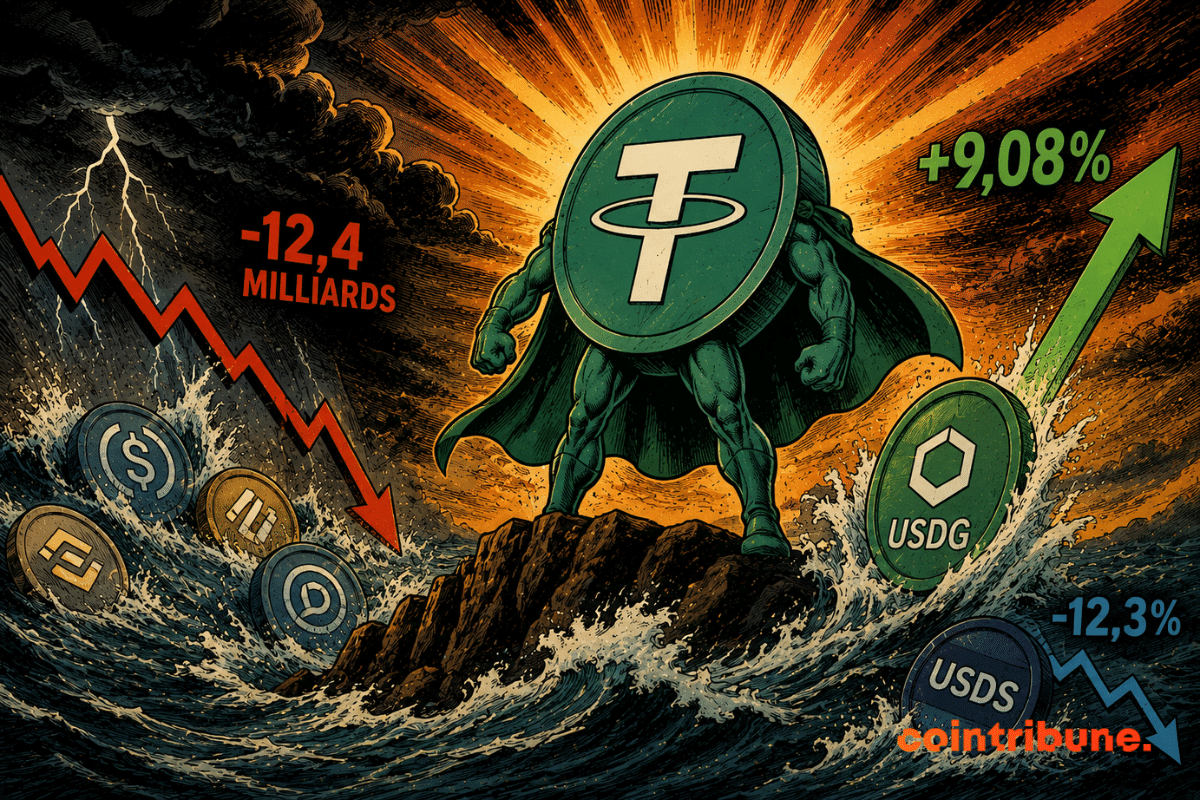
12 billion fled stablecoins. Tether doesn’t flinch, Sky Dollar crashes, Global Dollar explodes. Hyundai and Visa join the dance.
Sun 19 Jul 2026 ▪
5 min read
▪
by
Luc Jose A.
Are Shiba Inu investors losing interest? Data indicates a possible change. SHIB movements on trading platforms show a long-term decline in activity on the memecoin. Thus, routine trading patterns lead to capital shifts and can affect the memecoin's price.
Sun 19 Jul 2026 ▪
4 min read
▪
by
Fenelon L.
The Blockchain company Consensys accidentally employed a developer linked to North Korea, who accessed some of its systems for a month. The incident, revealed on July 17, 2026, did not result in any theft of funds or malicious code according to the company. How far do North Korean networks infiltrate development teams in the sector?
Mon 20 Jul 2026 ▪
4 min read
▪
by
Ghiles A.
The cryptocurrency sector continues to attract cybercriminals, who perfect their methods to deceive their victims. This time, Kaspersky highlights a new malware framework designed to compromise digital wallets and steal sensitive data. Analysis shows attackers combine social engineering, fake GitHub projects, and remote access techniques to infiltrate devices. Meanwhile, another campaign targets Web3 developers through fake job offers posted on LinkedIn, revealing an evolution of threats.