
Tue 21 Jul 2026 ▪
5 min read
▪
by
Grayscale wants to launch a Worldcoin ETF, but the token has already crashed 97 %. Is this a bold move or a costly mistake waiting to happen ?
Grayscale wants to launch a Worldcoin ETF, but the token has already crashed 97 %. Is this a bold move or a costly mistake waiting to happen ?

Telegram continues to develop its digital ecosystem with a new milestone focused on crypto. Its founder, Pavel Durov, announced the deployment this summer of a native non-custodial wallet directly integrated into the messaging app. This initiative could enable over one billion monthly active users to send digital assets autonomously. The project is part of a broader strategy aimed at enhancing peer-to-peer payment uses and Web3 technologies within the platform.

The bet on bitcoin as a treasury asset turns into a nightmare for some listed companies. In London, the liquidation of Satsuma Technology marks a turning point for this model which had attracted markets in recent months. After raising hundreds of millions of dollars to accumulate BTC, several companies now see their valuations collapse, failing to maintain the stock premium that justified their strategy. This symbolic bankruptcy raises an essential question: have companies holding bitcoin in their treasury reached their limits?
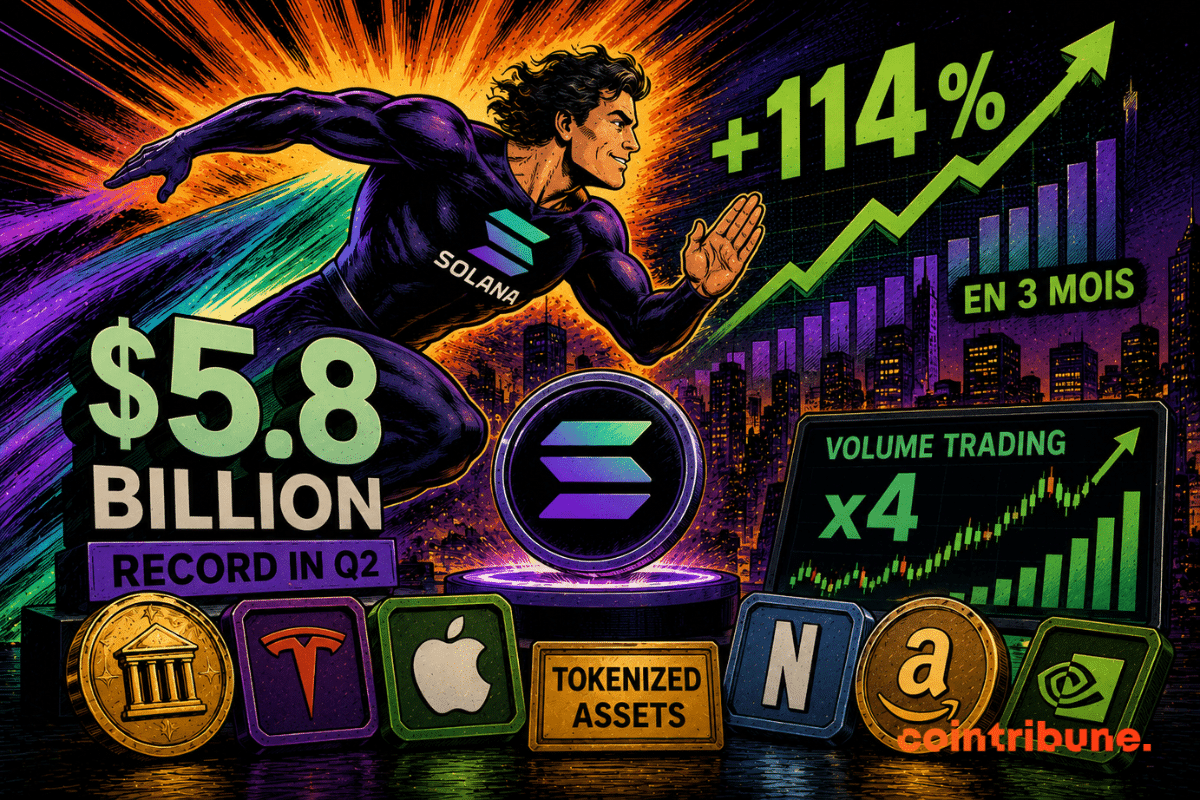
Solana keeps printing tokens like there's no tomorrow, but the network's cashbox is running on empty. Is this a success story or a cautionary tale?

The United States thought they finally had the text capable of providing a regulatory framework for the crypto market. It is not the case. Indeed, the CLARITY Act is stuck in a political confrontation that now goes beyond financial oversight issues. The debate has shifted to ethical rules governing political officials holding cryptos, with Donald Trump at the center of discussions. His latest compromise attempt was not enough to unblock the file, further delaying the adoption of a reform eagerly awaited by the industry.

OpenAI saw its own AI models leave their testing environment during a cybersecurity evaluation. Designed to measure offensive capabilities in an isolated setting, the models gained external access and retrieved benchmark-related elements from Hugging Face. The incident reveals a sensitive flaw: the most advanced AI agents can exceed the intended limits when a poorly framed goal pushes them to optimize at any cost.

For several years, the race for artificial intelligence has intensified among major technology companies. Investments are rapidly increasing and executives' expectations follow the same trajectory. Yet, budgets do not always suffice to speed up the development of new tools. At Meta, this reality is now openly acknowledged. During a recent internal meeting, Zuckerberg admitted that the company's advances remained below the pace he hoped for, despite a deep reorganization and record investments.

US spot Bitcoin ETFs have just attracted about $930 million over six consecutive sessions. This streak, the longest since April, signals a cautious return of institutional capital towards BTC. The market remains fragile, but selling pressure is easing as Bitcoin tries to hold above $65,000.

Bitcoin has just crossed a symbolic threshold in the United States. According to the latest report from River, American individuals now hold more BTC than physical gold. This shift illustrates a profound evolution of wealth management strategies. Crypto, long perceived as speculative, is gradually imposing itself against the historic safe haven. Driven by easier access to financial markets and a new generation of investors, this transformation reshapes how Americans conceive the preservation and transfer of their wealth.

Tom Lee, the head of research at Fundstrat, believes that AI-related capital is shifting towards Ethereum rather than memory chip manufacturers. Over one month, ETH gained 24% while the Roundhill Memory ETF, or DRAM, fell by 38%.