Binance challenges explosive WSJ investigation on Iran-linked flows
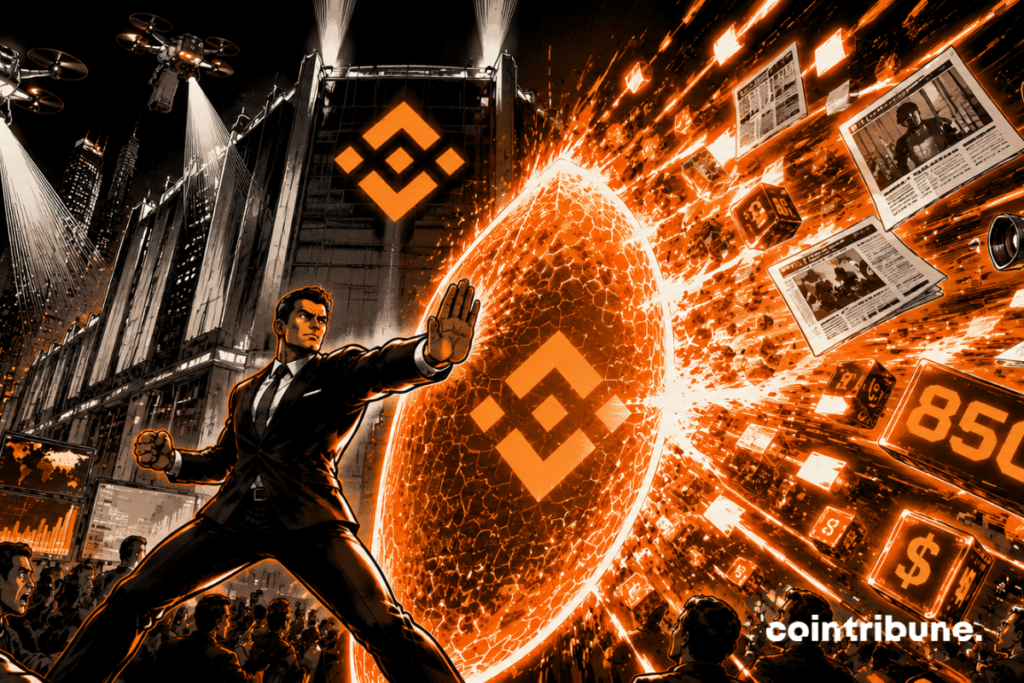
The standoff between Binance and the Wall Street Journal takes on a new scale. The world’s leading crypto platform firmly rejects accusations of 850 million dollars in transactions linked to Iran and U.S.-sanctioned entities. Can Binance really turn the page on its regulatory problems in the United States?
In Brief
- Binance denies the Wall Street Journal’s accusations concerning Iran-linked flows.
- Richard Teng asserts that the mentioned transactions did not concern any sanctioned individuals at the time of the events.
- The case revives concerns about Binance’s compliance following the record $4.3 billion fine paid in 2023.
Binance counterattacks against the Wall Street Journal’s accusations
Thursday, May 22, 2026, the Wall Street Journal publishes an investigation directly targeting Binance. According to the American newspaper, 850 million dollars would have transited through the platform via accounts linked to Babak Zanjani, an Iranian financier re-sanctioned by the United States in January 2026. The presumed final destination: the Islamic Revolutionary Guard Corps (IRGC), an organization classified as a terrorist group by Washington.
What strikes in the WSJ investigation is the level of detail. Zanjani allegedly operated through his company Zedcex, but also via accounts of his sister, his partner, and a director, all connected from the same devices. An architecture difficult to attribute to mere coincidence.
Even more embarrassing for Binance: the Journal claims that its own compliance teams detected a login attempt from Tehran at the end of 2024. More than a dozen internal alerts supposedly followed. Its investigators would have recommended the immediate closure of the accounts and their reporting to authorities. Yet, the accounts reportedly remained open for more than a year.
The WSJ goes even further. It alleges that the Iranian central bank transferred 107 million dollars in crypto to Binance accounts in 2025, and that a foreign law enforcement agency traced about 260 million dollars in direct transactions between Binance and financiers linked to Iranian terrorism.
Regulatory pressure still threatens the crypto industry
In response to these revelations, Richard Teng did not wait. The next day, Friday, May 23, he posted a direct rebuttal on X, calling the article “fundamentally inaccurate.” His defense line relies on three arguments:
- Binance has never authorized transactions with sanctioned persons.
- The suspicious activities identified would have occurred before those individuals were sanctioned.
- Binance launched its own investigation even before the WSJ contacted it, yet its findings were not included in the article.
However, the context complicates this defense. In 2023, Binance pleaded guilty to money laundering and sanctions violations, paying a record fine of 4.3 billion dollars with a promise to fully reform its compliance system. According to the WSJ, the alleged Iranian fund flows resumed shortly after this settlement.
It should also be recalled that this is not the first skirmish between the two parties. In February 2026, the Journal had already claimed that Binance closed an internal investigation involving nearly one billion dollars linked to Iranian armed groups. Binance then denied it.
In March, the U.S. Department of Justice reportedly opened a new investigation into the use of Binance to circumvent Iranian sanctions. The platform responded by filing a defamation lawsuit against the WSJ, seeking damages and a jury trial.
This conflict goes beyond simple media disagreement: it reveals the limits of compliance in a crypto sector still undergoing regulatory construction. While Binance brandishes its “zero tolerance” policy against illicit activities, repeated WSJ allegations and increasing DOJ interest suggest the case is far from closed. The credibility of the world’s largest crypto exchange is at stake.
Maximize your Cointribune experience with our "Read to Earn" program! For every article you read, earn points and access exclusive rewards. Sign up now and start earning benefits.

Passionné par le Bitcoin, j'aime explorer les méandres de la blockchain et des cryptos et je partage mes découvertes avec la communauté. Mon rêve est de vivre dans un monde où la vie privée et la liberté financière sont garanties pour tous, et je crois fermement que Bitcoin est l'outil qui peut rendre cela possible.
The views, thoughts, and opinions expressed in this article belong solely to the author, and should not be taken as investment advice. Do your own research before taking any investment decisions.