Bitcoin Hashrate Surges As Difficulty Heads Higher
The computing power of the Bitcoin network has regained the threshold of 1 zettahash per second, its highest level in nearly seven months. This rebound strengthens the protocol’s security, but it also announces a new increase in difficulty that could reduce the revenues of the least competitive mining companies.
In Brief
- Bitcoin’s hashrate exceeds 1 zettahash per second, its highest level in nearly seven months.
- This increase strengthens the network’s security but intensifies competition among mining companies.
- Mining difficulty increased by 5.92% and could rise another 5 to 6% by the end of October.
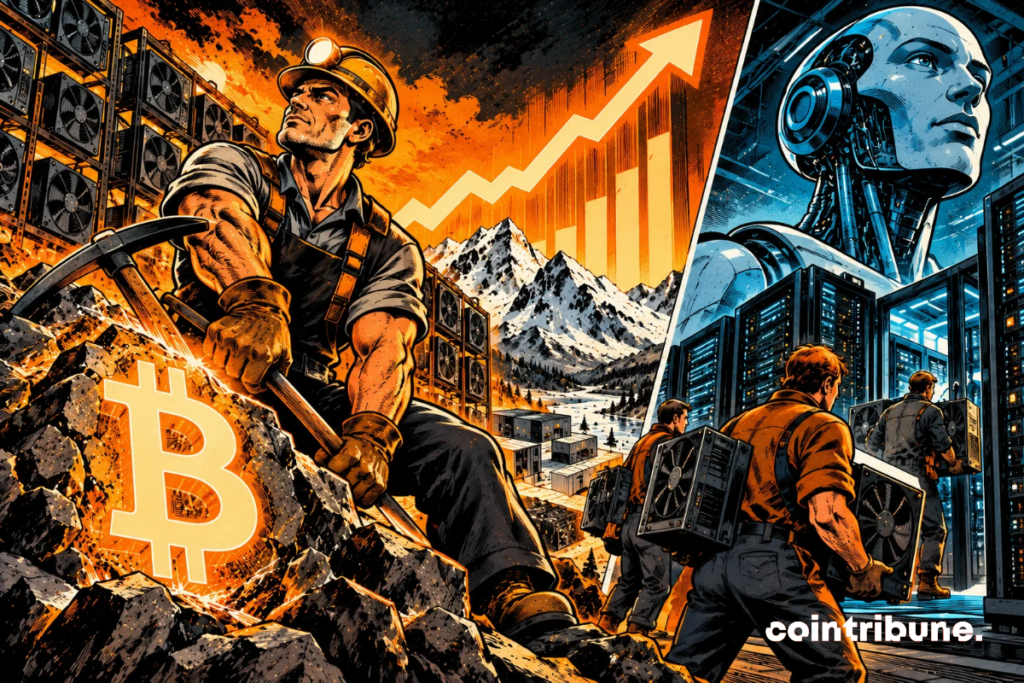
- Despite some companies transitioning to AI, the network’s computing power continues to grow.
- More efficient machines and low-cost electricity favor the most competitive mining companies.
Bitcoin’s hashrate returns to 1 zettahash per second
The seven-day average Bitcoin hashrate has exceeded 1000 exahashes per second, that is 1 zettahash per second. This computing power had not been observed since March 3, according to data cited by BlocksBridge Consulting.
The hashrate measures the number of calculations that machines dedicate each second to mining. Its increase complicates an attack on the network, as a malicious actor would have to mobilize even more computing power to attempt to alter the transaction history.
The key indicators show the magnitude of the rebound :
- The seven-day average hashrate exceeds 1000 EH/s ;
- Difficulty increased by 5.92% on October 16 ;
- It now reaches 140.58 trillion ;
- A new increase between 5% and 6% remains possible by the end of October ;
- Hashprice hovers around 37 dollars per PH/s per day ;
- Blocks are produced faster than the ten-minute target.
Bitcoin automatically adjusts its difficulty every 2016 blocks, about every two weeks. When more machines join the network, blocks are found faster. The protocol then increases the difficulty to bring their average interval back to ten minutes.
Estimates of the next adjustment remain provisional. They evolve according to the speed of production of the latest blocks. If the expected increase is confirmed, the difficulty could gain about 11% over two consecutive periods.
BlocksBridge notes :
This is far from the respite the remaining miners could have hoped from the migration to AI.
Each operator will have to share the same rewards with a higher overall computing power.
The shift to artificial intelligence does not reduce competition
Several listed mining companies have begun converting part of their infrastructure into data centers for artificial intelligence and high-performance computing. These activities can offer more predictable contracts than mining, whose revenues depend on the BTC price, transaction fees, and difficulty.
This relocation has not, however, caused a sustained drop in hashrate. Private companies, machine manufacturers, or operators located in regions with cheaper electricity seem to have absorbed capacity abandoned by some listed groups.
ASIC improvements also contribute to the movement. New machines produce more calculations for comparable energy consumption. The hashrate can thus increase without requiring a proportional rise in energy consumed.
Ki Young Ju, founder of CryptoQuant, estimates that “miners are running at full capacity”. According to him, the industry is gradually moving away from a venture capital-like model to become a heavy industry dominated by large companies and institutional investors.
US-listed companies would now control between 35% and 40% of the global power. However, this figure should be treated with caution because the exact origin of the hashrate remains difficult to determine behind mining pools.
Enhanced Security, But Margins Still Fragile
An increase in hashrate improves Bitcoin’s defenses, but it does not guarantee miners’ profitability. When difficulty rises, a machine maintaining the same power gets a smaller share of rewards.
Hashprice, which measures the expected daily revenue for a unit of computing, remains close to 37 dollars per petahash. At this level, older equipment or equipment powered by expensive electricity can become unprofitable.
Recent models, with efficiency around 9 to 12 joules per terahash, have better margins. Operators must also secure competitive electricity rates. The exact price to remain profitable depends on the hardware, financial costs, cooling, and bitcoin price.
The return of hashrate does not therefore mean all miners are doing better. It mainly shows that available power is finding new owners or that the most efficient players are increasing their production. The next difficulty increase will confirm this trend, but it could also accelerate the exit of the most fragile operators.
Maximize your Cointribune experience with our "Read to Earn" program! For every article you read, earn points and access exclusive rewards. Sign up now and start earning benefits.

Diplômé de Sciences Po Toulouse et titulaire d'une certification consultant blockchain délivrée par Alyra, j'ai rejoint l'aventure Cointribune en 2019. Convaincu du potentiel de la blockchain pour transformer de nombreux secteurs de l'économie, j'ai pris l'engagement de sensibiliser et d'informer le grand public sur cet écosystème en constante évolution. Mon objectif est de permettre à chacun de mieux comprendre la blockchain et de saisir les opportunités qu'elle offre. Je m'efforce chaque jour de fournir une analyse objective de l'actualité, de décrypter les tendances du marché, de relayer les dernières innovations technologiques et de mettre en perspective les enjeux économiques et sociétaux de cette révolution en marche.
The views, thoughts, and opinions expressed in this article belong solely to the author, and should not be taken as investment advice. Do your own research before taking any investment decisions.