Dive into the world of bitcoin (BTC), the digital currency revolution that is shaping the future of online transactions. Since its mysterious genesis, bitcoin has emerged as the undisputed pioneer of cryptocurrencies, redefining the way we perceive and use money. This section goes beyond historical exploration by guiding you on how to secure and use your bitcoins wisely.
Discover how to secure your valuable digital assets, focusing on advanced security practices to protect your wallet effectively. Furthermore, explore practical tips on how to make the best use of your bitcoins, be it for day-to-day transactions or long-term investments. Whether you're a novice or an insider, our comprehensive guide will accompany you every step of the way on your Bitcoin journey.
You can also visit the main category Crypto for a more in-depth exploration of the cryptocurrency ecosystem.
The security of cryptocurrencies is a major issue for all investors and players in the crypto industry. Indeed, in a context where cryptocurrency scams are becoming more common, learning to keep your bitcoins safe is essential. In this guide, we will present you with the 10 best tips to ensure the security of your bitcoins and other cryptocurrencies. Follow these steps to minimize risks and protect your valuable digital assets.
The crypto investor, in their perpetual quest for new techniques to protect and secure their assets, must consider various Bitcoin security tips [Insert link to the main Bitcoin security tips page]. Among these, multisig security, which involves the use of multisignature wallets or "multisig wallets," takes a prominent place. Indeed, establishing multiple levels of approval to spend your bitcoins proves to be an infallible method to safeguard them against hacking attempts. Therefore, it is imperative to deeply understand the concept of multisig security. Let’s explore this concept together.
The bitcoins contained in your wallets do not benefit from optimal protection with the traditional passwords associated with them. Therefore, you need to add an extra layer of security such as two-factor authentication (2FA) to prevent any intrusion and better protect your assets. In this guide dedicated to Bitcoin security tips [Insert link to Bitcoin Security Tips main page], we will explore the critical importance of security in the cryptocurrency universe, and how implementing two-factor authentication can play a crucial role in protecting your valuable digital assets such as bitcoin. We will review the different 2FA methods, their implementation on the most popular exchange platforms, and the available alternatives to further strengthen the security of your accounts.
Bitcoin presents enormous financial potential and has a strong impact on the global economic system. Its strengths make it increasingly popular, attracting more attention from investors and even governments. Nevertheless, many enthusiasts of this digital asset have questions about its privacy. In this article, we reveal the different privacy elements related to the use of Bitcoin, whether you are a regular user or a curious investor. You will also receive some security tips from Bitcoin security to better navigate the cryptocurrency ecosystem.
Bitcoin scams are an unfortunate reality in the booming world of cryptocurrencies. Indeed, the exponential success of Bitcoin and other cryptocurrencies has given rise to a multitude of frauds and scams. Therefore, Bitcoin security [Insert link to the main Bitcoin security page] has become a crucial issue. In this article, we will provide you with the necessary tools to detect these frauds and to ensure the security of your investments in Bitcoin and other cryptocurrencies.
In the world of cryptocurrencies, security is of paramount importance for investors, especially when they are exposed to Bitcoin. This article examines a recurring and perilous issue for users of these assets: phishing scams. We will explain how to identify attempts at this Bitcoin scam [Insert link to Main Bitcoin Scam Page], and provide you with protection tips. You will also receive some recommendations on the steps to take in case you fall victim to this type of attack.
Since their emergence, cryptocurrencies have revolutionized the financial world by offering a decentralized alternative to traditional financial systems. If you are new to the crypto sphere and not yet familiar with the specifics and concepts, particularly Bitcoin soft wallets, this is an opportunity to learn a bit more. A Bitcoin soft wallet is, in fact, a software wallet that stores your private keys and allows you to send, receive, and store bitcoins. It contrasts with a hard wallet, which is often a physical device. Learn more about the concept of a Bitcoin soft wallet, an essential tool for anyone interested in cryptocurrencies and blockchain. What is a soft wallet, how does it work, and what are the advantages and disadvantages of using this type of wallet?
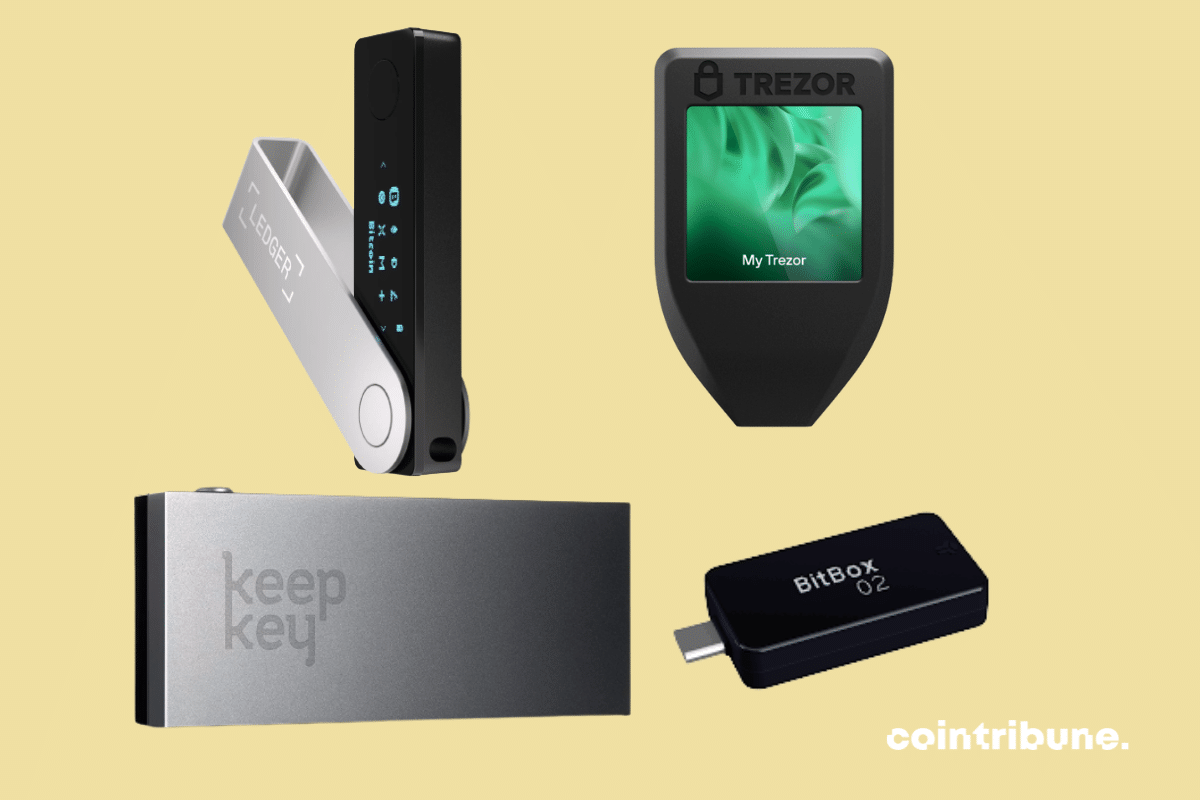
In the world of cryptocurrencies, security is paramount. Users are constantly looking for solutions to protect their digital assets, as hacks are prevalent. It is in this context that hard wallets, also known as hardware wallets, have gained popularity. These physical Bitcoin wallets [Insert link to the main Bitcoin Wallet page] come in the form of either a USB stick or a smart card. They are more valued than online wallets because they allow for complete control over your cryptocurrencies. In this article, we will explore in detail what Hard Wallets are, how they work, and how to choose the best one for your needs.
In the ever-evolving world of blockchain technology and cryptocurrencies, adopting best security practices such as regularly updating your Bitcoin software is imperative. Just as updates are crucial for devices like your smartphone or computer, they are equally important for your Bitcoin software. Although this task may seem tedious, its importance should never be underestimated. Through this comprehensive guide, we aim not only to highlight the significance of these updates but also to share essential Bitcoin security tips. We will explore how to identify the software that needs updating and how to perform these updates safely and effectively.
If you have just started to explore the world of Bitcoin, you have surely come across various technical terms that are difficult to understand. Today, we will discuss Proof of Work, the consensus mechanism that ensures the security of Bitcoin. But you are probably wondering: How does it work? Discover in this guide all the inner workings of the most widely used validation mechanism in cryptographic systems.
The entire technology surrounding the Bitcoin ecosystem continues to fascinate us. Every element and feature is important for ensuring the proper functioning, security, and decentralization of the network. This is the case with the hashrate, which is a measure of the total computational power required by the Bitcoin network to validate new blocks. The hashrate is essential for the Bitcoin mining process. But what exactly is it? How does it work? And above all, what is it used for?
Victim of its success, the Bitcoin network faces congestion problems: cryptocurrency transactions take longer to be validated and fees are higher. It is in this context that Segwit came into being, bearing the improvement proposal number BIP141. This is a soft fork of Bitcoin that helps to address the scalability of the network. In addition to improving the performance of the ecosystem, this upgrade has also brought better security to transactions. But how does Segwit actually improve the BTC blockchain? We explain everything in this comprehensive guide.
The Bitcoin blockchain is a distributed ledger technology that underpins the first and most iconic cryptocurrency: Bitcoin. Since its creation in 2009, it has sparked global interest, challenging our conception of money and transactions. With its growth, debates have intensified around its environmental impact and its ability to scale without compromising its principles of decentralization. This article reveals the mechanisms of the Bitcoin blockchain, clarifying its complex functioning and practical implications for users and society as a whole.
Since its creation in 2009, Bitcoin (BTC) has faced scalability challenges and transaction fees. To address this, several hard forks have emerged, including Bitcoin Cash (BCH). This digital currency was born with the aim of improving scalability and transaction efficiency. Let's take a deep dive into the history of BCH, its advantages and disadvantages, as well as its potential uses and development prospects.
Bitcoin, with its decentralized architecture, has revolutionized the world of blockchain. However, its operation relies on considerable electricity consumption, raising questions about the sustainability of this system. This article explores the energy mechanisms of Bitcoin and examines the factors influencing its electricity consumption. It assesses the environmental consequences of Bitcoin's energy consumption and discusses potential solutions for a greener future.
Bitcoin SV (BSV), which stands for "Bitcoin Satoshi Vision", is a cryptocurrency that emerged in November 2018 following a hard fork of the Bitcoin Cash (BCH) protocol. Since then, it has become one of the most valued cryptocurrencies in the crypto market, with an increasingly growing adoption. To better understand the potential of this digital currency, let us take a closer look at its origins, technical characteristics, ecosystem, as well as the investment opportunities and challenges it faces.
Bitcoin Diamond (BCD) is one of the major blockchain projects that emerged following a hard fork of Bitcoin (BTC). It was designed with the aim of overcoming certain challenges faced by its predecessor. In this article, we will examine the history, functionality, and potential benefits of BCD. Finally, we will explore how Bitcoin Diamond could evolve and develop in the future within an increasingly competitive cryptocurrency market.
Bitcoin Gold (BTG) is a cryptocurrency project that resulted from a hard fork of Bitcoin (BTC). It was created with the aim of making mining more accessible. Since its launch, this project has been adopted by several exchange platforms and crypto wallets. In this article, we will explore in detail the origins of BTG and how it works. We will also attempt to determine what the future holds for this digital asset, which has been gaining ground in the cryptocurrency market for several years.
Bitcoin (BTC) has revolutionized the financial world by offering a decentralized alternative to traditional online transactions. Since its launch in 2009, it has attracted a large community of users and developers, but it has also faced debates on how to evolve and develop. To resolve these differences, some members of the community have chosen to fork the Bitcoin blockchain. What does this term refer to? What are the different types of forks and how do they work? What are the impacts for users and miners? Let’s explore the world of forks together to deepen our understanding of how Bitcoin operates.
Data security is a crucial issue, especially in a digital world where hacking and privacy breaches are becoming increasingly prevalent. To ensure the protection of digital files, one of the most effective means is the use of hashing algorithms. These have the particularity of transforming any type of data into a unique digital fingerprint that preserves its integrity. In this article, we will explain how this fingerprint is calculated for a file. For this practical case, we will use SHA-256, the hashing algorithm used by the Bitcoin protocol. But first, let's explore the fundamentals of hashing in general, and SHA-256 in particular.
Merkle trees are a fundamental element of blockchain technology. They are used by most protocols, starting with Bitcoin, which relies on the Proof-of-Work consensus mechanism. However, they are utilized by most protocols to ensure the security and integrity of data on the network. If you are interested in the queen of cryptocurrencies, you have probably heard of them, but without really grasping how they work. In this article, we will explain to you precisely and in detail what Merkle trees are and their utility for the Bitcoin network. You will also discover the limitations and prospects of this technology.
In the last few decades, the music industry has changed massively with the emergence of digital downloading, streaming services and social media, which has changed how artists market and place value back on their work. But with all these advances, many musicians still struggle with fair payment, especially from streaming platforms that pay pennies per stream. With the rise of cryptocurrency, however, a potential solution to this long-standing issue is emerging: Bitcoin.
He is one of those who have marked the history of bitcoin. Mark Karpelès was the CEO of the cryptocurrency exchange platform Mt. Gox, once a market leader, which nonetheless went bankrupt under the most deplorable conditions. But beyond this notorious label, he also played an important role in the development of Satoshi Nakamoto's project. From "bitcoin baron" to pariah, let's explore the atypical journey of this geek who made global headlines in 2014.
Hal Finney, rumored to be the true Satoshi Nakamoto, is an iconic figure in the history of Bitcoin (BTC). He is the recipient of the first Bitcoin transaction, and his commitment to the project was considerable. An experienced developer and privacy advocate, discover the person behind this icon of the cryptocurrency industry.
Before the history of Bitcoin (BTC) began, several projects attempted to create a new form of anonymous, decentralized digital currency. Although they were unsuccessful, they laid the ideological, technological and economic foundations for the operation of the pioneering cryptocurrency. In this article, we take a look at the ancestors of Satoshi Nakamoto's currency.
A prominent figure in the crypto community, Gavin Andresen is a major player in the history of Bitcoin (BTC). After the disappearance of Satoshi Nakamoto, he took the reins of the project and shaped it into what we know today. This earned him the nickname "the man who built Bitcoin." In this article, we delve into the journey of this brilliant figure who greatly contributed to the rise of the pioneer of cryptocurrencies and continues to shape the structure and evolution of the crypto world globally.
Bitcoin was born in one of the most tumultuous financial contexts the United States, indeed the whole world, has ever known. From 2007 to 2009, with the subprime crisis, a feeling of mistrust towards governments and banks gripped the population, leading them to question the entire monetary system.
Simple, eclectic and bold, the bitcoin (BTC) logo is the very emblem of the monetary revolution. But what do we really know about it? What does it stand for? Has the queen of cryptocurrencies always sported this charismatic and vigorous visual identity? What are the origins of this iconic orange background and white color? These are just some of the questions we'll be answering in this post.
One might think that the world of combat sports and that of crypto are quite distinct. However, a recent announcement reiterates the many emerging links between the two universes. A former kickboxing world champion has announced his intention to invest a colossal sum in Bitcoin.