







Press release

Mon 16 Mar 2026 ▪
3 min read
Paris, March 143, 2026 – Following the announcement that Token 2049 Dubai will not take place as planned, many companies across the digital asset sector are now reconsidering their plans for the spring conference season.

Fri 13 Mar 2026 ▪
4 min read
VICTORIA, Seychelles, March 12, 2026 — BYDFi announced the integration of its perpetual futures market data into TradingView, allowing traders to access real-time prices and crypto market signals directly within TradingView charts. This integration promotes more efficient workflows…

Fri 13 Feb 2026 ▪
10 min read
Consensus Hong Kong 2026, held from February 10–12 at the Hong Kong Convention and Exhibition Centre, wrapped its second edition after three days of high-impact programming that attracted 11,000 registered attendees representing over 122 countries and regions.

Wed 04 Feb 2026 ▪
4 min read
For years, blockchain conferences have been dominated by crypto-native narratives. Protocols talking to protocols, builders talking to builders. Paris Blockchain Week 2026 takes a different approach.

Thu 22 Jan 2026 ▪
3 min read
Crypto portfolio management platform adds real-time position monitoring for three major perpetual trading protocols

Tue 20 Jan 2026 ▪
10 min read
The crypto market faced a sharp correction in the final quarter of 2025, with total market capitalization plunging -23.7% to finish at $3.0 trillion. This marked a -10.4% Year-on-Year decline, crypto’s first annual downturn since 2022. While the quarter saw a brief all-time high of $4.4 trillion, a historic $19 billion liquidation event in October, sent prices slumping. Despite the price retreat, volatility pushed average daily trading volumes to a yearly high of $161.8 billion, while the stablecoin sector climbed +48.9% annually to hit a record $311.0 billion.

Fri 16 Jan 2026 ▪
6 min read
Singapore, 16 January 2026 – Veera, a crypto-powered financial services platform focused on inclusion and usability, has raised a total of $10 million across its pre-seed and seed funding rounds to accelerate product development and to expand access to on-chain financial services globally.

Thu 15 Jan 2026 ▪
8 min read
Las Vegas, NV, [15 January 2026] – High Roller Technologies, Inc. (“High Roller”) (NYSE: ROLR), a publicly listed global operator of premium online casino brands, today announced a strategic collaboration with Power Protocol to explore next-generation Web3-enabled engagement models. The initiative will…
Tue 13 Jan 2026 ▪
23 min read
Outset Data Pulse continues to map global shifts in the crypto mediascape. Following our in-depth reports on Asia, Latin America, and individual European subregions, we now turn our focus to Europe as a whole, examining how crypto-native and mainstream outlets performed across Eastern and Western Europe in Q3 2025 amid regulatory execution and changing discovery dynamics.

Tue 30 Dec 2025 ▪
5 min read
Miami, Florida, USA — As blockchain payments gain enterprise adoption, privacy has become a critical requirement rather than a feature. Addressing this shift, Fhenix introduced Privacy Stages — a new framework for assessing onchain privacy — and demonstrated its capabilities through Fhenix402, a private implementation of Base’s x402 payments that makes transaction amounts fully confidential while remaining fast and intuitive.

Mon 16 Mar 2026 ▪
4 min read
▪
by
The largest American bank reaches a decisive milestone. JPMorgan Chase now allows its institutional clients to pledge bitcoin and Ethereum to obtain loans. A decision that, seemingly technical, sends a strong signal to the entire global financial sector.
Mon 16 Mar 2026 ▪
3 min read
▪
by
What if the Internet collapsed tomorrow? A recent study reveals that Bitcoin would survive even a massive failure of 72% of submarine cables. Discover why the crypto queen is designed to withstand the worst scenarios.
Mon 16 Mar 2026 ▪
4 min read
▪
by
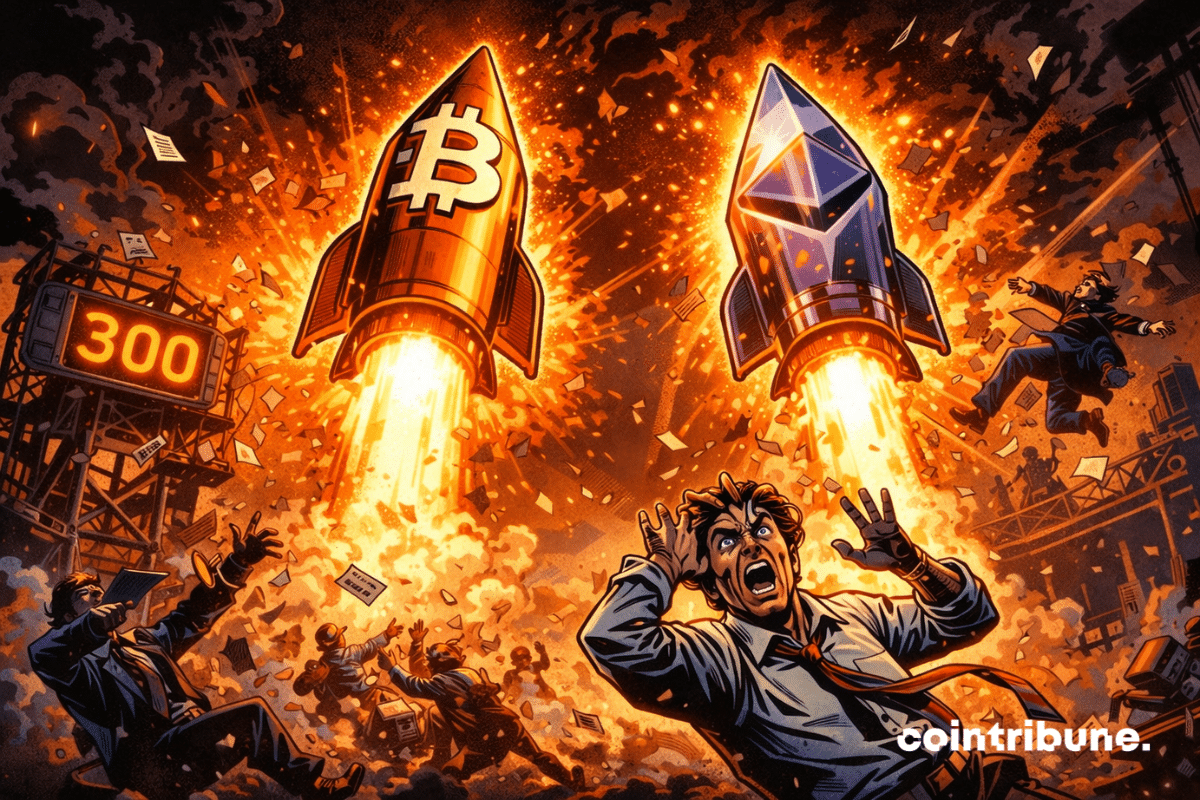
The crypto market reopened the week with a brutal move. Bitcoin surpassed 73,000 dollars on March 16, while Ether regained the 2,200 dollar zone. At the same time, nearly 300 million dollars of short positions were liquidated within 24 hours, which accelerated the rise.

Mon 16 Mar 2026 ▪
4 min read
▪
by
Bitcoin regains strength as the rest of the market moves with much more hesitation. Amid geopolitical tension in the Middle East, the asset is having its best week since September 2025. This movement is not only based on a technical rebound. It also relies on the return of institutional flows and on a dynamic that is beginning to distinguish bitcoin from other major assets.

Mon 16 Mar 2026 ▪
4 min read
▪
by
A new controversy shakes the Bitcoin ecosystem. The BIP-110 proposal, aimed at limiting certain data recorded on the blockchain, provokes an open confrontation between developers and historical figures of the network. Designed to curb the rise of inscriptions linked to Ordinals and Runes, this protocol modification triggers strong criticism. Among them, Adam Back, a pioneer of the cypherpunk movement, denounces a true "regression" for Bitcoin. Behind this technical debate lies a central question: how far can bitcoin evolve without betraying its fundamental principles?

Mon 16 Mar 2026 ▪
3 min read
▪
by
Transparency of public blockchains is both their strength and their limitation. Every transaction is visible, a feature that still deters some businesses and institutions. The XRP Ledger could soon provide an answer to this dilemma. A key contributor to the XRPL ecosystem has revealed the outlines of a development based on Zero-Knowledge Proofs, a technology that allows validating a transaction without disclosing the sensitive data it contains. This is a breakthrough likely to change how privacy is viewed on the XRP network.

Mon 16 Mar 2026 ▪
3 min read
▪
by
Bitcoin hides a strategic move: whales are buying while retail investors are selling. Preparing for a new cycle?
Mon 16 Mar 2026 ▪
6 min read
▪
by
American senators prefer bankers' quarrels to crypto laws. Result: the CLARITY Act is rotting in drawers. Meanwhile, DeFi waits. Patience.

Sun 15 Mar 2026 ▪
3 min read
▪
by
For years, crypto investors have followed an almost immutable rule: when bitcoin takes off, altcoins eventually explode too. This phenomenon, called altseason, has long shaped market cycles. However, this pattern might belong to the past. The explosion in the number of tokens and the redistribution of capital are disrupting the market balance. Some industry leaders now talk about shorter cycles and brutal rotations. Is altseason disappearing?

Sun 15 Mar 2026 ▪
3 min read
▪
by
Bitcoin could soon experience a historic turning point thanks to a reform of Basel banking rules. If current constraints are eased, banks could finally adopt the crypto queen and trigger an unprecedented influx of liquidity.
Sun 15 Mar 2026 ▪
6 min read
▪
by
The former British Prime Minister finds out that a friend got scammed by a crypto fraud. Logical conclusion according to BoJo: it's the bitcoin's fault. Saylor sets the record straight.

Sun 15 Mar 2026 ▪
3 min read
▪
by
Market reversals often occur when pessimism reaches its peak. While uncertainty dominates the financial markets, one signal draws analysts' attention: bitcoin now outperforms American stocks. In a recent analysis, Coinbase Institutional believes the crypto market may have reached a "peak of pessimism," a pivotal moment when investor sentiment is at its lowest. This divergence between bitcoin and Wall Street revives the debate about a possible change in dynamics for cryptos.

Sun 15 Mar 2026 ▪
4 min read
▪
by
The Ethereum Foundation has just monetized a small part of its reserve. The operation remains limited in volume, but it says a lot about the Foundation's new financial discipline and the rise of crypto treasury companies.

Sun 15 Mar 2026 ▪
4 min read
▪
by
The most used DeFi protocol in the world is going through an unprecedented turbulence zone. The deployment of Aave V4 on Ethereum, presented as a major breakthrough for the crypto ecosystem, has instead opened deep fractures within its own organization. Between dramatic departures, catastrophic transaction and governance war, Aave is currently playing one of the most delicate parts of its history.

Sun 15 Mar 2026 ▪
4 min read
▪
by
The Bitcoin market is changing its face. This time, the driving force does not come from a simple speculative rally, but from the rising power of publicly traded companies accumulating BTC in their treasury. According to Adam Back, this group could soon absorb up to ten times the newly mined daily supply. The idea may seem extreme. However, it is based on a mechanism already visible in the market.
Sun 15 Mar 2026 ▪
4 min read
▪
by
While stock markets waver under the impact of geopolitical tensions, bitcoin follows an opposite trajectory. The leading crypto shows a strong weekly performance, surpassing stock indices in a climate of global uncertainty. This divergence once again attracts the attention of institutional investors. Thus, Michael Saylor's company Strategy could have a financial leverage of 776 million dollars to strengthen its BTC purchases. Between strategic accumulation and a tense macroeconomic context, several signals suggest that bitcoin could enter a new market phase.

Sat 14 Mar 2026 ▪
3 min read
▪
by
The interest of institutional investors in cryptos continues to grow, but not all assets enjoy the same enthusiasm. As crypto ETFs multiply, the strategies of traditional finance giants offer valuable insight into market priorities. BlackRock, the world’s largest asset manager, has just provided a clear answer: for the vast majority of investors, two assets dominate flows. According to the company, most demand for crypto ETFs is now concentrated on bitcoin and Ethereum, while other cryptos remain largely behind.

Sat 14 Mar 2026 ▪
5 min read
▪
by
A billionaire who earned 30% annually without ever losing announces the death of banks. Stablecoins will devour everything. Even the dollar trembles on its century-old foundations.

Sat 14 Mar 2026 ▪
5 min read
▪
by
American spot Bitcoin ETFs have just sent a signal that the market had been waiting for several weeks. For the first time in 2026, they have recorded five consecutive sessions of net inflows. During this sequence, about $767 million were absorbed by these products, marking a visible return of institutional demand for bitcoin.

Sat 14 Mar 2026 ▪
3 min read
▪
by
On-chain data suggests a possible bullish move for Ethereum. Investor accumulation analysis reveals a low resistance area that could pave the way to 2,800 dollars if certain technical levels are breached. This setup is based on the purchase price distribution of ETH holders. Yet, derivative markets send a more cautious signal. Between accumulation momentum and trader hesitation, Ethereum is entering a decisive phase of its market cycle.

Sat 14 Mar 2026 ▪
5 min read
▪
by
Bitcoin does not necessarily lack strength. What it mainly lacks is a clear signal. According to Glassnode, this signal comes from a simple yet incredibly useful indicator: the share of bitcoins held by short-term investors still in profit. As long as this gauge remains below 50%, the idea of a sustained rebound remains fragile.

Sat 14 Mar 2026 ▪
4 min read
▪
by
The duel between the two largest stablecoins in the market has just taken an unexpected turn. According to a report from investment bank Mizuho, Circle's USDC has surpassed Tether's USDT in adjusted volume since the start of the year, a key indicator for measuring the actual usage of these currencies. This shift does not yet challenge Tether's dominance in capitalization, but it reveals an evolution in how these assets are used. The stablecoin market is now divided between financial power and actual usage.
Sat 14 Mar 2026 ▪
4 min read
▪
by
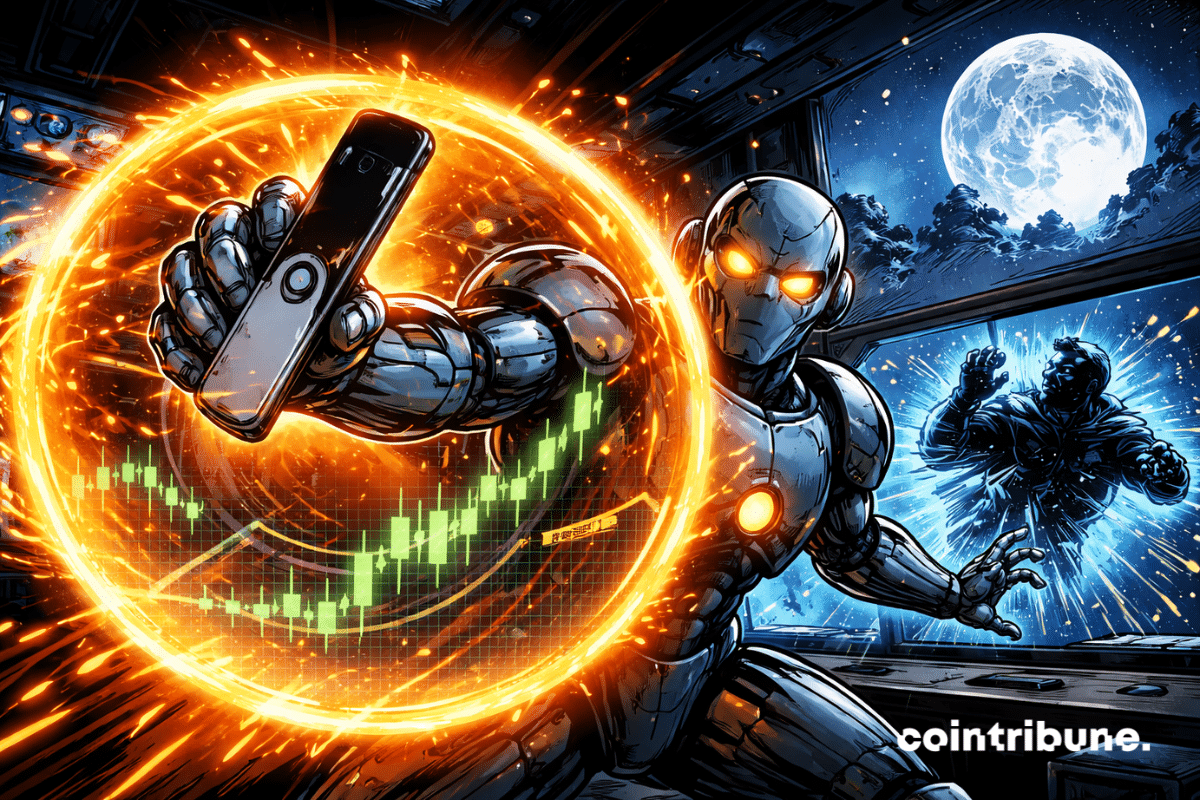
Automated trading by artificial intelligence is booming. But it carries a well-known Achilles' heel: private key security. Two giants in the crypto sector have partnered to address this, and their solution could redefine industry standards.

Sat 14 Mar 2026 ▪
3 min read
▪
by
Address poisoning attacks on Ethereum have already caused losses exceeding 80 million dollars. CZ, the head of Binance, accuses Etherscan of not protecting crypto users enough. Who is responsible? Discover the solutions to avoid becoming the next victim.

Sat 14 Mar 2026 ▪
4 min read
▪
by
The crypto market is regaining color, and it is the tokens linked to artificial intelligence that are leading the dance. In 24 hours, the AI sector jumped 5 %, raising its total capitalization to 15.1 billion dollars. A recovery that is no coincidence.
The leader in blockchain news, CoinTribune is an independent media outlet, not linked to any blockchain or crypto asset based project or advising, audit, fund management entity. We strive for the highest objective journalistic standards in French, English and Spanish focusing on alternative investments such as blockchain projects and crypto assets.
Request my coaching
Recherche
Subscribe to newsletter
Contact us