Donald Trump Targets Venezuela Oil Revival as U.S. Takes Control After Maduro’s Removal
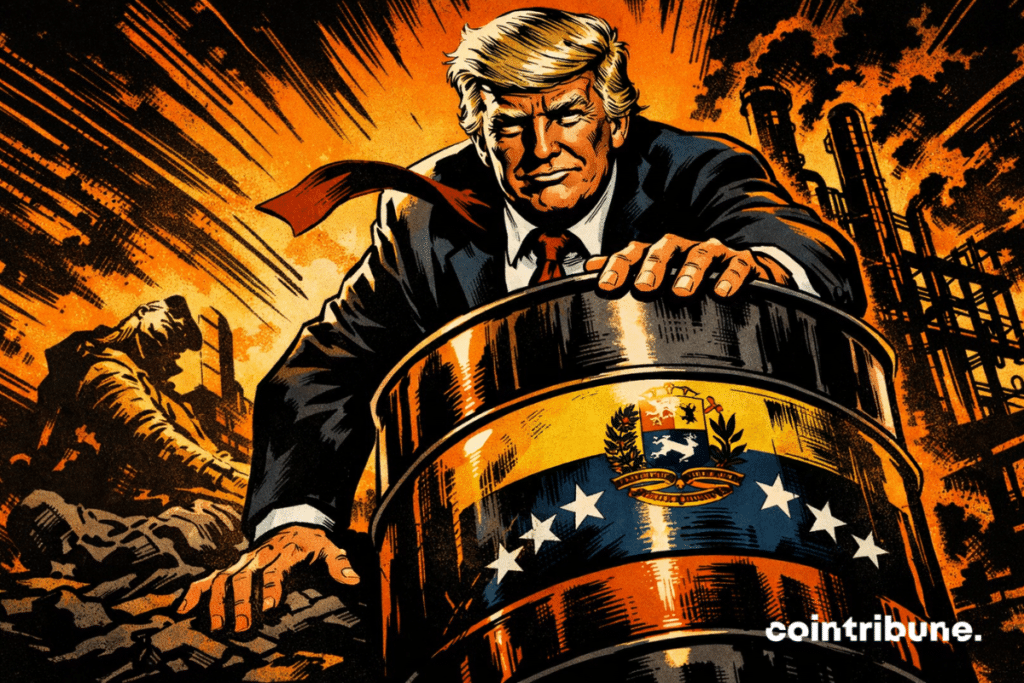
U.S. President Donald Trump said Saturday that reviving Venezuela’s oil industry will be a central focus of Washington’s intervention following the removal of President Nicolas Maduro, framing the effort as both a geopolitical and economic play. Speaking from Mar-a-Lago, Trump said U.S. energy companies are expected to take a leading role in repairing the country’s oil infrastructure while the United States oversees a temporary transition of power.
In brief
- Trump says U.S. oil companies will repair Venezuela’s damaged energy infrastructure under a U.S.-led transition period.
- Washington plans to keep the oil embargo in place while overseeing production, exports, and revenue flows during the interim.
- Chevron continues exports as uncertainty over leadership raises concerns about contracts, payments, and supply stability.
- Analysts expect limited market impact due to global oversupply and strong U.S. and OPEC+ production levels.
U.S. Policy Points to Oil-Led Recovery Plan for Venezuela
The comments followed an overnight military operation in which U.S. forces detained Maduro and his wife, Cilia Flores. Both face drug-trafficking indictments in New York. Trump said the United States would administer Venezuela “with a group” until conditions allow for a formal transfer of authority, though details around governance and oversight remain unclear.
Oil investment, Trump said, could open a path for U.S. firms to recoup losses tied to years of sanctions and underinvestment. Major energy companies are expected to fund repairs to wells, pipelines, and export terminals, with repayment tied to future production rather than direct state financing.
We’re going to get the oil flowing the way it should be. We’ll be selling large amounts of oil to other countries, many of whom are using it now, but I would say many more will come.
Donald Trump
Early policy signals suggest Washington plans to maintain tight control over Venezuela’s oil sector during the interim period:
- U.S. oil majors positioned to lead infrastructure repairs and field development.
- The existing oil embargo remaining in place despite the leadership change.
- Energy firms covering rebuilding costs upfront, with repayment through output.
- U.S. oversight of production and exports during the transition.
- Crude shipments aimed at global buyers once volumes recover.
Uncertainty Over Oil Revenue Control Raises Risks for Buyers
Venezuela holds the world’s largest proven oil reserves, estimated at 303 billion barrels, or roughly 17% of global supply, according to the U.S. Energy Information Administration. Production, however, has fallen sharply over the past two decades. Output peaked at nearly 3.5 million barrels per day in the late 1990s and has since dropped to about 800,000 barrels per day, according to Kpler data.
Chevron remains the only major U.S. producer still operating in the country. The company exported about 140,000 barrels per day during the fourth quarter of 2025, according to Kpler. Chevron said it continues to comply with all applicable laws while prioritizing staff safety and asset protection.
China and Russia continue to hold stakes in Venezuela’s energy sector, raising questions around contract enforcement and asset control. Russian-linked firms secured a 15-year extension on joint ventures last November, shortly before Maduro’s removal. Analysts say those agreements could face review as authority in Caracas shifts.
For markets, the immediate risk lies in uncertainty over who controls export revenue and settlement flows. Buyers may delay payments or demand additional assurances, particularly while sanctions remain active. Some analysts say Chevron’s ongoing exports could help limit near-term supply disruptions.
Analysts See Limited Near-Term Market Impact From Venezuela Supply Risks
Key market risks to watch include:
- Security conditions around oil fields, pipelines, and ports.
- Potential export pauses from non-U.S. operators.
- A global oil surplus dampening price sensitivity.
- Continued OPEC+ output increases adding pressure.
- Record U.S. production levels offsetting supply shocks.
Oil markets entered 2026 under pressure. Brent crude fell about 19% in 2025, while U.S. crude dropped nearly 20%, marking the sharpest annual decline in five years. Rising OPEC+ output and steady gains in U.S. shale production have weighed on prices, limiting the market impact of geopolitical disruptions.
Analysts say any short-term Venezuelan supply risk may be absorbed by excess global capacity. Over a longer horizon, however, renewed production could alter trade flows if political control stabilizes and sanctions policy shifts. The pace of U.S. involvement, alongside responses from China and Russia, is expected to shape Venezuela’s position in global energy and commodity markets.
Maximize your Cointribune experience with our "Read to Earn" program! For every article you read, earn points and access exclusive rewards. Sign up now and start earning benefits.

James Godstime is a crypto journalist and market analyst with over three years of experience in crypto, Web3, and finance. He simplifies complex and technical ideas to engage readers. Outside of work, he enjoys football and tennis, which he follows passionately.
The views, thoughts, and opinions expressed in this article belong solely to the author, and should not be taken as investment advice. Do your own research before taking any investment decisions.