Draper links bank risks to bitcoin adoption strategy
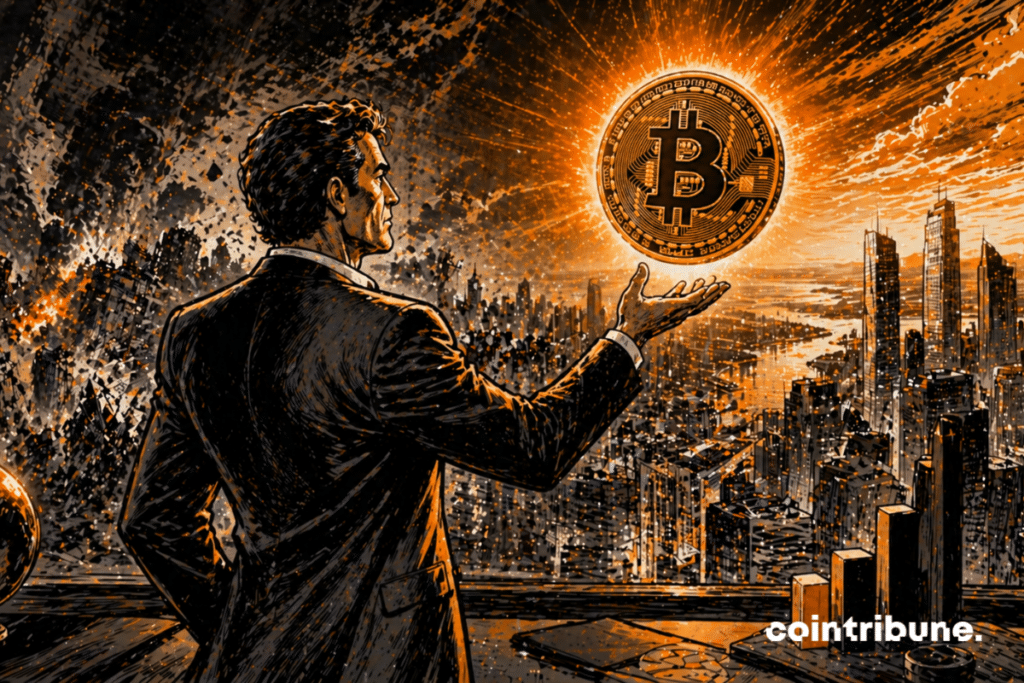
During the Bitcoin 2026 event, Tim Draper warned the audience by stating that not holding bitcoin now amounts to taking a risk. The investor, known for his strong positions, directly links the absence of BTC to financial vulnerability in an environment marked by banking failures and monetary uncertainties. His remarks reignite the debate on the place of bitcoin as a protective asset against the fragilities of the current financial system.
In brief
- Tim Draper issues a clear warning about the risks of not including bitcoin in a financial strategy.
- He outlines concrete recommendations for both individuals and businesses to better protect themselves.
- Recent banking crises reinforce his analysis of vulnerabilities within the financial system.
- The investor questions the strength of traditional currencies in the face of bitcoin’s rise.
Tim Draper calls to secure reserves in bitcoin
While bitcoin has just fallen below $76,000, Tim Draper left no room for ambiguity in his diagnosis. During his speech, he states: “you should be worried if you do not own bitcoin” and he insists by adding: “you should be very, very concerned.”
The investor establishes a direct link between lack of exposure to bitcoin and financial vulnerability in an environment he considers unstable.
Here are his recommendations :
• He asks companies to hold between 5% and 15% of their treasury in bitcoin ;
• He advises individuals to keep the equivalent of six months of expenses in BTC ;
• He relies on the failure of Silicon Valley Bank to illustrate banking risks.
These elements reflect a structured approach to risk management. Draper highlights the dependence on traditional financial institutions and emphasizes that bitcoin makes it possible to free oneself from them, by offering direct ownership of funds without an intermediary. The example of the recent banking crisis reinforces his argument in favor of diversification into crypto.
A disruptive vision in the face of traditional currencies
Beyond these practical recommendations, Tim Draper develops a broader reading of monetary evolution. He describes a gradual transition from fiat currencies to stablecoins, then to bitcoin. To illustrate this shift, he refers to the precedent of the Confederate dollar, which became worthless, suggesting that current currencies could suffer a similar fate.
He also supports his analysis with contemporary situations, citing countries such as Argentina or Nigeria where inflationary tensions have weakened local currencies. In this perspective, he anticipates a scenario of banking panic likely to trigger massive adoption of bitcoin. His call is explicit: “go out, go buy bitcoin…,” positioning the asset as an alternative in the face of the fragilities of current monetary systems.
This vision opens a debate on the real trajectory of financial markets. Between anticipation of a structural change and a deliberately alarmist discourse, the place of bitcoin in investment strategies remains linked to the evolution of trust in institutions and to the ability of states to stabilize their currencies.
Maximize your Cointribune experience with our "Read to Earn" program! For every article you read, earn points and access exclusive rewards. Sign up now and start earning benefits.

Diplômé de Sciences Po Toulouse et titulaire d'une certification consultant blockchain délivrée par Alyra, j'ai rejoint l'aventure Cointribune en 2019. Convaincu du potentiel de la blockchain pour transformer de nombreux secteurs de l'économie, j'ai pris l'engagement de sensibiliser et d'informer le grand public sur cet écosystème en constante évolution. Mon objectif est de permettre à chacun de mieux comprendre la blockchain et de saisir les opportunités qu'elle offre. Je m'efforce chaque jour de fournir une analyse objective de l'actualité, de décrypter les tendances du marché, de relayer les dernières innovations technologiques et de mettre en perspective les enjeux économiques et sociétaux de cette révolution en marche.
The views, thoughts, and opinions expressed in this article belong solely to the author, and should not be taken as investment advice. Do your own research before taking any investment decisions.