Fri 20 Feb 2026 ▪
3 min read
▪
by
Bitcoin plunges and extreme fear dominates the market. However, institutions are quietly accumulating. Should you buy now?
Bitcoin plunges and extreme fear dominates the market. However, institutions are quietly accumulating. Should you buy now?

Bitcoin enters a zone of strategic turbulence. Behind the apparent price stabilization, the derivatives market sends a clear signal: professional investors strengthen their defensive positions. The options structure suggests that a return to 60,000 dollars becomes a credible scenario. At the same time, institutional flows contract and US Bitcoin ETFs record net outflows. Between tactical repositioning and capital caution, the market balance is shifting.

The apparent calm of bitcoin masks growing nervousness. Held below the $70,000 threshold, BTC moves within a technical compression zone while more than $200 million has been liquidated in just 24 hours. Behind this deceptive stability, signals accumulate: lack of convincing rebound, descending highs, and persistent institutional investor outflows. The crypto market holds its breath, suspended at technical levels likely to trigger a more violent move.
The Dollar reaches new heights and crushes the crypto market along the way. Bitcoin, Ethereum, Solana, and XRP collapse despite a rising tech market. Why does this Dollar pressure stifle digital assets?

The Bitcoin options market shows a clear signal: the 40,000 $ put has become the second largest bet before the February 27 expiration, with about 490 million dollars of notional. In other words, some traders are paying dearly for "catastrophe" insurance. Is this a prophecy? Not necessarily. It is often a hedging reflex when the market has just been shaken. Bitcoin currently drifts around 66,000–68,000 $, after a sharp decline from the October highs. In this setting, options look less like a vote on the future and more like a seatbelt fastened at the last moment.

Ethereum is attempting to stabilize after heavy weekend selling, but confirmation of a durable bottom remains elusive. While price action has cooled following Sunday’s drop, the broader market structure still reflects a corrective phase rather than the beginning of a sustained uptrend. Meanwhile, momentum remains subdued, and derivatives positioning suggests the recent bounce was largely driven by short-term reactions rather than fresh accumulation.

Bitcoin is evolving in a pivotal zone. Below 70,000 dollars, the market is looking for a balance point after several weeks of pressure. A recent analysis highlights the role of investors who entered in the first half of 2024, whose positions concentrated between 60,000 and 69,000 dollars are currently stabilizing prices. Meanwhile, some traders anticipate a move toward 52,000 dollars. Between structural support and risk of breakdown, the short-term trajectory remains uncertain.

Warning signals are multiplying around Solana. While SOL struggles to stabilize above a key technical threshold, derivatives market data show a clear retreat of bullish positions. Meanwhile, on-chain activity is slowing down and network revenues are eroding. As the 80 dollar level, now closely watched by investors, approaches, the question is no longer about a simple technical rebound, but about the very solidity of market support.

Bitcoin ETF flows plunge by $105M. Behind these withdrawals, a surprising dynamic could reshape the crypto market.

The bet "Ethereum on the Stock Market" has just lost its loudest sponsor. Peter Thiel and entities linked to Founders Fund have sold their entire stake in ETHZilla, according to a 13G filing with the SEC.

Tuesday, February 17, 2026, eToro (ETOR) stock closed up about 20%, supported by better-than-expected quarterly results and the still central weight of crypto in its model. Even in a less euphoric market than in 2024, Wall Street liked the message: eToro makes money, and the platform remains a crossroads between crypto and traditional finance.

Memecoins were dying. Pump.fun got scared. No more parasitic creators, room for traders. Cashback galore. Volumes soar, millionaires cry. The circus continues.

Despite its removal from many platforms, Monero continues its growth. Transactions remain stable and darknet usage is booming, confirming its unique role in privacy-focused cryptocurrency.

While the crypto market undergoes a brutal correction phase, some listed companies choose to strengthen their positions rather than scale down. Amid volatility, Strategy and Bitmine Immersion Technologies increase their reserves of Bitcoin and Ether, despite an unfavorable stock market climate. This contrast is striking as prices fall and crypto-related stocks plunge, these companies intensify their exposure.
Bitcoin undergoes a drastic drop in open interest, a sign of leverage withdrawal and nervous markets. Full analysis here.

The 70,000-dollar threshold did not hold. In a climate of high volatility in the United States, bitcoin takes the full brunt of the return of instability in traditional markets. Bond yields under pressure, rising volatility index, marked risk aversion: the macroeconomic backdrop is hardening. This sequence goes beyond a simple technical correction. It illustrates bitcoin's growing dependence on global financial dynamics. So, can the crypto market still free itself from macroeconomic cycles?

Capitulation often precedes market reversals. As crypto sentiment sinks into extreme fear, Matrixport believes bitcoin could be approaching a potential bottom. In a recent analysis, the firm highlights that several sentiment indicators and technical signals converge towards a historically sensitive zone. Simple excess pessimism or a true end-of-cycle signal? At a time when volatility intensifies, this diagnosis deserves special attention.
For a long time, paying high fees on Ethereum symbolized security and prestige. But the market follows usage: in recent days, Polygon has generated more daily fees than Ethereum. This is not just a statistical anomaly, it is a concrete signal of activity shift and a question about the real evolution of crypto demand in 2026.

A whale just withdrew 19,820 ETH from exchanges, worth over 40 million dollars in a single transaction. This spectacular move confirms a strong trend: investors are betting on an imminent explosion in Ethereum's price!

Paying employees in USDT, making purchases without going through a traditional bank… What seemed exclusively reserved for DeFi a few years ago is becoming a measurable reality. A global BVNK report, published in early 2026, paints a striking portrait of stablecoin adoption accelerating far beyond crypto circles.

The cryptocurrency market in Russia is experiencing rapid growth, with massive financial flows escaping authorities' control every year. According to estimates, nearly 129 billion dollars circulate in unregulated transactions, highlighting the scale of adoption by citizens and the urgency to integrate these digital assets into the legal framework.

Bitcoin is going through one of its toughest phases in months. Nearly half of the circulating supply is at a loss, ETFs are bleeding billions, and yet — miners and long-term holders refuse to give in. Should this be seen as a sign of hope, or simply the denial of a market that has not yet hit bottom?

Bitcoin has just sent a signal that the market cannot ignore. After a brief surge above 70,000 dollars, Bitcoin sharply corrected in a fragile liquidity context, triggering a wave of massive liquidations. However, beyond this momentary volatility, a key indicator draws attention: the weekly RSI falls back to a level seen during the 2022 bear market. Between structural fragility and a possible echo of the previous cycle, the market finds itself at a strategic tipping point.

Discover how Metaplanet boosted its revenues by 738% thanks to Bitcoin. An impressive feat in the crypto market!

Large university endowments now refine their crypto arbitrage with surgical precision. Harvard's latest regulatory filing reveals a major rebalancing: a reduction of its Bitcoin exposure via BlackRock's spot ETF and a first declared foray into Ether. Behind this move, a strong signal is sent to the market. Indeed, in a context of marked volatility, Harvard Management Company redraws its digital allocation and illustrates the strategic evolution of institutional investors facing cryptos.

Washington throws its dollar stablecoins onto the Old Continent. Berlin says no. The Bundesbank draws its digital euro and its own stablecoins. The currency war is declared.

The bitcoin correction occurs in an already weakened macroeconomic context. As investors question the strength of the US economy, the fall of the flagship asset attracts attention far beyond the crypto market. For Mike McGlone, senior strategist at Bloomberg Intelligence, this movement could reflect broader tensions in financial markets and serve as an early signal of a recession risk in the United States.
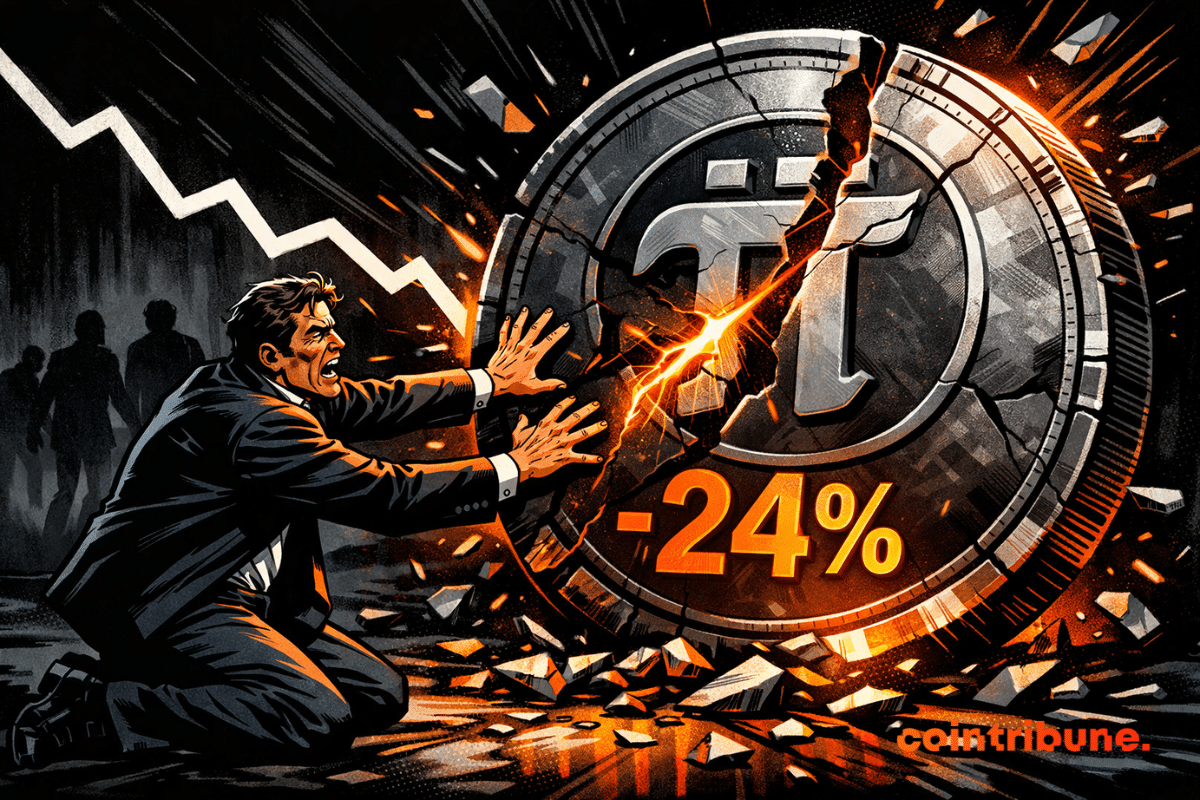
The crypto Pi Network is going through a critical zone. Its token Pi Coin loses 24% in one day. Analysis of a concerning signal.

Traders are placing sizable bets on Bitcoin’s path through 2026 across leading prediction platforms. Activity on Polymarket, Kalshi, and Myriad suggests a market that expects gradual progress rather than a rapid breakout. More than $84 million in combined volume across seven contracts reflects cautious optimism, balanced by consistent hedging against downside risk. While confidence appears to build later in the year, near-term expectations remain restrained.
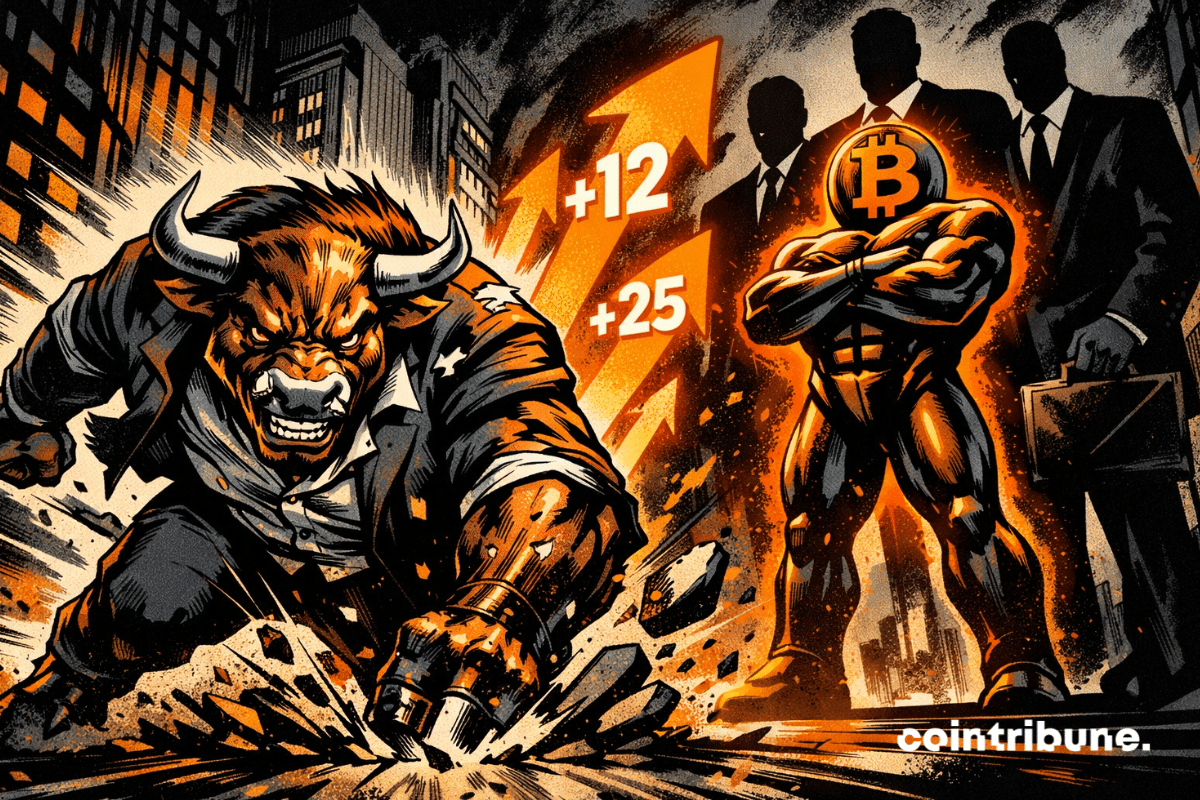
U.S. equities are seeing rising risk appetite, while Bitcoin lags with muted institutional demand and slow accumulation.