Bo Hines, former White House Crypto Council director, joins Tether to lead U.S. digital asset strategy and drive stablecoin expansion.
Ethereum dips to just above $4,100, but major traders are making big leveraged bets, signaling confidence in a rebound.
Shiba Inu (SHIB) has made a significant move of collaborating with Chainlink (LINK) to develop its ecosystem. With this shift, the meme-turned-utility coin is retwisting its burn policy, ushering in a new mechanism to link all cross-chain transactions back to Ethereum. This approach ensures SHIB continues to honor its roots while branching into new territory.
The Frontier stablecoin has been deployed on seven blockchains via LayerZero technology. Supported by the State of Wyoming, it aims to use the income from its reserves for education, with possible redistribution to holders in the future.
Bitcoin dropped by 7% in a few days, just after reaching an all-time high above $124,000. Simple pause or the start of a reversal? While the market questions the strength of the bullish cycle, some on-chain indicators send a completely different signal. Behind the volatility, some well-known indicators among seasoned investors outline a possible bottom, often a precursor to a rebound.
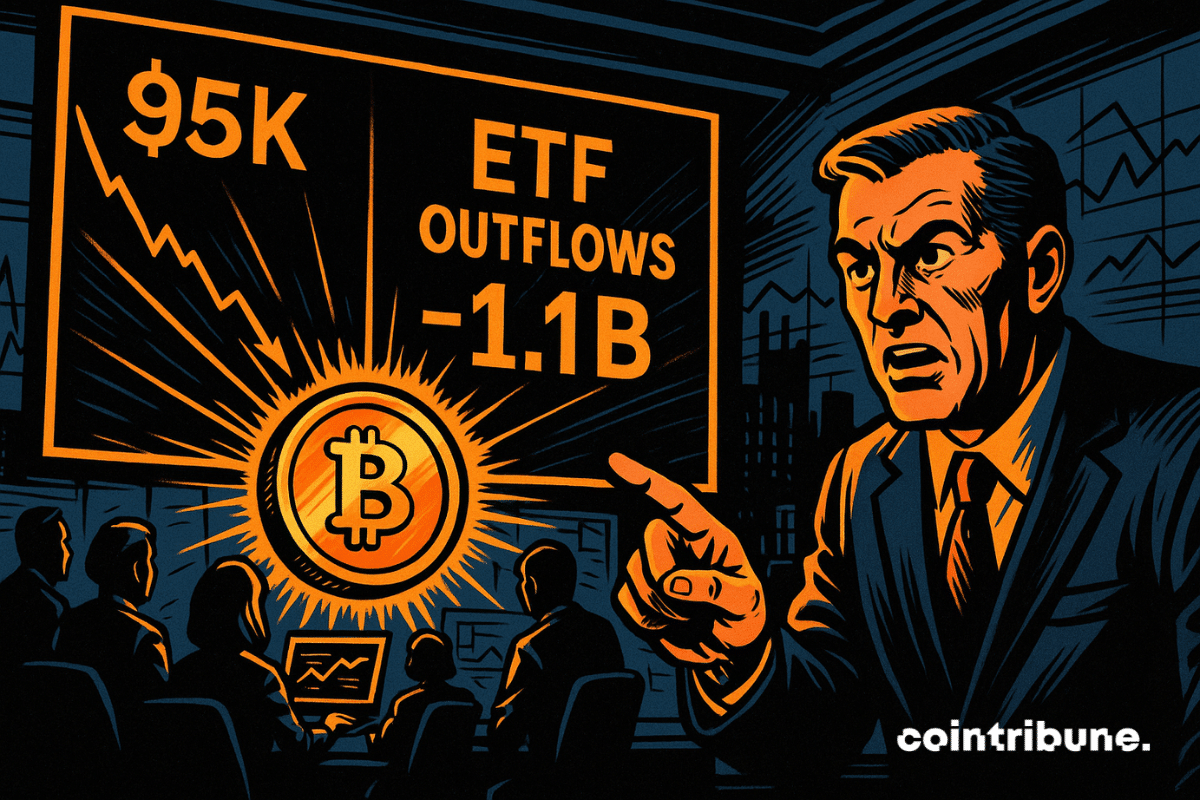
Bitcoin (BTC) is once again at a crucial crossroads after dropping below the $120,000 price mark, intensified by strong capital exits. For now, the OG crypto is hovering within the $120K rejection point and other key support regions. With the market currently consolidating, market participants are observing these levels as BTC appears to lose steam following multiple rejections at cycle highs.
Crypto ETFs blocked, Trump put on hold, and the SEC playing for time: behind regulatory delays, a strange political ballet resembling regulatory poker.
The US Department of the Treasury opens a public comment period until October 17, 2025, to assess cutting-edge technologies in the fight against money laundering and sanctions evasion. This approach is directly part of the implementation of the Genius Act, the historic legislation signed by Donald Trump that revolutionizes the regulation of stablecoins. But which technologies are US authorities really scrutinizing?
Google took a 14% stake in the bitcoin mining company, TeraWulf. This operation follows an increase in its financial commitment in a colocation agreement with Fluidstack. Thanks to this move, the tech giant becomes the main shareholder of TeraWulf and thus strengthens the credibility of its model between crypto and high-performance hosting.
The NFT sector lost more than $1.2 billion in market value within a week as Ether prices cooled. According to NFT Price Floor, the market capitalization of NFT collections fell 12%, dropping from $9.3 billion to $8.1 billion. The correction followed Ether’s decline of nearly 9% after recently reaching a high of about $4,700.
While the crypto market evolves in a climate of macroeconomic uncertainty, a major operation has just redefined the balances. In one week, BitMine Immersion Technologies acquired 1.7 billion dollars in Ethereum, crossing the symbolic threshold of 1% of the total circulating supply.
While mining profitability erodes and hashprice declines, the Bitcoin network records an unprecedented power rebound. On August 18, the hashrate climbed to 966 EH/s, nearing a historic peak, despite nearly zero transaction fees and growing economic pressure on mining companies. This striking contrast between economic tension and technical robustness raises questions: how does the mining ecosystem manage to maintain, or even strengthen, its security in such an unfavorable context?
After weeks of bullish euphoria, the crypto market violently corrected, revealing an underlying tension ignored for too long. In just 24 hours, over 500 million dollars of long positions were liquidated, dragging down bitcoin, Ethereum, and XRP in their fall. This brutal wave revealed the fragility of a market fueled by leverage, where technical indicators, sidelined by optimism, suddenly regain all their importance. A return to reality is necessary for investors.
Bitcoin in free fall, "hidden hands" at work, and the Fed lying in ambush: who is manipulating the market while traders play prophets?
The crypto market remains paradoxical. While Ether records a sharp drop of nearly 6% in a single session, ETFs linked to the world's second largest crypto continue to capture record volumes and inflows. A contradictory dynamic that illustrates the growing maturity of institutional investors: short-term corrections are no longer enough to slow the rush towards financial products backed by Ethereum.
While the wait around Pi Network drags on, a discreet statement from a moderator reignites hopes. Millions of users are still waiting to access their mined tokens, but a second migration to the mainnet could change the game. This signal, although unofficial, comes amid growing frustration. If it materializes, it would mark a strategic turning point for a project still locked in its mainnet, far from the promises of a truly accessible blockchain.
Bitcoin giant Strategy has added another 430 BTC to its balance sheet, according to a fresh SEC filing. The company spent $51.4 million at an average price of $119,666 per coin, raising its total holdings to 629,376 BTC, worth more than $72 billion at current market prices.
Cardano (ADA) ignites the crypto market with a surge in its futures volume, reaching nearly 7 billion dollars. This bullish momentum, driven by the shadow of a potential ETF, places ADA back at the center of discussions. Towards a lasting return above 1 dollar?
Within 24 hours, new wallets have acquired nearly 280 million dollars in Ethereum, while the asset trades just below its yearly highs. This sudden accumulation, spotted by on-chain analysts, raises questions: are we witnessing a simple strategic accumulation phase or the precursor signal of a larger bullish movement?
olana is preparing to replace TowerBFT with Alpenglow, a new consensus model aimed at faster finality, stronger security, and performance closer to traditional financial markets.
The stablecoin market has just passed another historic milestone with a total capitalization of 273 billion dollars. Tether consolidates its overwhelming dominance with 165 billion dollars, more than 60% of this booming sector.
What if bitcoin exploded to $280,000 by the end of 2025? This is not just another rumor, but the projection of a respected trading veteran in traditional circles. Peter Brandt, a prominent figure in financial markets for over 40 years, supports a chart model that is making a big noise in the crypto sphere. Built on the analysis of historical cycles, this scenario anticipates a new peak for bitcoin… well beyond current expectations. A forecast that reignites debates as a key market moment approaches.
Nearly 94% of XRP investors are now in the green, a level rarely reached in crypto history. Driven by a surge up to $3.11, the fourth largest crypto by market capitalization triggers as much euphoria as concern. Indeed, previous instances where XRP reached such profitability were followed by sharp corrections, in 2018 as in 2021. This time, is it a new bull cycle... or a precursor sign of a brutal reversal?
Jack Dorsey revives Satoshi Nakamoto's vision: making bitcoin a universal currency for exchange. Faced with speculation and financial markets, can it become everyday money?
Ethereum is soaring, ETFs are rushing in, but beware of overflow: exchange platforms are filling up and ether heats up faster than an insomniac trader's coffee.
Bitcoin is showing signs of slowing momentum. BTC trading volume fell by 28% this week, even as the price climbed modestly to around $117,582. Is capital quietly rotating into altcoins?
Bitcoin wavers below 117,000 dollars as the "Ghost Month" threatens to lead to a drop to 100,000. Between sustained demand in the United States and Korea, and seasonal pressures, the market plays a decisive game.
The crypto market is coming out of its lethargy: the open interest on Bitcoin futures has just exceeded $82.4 billion, an unprecedented level since speculative euphoria phases. While BTC's price remains stable, derivatives are experiencing a clear resurgence in activity. This dynamic, driven by institutional investors and rising leverage, could mark a turning point. Rising futures, options in frenzy: signals are multiplying, and the market seems to be preparing for a new cycle.
Could XRP initiate a decisive turning point? A rarely observed technical signal attracts analysts' attention: Bollinger Bands draw a setup favorable to a trend reversal. While the market remains volatile and volumes decline, the asset shows signs of resilience above a critical threshold. Enough to revive the interest of seasoned investors, on the lookout for a strategic entry point. Is this movement the prelude to a new bullish cycle or just a simple technical rebound?
XRP, long held back by its judicial battle with the SEC, returns to the forefront. While institutional investors quietly strengthen their positions, a series of massive liquidations shakes the market. Between unstable technical signals and behind-the-scenes accumulation strategies, crypto is going through a zone of high instability. Should this be seen as a simple correction or the beginning of a strategic repositioning?