After falling to $91,350, Bitcoin has attracted buyer interest, maintaining its price. Check out Elyfe's analysis to decipher BTC's technical outlook.
Currency symbols are not just simple coins; they embody eras, values, and habits rooted in a country's culture. However, in the United States, the existence of the penny is once again being questioned. Donald Trump, in search of budgetary rationalization, wishes to eliminate this one-cent coin, which he considers a waste of resources. This decision, far from being trivial, sparks a fundamental debate between economic necessity and attachment to American numismatic heritage. If enacted, the measure could disrupt commercial habits and provoke adjustments in the daily lives of Americans.
Amid revolutionary announcements, technological evolutions, and regulatory upheavals, the crypto ecosystem continues to prove that it is both a territory of limitless innovations and a battleground for regulatory and economic disputes. Here is a summary of the most significant news from the past week surrounding Bitcoin, Ethereum, Binance, Solana, and Ripple.
Donald Trump's crypto program could have significant repercussions on the acceleration of the development of the digital euro, according to Piero Cipollone, a member of the European Central Bank (ECB). He expresses hope that the European Parliament and the Council will finalize discussions on the legislation governing the digital euro by the summer of 2025.
The fusion of technology and power is an equation that Elon Musk seems to have made his playground. From controlling Twitter (now X) to space initiatives with SpaceX, the billionaire has made numerous incursions into spheres traditionally reserved for states. His latest initiative, targeting the U.S. Treasury's payment system, has not succeeded this time. What was supposed to be a transparency operation regarding the management of financial flows has turned into an unprecedented legal confrontation, questioning the legality of such control. In light of the controversy and the risks of disclosing sensitive information, the judiciary has ruled and imposed an immediate ban on Musk and his collaborators.
The social network X, formerly Twitter, is once again under judicial investigation in France. On January 12, Deputy Eric Bothorel alerted the Paris prosecutor's office about the algorithms of Elon Musk's platform, suspected of manipulation. This investigation follows several ongoing legal actions against the platform.
Rumors about a common BRICS currency frequently resurface, fueling speculation about a possible counterweight to the dollar. As several nations seek to reduce their dependence on the greenback, the prospect of a shared currency raises concerns in the United States. Donald Trump has threatened to impose sanctions on countries considering an alternative. However, the Kremlin has just defused the debate: no such project is under discussion. Instead, the bloc prioritizes joint investment platforms, leaving doubt about its true monetary strategy.
Ethereum continues to face downward pressure, pushing its price lower. Let's analyze the future prospects of ETH.
Sino-American relations continue to deteriorate, pushing China to strengthen its ties with the European Union. Lin Jian, spokesperson for the Chinese Ministry of Foreign Affairs, stated that Beijing sees Europe as a "global strategic partner and an important and independent pillar in a multipolar world."
Traditional finance and bitcoin are continuing to draw closer. Following the resounding success of its Bitcoin ETF IBIT in the United States, BlackRock, the world's largest asset manager, is preparing to take a new step: the launch of a Bitcoin Exchange Traded Product (ETP) in Europe. This fund, which will be domiciled in Switzerland, reflects the growing desire of financial institutions to establish a lasting presence in the crypto market. While the United States has seen Bitcoin ETFs capture more than $57 billion in assets in just a few months, this new product could change the European landscape. Why Switzerland rather than another country? What will be the effects on investors and the institutional adoption of bitcoin in Europe? These are all questions that arise as BlackRock accelerates its international offensive.
Shares of gold mining companies surged on Wednesday, February 5th, on Wall Street, driven by a new historic record of gold at $2,869.68 per ounce. This spectacular increase comes amid a revived trade war between Washington and Beijing, prompting investors towards safe-haven assets.
The creation by Donald Trump of a sovereign fund overseen by Howard Lutnick is very promising for the bitcoin reserve.
After reaching a new ATH of $109,354, Bitcoin is facing selling pressure, resulting in a decline in its price. Let's together examine the technical outlook for BTC.
RWA, once discreet, now flamboyant: +94% in one year, 4 billion in inflows, crypto rejoices. A revived market, a revolution underway, and numbers that are dizzying.
In the grand theater of power, Trump outlines a bold move: perhaps a crypto-friendly sovereign fund. Between a bluff and strategic genius, the suspense remains intact.
In an unprecedented turn for American economic policy, Donald Trump has signed a presidential decree that creates a national sovereign wealth fund, a groundbreaking initiative in the United States. This financial instrument aims to stimulate economic growth, fund strategic infrastructure, and potentially enable the acquisition of TikTok. The platform, under scrutiny from Washington for national security reasons, must divest itself of its Chinese shareholders in order to continue operations on American soil. Drawing inspiration from the sovereign wealth fund models of China, Norway, and Singapore, the Trump administration hopes to reduce U.S. dependence on borrowing and enhance its global economic influence. However, the establishment of such a mechanism raises numerous questions: how could a country that is accumulating massive budget deficits finance such a project? What would be the geopolitical implications of a direct intervention in a globally significant technology company? Balancing economic ambition with diplomatic challenges, this sovereign wealth fund represents a major shift that could redefine the role of the American state on the international stage.
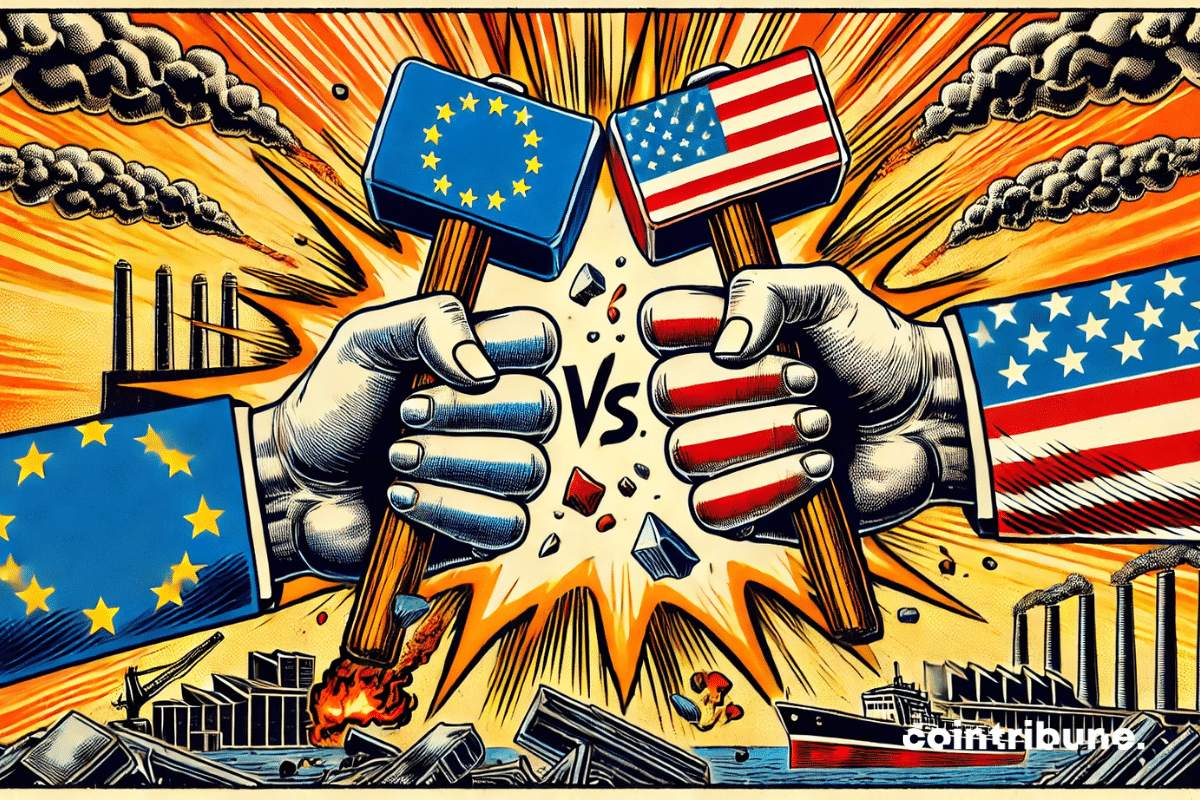
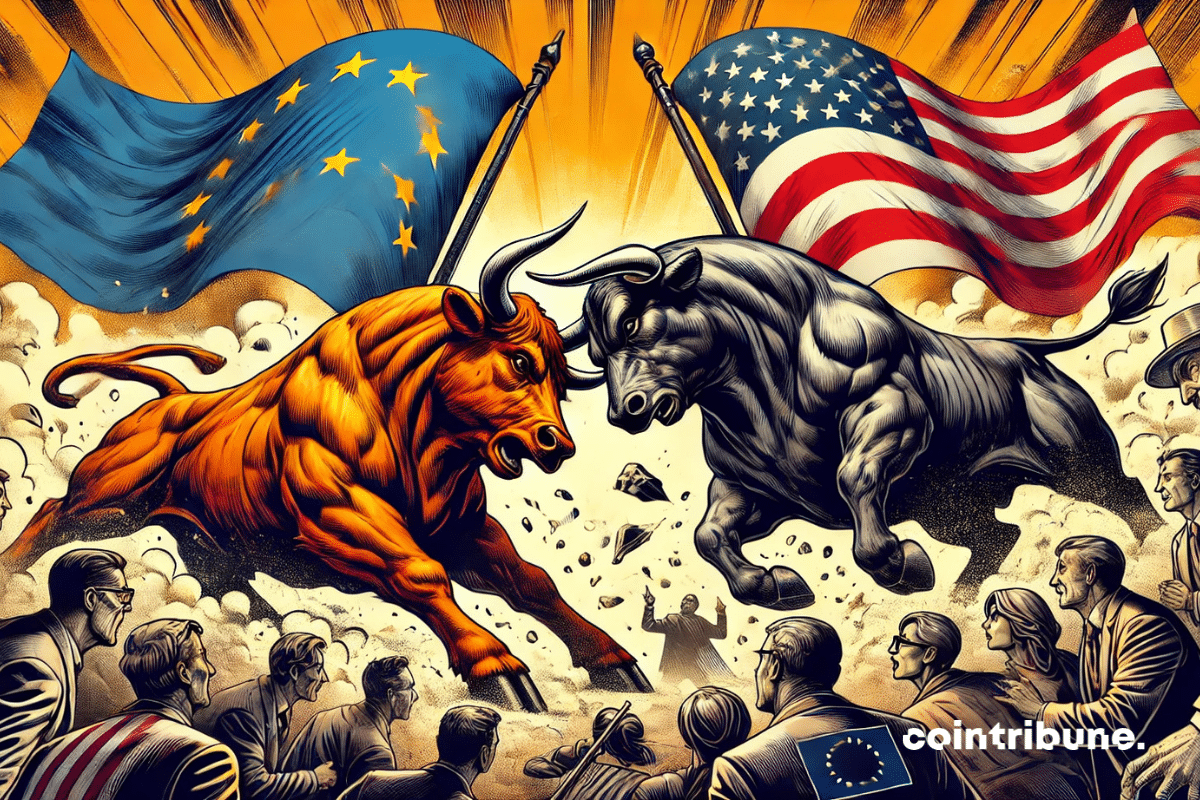
Trade tensions between the United States and its major partners have resurfaced, reviving the specter of a new economic war. Washington has announced an increase in tariffs targeting Canada, Mexico, and China, a decision that marks the return of the protectionism favored by Donald Trump. This tariff offensive has immediately sparked reactions everywhere, particularly in Europe, where the European Commission is closely monitoring the situation. Although the European Union is not yet directly affected, Brussels fears an expansion of American measures and warns that it will not remain passive. The Commission has already expressed its strong disagreement with this policy and states that it is ready to adopt retaliatory measures to protect the continent's economic interests. In the face of this new trade offensive from the United States, the risk of escalation between the two blocs cannot be ruled out.
The crypto market has just experienced an unprecedented financial tsunami. In 24 hours, 2.24 billion dollars evaporated under the blows of trade wars, propelling Ethereum to the forefront of a historic debacle. A massive liquidation, driven by Donald Trump's surprise announcement on customs duties, shattered the records of the FTX crisis and the COVID-19 crash. Behind these dizzying numbers, over 730,000 traders saw their positions turned to ashes. How could a political tweet shake a decentralized ecosystem? Let's dive into the machinery of this debacle.
Blockchain-based finance is evolving rapidly, providing innovative solutions to democratize access to investments and financing. Among the challenges still present in this ecosystem, the integration of real-world assets (RWA) remains a central issue. The collaboration between Lumia and Credefi aims to address these challenges by combining layer 2 (L2) infrastructure and expertise in RWA-backed loans.
The deficit is growing, taxes are rising, but Bayrou persists. Clinging to his 49.3 like a castaway to his buoy, he defies the political storm that is looming.
Amid revolutionary announcements, technological developments, and regulatory turbulence, the crypto ecosystem continues to prove that it is both a territory of limitless innovations and a battleground of regulatory and economic struggles. Here is a summary of the most significant news from the past week surrounding Bitcoin, Ethereum, Binance, Solana, and Ripple.
Donald Trump unveils his radical strategy to counter the monetary ambitions of the BRICS. In response to their proposal for a common currency, he threatens to impose 100% tariffs against any country that adopts it. This tough approach masks secret negotiations that could reshape the global monetary order.
The United States is reviving trade tensions with its major economic partners. Donald Trump has just announced massive new tariffs on imports from Canada, Mexico, and China, and is reigniting an aggressive protectionist policy. Presented as a response to the fight against fentanyl trafficking and illegal immigration, this decision primarily fits into a broader strategy aimed at renegotiating North American trade agreements and protecting the American industry from Chinese competition. This escalation has immediately provoked a virulent reaction from the targeted countries, which are already preparing retaliatory measures, foreshadowing a new economic showdown with uncertain consequences.
After a decade of exceptional growth, India's economy is showing signs of slowing down. Government forecasts predict a growth rate between 6.3% and 6.8% for 2025, a significant decline from the 8.2% of 2023-2024.
The French economy ends the year 2024 on a worrying note with a contraction of 0.1% of its GDP in the fourth quarter. This situation arises in a particularly tense context, where the public deficit reaches the alarming level of 6% of GDP, placing France among the worst performers in the eurozone.
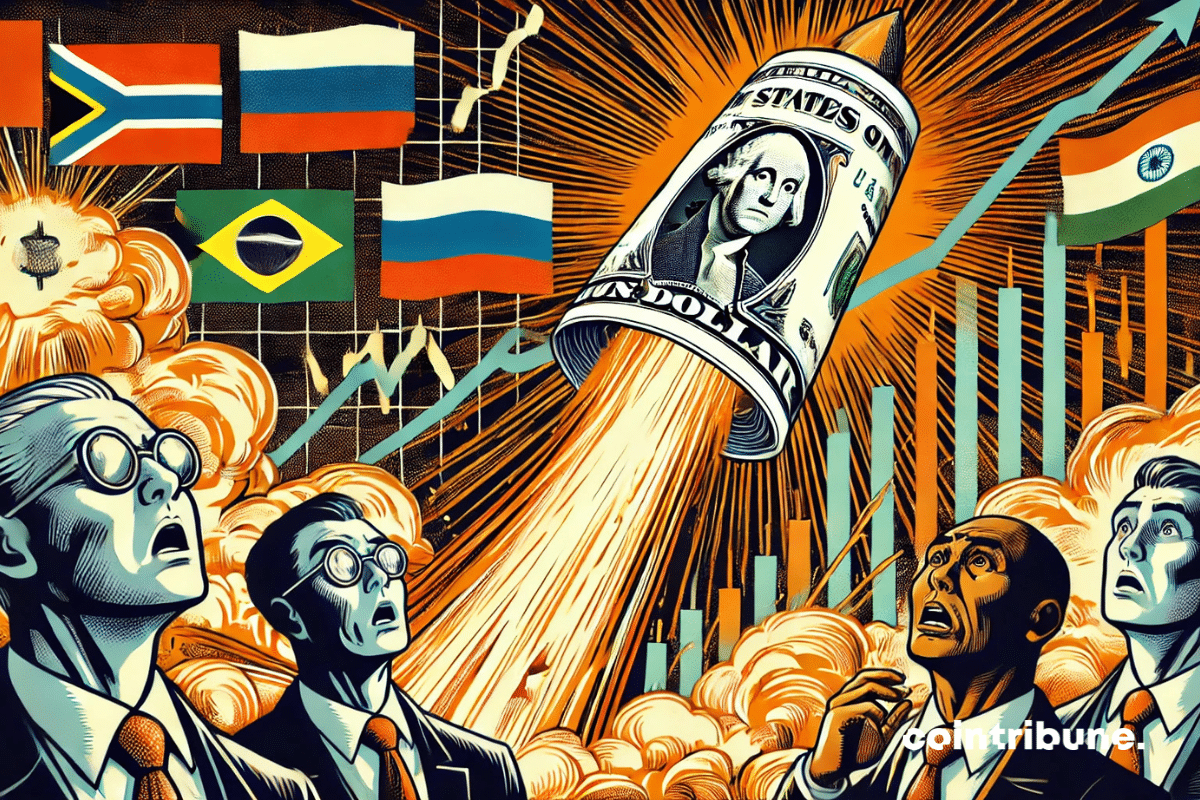
The status of the US dollar in the global economy once again causes tensions. While the BRICS seek to free themselves from its hegemony, Donald Trump brushed aside any possibility of dedollarization. "There is no chance that the BRICS will replace the US dollar in international trade or elsewhere," he stated. This declaration comes at a time when China, Russia, and their allies are intensifying their efforts to limit their dependence on the greenback, particularly through exchanges in local currencies and the establishment of alternative financial infrastructures. Behind this statement from the American president, one question arises: is the dollar really unassailable, or are we witnessing the beginnings of a new monetary order?
Rents in France continue to rise in 2025, putting pressure on household budgets in a rapidly transforming real estate market. With an average cost of 723 euros per month including charges, the increase reaches 3.3% compared to 2024. This phenomenon, which spans the entire territory, reveals significant disparities between major metropolitan areas and more affordable cities. While some regions experience a surge in prices, others remain more accessible. What are the factors behind this rental inflation and which cities are the most affected?
In a constantly changing world, where every political decision redraws the contours of power, a major phenomenon is emerging: the rise of the BRICS. This acronym, once seen as a symbolic grouping of major emerging economies, now asserts itself as a driving force of geopolitical balance. With the recent expansion of this bloc to new influential members, the global landscape is enriched with unprecedented dynamics, challenging the hegemony of Western institutions. While Donald Trump embarks on a second term in the United States, focused on a protectionist and isolationist policy, the rise of the BRICS represents a strategic challenge with profound implications.
The employment situation in France is experiencing a worrying deterioration. According to the latest figures published on January 27, 2025, by the Ministry of Labor, the number of unemployed job seekers without activity (category A) surged by 3.9% in the fourth quarter of 2024 compared to the previous quarter. This represents an additional 117,000 unemployed individuals, bringing the total to 3.1 million people, a level not seen in a decade, excluding the Covid-19 period.
For several decades, French budget management has been a source of recurring tensions, but the current situation has reached an unprecedented level. In 2025, the censorship of the budget voted by the Senate plunged the country into a major financial crisis, with losses estimated at 100 million euros per day. In the absence of a new text validated by the National Assembly, the budget for 2024 remains in effect, depriving the state of essential revenue and savings measures. Amélie de Montchalin, Minister for Public Accounts, warns about the repercussions of this deadlock and emphasizes both its economic cost and the institutional challenges it reveals.