Ray Dalio Warns: World Order Has Collapsed as New Geopolitical Era Emerges
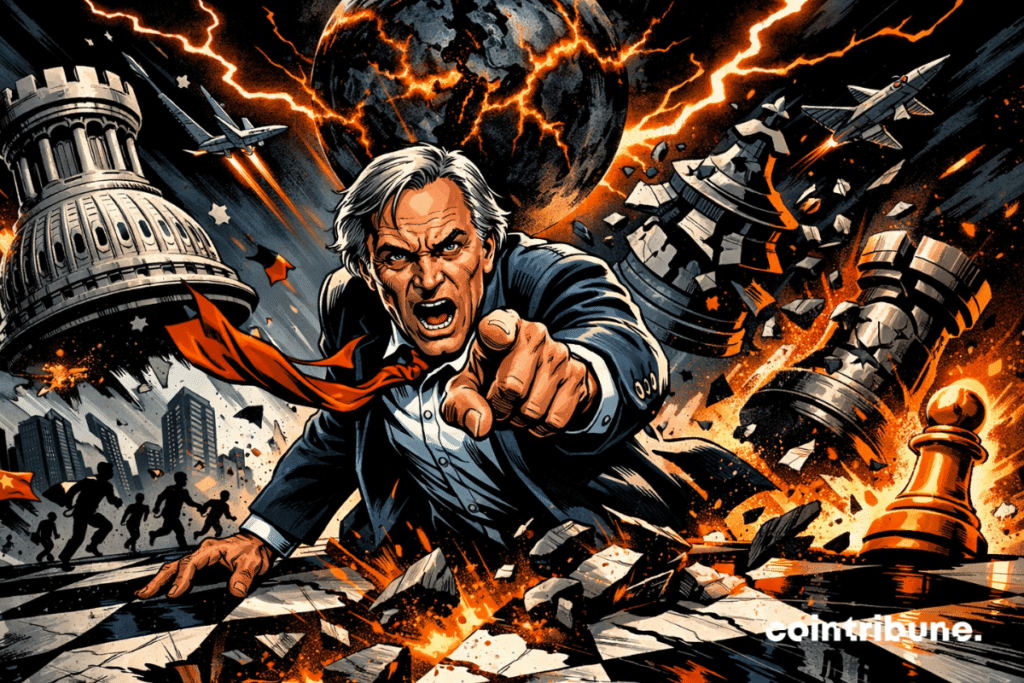
On February 14, Ray Dalio, founder of Bridgewater Associates, stated in a post on X that global leaders are increasingly acknowledging the breakdown of the international system created after World War II. Referring to discussions at the Munich Security Conference, he said the framework that has guided geopolitical and economic relations for decades is no longer functioning as before. In his view, this is now widely recognized among senior policymakers rather than treated as a distant concern.
In brief
- Ray Dalio says the international system created after World War II has broken down and is no longer functioning as intended.
- Interactions between countries are now driven by power and leverage rather than legal frameworks with disputes resolved through negotiation or confrontation.
- Dalio identifies five types of fights between nations including trade, technology, geopolitics, capital, and military confrontation.
Dalio Breaks Down the New Geopolitical Era
Dalio pointed to recent remarks from several officials to support his view, noting that Friedrich Merz argued the long-standing world order no longer exists and that the current environment is shaped by competition among major powers. Building on this concern, French President Emmanuel Macron warned that Europe “must prepare for war,” while U.S. Senator Marco Rubio described the current geopolitical situation as the start of a new phase, which shows a clear shift away from the previous international structure.
According to Dalio, countries interact differently from domestic political systems because there is no global authority to enforce binding rules or act as an impartial arbiter. As a result, interactions between states are driven mainly by power dynamics rather than legal frameworks. When disputes arise, nations rely on leverage, negotiation, or force instead of judicial settlement, resolving conflicts through bargaining or confrontation rather than courts.
Five Forces Driving Global Rivalry
Dalio identified five key forms of rivalry in the current global environment: trade and economic conflicts, technology competition, geopolitical struggles, capital-related disputes, and military confrontation. While the first four rarely involve direct combat, they still act as contests for influence between nations. Over time, these rivalries can intensify and, in some cases, escalate into military conflict, with the non-military forms often used as additional pressure alongside armed force once war begins.
These struggles and wars, whether or not they involve shooting and killing, are exertions of power of one side over the other. They can be all-out or contained, depending on how important the issue is and what the relative powers of the opponents are. But once a military war begins, all four of the other dimensions will be weaponized to the greatest extent possible.
Ray Dalio
Alongside these tensions, Dalio stressed that a country’s financial resources are central to its influence, as they allow it to strengthen the military, play a leading role in trade, and shape the behavior of other nations. He noted that countries able to maintain both economic growth and defense capabilities often stay dominant for long periods, though not permanently.
As an illustration of rising geopolitical risk, Dalio pointed to tensions between the United States and China, particularly around Taiwan, describing the situation as one of the most delicate potential conflict zones. He noted that, historically, the risk of military confrontation rises in two ways: when rival powers reach similar levels of strength and when they hold deep, unresolved disagreements.
Dalio on Economic and Financial Measures Before and During War
Dalio also emphasized that financial confrontation frequently precedes armed conflict and typically unfolds in a sequence of escalating measures:
- Before war begins, nations often deploy economic tools such as sanctions, asset freezes, export restrictions, and capital controls to pressure rivals
- Meanwhile, when war starts, governments typically expand intervention within their own economies, redirecting resources from profit-driven activities toward supporting military objectives.
- This intervention can include regulating production, rationing goods, controlling imports and exports, and setting prices and wages to prioritize the war effort.
- Governments may also restrict access to financial assets and limit the movement of money across borders, ensuring resources remain available for the conflict and overall economic stability.
He added that during periods of major war, financial markets are heavily influenced by state controls and developments on the battlefield, creating uncertainty for investors. In such times, stock trading has sometimes been suspended, leaving investors unable to access their funds. Under these conditions, precious metals like gold, and occasionally silver, often become the primary means of exchange. With prices and capital flows tightly controlled, determining the true value of goods and assets becomes increasingly difficult.
Dalio therefore noted that investors can protect themselves by reducing exposure to debt and increasing allocations to gold, since currencies are weakened during wars. He concluded that large-scale conflict is not inevitable, explaining that powerful nations can avoid such cycles if they remain productive, sustain surpluses, manage their systems effectively, and maintain stable, mutually beneficial relationships with key rivals.
Maximize your Cointribune experience with our "Read to Earn" program! For every article you read, earn points and access exclusive rewards. Sign up now and start earning benefits.

Ifeoluwa specializes in Web3 writing and marketing, with over 5 years of experience creating insightful and strategic content. Beyond this, he trades crypto and is skilled at conducting technical, fundamental, and on-chain analyses.
The views, thoughts, and opinions expressed in this article belong solely to the author, and should not be taken as investment advice. Do your own research before taking any investment decisions.