Stock Market: The KOSPI Plunges After the AI Rally, Raising Market Concerns
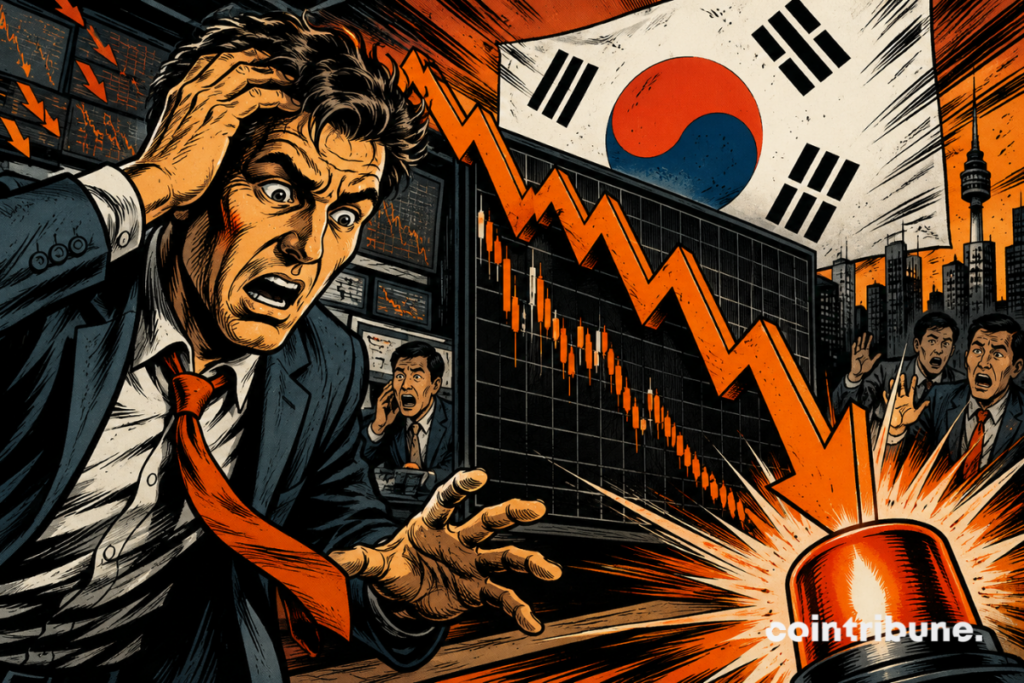
While global markets continue to assess the impact of artificial intelligence on valuations, the South Korean stock market is going through a period of high tension. After several months of spectacular growth driven by semiconductors and major technology companies, a sharp correction hit the local market. The move caught investors’ attention following reports of a significant market capitalization loss of about 260 trillion won and the plunge of the KOSPI. This drop reminds us of the risks linked to phases of excessive euphoria and markets heavily exposed to leverage.
In Brief
- The KOSPI suffered a sharp 30% drop after several months of growth driven by artificial intelligence and South Korean tech stocks.
- More than 260 trillion won liquidated in 15 minutes.
- Leveraged products and margin-funded positions amplified selling pressure during the decline.
- Large companies like Samsung Electronics and SK Hynix remain at the center of concerns after the euphoria related to semiconductors and AI.
- Global markets and crypto are now monitoring the South Korean market’s ability to regain balance after this period of high volatility.
The KOSPI Drops 30% After the AI Euphoria That Lifted the South Korean Stock Market
As volatility suddenly intensified in Asian markets after several months of strong growth in tech stocks, investors began to analyze the real scale of the correction in South Korea. In this context, DeFi researcher CryptoNobler shared a post on X highlighting the significance of the movement seen in the Korean stock market. According to his analysis, about 260 trillion won were erased from market capitalization in just fifteen minutes, along with the 30% drop in the South Korean stock market index KOSPI on the spot. His message quickly attracted the financial community’s attention, which focused on the severity of this correction and its potential causes.
However, this figure should be interpreted with caution. The KOSPI index had recorded strong gains before this correction, supported by enthusiasm around artificial intelligence. Investors had massively bet on companies able to benefit from semiconductor growth, notably Samsung Electronics and SK Hynix.
According to a Reuters report, the South Korean stock market had become an example of investment concentration around AI-related stocks. The rapid rise in tech shares attracted many retail investors but also increased the market’s sensitivity to sell-offs.
This situation shows how a prolonged period of optimism can change a market’s balance. When expectations become very high, investors often react more strongly to signs of slowdown or profit-taking.
Financial Leverage Amplified the KOSPI Correction
The KOSPI’s decline is not solely explained by the fall in tech stocks. Another factor amplified the movement: the significant exposure of retail investors to leveraged products. This strategy allows increasing a position with borrowed funds, but it also greatly increases risks when markets correct.
According to MarketWatch data, the correction in the South Korean market triggered a major wave of margin calls, affecting over one million investor accounts. Margin-financed positions then came under increasing pressure, pushing some brokers to automatically close positions when collateral became insufficient.
This mechanism reinforced selling pressure on the Korean stock market. Forced liquidations added new sell orders to an already fragile market, accelerating declines in leading shares. Seoul Economic Daily also reported that the rapid KOSPI drop triggered a significant rise in forced sales related to margin positions.
The phenomenon resembles mechanisms observed in other financial markets when investors heavily use leverage. An initially limited correction can become much more severe when borrowed positions begin to be liquidated automatically.
In this context, the KOSPI becomes a key indicator for measuring changes in investor sentiment. Upcoming sessions will help determine if this decline is merely profit-taking after AI-related euphoria or marks a more lasting correction.
Global Stock Market Watches Consequences After South Korean Drop
After this correction, investors now watch the KOSPI’s ability to regain stability. The market must absorb the effects of a strong rise period during which AI-related stocks attracted much of the available capital.
The global stock market views this situation as a reminder of risks linked to investment cycles. Sectors considered strategic, notably semiconductors and AI, can record rapid growth when expectations are high. However, they remain vulnerable when investors reassess growth prospects.
South Korean major tech companies remain at the heart of concerns. Samsung Electronics and SK Hynix hold significant places in the global components industry, explaining the attention to local market developments. A prolonged decline could influence sentiment around the tech sector.
This situation is also followed by crypto market players. South Korea represents an important market for digital assets, with strong retail investor participation. According to CoinGecko data, South Korean platforms regularly rank among the most active Asian markets for cryptocurrency trading.
However, stocks and cryptocurrencies evolve under different factors. Stocks depend mainly on company results, economic outlooks, and valuations. Digital assets follow their own cycles, notably influenced by institutional flows and regulation.
In the coming weeks, investors will follow the evolution of tech stocks, trading volumes, and the South Korean market’s ability to absorb this volatility phase. After the euphoria around artificial intelligence, markets are now seeking a new balance between expected growth and risk level.
Maximize your Cointribune experience with our "Read to Earn" program! For every article you read, earn points and access exclusive rewards. Sign up now and start earning benefits.

Journaliste et rédacteur web passionné par l’univers des cryptomonnaies et des technologies Web3. J’y traite les dernières tendances et actualités afin de proposer un contenu de haute qualité à un large public du secteur.
The views, thoughts, and opinions expressed in this article belong solely to the author, and should not be taken as investment advice. Do your own research before taking any investment decisions.