Solana wobbles, stumbles, falls below $200. Its volumes evaporate (-28%), its future oscillates between shipwreck and ETF miracle. The crypto market holds its breath.
Ethereum is at the center of unprecedented selling pressure. While Bitcoin continues to deliver strong performances, the second-largest cryptocurrency is struggling to regain its shine. A critical signal for investors? Since November 2024, short positions on Ethereum have skyrocketed by 500%, a level never reached before. Hedge funds, these seasoned institutional investors, are heavily betting on a collapse in ETH prices, further intensifying market volatility. If the extreme pessimism in the markets were to reverse, a brutal short squeeze could trigger a rapid price surge.
Solana-based applications are now significantly outpacing Ethereum by generating revenues ten times higher, according to cryptocurrency researcher Aylo. This performance occurs despite a bear market context and a slowdown in transactions.
Bitcoin, long the absolute master, looks helpless as Ethereum steals the spotlight: 793 million injected against 407 million, a Trafalgar blow to the ETP market.
In a world where finance and politics are increasingly intertwined, the launch of the memecoin Trump by Donald Trump and his sons has caused shockwaves in the markets. What could have been a crypto branding operation has turned into a brutal game of musical chairs, where early players pocketed hundreds of millions of dollars, leaving behind a tide of disappointed losers. In just a few hours, savvy traders multiplied their bets exponentially and benefited from a speculative surge that drove the token price to $75 before it collapsed. While the phenomenon of memecoins is nothing new, Donald Trump's direct involvement raises questions about ethics, regulation, and the future of political cryptocurrencies.
In a constantly evolving crypto market, altcoins are often presented as innovative alternatives to Bitcoin and Ethereum. However, according to Alon Cohen, co-founder of Pump.fun, the majority of them serve only one purpose: to be memecoins. He argues that the cryptocurrency market is flooded with projects that, while claiming to bring innovations or technical solutions, do not actually have any significant differentiation from memecoins.
The evolution of the crypto market often relies on subtle signals that only savvy investors know how to interpret. Among these, the inflows to accumulation addresses are closely monitored, as they help anticipate bullish trends. On February 7th, these addresses recorded a record influx of $883 million in Ethereum (ETH), an event that, historically, precedes major price increases. As competition among blockchains intensifies and the regulatory framework evolves, this massive accumulation of ETH raises a crucial question: Is Ethereum preparing for a new peak at $4,000 and beyond?
The decentralized betting platform Polymarket recorded an impressive volume of $1.1 billion in bets on the Super Bowl, despite a tense regulatory context. The Philadelphia Eagles triumphed over the Kansas City Chiefs in a match that captivated both sports fans and crypto bettors.
The Shiba Inu is playing hide and seek with traders: a dizzying drop, a rebound in sight, and whales gorging themselves in the background. Ready for the roller coaster?
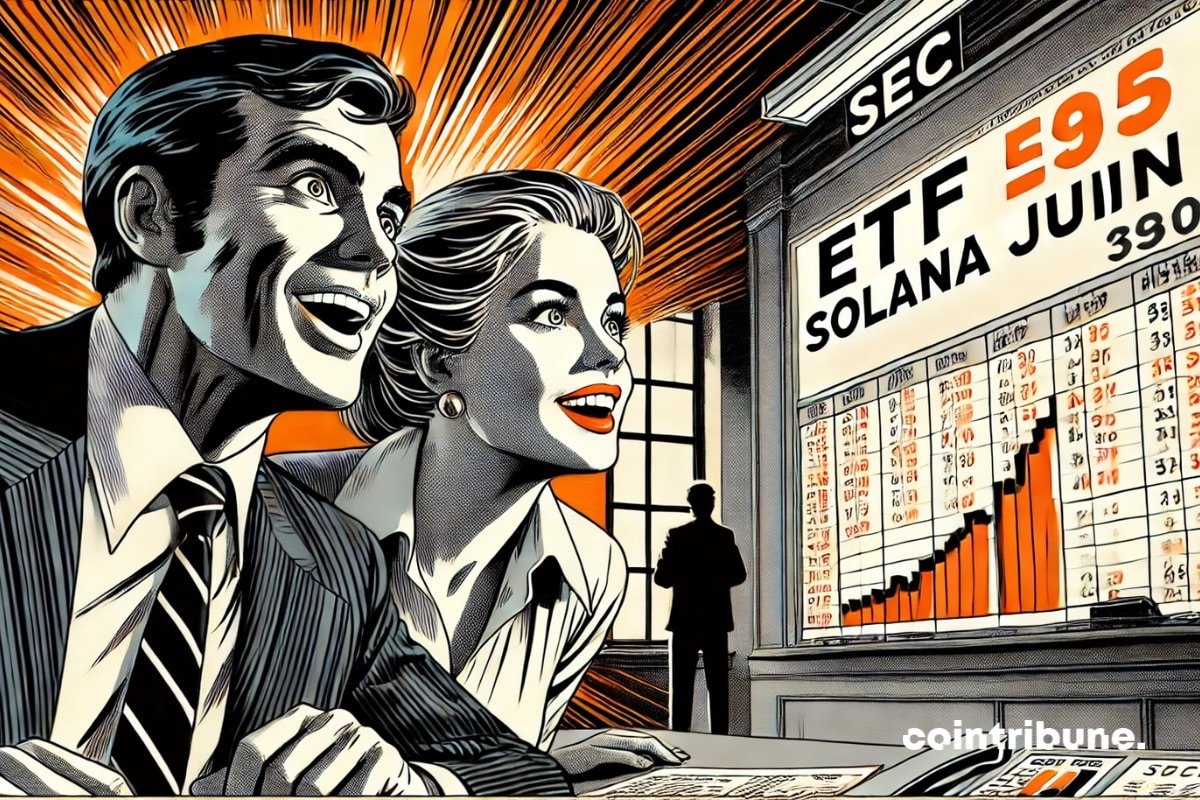
While Bitcoin and Ethereum have paved the way for ETFs, it is now Solana that is set to write a new chapter. The SEC has just ignited an unexpected fuse: the agency has started the countdown for the approval of a Solana ETF. A decision that reeks of gunpowder, as it contrasts sharply with its hostile past. But behind this turnaround lie issues far deeper than just a simple regulatory green light.
The crypto industry is going through an unprecedented phase of proliferation. With nearly 11 million tokens listed on CoinMarketCap, the market is facing dynamics that could redefine its equilibrium. This rapid expansion raises essential questions: Are we witnessing market saturation or a natural evolution of the crypto ecosystem? Between speculative enthusiasm and growing concerns about the viability of this multiplication of assets, the year 2025 marks a decisive turning point.
Tron, the outsider no one expected, overshadowed Bitcoin in 2024, riding a tsunami of stablecoins and memecoins, turning the blockchain into a true transaction fair.
The crypto market continues to face regulatory uncertainties in the United States. While institutional investors were hoping for a major breakthrough with the introduction of Ethereum ETF options, the Securities and Exchange Commission (SEC) has once again postponed its decision. This choice underscores the caution of the financial authority, despite the precedent set by Bitcoin ETF options, which are already in place. Behind this delay lies a whole segment of the crypto finance that remains suspended under still vague regulations, caught between growth potential and increased control by authorities.
The Ethereum derivatives markets have just recorded their largest outflow of ETH since August 2023, with over 300,000 ETH withdrawn from exchanges on February 6, 2025. This massive movement, amounting to approximately $817.2 million, comes amid increased market volatility.
The crypto market has always been marked by periods of extreme volatility, where panic and opportunities intersect in an instant. Indeed, the recent crash on February 3rd once again illustrated this reality. While XRP plummeted sharply to $1.78, some investors, far from succumbing to panic, seized the opportunity to massively bolster their positions. Among them, Korean traders played a key role. They bought large volumes, allowing XRP to rebound above $2 in record time. But, is this sudden influx of liquidity a sustainable bullish signal or just a temporary reaction from Asian markets?
Financial markets have their prophecies, and those of the crypto world are no exception. Indeed, when a $100 billion asset manager like VanEck makes an ambitious prediction such as Solana (SOL) rising to $520 by the end of 2025, the crypto ecosystem stops, observes, and analyzes. Should this be seen as a reliable indicator or an excess of optimism? This announcement is already provoking reactions from investors and analysts. Between technological prospects and market realities, let's revisit this forecast that could reshape the crypto landscape.
A new survey by JPMorgan reveals that the majority of institutional investors remain hesitant about cryptocurrencies, despite the improving regulatory framework in the United States. Only 29% of participants are active or plan to engage in this market.
Crypto donations surpassed one billion dollars in 2024, reaching a historic record driven by rising markets and a more favorable regulatory framework.
The crypto landscape is undergoing a silent earthquake. As altcoins attempted to rise into the spotlight, a giant regained control: Bitcoin. By the end of 2024, the "altcoin season" had faded, yielding to an overwhelming dominance of BTC. According to Rekt Capital, a respected analyst, Bitcoin could reach a 71% market share before any altcoin revival. A scenario that resonates as a warning for overly optimistic investors. But how did we get here? And what does this dynamic reveal about the evolution of the market?
Solana signs a spectacular performance in the fourth quarter of 2024 with a 213% increase in revenue generated by its applications, amounting to $840 million compared to $268 million in the previous quarter. This rapid surge is based on the explosion of memecoin trading, as well as the rise of tokens related to artificial intelligence. Once criticized for its repeated outages, the blockchain now establishes itself as a key player in the sector, attracting traders, developers, and investors. This swift transformation, indicated by Messari, illustrates Solana's evolution towards a more structured ecosystem, fueled by growing adoption and a massive influx of liquidity.
The crypto market is going through a turbulent period, and altcoins seem far from reaching their December highs. According to analyst Matthew Hyland, it will likely take until April, or even longer, to see a full recovery.
Crypto traders are disoriented by a market that no longer reacts according to traditional patterns, despite an apparently favorable context with the pro-crypto initiatives of the U.S. government.
Solana (SOL), one of the leading cryptocurrencies in the market, is currently at a decisive crossroads. After reaching a peak of $220, the price began to decline, breaking through support levels at $215 and $212. Currently, SOL is trading below $205 and the 100-hour simple moving average, indicating persistent bearish pressure. But everything could soon swing!
Dogecoin (DOGE) is experiencing a period of instability. The memecoin is losing ground and is now below $0.30. This sharp decline revives uncertainty among investors as selling pressure increases. However, some analysts see it as merely a technical pullback, necessary before a new leap to unprecedented heights. Trader Tardigrade and DOGECAPITAL, influential figures in the market, believe that this correction fits into a larger bullish cycle, already observed in the past. In 2016 and 2021, Dogecoin experienced similar drops before soaring by 9,222% and 30,693%, respectively. If history repeats itself, DOGE could soon embark on a spectacular rise. But is this scenario really credible?
The cryptocurrency market is experiencing a new phase of instability, with XRP at the forefront. Within a few hours, its price saw a dramatic drop of 31%, before rebounding with a similar intensity. This extreme movement has created doubt among investors, torn between hope for a recovery and fear of a mere technical bounce. In this context, Bollinger Bands, a key technical indicator, are delivering mixed signals. If XRP manages to stabilize above its median threshold, a new bullish momentum could emerge. Conversely, a return to recent lows remains a credible hypothesis. This extreme volatility puts investors in a decisive position: to hold their positions betting on a recovery or to reduce their exposure to limit risks.
Shiba Inu is plunging, traders are panicking, and liquidations are pouring in. A crypto tragedy worthy of a soap opera, except this time, it's the wallet that is crying.
The crypto market is experiencing a spectacular rebound following the decision by U.S. President Donald Trump to temporarily suspend the proposed tariffs on Canada and Mexico. This announcement comes amid intense negotiations between the United States and its North American neighbors concerning border security and trade.
The crypto market is going through a period of instability, and Solana (SOL) is on the front lines. Since February 1st, the drop of Bitcoin below $100,000 has caused a shockwave across altcoins. Solana, whose price moves in strong correlation with BTC, has seen its price fall below the critical threshold of $200. The impact has not been limited to price declines: investors have massively reduced their exposure, leading to a withdrawal of $367 million from spot markets in three days. This massive liquidation has reversed market sentiment, as evidenced by a long/short ratio dropping to 0.93, confirming seller dominance. While technical indicators signal sustained bearish pressure, a break of current support levels could send Solana to new lows, unless a sudden surge in demand comes to reverse the trend.
The Crypto Fear and Greed Index has just reached 39, signaling a significant period of uncertainty in the markets. This indicator, ranging from 0 (extreme fear) to 100 (extreme greed), is an essential barometer of market sentiment. A value of 39 suggests some anxiety, but is it a sign of imminent panic or a strategic investment opportunity?
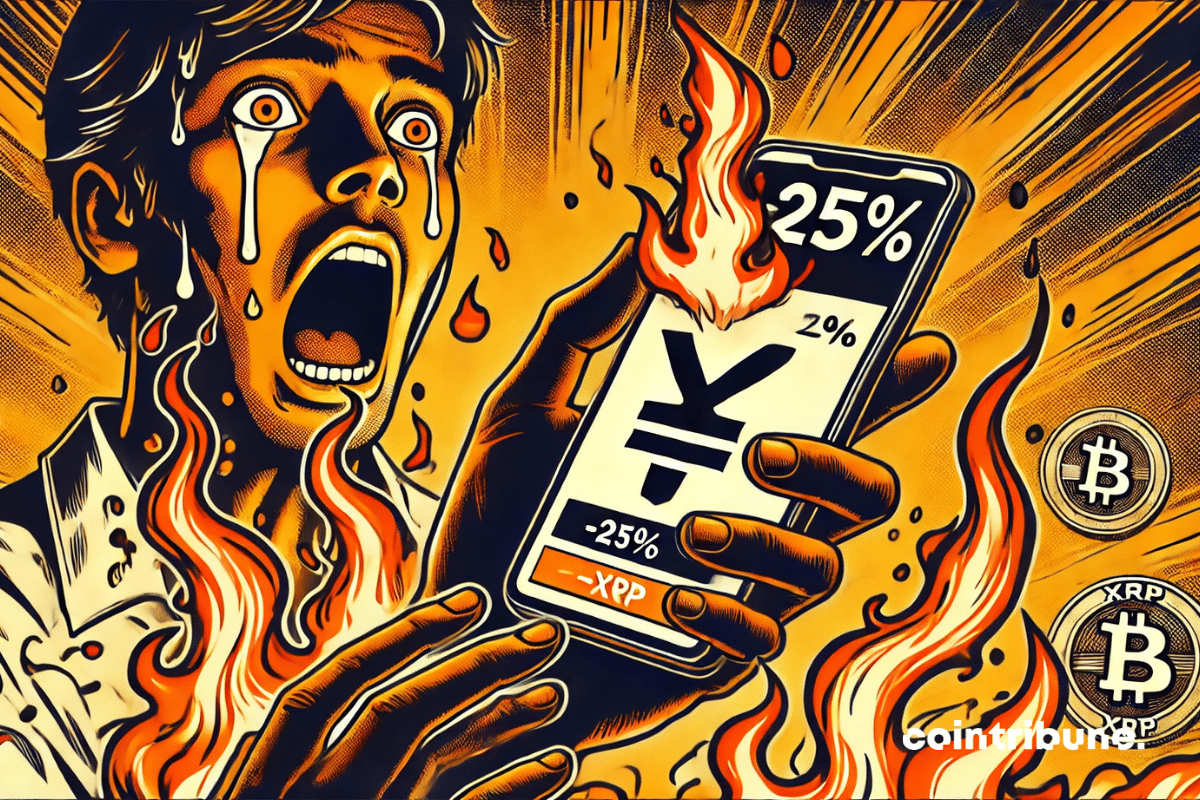
The crypto market is experiencing significant instability, and XRP is bearing the brunt of it. Indeed, the asset linked to Ripple has plunged by 25%, reaching an unprecedented low in several weeks. This brutal correction is not limited to XRP. Bitcoin has dropped by 6.35%, while Dogecoin has recorded nearly a 25% loss. This widespread pullback can be explained by an explosive cocktail of economic tensions and heightened speculative movements. The uncertainty surrounding traditional financial markets, particularly in the United States, fuels crypto volatility. In this context, one question remains: is XRP beginning a new descent, or is this a strategic low for opportunistic investors?