While BlackRock sees the recession as a springboard for bitcoin, the Federal Reserve cools the enthusiasm for crypto. Between bold predictions and economic warnings, the market navigates troubled waters.

Until April, crypto markets will feel the aftershocks of a deep-rooted economic storm. An explosive mix of geopolitical tensions and interest rate rigidity is stifling risk appetite. But behind this chaos lie opportunities. Decoding.
As Bitcoin hovers around $85,000, a subtle tension stirs in the markets. Behind this apparent resistance lies a paradoxical movement: the "whales" are quietly preparing their offensive. Their strategy? Massive bets against it, despite a technical rebound that would make optimists dream. A risky game, indicative of unprecedented mistrust, but also of an invisible battle where every dollar counts.
Against all odds, BlackRock, the global asset management giant, is shaking up conventional wisdom about Bitcoin. While cryptocurrencies are often associated with volatility and risk, Robert Mitchnick, head of digital assets at BlackRock, debunks this narrative. In a context where Bitcoin has lost 20% of its value since its peak at the end of 2023, his recent statements on CNBC resonate like a bold advocacy. Why does a traditional institution defend such a disruptive vision? The answer lies in a subtle strategy and a deep understanding of market evolution.
Ethereum is collapsing, but reserves on crypto platforms are evaporating even faster. Is a historic rebound near? Analysis!
2025 could mark a point of no return for crypto. As traditional markets navigate between uncertainties and capricious interest rates, financial institutions seem to have found their new compass: digital assets. According to a recent study by Coinbase and EY-Parthenon, 83% of institutional investors plan to increase their allocations to crypto starting next year. A shocking figure that conceals a more complex reality, but above all, a profound transformation of investment strategies. Far from clichés about volatility, crypto is becoming a pillar of institutional portfolios.
The euphoria of the February peaks has evaporated. Bitcoin, after flirting with $109,000, is now wobbling around $82,000, revealing a reality more complex than it appears. According to the latest report from Glassnode, signed by researchers Cryptovizart and Ukuria OC, the market faces an unprecedented liquidity crisis, compounded by a growing rift among investors. A contrasting picture that raises the question: is Bitcoin at a critical turning point or simply in a phase of consolidation?
The Dogecoin is once again flashing on the radars. At $0.13, it teeters on the edge of a technical precipice… or a springboard. The charts whisper a contradictory story: oversold indicators, weakened historical supports, but also signals that have preceded rallies of +400% in 2024. So, is DOGE a neglected gem or a trap for speculators? Crypto experts lean towards the former option... provided the stars align.
Nvidia unveils its new chips and triggers a crash in AI crypto tokens! We provide all the details in this article.
Bitcoin dominates at 61.6% and altcoins struggle to survive. Are we witnessing the definitive end of altseason? Analysis and figures to support!
Siemens, a pillar of the European industry, is accelerating into crypto. Its integration of the Minima blockchain into its connected machines goes beyond mere innovation. The group is redefining digital trust with a decentralized network capable of transforming entire sectors. IoT and crypto are joining forces to secure critical infrastructures and automate industrial processes.
Bitcoin is wobbling. In three months, a staggering drop of 30%: from $109,590 to $77,041. Bitfinex dissects this debacle. Behind the sawtooth charts, a narrative is woven: panic of small investors, desertion of institutions, and a grinding macroeconomy. But is this crisis a shipwreck or a wave to surf?
Is Ethereum at risk of a crash? On-chain data and ETFs indicate a significant downturn ahead. Full analysis here!
For several weeks now, bitcoin has been swaying. A drop of 22% from its historical peak at $109,000 in mid-January is fueling doubts. Is this the end of a four-year cycle, deeply embedded in the crypto market's DNA, or just a simple turbulence before a new surge? Analysts lean towards the latter option, but the nuances deserve to be explored.
As gold shatters its historical records by nearing $3,000 an ounce, Bitcoin wavers. The Bitcoin/gold ratio, a symbolic pillar for twelve years, has just broken its upward trend. An alarming signal for crypto enthusiasts? Amid geopolitical tensions, aggressive trade policies, and contrasting ETF flows, the financial landscape is fracturing. Is the reign of "digital gold" threatened by the renewed shine of the precious metal?
Nuclear energy and cryptocurrencies: an unlikely marriage? Marine Le Pen, a significant figure in the French political landscape, has shaken things up by linking these two worlds. During a visit to the Flamanville EPR, she outlined a vision where surplus nuclear electricity would power Bitcoin mining.
As cryptocurrencies reshape the boundaries of finance, the United States takes a historic step. The Bitcoin Act of 2025, submitted to the House of Representatives, proposes to create a strategic reserve of one million BTC over two decades. A bold maneuver, blending financial innovation and geopolitical vision. Far from being a simple accumulation of digital assets, this project embodies a strategic realignment in the face of digital gold. Explanations.
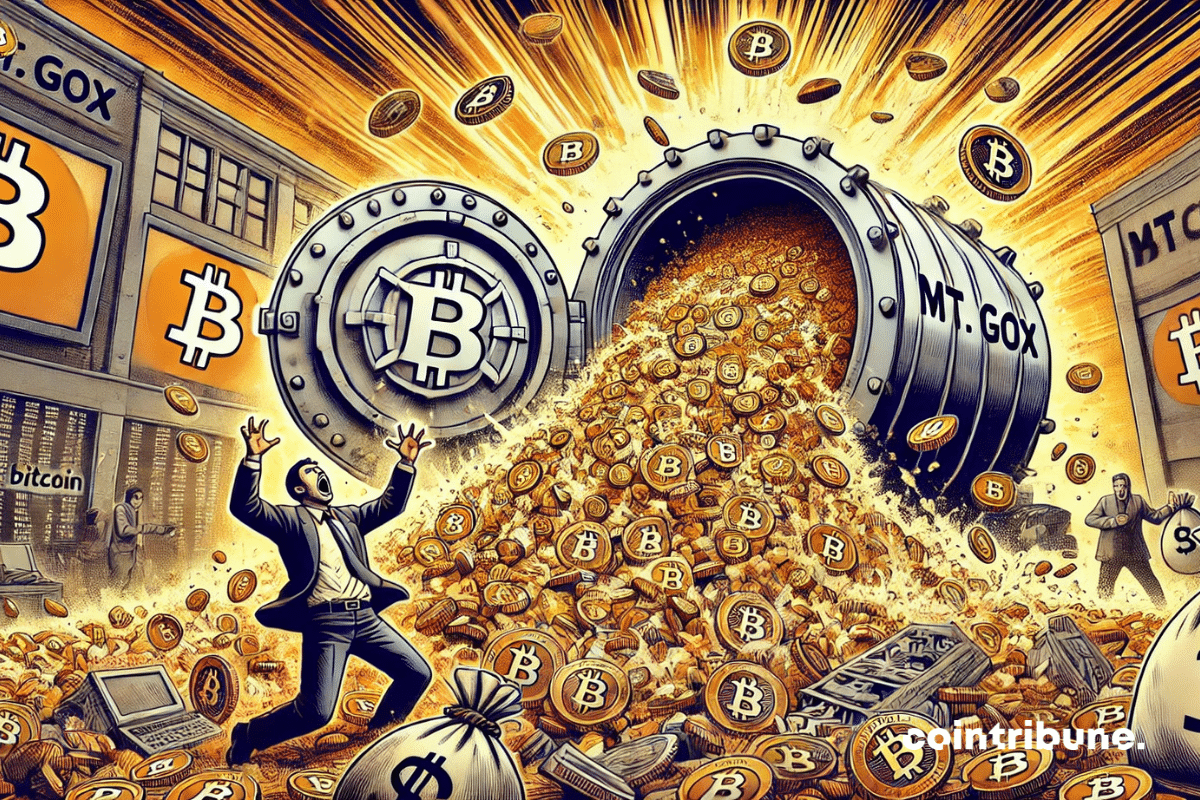
As Bitcoin hovers around $81,000, a massive transfer of nearly 12,000 BTC by the former defunct giant reignites speculation. Between the psychology of the players and invisible market mechanisms, a breakdown of a tremor that recalls the fragility of an ecosystem still marked by its ghosts. Did Mt. Gox just…
The landscape of decentralized finance (DeFi) resembles a battlefield. In just a few months, $45 billion has evaporated, sweeping away the hopes sparked by Donald Trump's election in 2024. Amidst dashed hopes, technical errors, and secret accumulation strategies, Crypto is weathering a storm. How did we get here? A deep dive into the guts of a collapse that questions the very future of DeFi.
Bitcoin, often seen as a safe haven against the failures of traditional currencies, is experiencing a striking paradox. While the US dollar is eroding at an unprecedented rate over the last 12 years, the crypto king stumbles. How can this disconnect be explained? Behind this contradiction lie obscure financial mechanisms, neglected indicators, and a silent standoff with central banks. Jamie Coutts, a seasoned analyst at Real Vision, sheds light on this high-stakes duel.
For several days now, the crypto market has been in turmoil. With 1.43 billion XRP traded in just 24 hours, investors are questioning: simple market movement or signs of a radical change? While some see it as an opportunity, others fear speculative manipulation. Analysis.
As cryptocurrencies divide global geopolitics, Russia is carving a unique path. Vladimir Putin, while acknowledging the intangibility of bitcoin, categorically refuses its integration into national reserves. This position contrasts with that of Donald Trump, a fervent advocate of a crypto-sovereign America. Between technological fascination and strategic caution, Moscow plays a subtle balance on the digital chessboard.
The financial landscape of Bitcoin is undergoing a silent transformation. Blockstream, a giant in blockchain infrastructure, has just unveiled an initiative that could rewrite the rules of institutional credit. With three funds totaling several billion dollars, the company is opening an unprecedented breach: transforming Bitcoin into liquid leverage without requiring its sale. A bold move that places BTC holders at the center of a parallel financial system, where digital gold finally becomes a productive asset.
The American stock market has just experienced a financial earthquake. In just a few hours, 3.4 trillion dollars evaporated, erasing the post-election gains in one fell swoop. A disastrous scenario that plunges Wall Street into an unprecedented stupor. And in the crosshairs? Donald Trump, whose new tariffs have ignited the fuse of a crisis with global repercussions.
Donald Trump's announcement on March 2 to include XRP in a U.S. strategic reserve alongside Solana and Cardano propelled the altcoin by +34% in 24 hours. A fleeting flash of glory: by the next day, the price retraced 50%, while on-chain data revealed a massive exit of institutional investors. Is crypto going through a classic pump and dump scenario amplified by politics, or does this pullback hide a discreet accumulation before a rebound?
Bitcoin has rebounded by 20% in just a few days. But behind this spectacle of volatility lurk insidious risks. Amid political euphoria, technical anomalies, and contradictory signals, the king of crypto is navigating a minefield. Here are five key elements to decipher this critical phase.
A collective of financial analysts specializing in cryptocurrencies has published a study suggesting that XRP could reach the staggering value of 18,000 dollars. This prediction, which sparks as much enthusiasm as skepticism within the crypto community, deserves a thorough examination.
The crypto market is shaking. Bitcoin shows a Fear & Greed index plunging to 10 — an unprecedented level of extreme fear since the winter of 2022. As traders hold their breath, a burning question arises: is this panic a deadly trap… or a disguised opportunity?
The crypto market is undergoing a new phase of turbulence. Solana (SOL) has fallen by 41% in just a few weeks. This decline is not just a simple market correction: it highlights structural vulnerabilities and a high dependence on certain speculative trends.
As Bitcoin struggles to maintain its credibility in the face of distressed investors, the crypto market as a whole plunges into a worrisome spiral. The total capitalization reaches an unprecedented level since November 2021, revealing a multifaceted crisis.