Crypto markets are going through a turbulence zone. For the fourth consecutive week, specialized funds record massive withdrawals. Bitcoin stumbles and falls below the symbolic 70,000 dollars mark.
The crypto market has just received a strong signal from traditional finance. By sharply revising its forecasts for Solana, the Standard Chartered bank caused a shock in the ecosystem. While SOL remains one of the most watched assets by institutional investors, the lowering of the target for 2026 contrasts with a spectacular long-term projection. This decision reveals a much more nuanced reading of the future of blockchain than simple price movements suggest.
Solana (SOL) flirts again with the critical threshold of 100 dollars, its lowest in 10 months. For some analysts, this level marks a possible floor, signaling a rebound of +150%. For others, it is just a stage in a still fragile trend. Between hopes for a recovery and technical doubts, the market hesitates. Are the current signals really enough to reverse the momentum?
Crypto investment products suffered steep losses on Thursday as a broad sell-off swept through global markets. The total crypto market value fell roughly 6%, prompting one of the largest single-day fund outflows of the year. Bitcoin and Ether investment products bore the brunt of the decline as investors moved decisively to reduce risk.
Solana sees its validators disappear at an alarming rate, 68% of them have thrown in the towel since 2023. Behind this hemorrhage lies a crucial dilemma: how to reconcile performance and decentralization when costs crush small operators? Between transaction records and growing centralization, the crypto network is betraying its promises.
Solana is taking a new bet: making hardware a driver for crypto adoption. And, this week, the scenario took an unexpected turn. The token linked to the Seeker smartphone, $SKR, jumped more than 200% in a few days, according to CoinGecko data. The movement followed the TGE and the airdrop associated with Solana Mobile's second phone: a $500 Android, designed from the start for on-chain uses. Everyone expected volatility. But the speed and magnitude of the increase clearly awakened the market.
For years, the narrative has been well-oiled: Bitcoin as the ultimate reserve, the rest of the market playing more or less exotic satellites. Yet, some lines are starting to crack. According to crypto analyst and YouTuber FireHustle, the next wave of institutional adoption could well be built elsewhere. More precisely around Solana. A bold hypothesis, almost uncomfortable for maximalists, but deserving more than a shrug.
While the crypto market is going through a downturn phase, Solana (SOL) drops below $130, sowing doubt among investors. However, behind this sharp drop, the on-chain data outline a very different scenario. Whales buying, supply free-falling on exchanges, network activity booming: the fundamentals remain solid. A marked divergence between price and network reality, which could reshuffle the cards faster than imagined.
While the crypto ecosystem oscillates between uncertainty and consolidation, Solana attracts an unexpected wave of users. In the space of 24 hours, more than 8.9 million new addresses were created on the network, a record that reignites attention on this blockchain known for its speed and efficiency. Behind this sudden enthusiasm lies a more nuanced reality, where the enthusiasm of newcomers clashes with fragile technical signals.
Memecoins live at a strange pace. Everything goes very fast, then nothing. On Solana, Pump.fun has been one of the main accelerators of this dynamic. But when a platform grows, every setting becomes political. Even a simple fee.
Pump.fun has just made crypto history by exceeding 2 billion dollars in daily volume thanks to Solana memecoins. Between rapid opportunities and legal risks, this explosion raises questions: sustainable revolution or bubble ready to burst?
A crypto user known as “The Smart Ape” lost about $5,000 from a hot wallet during a short hotel stay. No phishing links were opened, and no fake sites were used. Instead, a chain of small missteps created the conditions for a delayed wallet drain. Security researchers say the case shows how everyday actions, both online and offline, can combine into a serious loss.
Solana is changing its status. Long perceived as a fast alternative to Ethereum, the blockchain now attracts leading institutional investors. This rise comes as the network consolidates its technical fundamentals. The accumulation of SOL by specialized funds fuels a new dynamic, at the crossroads of real uses and financial flows. At the start of this year, Solana no longer just promises: it establishes itself as a structuring player in the ecosystem.
Solana Mobile has confirmed plans to distribute its new ecosystem token, SKR, through an airdrop scheduled for January 20. Distribution will target second-generation Seeker smartphone users and developers building apps for the device. Earlier Saga phone owners will not qualify, marking a shift toward the newer hardware.
A stablecoin backed by BlackRock, a crypto ecosystem in superapp mode… what if Jupiter was preparing the discreet invasion of the dollar into our decentralized wallets?
At Visa, it's no longer a toss-up with crypto: 91 million later, the card becomes the new favorite toy of decentralized financiers. To be continued…
Despite a 46% drop in three months, Solana tops the crypto trends at the start of this year, according to Santiment data. This accumulation is supported by large wallets, while the majority of investors remain hesitant after an unstable 2025. Such a discreet but structured movement calls for attention. Is it a simple opportunistic bet or an early reversal signal?
Solana shakes up the crypto market with a massive liquidation in just one hour. All details in this article.
Charles Hoskinson compares Solana and Ethereum, noting Solana’s rapid growth potential and Ethereum’s focus on long-term, research-driven development
Trump launches a stablecoin, Binance rolls out the red carpet, and here is USD1 at the top. Political coincidences or decentralized finance with a MAGA twist? The crypto story is written in capital letters.
When two former crypto rivals kiss on an ADA–SOL bridge, it smells like strategy… or a plot to dethrone Ethereum quietly, under Bitcoin's watchful eyes.
Global crypto exchange-traded products (ETPs) saw a sharp pullback last week amid a return to regulatory uncertainty. New data from CoinShares shows investors withdrew nearly $1 billion, ending a three-week streak of inflows. Delays around the U.S. Clarity Act played a key role in weakening sentiment, especially among U.S.-based institutions. Market activity also pointed to rising caution around large holders and near-term policy risks.
Memecoin trading on Solana is under new legal scrutiny after investors accused several crypto firms of operating an unfair trading system. A federal lawsuit alleges private messages show coordination between blockchain engineers and a popular memecoin platform, putting retail traders at a disadvantage. A judge has allowed the case to proceed with expanded claims.
Stablecoins continue to gain a stronger foothold across global crypto markets. This growth now appears not only in supply figures but also in transaction activity across blockchains. In Europe, momentum is building around euro-linked tokens, while USDC continues to expand across multiple networks. Recent data points to a shift toward transaction-driven expansion rather than passive issuance.
The Christmas season often raises the same question each year: what gift will have lasting value? For people involved in crypto, interests extend far beyond standard tech gadgets. Crypto users form a global community focused on digital ownership, financial independence, and long-term participation in blockchain networks. And as such, selecting a crypto-related gift shows awareness of these priorities. This article presents practical, beginner-friendly crypto gift ideas suited to different interests while remaining useful long after the holidays.
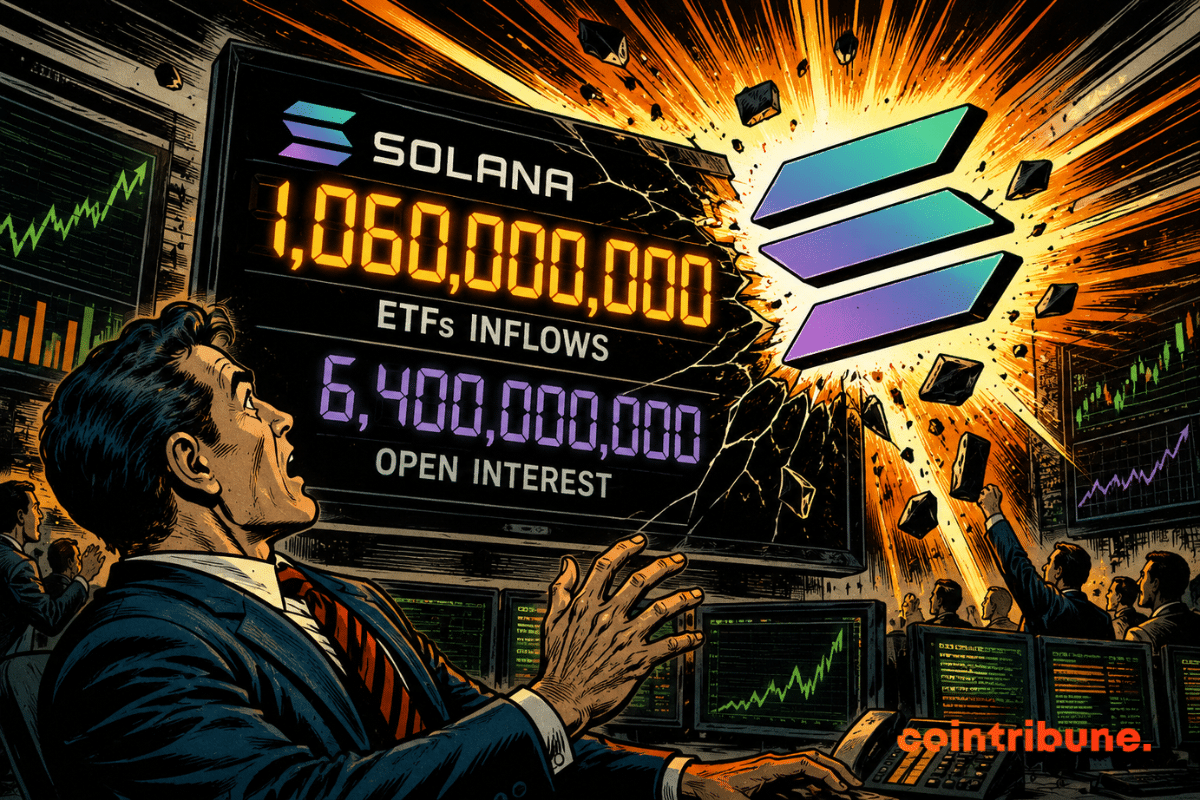
In 2025, institutional money flees Bitcoin and Ethereum to rush towards XRP and Solana, with record ETF flows exceeding one billion dollars. Why this historic turnaround? The data reveal an irreversible trend: investors now bet on crypto assets with concrete utility, not speculation.
Financial products backed by XRP have just crossed the one billion dollar mark in assets under management. For several weeks, inflows have accelerated, driven by renewed institutional interest. In a market dominated by Bitcoin and Ethereum ETFs, the growth of Ripple's asset surprises by its consistency. This movement contrasts with capital outflows observed elsewhere, signaling a discreet but firm repositioning of investors towards an asset long kept in the background.
Brazil did not wait for crypto to fall in line. It simply decided to open the official path for it. With the arrival of the Solana (VSOL) product on the B3, the country’s main stock exchange, the Brazilian market takes a step forward, that of assumed regulated crypto. And for Valour, the DeFi Technologies subsidiary, this is much more than a simple launch. It is a signal addressed to an entire continent.
Solana is not collapsing but shows a clear cooling in the crypto market. SOL lost 52% between September 18 and November 21, in a context where altcoins have dropped. The key point is not just the price drop towards a possible 80 dollar scenario, it is the simultaneous decline of on-chain indicators, which suggests a real decrease in usage and engagement on the network.
Solana has resisted one of the most intense DDoS attacks ever recorded on a public blockchain, peaking at 6 terabits per second. The network remained stable, with no interruptions or notable degradation. This inadvertent test, occurring amid recurring technical tensions in the ecosystem, marks a turning point. Long criticized for its instabilities, Solana today shows robustness that could change its position in the hierarchy of decentralized infrastructures.