DeFi TVL has lost 39% since January 2026. Crypto market correction, 121 hacks and capital flight: full analysis.
The crypto market has just experienced one of the most violent shocks of the year, illustrating once again the fragility of positions heavily linked to leverage effects in the face of macroeconomic uncertainties and technological disruptions. In just a few hours, more than 100 billion dollars of global market capitalization disappeared. This massive purge occurs in a context of global technological rout and regulatory tightening and plunged the Crypto Market Fear & Greed index into an "extreme fear" zone, with a score of 23.
Bitcoin ETFs show a negative result of $68M despite combined inflows of $121M from Ark Invest and Fidelity. Full analysis.
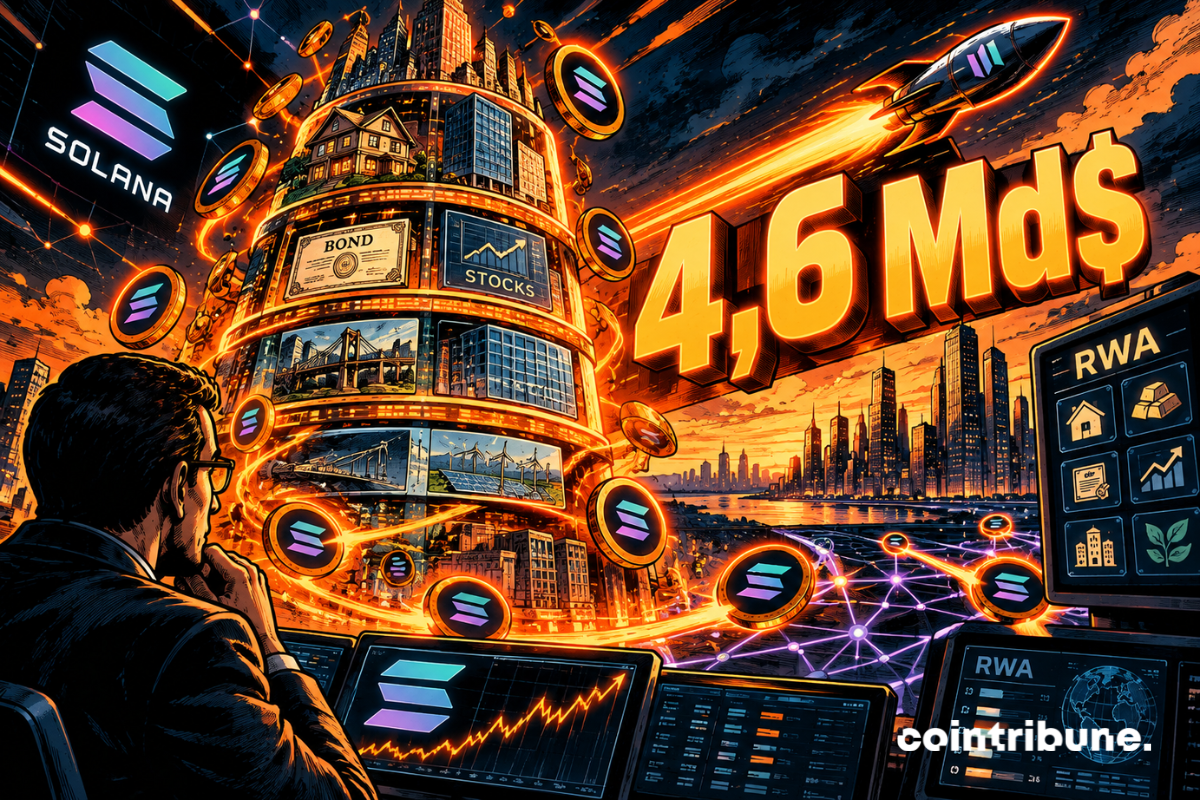
The crypto market is going through a period marked by strong attention to prices, but certain sectors continue to evolve. Solana is gradually gaining ground in the tokenization of assets and digital stocks. Its network is attracting more activities linked to real-world assets, a sector that could play an important role in the next phase of blockchain adoption.
Solana defies logic: institutions build up while its price collapses. Why? Tokenized RWA, growing ETFs, and unclear technical trends make SOL an intriguing crypto paradox.
Solana falls much faster than Ethereum in June. However, ETFs tell a completely different story than the price. Full analysis!
The CME Group started trading futures contracts on the Nasdaq CME Crypto index on June 9, covering eight leading digital assets. This product responds to an institutional demand that goes far beyond the bitcoin/ether pair alone. Traditional finance is, once again, setting its milestones in the crypto universe.
The crypto market panics, but engineers build. Against all odds, Ethereum crushes the competition with a staggering volume of activity on GitHub. Discover the figures that price charts hide from you.
Nearly 350 million dollars left Bitcoin and Ethereum ETFs in a single day, a signal confirming the gradual disengagement of some institutional investors from the two main cryptos on the market. However, this capital does not seem to be fleeing the ecosystem as a whole. At the same time, ETFs linked to XRP, HYPE, and Solana record net inflows, revealing a reallocation of flows that could reshape investor preferences in the coming weeks.
Flows change direction in the crypto market. This week, Bitcoin and Ethereum ETFs recorded significant capital outflows, while funds related to XRP, Solana, and HYPE attracted new investments. Behind these movements is a gradual rotation of institutional investors, who now seem to seek more exposure to altcoins than to the market's dominant assets.
The price of the crypto SOL collapsed by 33% in the first quarter of 2026. Yet, behind this brutal decline, the Solana network has never been so active. How to explain this paradox?
The crypto market has just crossed a symbolic milestone. For the first time, Hyperliquid surpassed Solana in fully diluted valuation (FDV), an indicator increasingly scrutinized by institutional investors. Behind this duel of numbers lies a much deeper transformation: the emergence of "revenue chains," capable of generating massive financial flows through trading and on-chain finance.
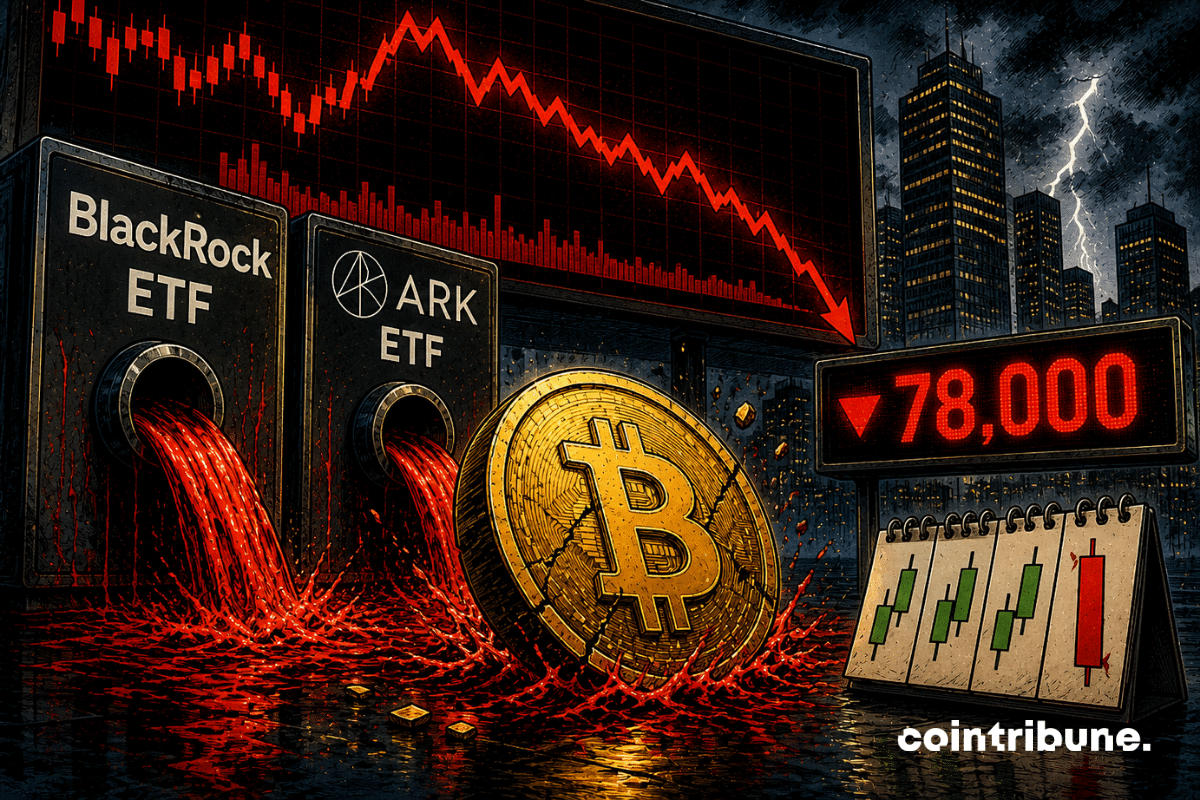
In a single day, Bitcoin and Ethereum ETFs lost more than 735 million dollars. BlackRock alone saw $448M flee from IBIT. Here's why it should alert crypto investors!
Goldman Sachs has just revised its crypto positions and the signal sent to the market is already intriguing Wall Street. A simple adjustment... or the beginning of a new institutional cycle?
Solana stumbles slightly after its sprint, but the bulls still refuse to put away their technical rifles. Behind the red candles, several crypto analysts still sense a rebound capable of surprising sustainably.
Bitcoin ETFs have just suffered their largest capital outflow in more than three months. On May 13, spot BTC funds lost $635.23 million in a single session. On the other hand, Solana remains in positive territory. The crypto market does not cut risk everywhere. It simply changes direction.
Institutional capital is beginning to shift direction in the American crypto market. While Bitcoin regains inflows thanks to Morgan Stanley, ETFs linked to XRP and Solana now attract a growing share of flows. Driven by expectations around the Clarity Act, this movement contrasts with the persistent weakness of Ethereum ETFs and reveals a gradual repositioning of investors on assets most exposed to the future American regulatory framework.
Solana reaches a decisive stage with Alpenglow. The upgrade of its consensus now enters a community testing phase, before a possible activation on the mainnet between the end of the third quarter and the beginning of the fourth quarter of 2026.
While some buried Solana between two lukewarm coffees, ETFs quietly fill their pockets, while crypto traders and speculators relight their greasy screens around the famous $120 now nervously watched.
While Ethereum jealously guards its old digital hoard, Solana and Base are quietly nibbling at its pockets. Behind the crypto scenes, some are already nervously recounting the kingdom's tokens.
Solana regains its place in crypto discussions again. Indeed, on social media, optimism around SOL reaches heights that the market had not seen for several months. However, behind this speculative euphoria, on-chain data paints a much less flattering picture. While investors bet on a possible token rebound, the real network activity continues to slow down. This contrast is beginning to worry analysts specializing in blockchain metrics.
AI agents enter a new phase: they can now pay for digital services themselves. With Pay.sh, Solana and Google Cloud want to make stablecoins a native payment layer for the artificial intelligence economy.
Western Union accelerates in digital payments. The group announced USDPT, a US dollar stablecoin based on the Solana blockchain and issued by Anchorage Digital Bank NA. This initiative aims to integrate a regulated digital dollar into an already well-established global network. Through this project, Western Union seeks to improve international settlements while relying on a large-scale existing infrastructure.
The crypto market is once again eyeing Solana. A technical signal identified on its weekly charts, previously observed during strong upward phases, has just been confirmed. This return occurs in a still fragile environment where investors are seeking benchmarks. Between historical precedent and critical price levels, the asset finds itself at a pivotal moment in its trajectory.
Crypto trading leaves traditional platforms to infiltrate daily uses. With the arrival of XRP on WhatsApp via the Solana ecosystem, a new gateway to DeFi opens, directly from a simple conversation. Behind this innovation, bots capable of executing orders from text messages redefine the user experience. This convergence between messaging and decentralized finance raises questions: is this a major turning point or an underestimated risk?
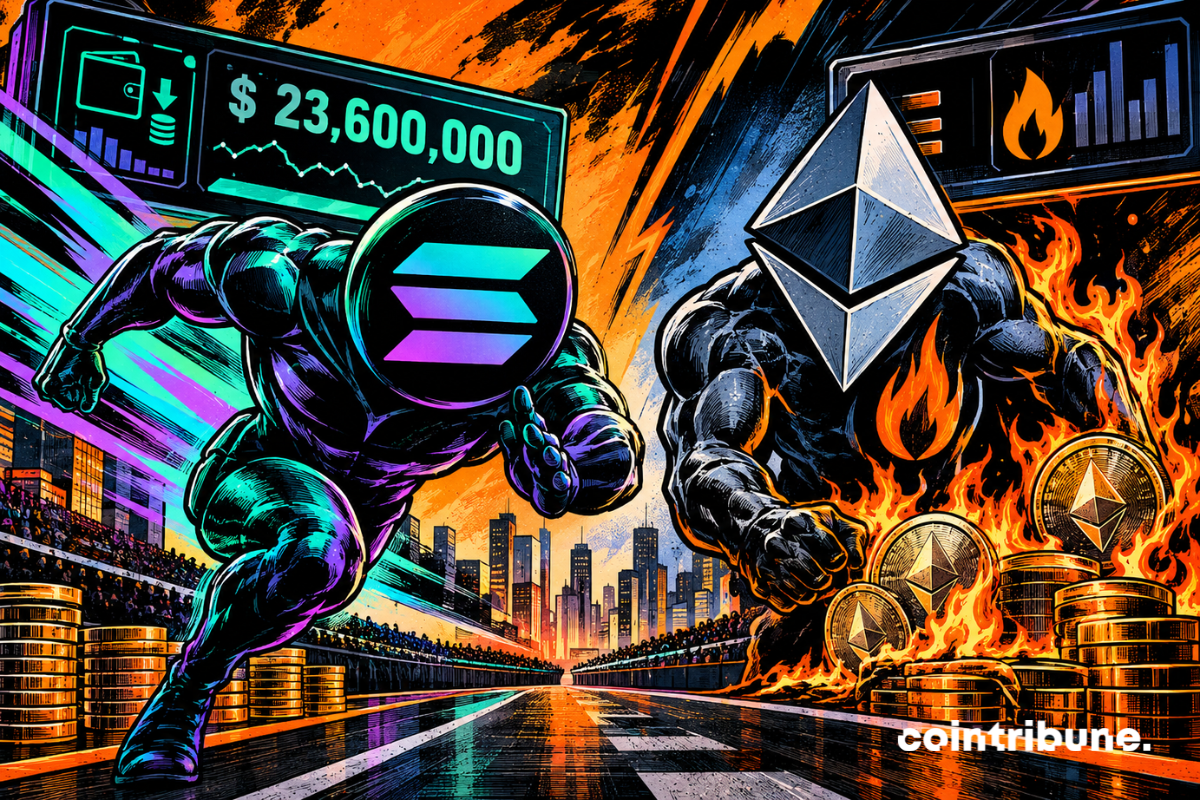
Solana leads Ethereum in decentralized applications revenue for five consecutive weeks. This indicator, focused on actual user activity, reveals a shift in power dynamics between the two blockchains. The now established trend draws the attention of market players.
Interest in Solana derivatives products has risen sharply in recent days, accompanied by an increase in the crypto's price. This renewed activity raises a market question: is a return to 100 dollars possible in the short term? Behind this dynamic, indicators send mixed signals, between rising leverage and persistent investor caution.
Crypto news: $471M net flows on Bitcoin ETFs in one day. Here is what this institutional signal really means.
While the heavyweights Bitcoin and Ethereum take a breather, Solana and XRP pick up the stakes, and crypto plays its old sleight of hand again.
The Solana Foundation has just reached a decisive milestone. It is launching a platform dedicated to financial institutions, with three heavyweights from the sector on board: Mastercard, Western Union and Worldpay. Blockchain, long seen as a field reserved for insiders, is now entering the corridors of major banks and payment companies.