The Bank of England Eases Its Stance on Stablecoins
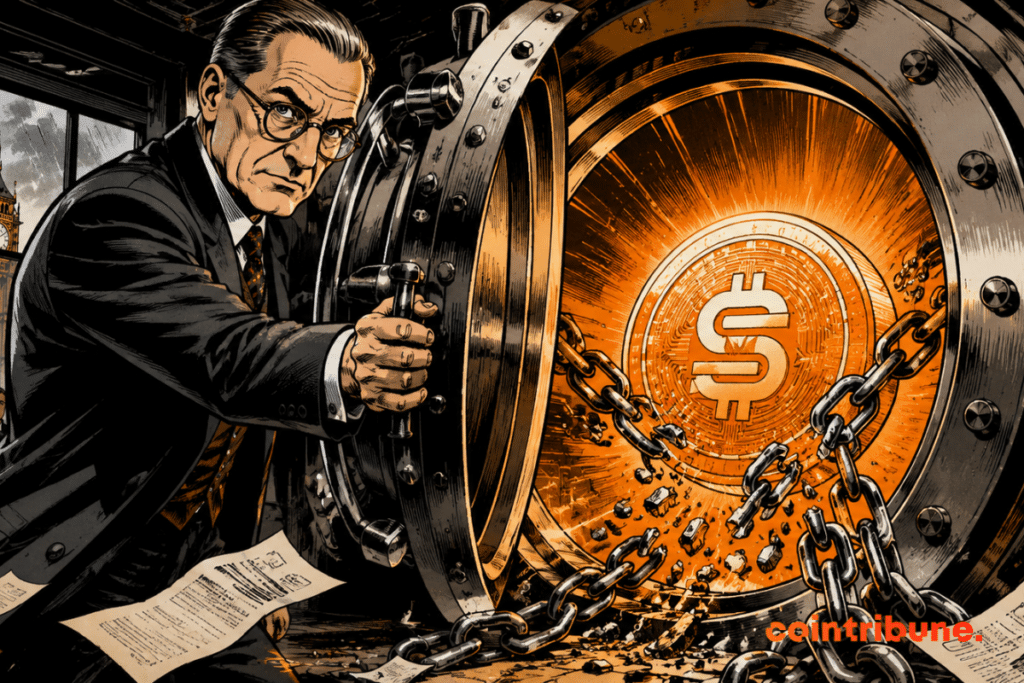
The Bank of England is considering a comprehensive review of its regulatory framework on sterling stablecoins. Under pressure from the private sector, the institution is reconsidering rules deemed too restrictive, and potentially fatal for the UK’s competitiveness against the United States and Europe.
In brief
- The Bank of England is reassessing the limits imposed on sterling stablecoins.
- Reserve requirements considered too strict could be relaxed.
- The crypto sector believes current rules hinder innovation in the UK.
The Bank of England Eases Its Grip on Stablecoins
The Bank of England confirmed on May 14, 2026, that it is reviewing several key measures of its upcoming regulatory framework on sterling stablecoins. Deputy Governor Sarah Breeden acknowledged that some proposed constraints could hinder the sector’s development in the UK.
The most contested point concerns holding limits. The current draft stipulates that an individual cannot hold more than 20,000 pounds of the same British stablecoin. Businesses, meanwhile, would be limited to about 13.5 million dollars during a transitional phase.
This is coupled with a particularly strict obligation: at least 40% of issuers’ reserves should be held as non-interest-bearing cash deposits at the central bank. Market participants say this requirement greatly reduces the profitability of stablecoins and discourages future issuers.
This reaction is no accident. Today, the global stablecoin market remains largely dominated by dollar-pegged tokens like Tether and USD Coin. Sterling-backed stablecoins still represent only a marginal share of the sector.
The UK now fears falling behind. As the United States speeds up crypto regulations under Donald Trump’s administration, and the European Union gradually rolls out the MiCA framework, London seeks to preserve its financial attractiveness.
London Seeks a Balance Between Innovation and Financial Stability
For several years, the Bank of England has taken a cautious approach towards stablecoins. The institution especially fears a massive flight of traditional bank deposits into tokenized digital currencies.
This risk is taken very seriously. If millions of users suddenly transfer their funds into regulated stablecoins, some commercial banks might see their liquidity weakened. For the central bank, stablecoins must therefore offer a level of security comparable to traditional payment infrastructures.
But this very conservative view is starting to show its limits. Several law firms, fintech companies, and crypto platforms have warned that the British framework could render local stablecoins less competitive than their American or European counterparts.
The issue goes far beyond simple crypto. Stablecoins are gradually becoming a central pillar of global digital finance. They are already used in:
- cross-border payments;
- corporate treasury;
- instant settlements;
- DeFi;
- tokenization of financial assets.
In this context, excessive rigidity could push innovative companies to leave London for more favorable jurisdictions.
The Bank of England’s change of tone thus reflects a deeper reality: major financial powers can no longer ignore the rise of stablecoins. After Bitcoin ETFs, tokenization, and strategic BTC reserves, the battle over digital currencies is now entering a new phase.
The Bank of England is now trying to find a tightrope between financial prudence and economic competitiveness. Its future regulatory framework could determine whether the UK becomes a major player in stablecoins or just a spectator in a market dominated by the dollar.
Maximize your Cointribune experience with our "Read to Earn" program! For every article you read, earn points and access exclusive rewards. Sign up now and start earning benefits.

Passionné par le Bitcoin, j'aime explorer les méandres de la blockchain et des cryptos et je partage mes découvertes avec la communauté. Mon rêve est de vivre dans un monde où la vie privée et la liberté financière sont garanties pour tous, et je crois fermement que Bitcoin est l'outil qui peut rendre cela possible.
The views, thoughts, and opinions expressed in this article belong solely to the author, and should not be taken as investment advice. Do your own research before taking any investment decisions.