Crypto platforms complicit with Russia in the sights of the EU's 21st sanctions package
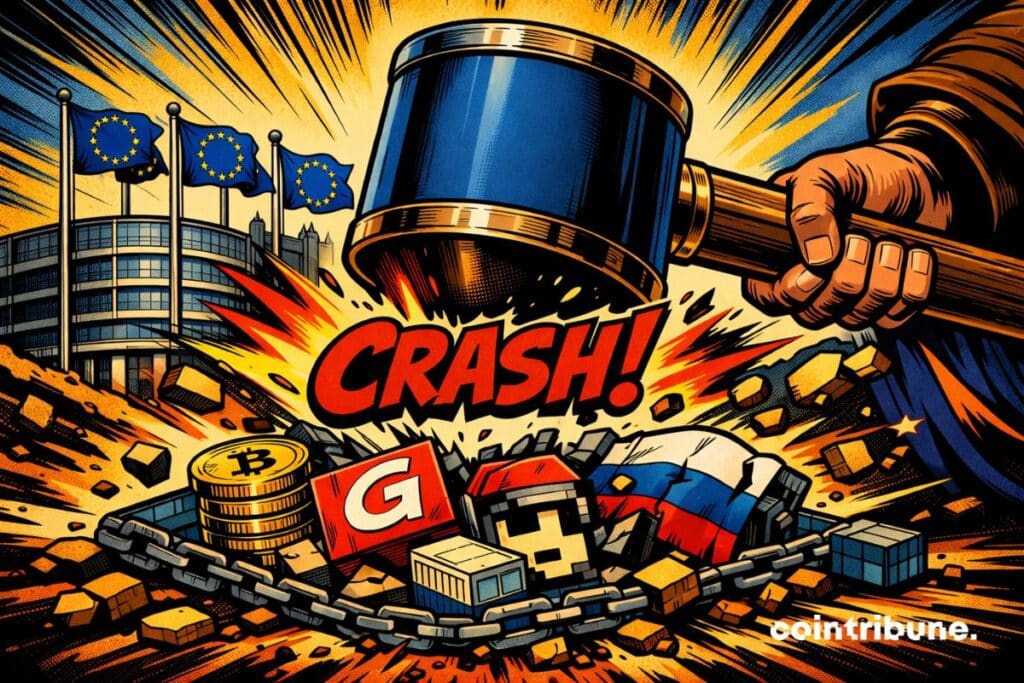
The European Union shifts into high gear with its 21st sanctions package now targeting crypto platforms complicit with Russia. A historic first that could disrupt markets and redefine the geopolitical rules of the game.
In brief
- The EU expands its sanctions to crypto platforms helping Russia evade restrictions, in the 21st sanctions package.
- 20 third-party entities (banks, exchanges) targeted for their role in evading Russian sanctions.
- A global first with a potential ban on crypto services for complicit countries.
The European Union targets crypto platforms helping Russia, in its 21st sanctions package
For the first time, the European Union extends its sanctions to the crypto ecosystem by proposing a total ban on crypto services and platforms for non-EU countries hosting platforms that help Russia circumvent restrictions. This measure, included in its 21st sanctions package announced on June 9, 2026, aims to close the loopholes used by Moscow to finance its war in Ukraine through opaque transactions.
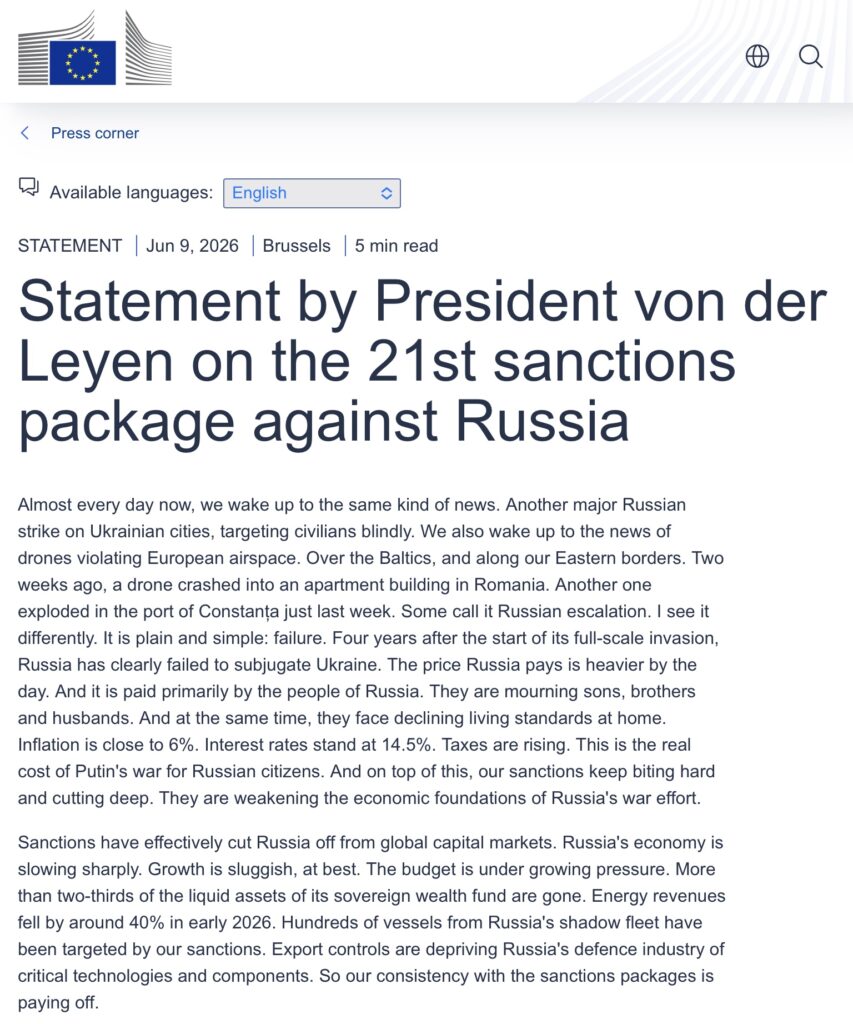
Specifically, the European Commission targets 20 third-party entities (banks, crypto exchanges, traders) involved in illicit transfers for sanctioned Russian actors. Among them are giants like HTX (formerly Huobi), already sanctioned by the United Kingdom. The goal? To deter third countries from tolerating these practices under the threat of losing access to the European market. This decision takes place in a context where illicit crypto addresses linked to Russia handled 154 billion dollars in 2025! With stablecoins like A7A5 supported by the Russian state playing a key role. A revolution in the fight against sanctions evasion.
The crypto most affected by EU sanctions against Russia
While Bitcoin (BTC) remains the most used crypto for cross-border transfers, it is primarily stablecoins linked to Russia that could experience the biggest shock. Indeed, the European Commission explicitly targets platforms facilitating exchanges in digital rubles or stablecoins backed by Russian assets, such as A7A5, which generated 93.3 billion dollars in volume in 2025.
Moreover, centralized exchanges (CEX) under European jurisdiction or collaborating with the European Union must freeze accounts and block suspicious crypto transactions. A measure that could push Russian users towards DEXs (decentralized platforms), which are less regulated but riskier. Finally, bitcoin could see its liquidity reduced in Europe if platforms strictly comply with the new rules. A real-life test for the industry.
The European Union strikes where it hurts: crypto. But will these sanctions be enough to strangle Russia? Or will they push it to innovate with even more opaque solutions? And you, do you think crypto can still escape state control?
Maximize your Cointribune experience with our "Read to Earn" program! For every article you read, earn points and access exclusive rewards. Sign up now and start earning benefits.

The world is evolving and adaptation is the best weapon to survive in this undulating universe. Originally a crypto community manager, I am interested in anything that is directly or indirectly related to blockchain and its derivatives. To share my experience and promote a field that I am passionate about, nothing is better than writing informative and relaxed articles.
The views, thoughts, and opinions expressed in this article belong solely to the author, and should not be taken as investment advice. Do your own research before taking any investment decisions.