After the digital euro, the EU should tokenize the SEPA according to the Bank of Italy
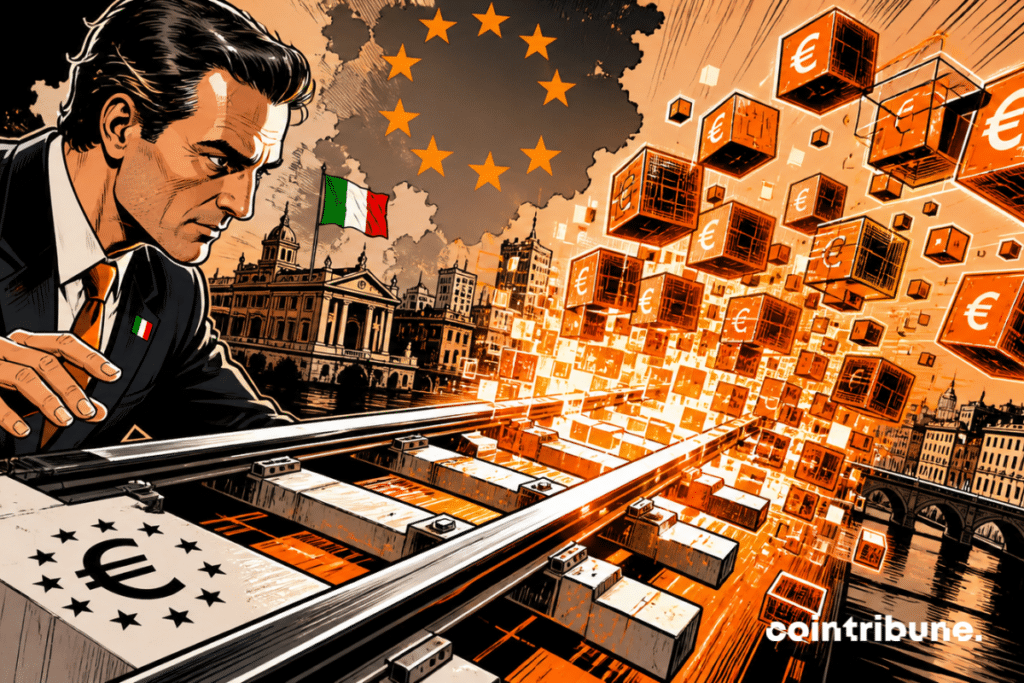
Europe could soon deeply rethink its payment infrastructure. The Bank of Italy has just sent a strong signal in favor of a tokenized version of the SEPA system. An initiative that could redefine the role of the euro in an increasingly digital financial world.
In brief
- The Deputy Governor of the Bank of Italy, Chiara Scotti, advocates for a tokenized extension of the SEPA payment system.
- SEPA represents 116 trillion euros in cashless transactions in the first half of 2025.
- The digital euro remains the most advanced project on the ECB side, with online payment tests already underway.
The tokenized SEPA, an idea gaining momentum in Rome
It was from Rome, during a speech delivered Monday, that Chiara Scotti, Deputy Governor of the Bank of Italy, launched the idea. Her message is clear: the European Union should seriously consider a tokenized version of its common payment system, the SEPA (Single Euro Payments Area).
For Scotti, tokenization is no longer an experimental technology. It has become “relevant.” And rather than waiting for new instruments to emerge, she advocates leveraging what Europe already has.
“A tokenized extension of SEPA could constitute an important axis of reflection, relying on a distinctive European asset: a large-scale common payment framework, equipped with shared standards and an established degree of interoperability“, she said.
The observation is relevant. SEPA handles colossal volumes: in the first half of 2025, cashless transactions reached 116 trillion euros, an increase of 2.9% year-on-year according to the ECB. Tokenizing this infrastructure potentially offers the euro a new lease on life in the global digital economy.
Digital euro, stablecoins, where does Europe really stand?
The Bank of Italy does not stop there. Chiara Scotti also recalled that the digital euro remains the most advanced project analytically. Monetary policy, financial stability, privacy protection, inclusion: all angles have been scrutinized by the ECB and the Eurosystem.
Proof of this dynamic, the ECB has just signed agreements with three standardization bodies, European Card Payment Cooperation, Nexo Standards, and Berlin Group, to test the processing of online payments related to the digital euro.
On stablecoins and tokenized deposits, the tone is more cautious. These instruments “can serve legitimate use cases,” Scotti acknowledges, but their implications for the monetary system remain “less clear.”
A message that resonates in a context where dollar stablecoins, such as USDT or USDC, are gaining ground globally. Europe cannot afford to ignore this dynamic, at the risk of seeing the euro lose influence in digital financial flows.
In short, the Bank of Italy’s proposal comes at the right time. While the digital dollar is advancing quietly and stablecoins are reshaping global exchanges, Europe has a card to play with the tokenized SEPA. The real question is no longer whether the euro should digitize, but how quickly Brussels will be ready to take the step.
Maximize your Cointribune experience with our "Read to Earn" program! For every article you read, earn points and access exclusive rewards. Sign up now and start earning benefits.

Passionné par le Bitcoin, j'aime explorer les méandres de la blockchain et des cryptos et je partage mes découvertes avec la communauté. Mon rêve est de vivre dans un monde où la vie privée et la liberté financière sont garanties pour tous, et je crois fermement que Bitcoin est l'outil qui peut rendre cela possible.
The views, thoughts, and opinions expressed in this article belong solely to the author, and should not be taken as investment advice. Do your own research before taking any investment decisions.