Crypto: The CLARITY Act Faces Renewed Turmoil, but Patrick Witt Remains Confident
The Clarity Act is still not dead. Patrick Witt, the White House crypto advisor, even says he is “optimistic” ahead of the next vote scheduled in the Senate on September 15. The text exceeds 600 pages and aims to give the United States a federal framework for the crypto market. However, an old issue complicates the discussions again: the rewards paid on stablecoins.
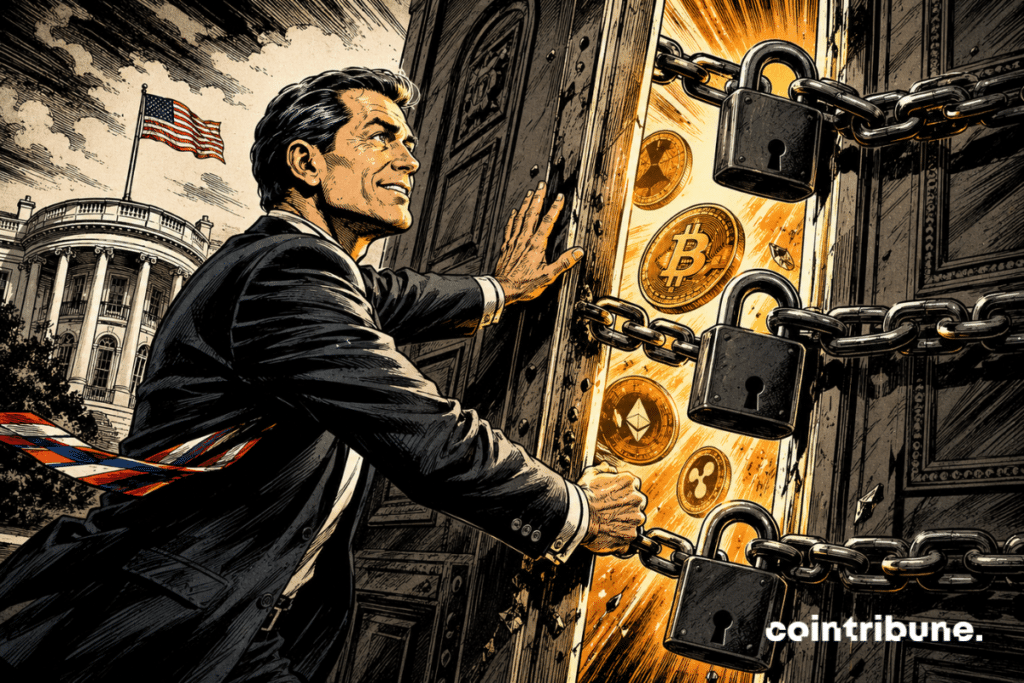
In brief
- The Senate plans a new stage of the Clarity Act on September 15.
- The compromise on stablecoin rewards returns to the discussions.
- Ethics rules targeting Donald Trump’s crypto activities also remain to be settled.
Crypto now awaits September 15
American senators are currently enjoying their summer break. They are to return to Washington in mid-September. The Clarity Act awaits them. The text has been seeking for months to clarify the SEC and CFTC’s jurisdictions over the crypto market. The House of Representatives had already adopted its version in July 2025.
In the Senate, things are taking much longer. John Thune, the Republican majority leader, has scheduled a cloture vote for September 15. This procedure would allow progress toward a vote on the text by limiting debates.
Patrick Witt wants to believe in it. The White House crypto advisor said Tuesday that Republicans intend to use the coming weeks to discuss with Democrats and resolve the still open disagreements. He says he is “optimistic and confident.” The schedule leaves little room. The Senate returns in September before another break in October.
Stablecoins return to the table
Washington thought it had found a compromise. Banks have refused for several months that crypto platforms pay yields simply because a user holds stablecoins in their account. They fear direct competition with bank deposits in particular.
The crypto industry defends these programs. A compromise negotiated by Senators Angela Alsobrooks and Thom Tillis was supposed to calm both sides. It would ban rewards granted solely for holding the stablecoin.
Payments and certain transactions, however, could continue to entitle rewards.
The matter seemed settled.
Not really.
Tim Scott, Republican chairman of the Senate Banking Committee, acknowledged Tuesday that the stablecoin problem had resurfaced. So discussions will have to reopen. This debate had already caused several postponements of the Clarity Act in spring. Banks and crypto companies thus return to a battle several months old.
The subject is very important for exchanges. Rewards programs represent a profitable activity and allow stablecoins to compete more directly with certain traditional financial products.
No one really wants to give in.
Trump also remains in the negotiations
Stablecoins are not the only obstacle. Democrats still want to strengthen provisions concerning crypto interests of political officials. Donald Trump himself has several financial ties with the sector.
A first proposal would prevent public officials and their spouses from issuing or promoting certain digital assets. They could still invest. The measure also provides for its expiration in January 2029.
Another proposal led by Senators Ruben Gallego and Thom Tillis would allow state attorneys general to enforce some of these rules. Trump is still reviewing this version. Cynthia Lummis does not know what he will decide.
Meanwhile, U.S. regulation of stablecoins is advancing on another front. The Treasury has just published new rules preparing the implementation of the GENIUS Act. The Clarity Act will then have to be coordinated with this framework. Patrick Witt remains confident. September 15 will say whether the Senate shares his optimism.
Maximize your Cointribune experience with our "Read to Earn" program! For every article you read, earn points and access exclusive rewards. Sign up now and start earning benefits.

Fascinated by Bitcoin since 2017, Evariste has continuously researched the subject. While his initial interest was in trading, he now actively seeks to understand all advances centered on cryptocurrencies. As an editor, he strives to consistently deliver high-quality work that reflects the state of the sector as a whole.
The views, thoughts, and opinions expressed in this article belong solely to the author, and should not be taken as investment advice. Do your own research before taking any investment decisions.