
Tue 24 Feb 2026 ▪
6 min read
▪
by
Stablecoins want to buy U.S. debt. 2 trillion in their sights. The Treasury panics, 30-year bonds suffer. Tether is rubbing its hands.
Stablecoins want to buy U.S. debt. 2 trillion in their sights. The Treasury panics, 30-year bonds suffer. Tether is rubbing its hands.

Bitcoin approaches the end of February under pressure, with market sentiment reaching historically low levels. Sellers take control, whales become active, and comparisons with the 2022 bear market multiply. Should we really expect a return to $50,000?

Bitcoin’s underlying supply dynamics are showing early signs of recovery after months of steady distribution. A key on-chain measure known as apparent demand has returned to positive territory for the first time in three months. The shift comes even as price action remains range-bound and institutional flows stay cautious.

Metaplanet CEO Simon Gerovich has pushed back against growing criticism of the company’s Bitcoin treasury strategy and disclosure practices. Anonymous accounts on X alleged that the firm withheld price-sensitive information tied to large Bitcoin purchases, derivatives positions, and Bitcoin-backed borrowings. Gerovich dismissed the claims, arguing that the company’s filings and public announcements clearly document its activities.

Bitcoin is going through a turbulent zone, but the numbers might tell a very different story. Economist Timothy Peterson just published an analysis that catches attention: according to him, the probability that bitcoin will end the year higher than its current level is 88%. Enough to rekindle hope or fuel debate.

In a crypto market shaken by volatility, Michael Saylor reignites the strategic tension around bitcoin. The head of Strategy hinted that a new purchase might be imminent as his company nears a historic threshold of 750,000 BTC in reserve. This methodical accumulation, carried out despite a bearish context, goes beyond simple treasury management. It could impact market balance and revive the debate on the growing influence of institutional players in the Bitcoin ecosystem.

The crypto market shakes, but investors act. Despite an "Extreme Fear" index and record Bitcoin ETF withdrawals, Robinhood reveals a surprise trend: diversification is exploding. Bitcoin and Ethereum are no longer enough. Which cryptos and strategies dominate the market?

XRP has just triggered a signal that the market had not observed since 2022. Within a week, the token dropped by about 4% while on-chain data revealed nearly $1.93 billion in realized losses, an unprecedented level in nearly four years. This shock reflects a wave of massive selling. Is this a capitulation signaling a bottom, or a new warning in a still unstable macroeconomic environment?

A historical indicator puts bitcoin under pressure. According to a metric based on past cycles, BTC could aim for $122,000 on average over ten months, with a high probability of showing a higher price by 2027. At a time when the market is hesitating between consolidation and bullish recovery, this statistical signal draws attention. It promises nothing, but it revives a central question: is the next peak already forming?

Ethereum is refocusing on its base layer, pushing key upgrades to boost security and long-term resilience.

Uniswap Labs releases seven AI modules allowing automated agents to handle swaps, liquidity, and pool management efficiently

Bitcoin’s short-term risk metrics have slipped into extreme territory, reviving debate over whether the market is nearing another major bottom. A widely followed measure, the short-term Sharpe Ratio, has dropped to around -38.38—a level seen only a handful of times in Bitcoin’s history. Analysts tracking on-chain and statistical data say similar readings have previously aligned with long-term buying opportunities.

After the closure of Garantex, Russia did not lose its channels for circumventing sanctions. It multiplied them. Five new crypto platforms have taken over, according to an alarming report from Elliptic.

Ethereum is putting an old crypto promise back at the center of the game. Not the marketing promise. The political promise. The one that says a public network should not depend on the mood of an intermediary, a blacklist, or a "we'll see later." Vitalik Buterin just reignited this cypherpunk thread with a simple, almost brutal message: Ethereum "going hard." Behind the phrase, there is a very concrete technical choice: FOCIL, for Fork Choice Enforced Inclusion Lists, announced as the flagship on the consensus side of the upcoming Hegota upgrade, expected in the second half of 2026.

The big fish are emptying their pockets on Binance. The whale ratio soars to 0.64. Meanwhile, small holders watch their altcoins sink. Nice!

The post-election rally in the US was short-lived. Less than a year after the November 2024 presidential election, the crypto market has erased almost all the gains accumulated in its wake. Driven by a spectacular surge in altcoins, the sector peaked in October 2025 before sharply giving up ground. Since this peak, capitalization has fallen by about 40%, ending a bullish momentum that seemed firmly established. The electoral cycle ultimately did not fulfill its promises.

US spot Bitcoin ETFs have seen a fifth consecutive week of net outflows. In total, nearly 3.8 billion dollars have left these investment vehicles since mid-January. Institutional investors are tightening ranks, but for how long?

While the price of Bitcoin seems to stagnate, the Lightning Network is breaking usage records: 5.22 million transactions and over 1 billion dollars transferred, a sign of growing adoption and an ecosystem ready for the future.

Bitcoin has only two outcomes according to Michael Saylor, either $0 or 1 million $. A radical prediction that shakes the crypto market. Between total collapse and financial revolution, which scenario will happen according to you?

While the cryptocurrency market undergoes a phase of decline marked by strong risk aversion, Tether's USDT shows an opposite dynamic. The stablecoin records record adoption, driven by practical uses such as savings, payments, and cross-border transfers, confirming its central role in crypto ecosystem liquidity and stability.

After absorbing 230,000 BTC from a massive wave of sales, the largest wallets have triggered a "V" shaped accumulation that reshuffles the market cards. In an environment marked by high volatility and significant flows to exchange platforms, this strategic turnaround intrigues. Rapid rebuilding of reserves, large movements towards Binance: on-chain signals suggest a possible shift in the balance between supply and demand.

The threshold of 50% of ETH "in staking" announced by Santiment looks like a reassuring milestone, almost triumphant. But it triggers a controversy: does this figure really measure active staking or only accumulated deposits? The difference is not trivial, as it changes the reading of supply, network security, and market sentiment.

The Clarity Act could change everything for crypto, and Brad Garlinghouse bets 90% on its adoption in April 2026. A regulation that would finally clarify the status of digital assets, reduce legal uncertainties, and pave the way for a new era for Ripple and stablecoins.

Nearly $4 billion has left Bitcoin ETFs in five weeks. Indeed, investment vehicles meant to embody Bitcoin's institutional anchoring are going through a phase of sustained withdrawals. After months of record inflows, the mechanism reverses and raises questions. Is this a mere tactical adjustment or a deeper change in investors' perception regarding indirect exposure to the flagship asset?
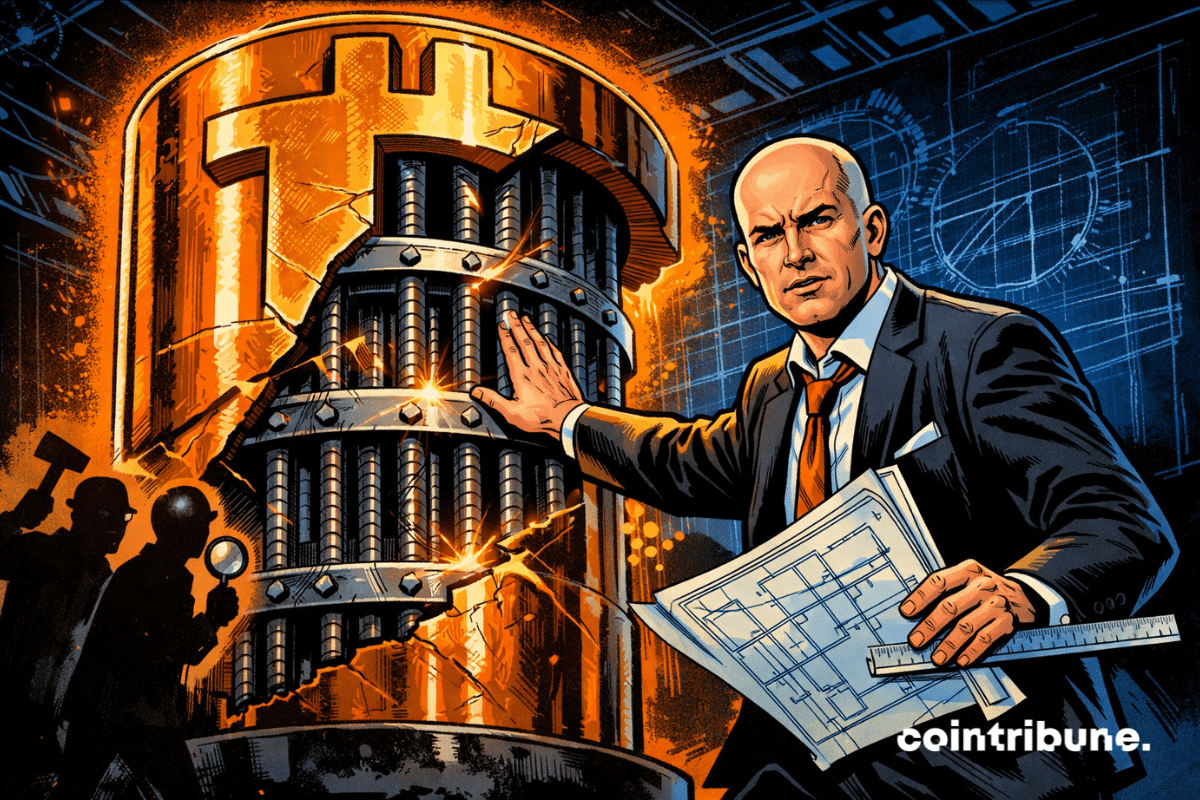
One can see a Bitcoin pullback as a diagnosis… or as a mirror. Brian Armstrong, CEO of Coinbase, clearly chooses the second option: according to him, the recent drop looks more like a collective nervous breakdown than an engine failure. The network is not damaged. It is the emotions that make the noise.

On April 15 and 16, 2026, the Carrousel du Louvre will host the Paris Blockchain Week, an event that has become in a few editions the must-attend meeting where traditional finance and digital assets stop observing each other and finally start to dialogue. Far from crypto conferences focused on speculation and community narratives, PBW 2026 embodies a paradigm shift: financial institutions are no longer spectators, they become actors of the blockchain infrastructure. Analysis of an event that materializes the maturity of a sector.

Stablecoins reach $141 billion of illicit activities in 2025. A record that reignites the debate on global crypto regulation!

While the bitcoin price struggles to regain its peaks, the network itself shows robust health. The mining difficulty has just recorded its largest increase since 2021, a paradox worth examining.

Bitcoin network activity has fallen nearly 50% since 2021, revealing a sharp drop in on-chain engagement even as market caps climbed.

Bitcoin staggers, but institutional capital does not disengage. While crypto has erased nearly 50% from its peaks, US spot ETFs still show $53 billion in cumulative net inflows. A striking contrast with the atmosphere of distrust dominating the market. Behind the recent withdrawals, the figures tell a deeper dynamic: that of a financial instrument that has far exceeded initial projections and is reshaping institutions’ relationship with bitcoin.