Solana is experiencing a marked correction phase after the break of a key support, in a market context dominated by Bitcoin's decline. Discover the technical outlook for the future evolution of SOL.
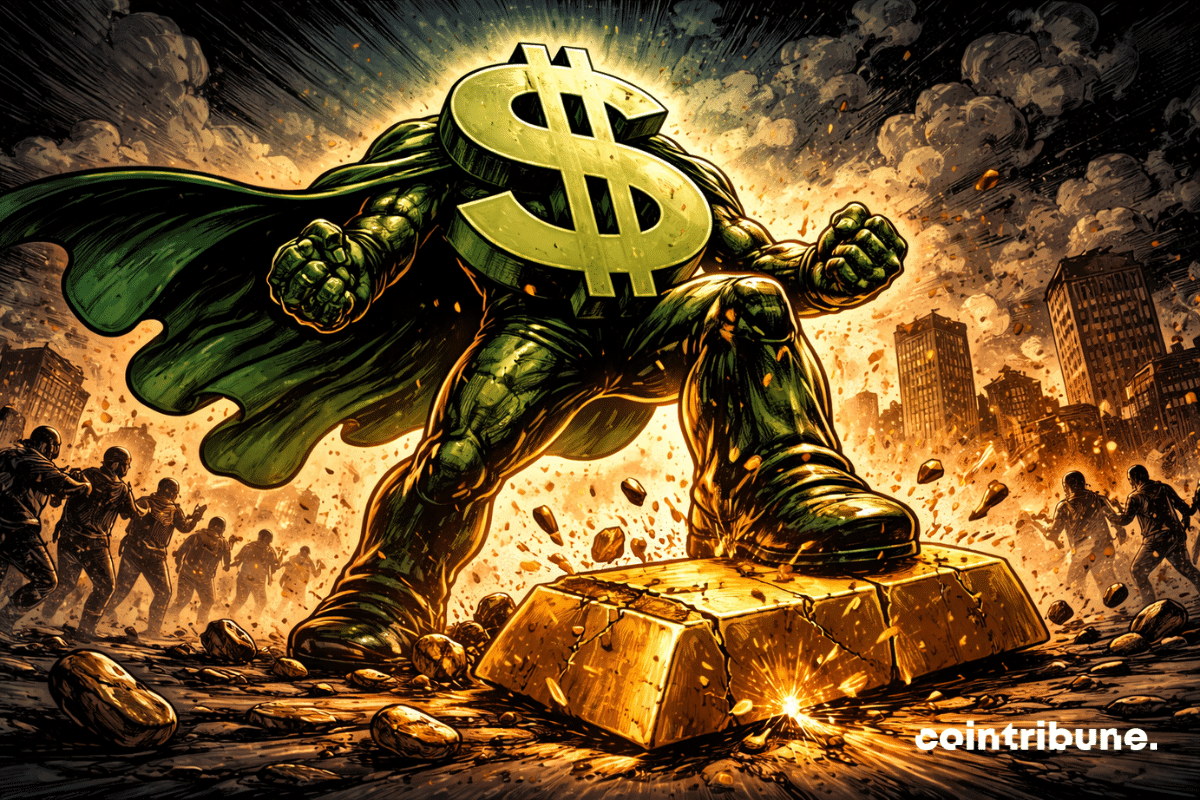
The dollar, the cornerstone of the global financial system, once again finds itself at the heart of a geopolitical controversy. Donald Trump accuses the BRICS of wanting to undermine its supremacy. In response, the Kremlin firmly denies any intention of destabilization, stating that the alliance does not target any foreign currency. Behind this tense exchange, one question remains: are the BRICS quietly working to reshape the global monetary order, or is this an alarmist reading of the ambitions of this emerging bloc?
Prediction platform Polymarket is broadening its reach into traditional finance with a new feature that lets users bet on stock and index movements. The move highlights the platform’s growing ambition to connect crypto-native speculation with mainstream financial markets, as investor interest in event-based trading continues to accelerate.
The Hong Kong subsidiary of one of the largest Chinese banks has just made history by tokenizing a colossal fund on the Binance blockchain. A bold initiative that comes in a highly tense regulatory context.
While the market is bleeding, Bitget releases a report: crypto investors still want to load up. 2025, a year of gains... or shocks?
Last Friday, the crypto market experienced a brutal reversal, with nearly 19 billion dollars of open interest wiped out in a few hours. A correction of such magnitude, even in an ecosystem accustomed to volatility, immediately caught analysts’ attention and revived fears of an uncontrolled collapse. However, behind this spectacular drop, the first analyses reveal a very different scenario, that of a planned deleveraging rather than a generalized panic.
After one of the steepest selloffs in crypto history, digital assets have begun to recover. A renewed wave of buying has lifted both memecoins and major tokens, driven by easing tensions between the U.S. and China and a rebound in overall market sentiment.
A trader operating on the decentralized platform Hyperliquid reportedly pocketed over 150 million dollars by betting against the market a few minutes before a major political announcement triggered a crypto crash. The operation, as spectacular as it is unsettling, revives suspicions of insider trading. A few days later, the same player opens a new short position of 160 million, fueling speculation about his identity and access to information.
The Sino-American trade war may be worsening, but the lights remain green for bitcoin.
On October 10, a radical decision by Donald Trump, 100% tariffs on Chinese software, triggered an unprecedented storm. Within hours, bitcoin collapsed, more than 16 billion dollars evaporated, and 1.6 million traders liquidated positions.
Trump sneezes on tariffs, Wall Street catches a cold, crypto convulses: 1.6 million traders liquidated, 19 billion evaporated. The crash is no longer a threat, it's a slap.
After a marked rebound on support, bitcoin broke through its last major resistance, reaching a new ATH at $126,293. Discover the technical outlook for BTC's future evolution.
The startup unveils a layer-1 infrastructure dedicated to RWAs, backed by Wiener Privatbank and designed to solve the security-decentralization-compliance "trilemma".
While dApps are looking gloomy, DeFi is gorging on billions. Decline in clicks, increase in liquidity... traders are deserting, but capital has never been so loyal.
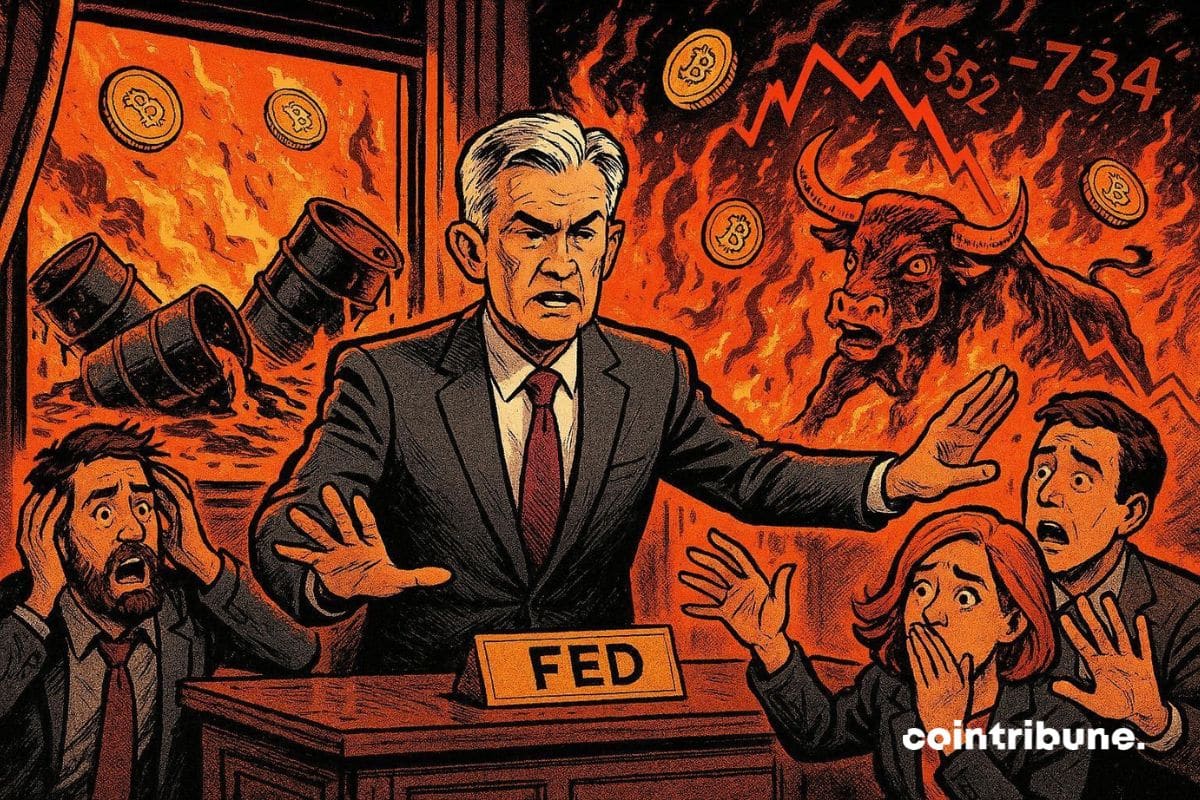
The minutes of the Fed published on October 8 confirm an expected but delicate monetary shift. While the rate cut is now underway, the extent of the move by the end of the year still divides the committee. In a context of slowing employment, contained inflation, and government paralysis, this shift weighs heavily on market expectations. For crypto investors, sensitive to monetary policy signals, every Fed hesitation becomes a factor of volatility.
While bitcoin reaches a new all-time high at $126,000, the prevailing sentiment is that the market is already inaccessible. However, contrary to this impression, recent data paint a very different picture. According to Cosmo Jiang, partner at Pantera Capital, over 60% of investors still have no exposure to cryptos. This revealing figure reminds us that the majority of the adoption potential is yet to come.
Prediction markets have received a major vote of confidence after Intercontinental Exchange (ICE)—the operator of the New York Stock Exchange—announced a $2 billion strategic investment in Polymarket. The deal values the platform at roughly $8 billion, marking a stunning turnaround for a company that faced regulatory fire just three years ago.
While currencies wobble and the economy coughs, gold climbs, bitcoin soars... and investors applaud hoping not to jump with the monetary parachute.
Spot trading activity across crypto exchanges slowed in September, hitting its weakest level in months, even as institutional demand for Bitcoin surged through exchange-traded funds. The contrasting trends highlight a shift in market behavior, with speculative trading losing momentum while long-term investment flows gaining strength.
Less than two years after the entry into force of MiCA, the ambition of a unified European framework for cryptos is faltering. Amid national divergences, institutional criticisms and tensions over passporting, the European Union struggles to deliver the promised coherence. And now, ESMA is advocating to take back control, at the risk of reigniting tensions between Brussels and national regulators.
Tether, the ace of stablecoins, dribbles right up to Juventus' board. Governance, millions, and crypto at every level: soon a blockchain-sponsored VAR?
While bitcoin exceeded $126,000 for the first time, Michael Saylor chose to stay away. The leader of Strategy, accustomed to increasing his positions at every peak, made no purchases this quarter. This unusual decision contrasts with his aggressive accumulation strategy and raises questions among observers.
October is shaping up to be a pivotal month for the crypto market, with more than $1 billion worth of tokens preparing to enter circulation. A series of major token unlocks from leading projects, including Aptos, Ethereum Name Service (ENS), ImmutableX, and Bittensor, is set to test market resilience and liquidity. With billions in previously locked assets set to move freely, investors are bracing for heightened volatility and short-term price fluctuations across the board.
The United States debt is rushing toward 38 trillion dollars, triggering deep doubt about the solidity of fiat currencies. In a world where economic balances are shaky, this threshold is no longer just a macroeconomic indicator. It becomes the reveal of a system under strain, and revives the debate about the place of alternative assets in the face of the exhaustion of classic budgetary models.

The European stock market has just closed an exceptional week. The STOXX 600 rises by 2.8% and continues to break records. Health, banks, and mining lead the way, driven by palpable optimism.
Markets are almost unanimously betting on a rate cut on October 29. However, a much quieter scenario is starting to worry: that of a Fed status quo. In a context of incomplete economic data and persistent uncertainties about growth, the hypothesis of strategic immobility is gaining ground. What if this scenario, still largely underestimated, triggered the most violent market reaction?
Faced with a global financial system dominated by Washington, the BRICS are accelerating the implementation of an alternative payment network: BRICS Pay. This project, supported by a bloc expanded to ten countries, aims to reduce dependence on SWIFT and US sanctions. More than a simple technical initiative, it is a strategic bet to reshape the global monetary order and assert financial sovereignty in a world that has become multipolar.
The European Central Bank (ECB) is moving forward with preparations for a possible digital euro, marking another step in its ongoing multi-year project. In a recent notice, the ECB has signed agreements with several technology firms to develop key components of a potential digital currency. Although no final decision has been made, the groundwork underscores Europe’s push to modernize payments.
Chainlink’s new framework connects SWIFT messaging to blockchain, allowing tokenised funds and corporate workflows to operate smoothly on-chain.
Ethereum regains some stability after a correction phase. Find our complete analysis and the current technical outlook for ETH.