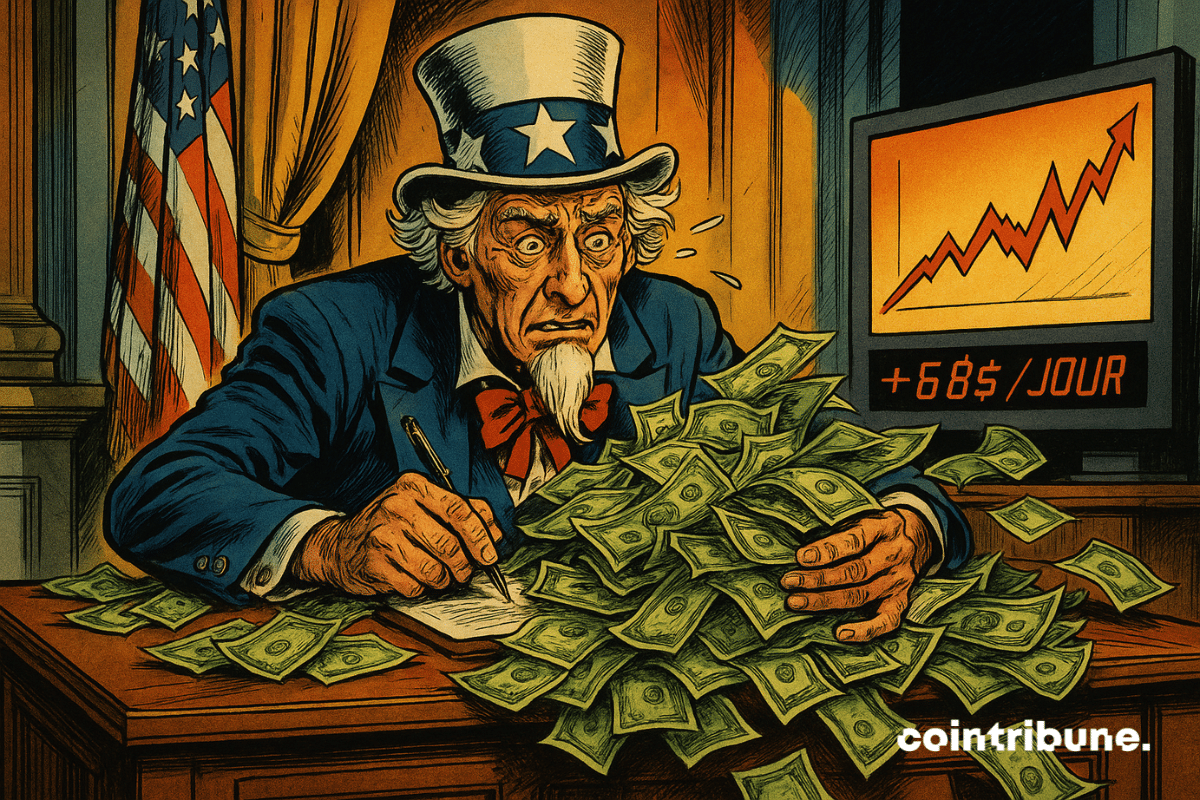
A former Goldman bets on the absurd, rakes in 68 million with joke tokens, and sparks a battle of memes, egos, and liquidity in the crypto jungle. Guaranteed folklore.
In the face of the fragilization of the global monetary system and the contested dominance of the dollar, the BRICS are moving discreetly but surely towards a strategic alternative: a common currency backed by sovereign digital infrastructures. Driven by a now-expanded and economically influential bloc, this initiative aims to reshape the global monetary balance. As the instability of fiat currencies worsens, the emergence of such a project raises questions for markets, institutions, and observers: is this a strong signal towards a new multipolar economic order?
As global trade lines are redrawn under geopolitical pressure, Donald Trump reveals his cards. Before a meeting in Scotland with Ursula von der Leyen, the American president warns: no customs tariff lower than 15% will be granted to the European Union. This firm stance, with direct repercussions on transatlantic flows, could also impact strategic sectors such as digital and blockchain. Behind this maneuver lies an economic showdown between two opposing views of commercial sovereignty.
Pay the national debt with a simple click on Venmo and PayPal: an absurd idea? Not for the U.S. Treasury, which is now allowing citizens to voluntarily contribute to the $36.7 trillion federal debt via PayPal and Venmo. Integrated into the Pay.gov platform, this unexpected measure combines consumer technology and macroeconomic management in a gesture that is symbolically significant but heavy with meaning.
Societe Generale has partnered with 21Shares to improve liquidity and expand access to Bitcoin and Ethereum crypto products for institutional investors across Europe.
In response to the increase in customs duties decreed by Donald Trump, 30% on European imports starting August 1st, Brussels is deploying heavy artillery. The Commission has approved a counter-tariff attack of 93 billion euros, targeting strategic American sectors. An economic escalation is unfolding between two major blocs, against a backdrop of political tensions and fragile global trade.
China remains indifferent to threats and is getting rid of American debt. Bitcoin is lurking.
Cryptocurrency adoption has witnessed remarkable growth in 2025, with individuals and even large institutions pivoting towards digital asset ownership. Interestingly, data shows that the recent wave of crypto embrace is largely driven by digital payment and artificial intelligence.
While Bayrou struggles with the budget, Occitanie is mining convictions: France's local regions are flirting with crypto, and it could very well earn them more than a Livret A.
Brussels holds its breath. As August 1st approaches, the trade dispute with Washington slides into strategic confrontation. In the face of the threat of a 30% surcharge on European imports, Paris and Berlin demand a firm response. Their goal: to push the EU to activate, for the first time, the anti-coercion instrument.
Solana shines, MoonPay joins the dance of liquid staking with a yield of 8.49%. But behind the simplicity, there is fierce competition and colossal stakes for crypto.
Tensions are rising within the Cardano community as a major delegated representative, known simply as “Whale”, has launched a critique of founder Charles Hoskinson and Input Output Global, accusing them of wasting millions in ADA on underdelivered promises. Whale, who reportedly controls around 6 million ADA worth of delegated voting power, declared a blanket rejection of all future proposals from IOG.
When Bitcoin flirts with unprecedented highs, the spotlight once again shines on the crypto universe. This spectacular rebound, fueled by ETFs and growing institutional adoption, coincides with the emergence of another phenomenon: the tokenization of real-world assets (Real World Assets or RWA). These hybrid instruments, halfway between traditional finance and Web3, attract a new wave of investors seeking stability and diversification.
The current global chaos is not a product of chance. According to a theory developed by historians Neil Howe and William Strauss, we are entering a destructive cycle that reshapes societies every 80 to 100 years. This major transformation could disrupt the global economy, financial markets, and redefine the geopolitical order as we know it.
The explosive rise of the HYPE token is shaking up traders and reinventing automated strategies. This native token of the Hyperliquid perp-Dex has seen its trading volume increase tenfold in just three months. Listed on several major exchanges, it offers exploitable volatility for those who know how to take advantage of it. The good news: coding is no longer required to build an effective bot. Thanks to Runbot, you can automate a trend-following strategy in a simple, fast, and visual way. Here's a step-by-step guide to create, test, and deploy a HYPE strategy using the most powerful no-code tools available today.
Crypto: Western Union aims for a borderless future with a global stablecoin wallet. Discover all the details in this article.
Michael Saylor has never been one to hold back his words or be tight with his wallet. When he promises Bitcoin, he buys. And quickly. As soon as the preliminary tweet is published, the orchestra kicks off: 6,220 BTC absorbed in the midst of bullish euphoria, with surgical calm. Behind the scenes, this is not just a purchase — it’s a signal to the market, a new demonstration of strength that tells another story: the Strategy model is running at full throttle.
As emerging powers strengthen their economic cooperation, Donald Trump reignites tensions by directly targeting the BRICS bloc. His tariff threats and offensive remarks aim at much more than just an alliance: they target the hegemony of the dollar, the future of multilateral policies, and ambitions surrounding digital currencies. This position, both political and economic, could reshape international trade and impact the already fragile balances between the Western sphere and the alternative strategies of emerging markets.
As of August 1, 2025, the rate of the Livret A will plunge to 1.7%, penalizing the 58 million French people who invest their savings there. A strategic but unpopular decision, which reignites the debate on access to fair and effective savings. In response, the Bank of France revives a long-underused solution: the Popular Savings Account. In this battle of returns, the lines of fracture between safety and performance are being redrawn.
The small Litecoin, the discreet brother of Bitcoin, is making its way into pharmaceutical vaults. MEI Pharma, either an insolent pioneer or an anticipatory genius? 100 million bet on a digital molecule.
When Jack Dorsey injects Bitcoin into Wall Street, stock indices tremble... and the bankers, they sweat. Block, a crypto pioneer, enters the S&P 500. Just like that.
Gen Z is using crypto for daily purchases while Gen X uses it for high-value transactions. Discover how age shapes crypto adoption globally.
The preferred savings account of the French is about to face a serious setback. The rate of the Livret A, held by more than 55 million people, will drop to 1.7% on August 1, 2025, down from 2.4% today. This is a significant decline, the largest since 2009, validated by the Banque de France and in accordance with the regulatory formula. In an still fragile economic climate, this decision reignites the debate on the profitability of regulated savings and raises questions about the future choices of savers in search of alternative solutions.
Here are TD Cowen's projections for the price of Bitcoin by the end of 2025. Three scenarios are proposed.
Prices are rising in the United States, and it’s not a coincidence. Since Donald Trump's return to the White House, his aggressive trade policy is starting to weigh on the economy. The tariffs he has imposed are impacting household wallets, driving inflation up faster than expected.
BlackRock experienced a massive surge in crypto ETF inflows in Q2 2025, driving strong revenue growth and setting new records for assets under management.
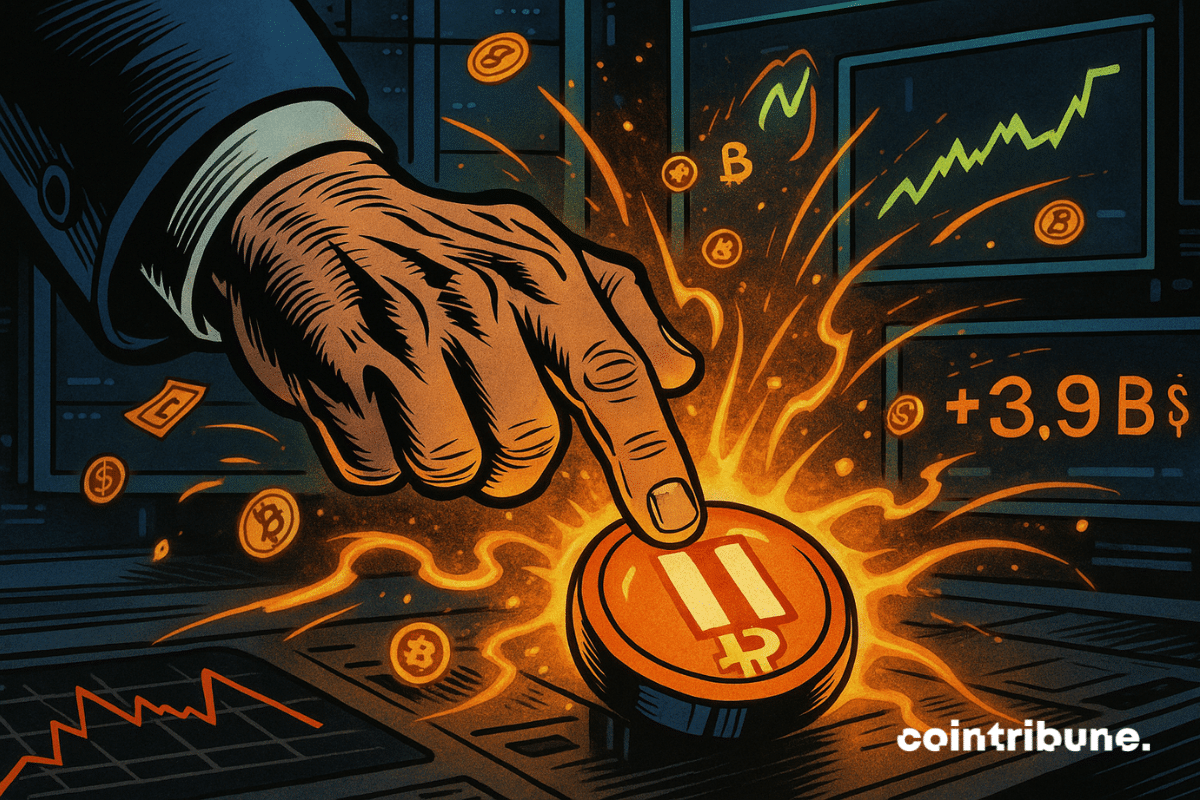
Wall Street flirts with a cypherpunk: 30,000 bitcoins, a SPAC, an impatient heir, and a wink to Satoshi. The question remains who will press the button...
Jerome Powell's term will expire in May 2026, and Donald Trump has already announced that he is considering three to four candidates to replace him. This crucial decision could radically transform American monetary policy and create shockwaves in global financial markets.
As he multiplies signals of firmness on the international stage, Donald Trump has imposed a 50-day ultimatum on Russia to end the war in Ukraine. This forceful statement, widely commented upon in diplomatic and military circles, has also triggered an unexpected upheaval in the financial markets. Bitcoin, particularly reactive to geopolitical tensions, began a rapid decline immediately following the announcement, reaching 116,000 dollars this morning. The climate of uncertainty created by this presidential warning fuels both political speculation and economic turbulence.
Crypto trading isn’t what it used to be. Not long ago, you had to stare at charts all day, act fast, and maybe even know how to code if you wanted to build an automated strategy. But that’s changing fast. A new wave of platforms is making algorithmic trading easier and more accessible. One of the most exciting names leading that charge is Runbot. Today we interview Alexandre, CEO of this no-code, AI-powered platform to better understand their vision, objectives, technologies...