The president of the Russian central bank ridiculed herself by trying to rein in bitcoin.
Solana, the rising star of cryptocurrencies, dances with the giants of the CME. Its futures contracts sow the hope for an ETF, but the SEC plays the cautious divas. Guaranteed suspense!
Moscow opens the golden cage: billions of Russian assets finally released, but under conditions. A masterstroke before a call where Trump will play the geopolitical illusionist.
The battle for crypto custody is intensifying. Ripple Labs, a key player in cross-border payments with XRP, takes a new step by filing the trademark "Ripple Custody." This application reflects a clear ambition: to expand its influence beyond transactions and target the strategic sector of institutional custody, a booming market fueled by growing demand from investors and the rise of crypto ETFs.
Amid revolutionary announcements, technological evolutions, and regulatory turbulence, the crypto ecosystem continues to prove that it is both a territory of limitless innovations and a battleground of regulatory and economic challenges. Here is a summary of the most significant news from the past week surrounding Bitcoin, Ethereum, Binance, Solana, and Ripple.
Tesla, once a star of the roads, is now heading towards the abyss: in France, outraged bosses and emptied fleets are signing the commercial death certificate of King Musk.
The USA-Ukraine summit was recently held in Riyadh and resulted in more ambitious ceasefire proposals than expected. "The ball is now in Russia's court" has become the American talking point on this issue. Meanwhile, Europe appears to be accelerating its military reassertion in an increasingly tense geopolitical context.
Trezor believed its vaults were impenetrable, but Ledger blew on the lock. A sealed flaw, a shaken trust, and the crypto security war is back in full swing.
A tiny device challenging the monsters of Bitcoin mining, a chance worthy of a miracle, and there is a solitary miner pocketing $260,000 under the astonished gaze of the industry.
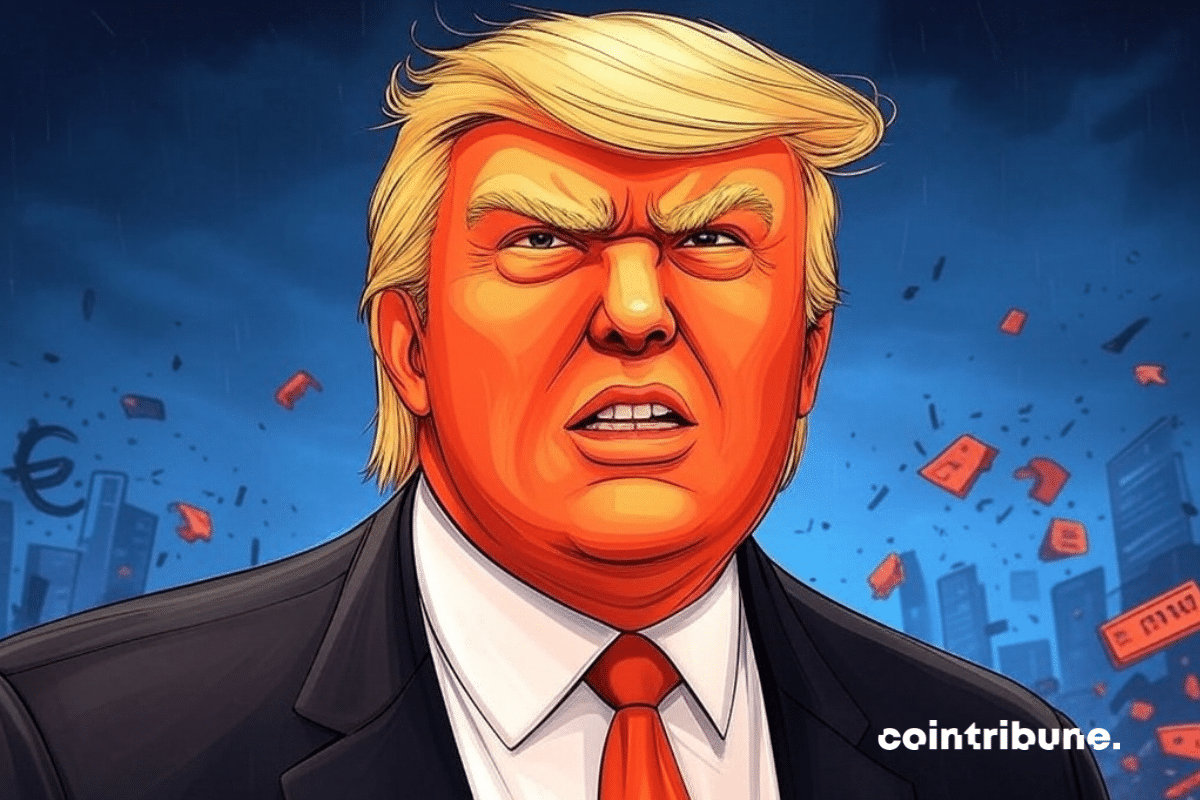
In the trade tug-of-war between the United States and the European Union, a new episode has rekindled tensions. Indeed, Donald Trump, true to his protectionist approach, is once again wielding the threat of massive tariffs, this time on European wines and champagnes. The announcement of a 200% tax on these products follows Brussels' decision to increase tariffs on American whiskey to 50%.
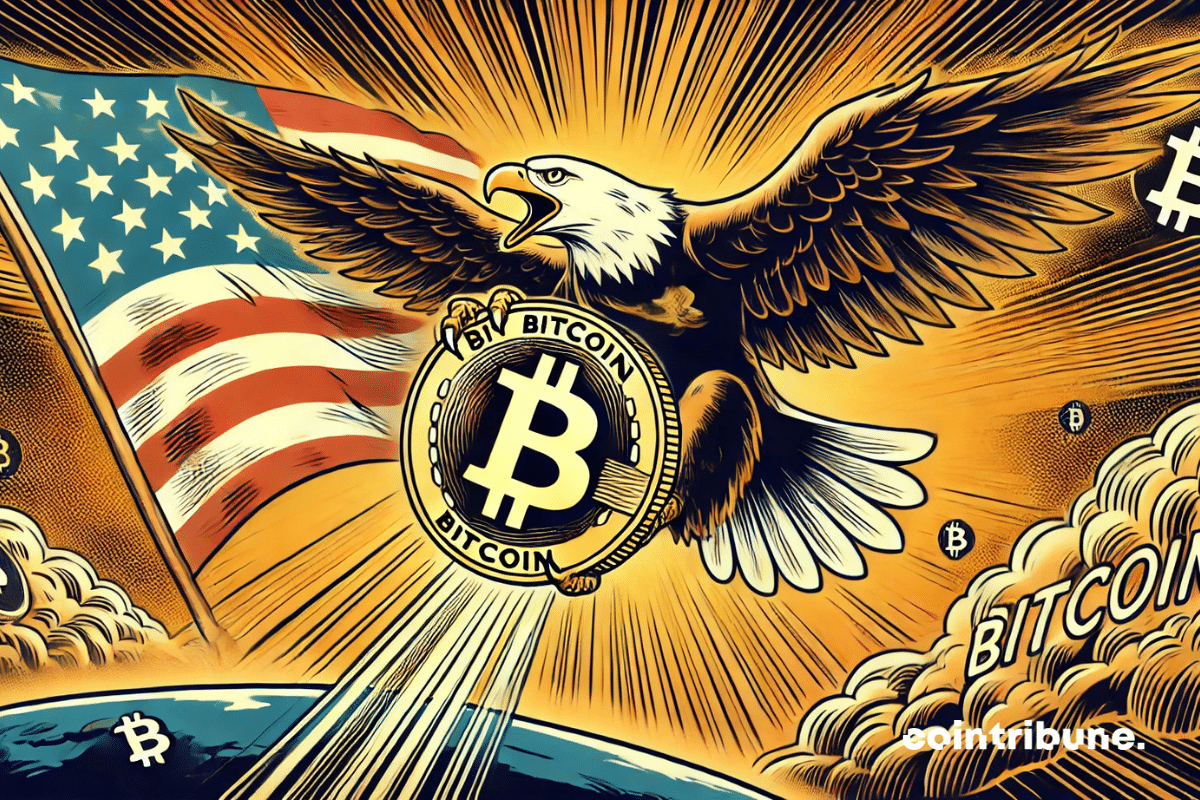
The United States is preparing to accumulate millions of bitcoins. Goal: to lighten the burden of debt.
The tax regimes for cryptocurrencies in France and Switzerland present significant differences. While Switzerland is known for its favorable tax conditions for private investors, France imposes a stricter taxation with a flat tax of 30% on capital gains realized. Here is a detailed comparison of the tax obligations in these two countries.
In the arena of Bitcoin, the giants play at their discretion while the newcomers flee. Binance watches, powerless, this grand ball of decentralized finance. End of the game or just an intermission?
The financial systems encountered significant disturbances at the start of 2025 after President Donald Trump enacted extensive import tariffs affecting Canada, Mexico, and China. President Trump initiated the new trade regulations, which imposed 25% duties on products from Canada and Mexico and 10% duties on Chinese exports to safeguard domestic businesses and correct commercial discrepancies. The tariffs caused disruptive effects throughout world markets, particularly in the cryptocurrency industry.
The SEC's case against Ripple is reaching a decisive turning point. After more than four years of legal confrontation, the U.S. Securities and Exchange Commission (SEC) appears ready to close this emblematic case. This trial, one of the most publicized in cryptocurrency history, has raised a fundamental question: Is XRP a financial security subject to U.S. stock market regulations? While the stakes extend far beyond Ripple and its native token, the outcome of the case could reshape the regulatory approach to cryptocurrencies in the United States.
In the world of crypto, selecting the right wallet to manage and protect your digital assets can be a real challenge. Browser wallets stand out as an effective solution, combining ease of access with a variety of features. Coinbase Wallet presents itself as an interesting option, offering a complete range of services suitable for everyone, from beginners to more experienced users. This article aims to provide you with an in-depth analysis of Coinbase Wallet, highlighting its key features, user-friendliness, and user feedback. Whether you are a beginner in the crypto space or an experienced investor, this guide will help you determine if Coinbase Wallet meets your needs.
As the United States embraces bitcoin, Europe bogs down by continuing to promote the dystopia of the digital euro.
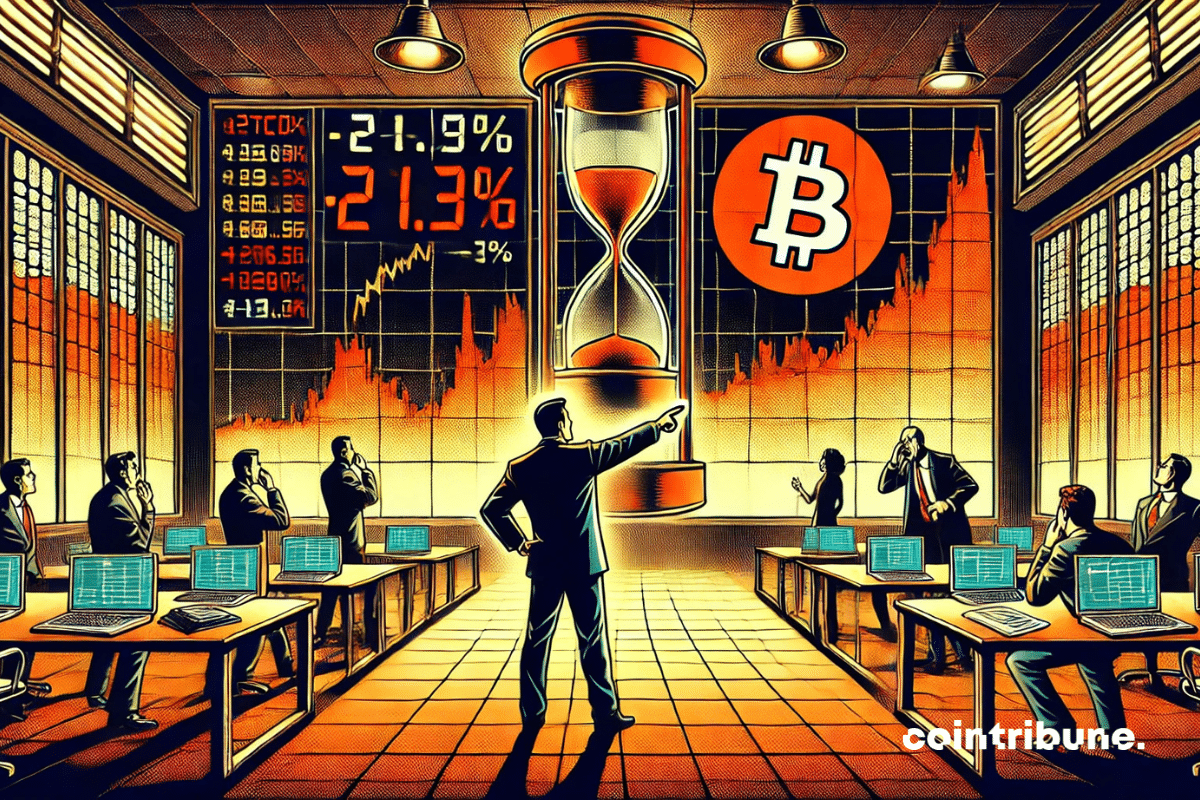
Bitcoin begins a crucial week following a significant drop that has shaken the market. Amid macroeconomic uncertainties, tensions over interest rates, and technical indicators under pressure, investors are closely monitoring the upcoming movements. Despite a sentiment of extreme fear, some signals suggest a possible reversal. Here are 5 major elements to watch this week!
The volatility of cryptocurrencies spares no one, and Solana (SOL) is no exception. After reaching a low of $125 on February 28, the native token of the Solana blockchain saw a rebound of 17%, hinting at a possible return towards $180. However, this recovery is far from guaranteed. Still down 50% from its all-time high of $295, SOL is facing several obstacles that could hinder its ascent. Between the slowdown in its on-chain activity, the lack of demand in the derivatives markets, and the concentration of transaction fees in the hands of a handful of users, the Solana ecosystem is wavering. What are the signals that could trigger a bullish rally?
Between ideology and regulation, the debanking war rages: a battle where crypto and "risky" industries fight for their survival.
Bitcoin is evolving at the intersection of major geopolitical tensions and global monetary strategies. While financial markets expected the United States to take the lead on the issue of bitcoin reserves, it is ultimately China that could trigger an unprecedented economic earthquake. A series of discreet initiatives led by Beijing suggests a possible massive influx of liquidity into the crypto ecosystem, with a potential impact of $1.4 trillion. Behind this strategy lies a clear intent to stabilize the yuan in order to circumvent U.S. sanctions and monetary policy.
Between the requisitioned Livret A, lightly tapped fortunes, and a starving military budget, Manu juggles: finding billions without upsetting anyone, this is an art worthy of the French budget circus.
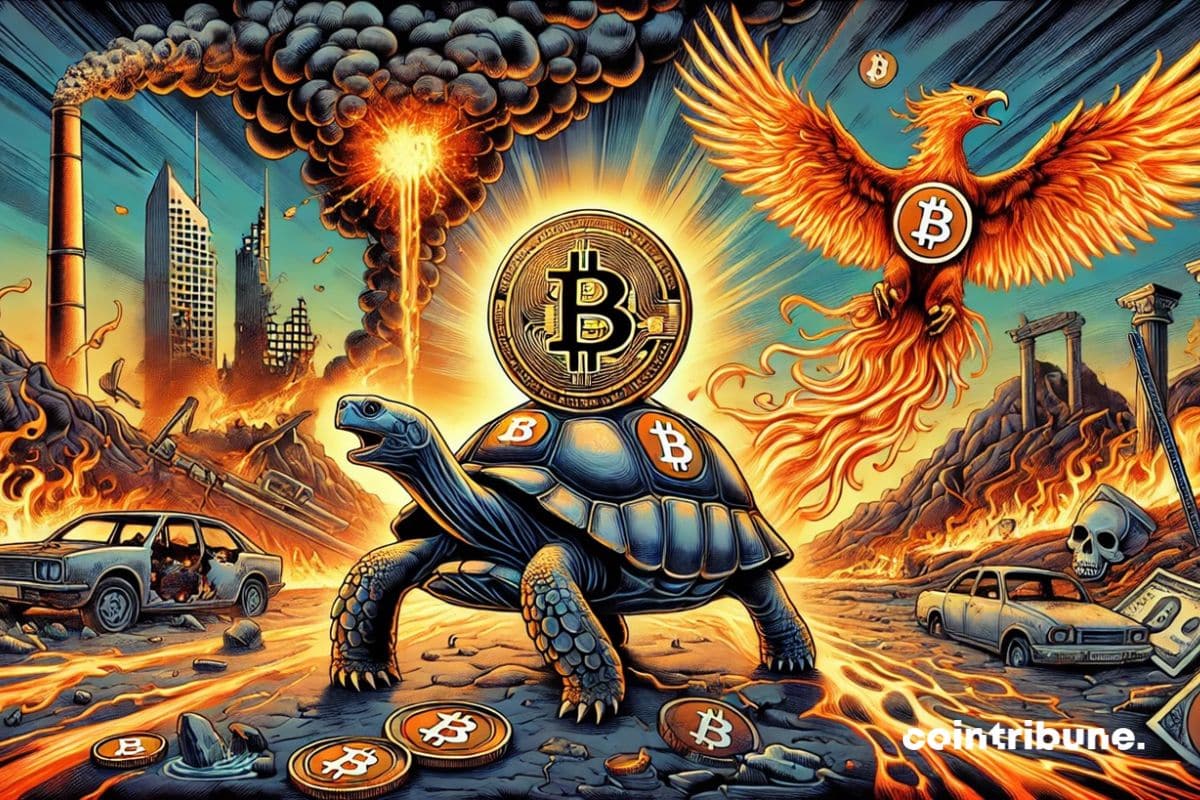
The United States has taken the bull by the horns both economically and geopolitically. Many things are going to change and, in the end, bitcoin will find its way.
The economic confrontation between the United States and China is taking on a new dimension. Indeed, far from being limited to traditional exchanges, this trade war is now affecting the crypto market. Thus, between Donald Trump's announcement regarding the creation of a national strategic reserve of cryptocurrencies and the Chinese response to American economic sanctions, investors are witnessing market movements of rare intensity. The question now arises: is this instability temporary or should we expect a lasting impact?
Like a rising tide, Aave is reshaping its economy: buybacks, redistribution, protection... The fragile balance of decentralized finance wavers under this bold overhaul.
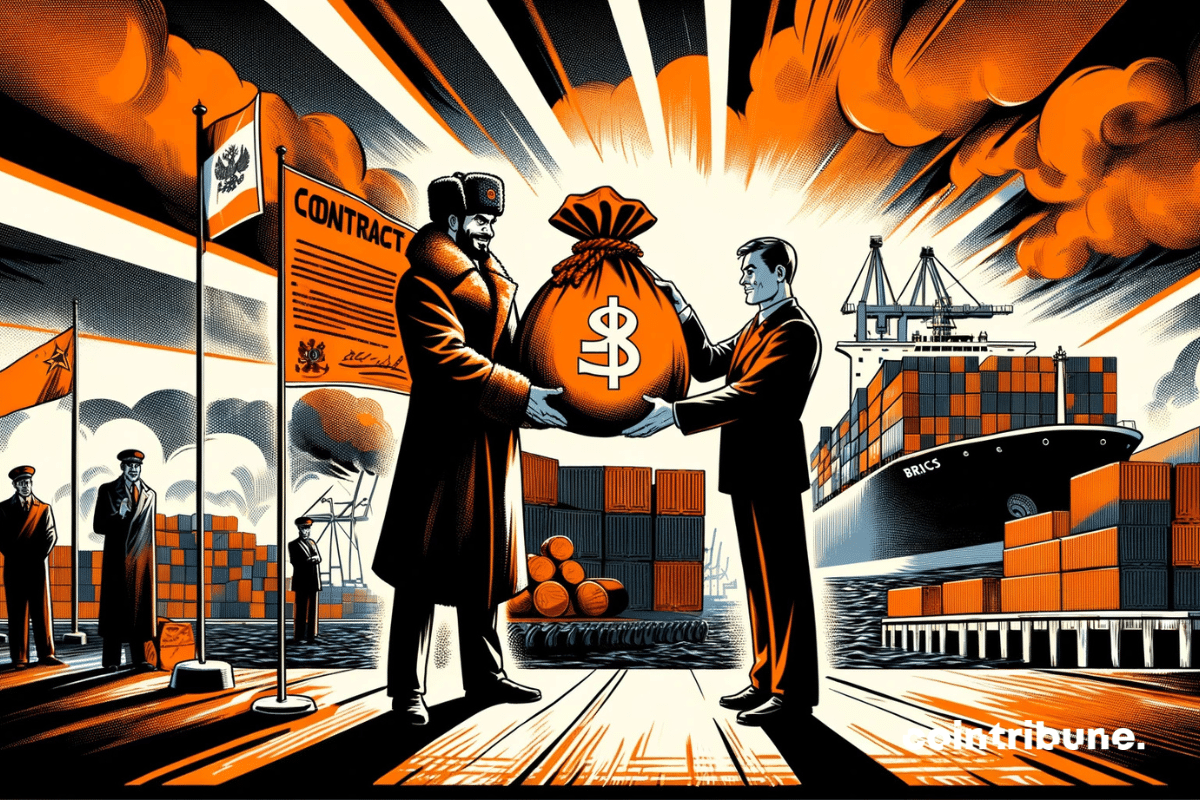
The economic clash between the Global South and the United States is taking a new turn, with Brazil emerging as a key player in this monetary battle. By opposing the supremacy of the US dollar, the Latin American country is redefining global financial balances and questioning the traditional architecture of international trade. This decision is part of a process of dedollarization, which is gaining momentum within the BRICS and could deeply modify international economic circuits.
After falling below $90,000, Bitcoin faced selling pressure, resulting in a nearly 14% drop. Find Elyfe's analysis to decipher the technical outlook for BTC.
Financial markets often evolve in line with political decisions, and the crypto universe is no exception. This Sunday, Donald Trump rekindled investors' attention by announcing that his crypto reserve project would include several major assets, including XRP, Solana, and Cardano. Initially, bitcoin seemed absent from this list, raising doubts about the former president's stance on it. A quick adjustment then corrected this, as he stated that bitcoin and Ethereum would obviously be included. This turnaround triggered a surge of optimism and a price spike, but the enthusiasm was short-lived. Within less than 24 hours, the market reversed. The cause was the growing concerns about the tariffs that Trump plans to impose, which rekindles fears of economic instability.
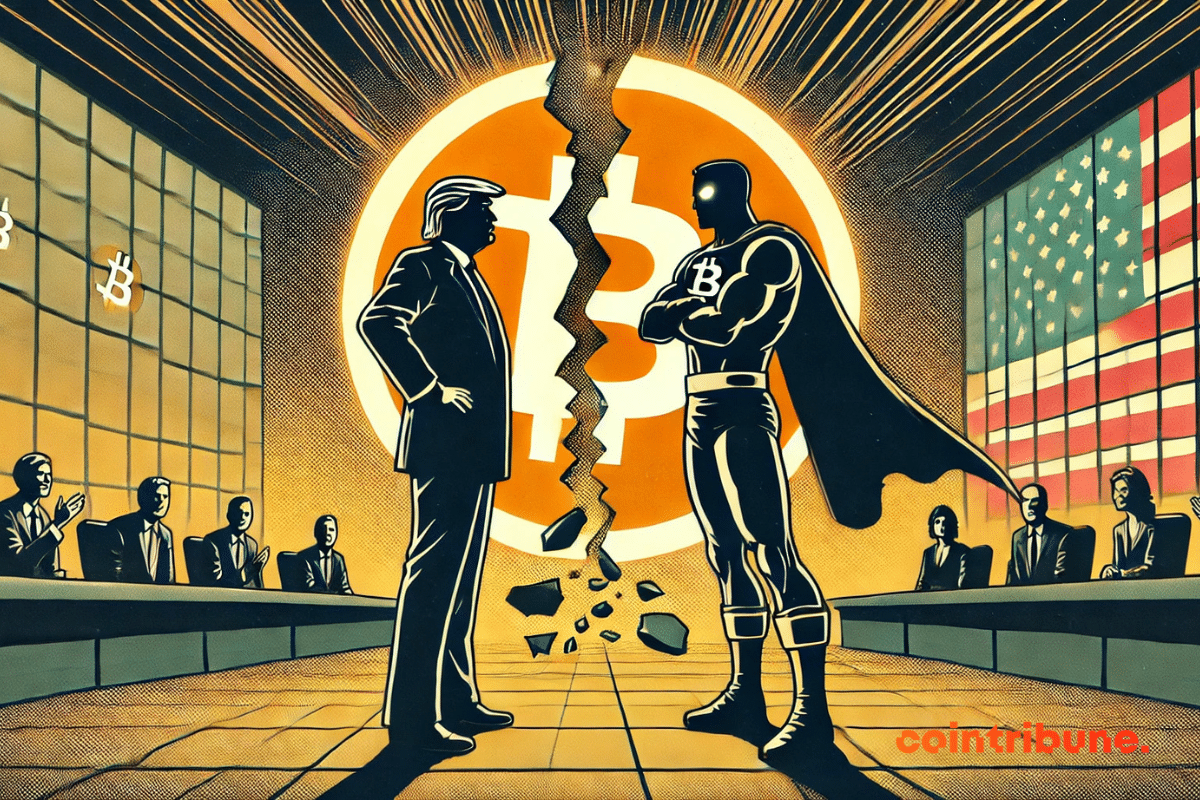
Donald Trump sparked an uproar by announcing that the strategic reserve of bitcoins would also include other cryptocurrencies.
Amid revolutionary announcements, technological advancements, and regulatory turbulence, the crypto ecosystem continues to prove that it is both a territory of limitless innovations and a battleground of regulatory and economic challenges. Here is a summary of the most significant news from the past week surrounding Bitcoin, Ethereum, Binance, Solana, and Ripple.