Thu 09 Jan 2025 ▪
9 min read
▪
by
The evolution of the price of bitcoin in 2025 will depend on three main parameters: macroeconomics, geopolitics, and bitcoin's ability to attract investors.
The evolution of the price of bitcoin in 2025 will depend on three main parameters: macroeconomics, geopolitics, and bitcoin's ability to attract investors.
The year 2025 begins under the sign of instability for the crypto market. After briefly exceeding the symbolic threshold of 100,000 dollars on January 7, Bitcoin experienced a dramatic reversal, falling to 92,500 dollars in just a few hours. This sudden decline cannot be explained by a technical factor but rather by major macroeconomic elements. Investors are closely monitoring the monetary policy of the U.S. Federal Reserve (Fed), whose decisions directly influence financial markets. So far, many had anticipated a drop in interest rates as early as the first quarter of 2025. However, the latest economic data in the United States indicate stronger-than-expected growth, which challenges this assumption. As a result, markets are reassessing their expectations and adjusting their positions. This uncertainty has triggered a wave of liquidations that has contributed to Bitcoin's decline.

Donald Trump's statements just days before his return to the White House have reignited tensions on the international stage. During a press conference, the elected president mentioned the possibility of annexing the Panama Canal and Greenland, strategic territories whose geopolitical significance far exceeds American borders. Far from being content with a mere statement of intent, he refused to rule out the use of force, provoking immediate reactions from the countries involved. As the world faces increasing geopolitical tensions, these stances raise many questions. Is Trump seeking to reshape international power dynamics, or is this a communication strategy aimed at influencing future diplomatic negotiations? What are the implications for relations between the United States and its partners? A look back at an announcement that certainly reignites fears of a return to an unpredictable American policy.
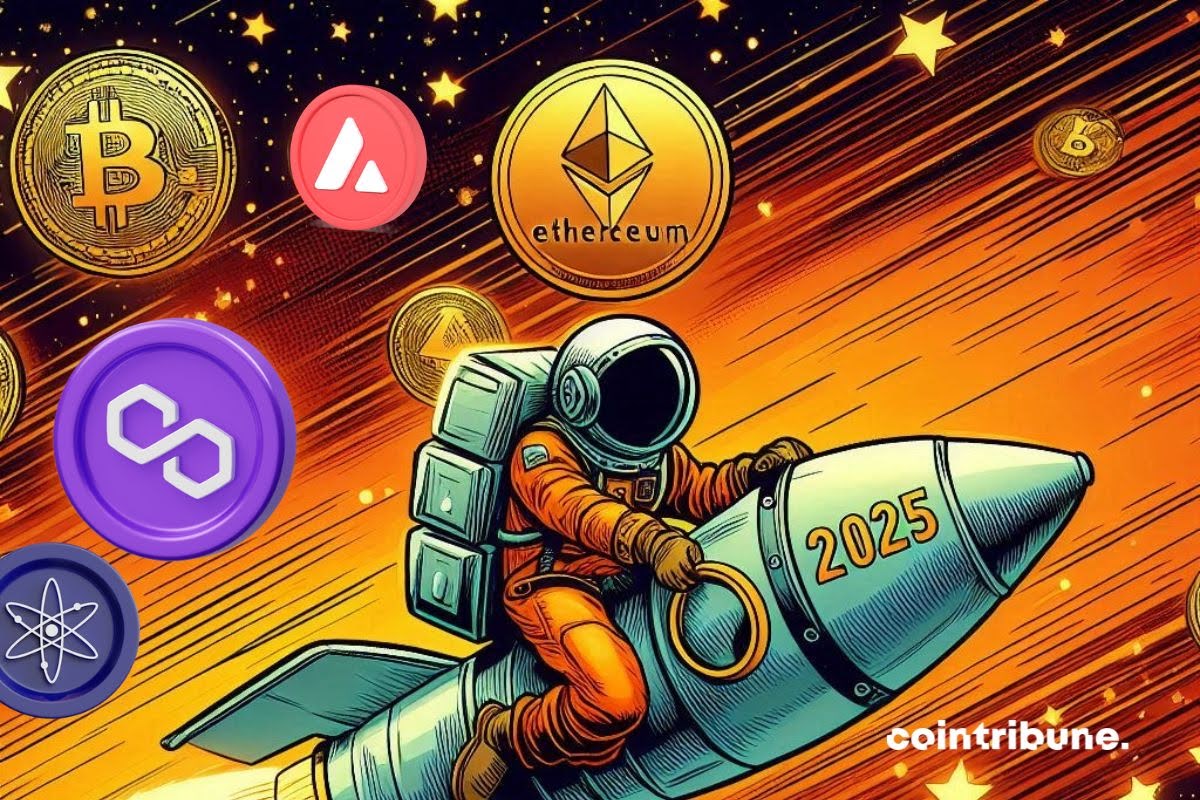
In 2024, Coinhouse identified five promising cryptos: Bitcoin, Ethereum, Polygon, Avalanche, and Cosmos. As the year is coming to a close, it is time to evaluate their performances and to look ahead to 2025 to understand the future prospects of these digital assets.
Financial markets have been shaken by a wave of tension, causing a sharp correction in bitcoin (BTC) and major altcoins. In just a few hours, the flagship crypto fell below the critical threshold of $100,000, while Ethereum (ETH) collapsed below $3,400. This pullback occurs against a backdrop of deteriorating global economic conditions. Several factors explain this storm in the crypto market: on the one hand, the rise in U.S. Treasury yields, and on the other, the monetary policy of the U.S. Federal Reserve (Fed) continues to weigh heavily on market confidence. Meanwhile, the global economic environment remains marked by additional stress factors. In light of these disturbances, the crypto market is undergoing a period of high volatility, where investor caution is mingled with panic movements. This correction now raises the question of a potential short-term rebound or a continuation of the bearish trend due to an uncertain macroeconomic environment.

A few statements are enough to shake the markets, and Donald Trump has once again demonstrated this. An article in the Washington Post suggested that his team was exploring a more nuanced approach to tariff policy. This single premise was enough to push stock indices higher, with investors betting on a relaxation of trade tensions. However, the former president was quick to respond. In a message posted on social media, he firmly denied this information, calling it yet another attempt at media manipulation. This sudden about-face triggered a shockwave in the financial markets.

After two years of noticeable decline, the real estate market appears to have reached a turning point. According to Charles Marinakis, president of Century 21 France, the correction in prices is nearing its end, paving the way for stabilization, or even a slight rebound in 2025. In Paris, the price per square meter has dropped by nearly 10% over two years, a similar decline observed throughout Île-de-France. This correction, exacerbated by rising interest rates, has allowed sales to gradually restart. However, the market's evolution will depend on several factors, including the continued decrease in credit rates and the ability of sellers to adjust their prices to match the new expectations of buyers.

Since January 2023, the crypto market has been experiencing a bullish phase marked by a significant appreciation of Bitcoin and altcoins. This dynamic is based on several factors, including accelerating institutional adoption, a massive influx of capital, and an overall optimistic market sentiment. Additionally, there are anticipations surrounding the approval of new crypto ETFs and potential favorable regulations that boost investor confidence. However, according to CryptoQuant, this euphoria could soon reach a critical point. The analytics firm identifies several technical signals indicating that the market has entered its final phase. Among these is the significant increase in the volume of Bitcoin traded over the past month, which reached 36% in the fourth quarter of 2024. This phenomenon, observed during previous market peaks, suggests a possible correction in the short to medium term. Yet, this warning is not unanimously accepted. Institutions such as Steno Research and VanEck adopt a more optimistic view. According to them, the bullish trend could continue until the end of 2025, driven by increasing adoption and evolving regulatory frameworks. VanEck even estimates that Bitcoin could reach $180,000, while Ethereum may exceed $6,000 by the end of next year. In light of these divergent forecasts, a question arises: should investors expect new price spikes or, on the contrary, take their profits before a possible market reversal?

The year 2025 starts on uncertain grounds for bitcoin. After reaching a peak of $108,000, the cryptocurrency quickly lost ground, falling back below the symbolic threshold of $100,000. This level, both psychological and strategic, has become a fragile equilibrium point where buyers and sellers are at odds. On one side, optimists believe this consolidation phase paves the way for a new bullish impulse, with potential recovery towards record levels. On the other side, proponents of a bearish scenario anticipate a more pronounced correction, which could bring BTC down to $76,000, a level corresponding to a key support zone. Beyond these contrasting forecasts, several factors contribute to the uncertainty. Additionally, macroeconomic tensions, particularly the upcoming decisions from the U.S. Federal Reserve (Fed), add further pressure on investors. In light of this uncertain climate, the coming weeks are poised to be critical for bitcoin. The outcome of this battle at $100,000 could well dictate market trends for the remainder of the year.
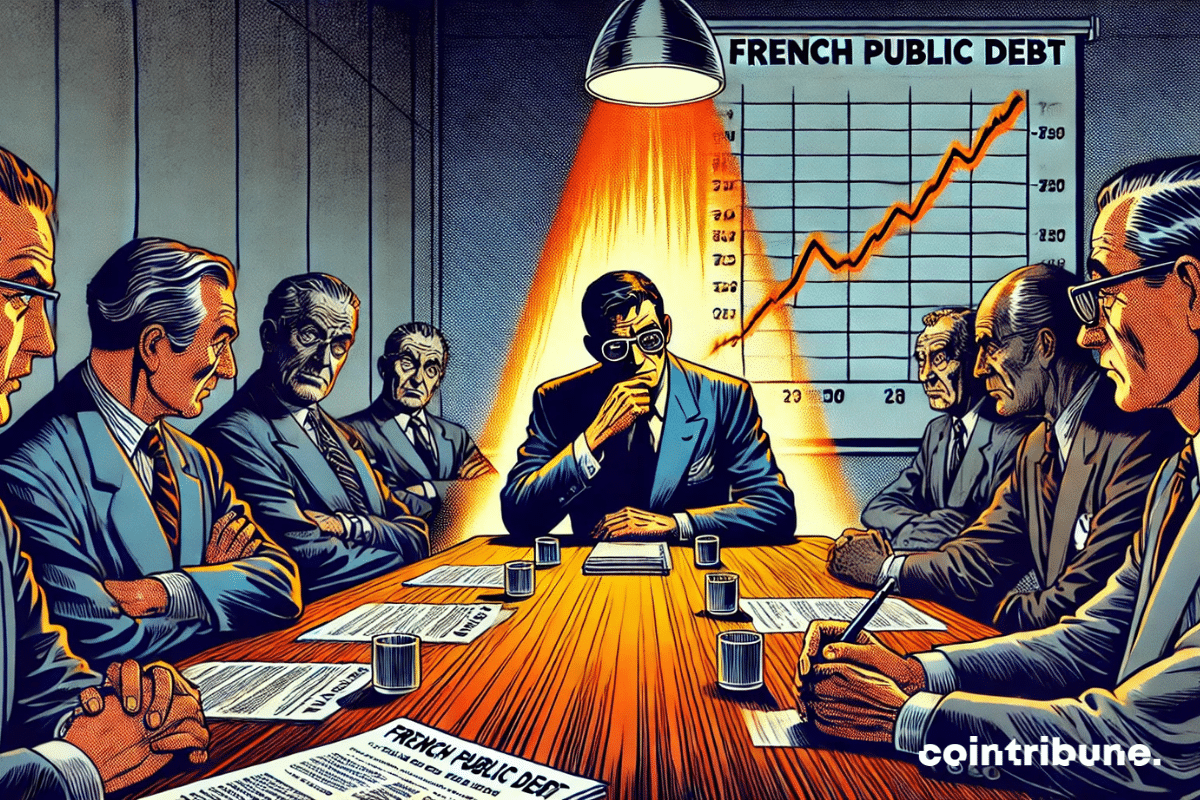
The French state is preparing to face a year of high tension in the financial markets. With 300 billion euros to borrow in 2025, an unprecedented level of debt, Bercy must maneuver in a particularly unstable environment. The French Treasury Agency (AFT), responsible for debt issuance, faces a double challenge: ensuring the financing of the country without destabilizing the markets and reassuring increasingly cautious investors. Indeed, political uncertainty further complicates the situation. Since the fall of the Barnier government, France has been operating without an approved budget, which strengthens doubts about the country’s budgetary trajectory. A special law adopted in emergency allows for the maintenance of borrowing, but this temporary solution is not enough to dispel the concerns. In the markets, signs of instability are multiplying. The spread between French and German rates, a key indicator of investor confidence, has doubled in a year to exceed 80 basis points. This signal reflects a riskier perception of French debt and could increase the cost of financing. In this climate of uncertainty, Bercy must find the right balance. Will the AFT’s strategy, based on predictability, regularity, and flexibility, be enough to avoid an excessive rise in interest rates? With only a few days until the first auctions, pressure is mounting on financial officials, while investors are waiting for guarantees on the country’s budgetary stability.
Amid revolutionary announcements, technological developments, and regulatory upheavals, the crypto ecosystem continues to prove that it is both a territory of limitless innovations and a battleground of regulatory and economic conflicts. Here is a summary of the most notable news from the past week regarding Bitcoin, Ethereum, Binance, Solana, and Ripple.
Taiwanese youth are enjoying life as if nothing were happening. Yet, the threat of a Chinese invasion has never been more present. And when the Chinese Communist Party launches the offensive, we will officially enter a 3rd world war.
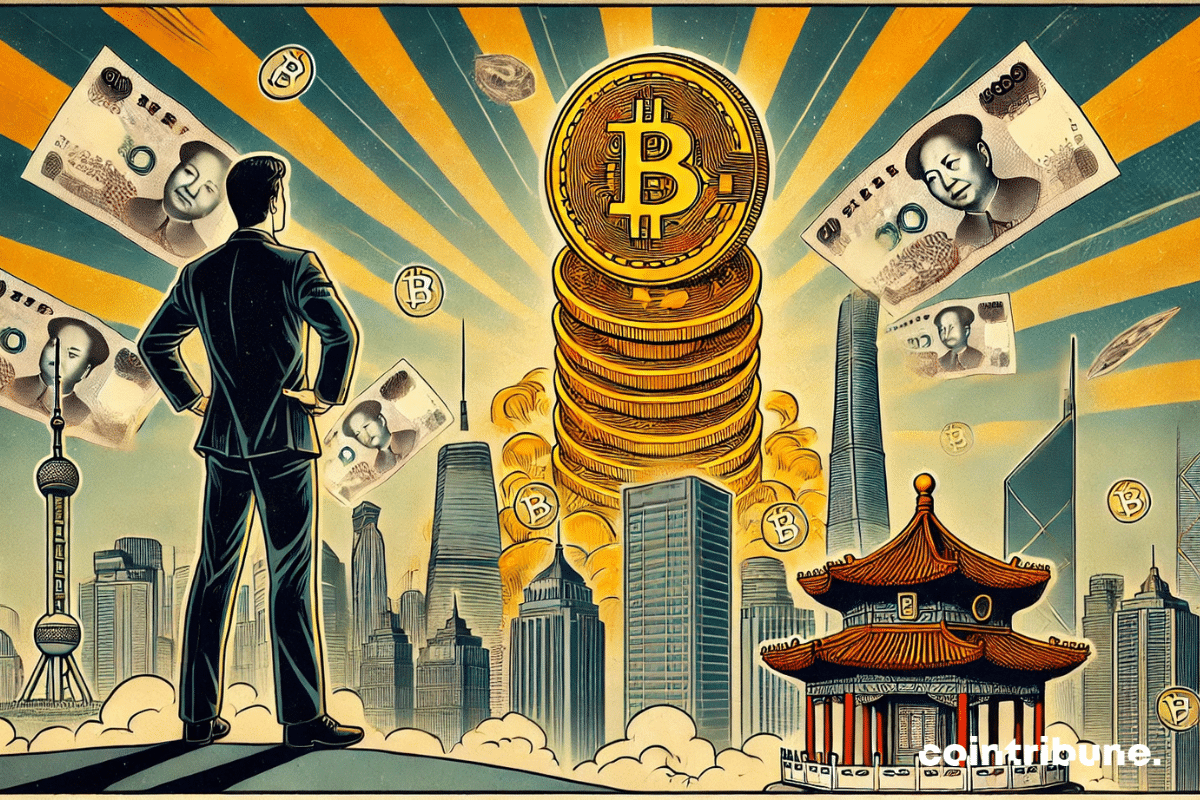
Financial markets are on the brink of a new cycle of monetary easing, marked by strategic decisions from major central banks. Following the American Federal Reserve, which began reducing its key interest rates last September, it is now the People's Bank of China (PBOC) that is preparing to take the lead. Beijing plans to lower its interest rates further to stimulate the economy and counter the heightened deflationary pressure on the yuan, a phenomenon that worries Chinese authorities and weighs on investor confidence. In light of this situation, Arthur Hayes, co-founder of BitMEX and macroeconomic analyst, anticipates a chain reaction in the financial markets. He asserts that the combination of a looser monetary policy in China and a favorable environment in the United States will enhance the appeal of alternative assets, particularly bitcoin and cryptocurrencies. According to him, this injection of liquidity, coupled with a reorientation of institutional capital, could trigger a massive rally in the cryptocurrency market during the year 2025.

The crypto market is in perpetual turmoil, and Dogecoin is one of its protagonists today. Within a week, its price surged by 21%, surpassing competitors like Shiba Inu, Pepe, and Bonk. This performance is no coincidence. Institutional investors and wealthy individuals have massively positioned themselves on the asset, as evidenced by the purchase of 1.08 billion DOGE for an estimated value of 413 million dollars. A notable transaction of 399.9 million DOGE, equivalent to around 144.9 million dollars, was also transferred from Binance to an unknown wallet, a movement often perceived as a bullish signal indicating a reduction in selling pressure. For some observers, the asset could finally cross the symbolic barrier of 1 dollar by the end of the year, thus propelling its market capitalization to 100 billion dollars. However, does this momentum rest on solid fundamentals, or is it merely a speculative frenzy? Amid strategic accumulations, optimistic analyses, and favorable political contexts, Dogecoin may well be on the brink of a new bullish cycle.

Social media has become much more than just simple exchange platforms. Today, they are the battleground of an ideological clash between freedom of expression, content moderation, and user engagement. Every modification to the rules governing these digital spaces sparks passionate debates, and X (formerly Twitter) is no exception. Recently, Elon Musk announced a revamp of X's algorithm, which aims to prioritize educational and informative content at the expense of those deemed too negative. According to him, this update addresses a central issue: some posts encourage excessive consumption of the social network without truly enriching users' experiences. However, this decision has quickly provoked criticism. Many users denounce a risk of control over information and question the criteria that will define "negativity." Some see it as a form of masked censorship, while others view this change as an attempt to influence how debates are organized on the platform.
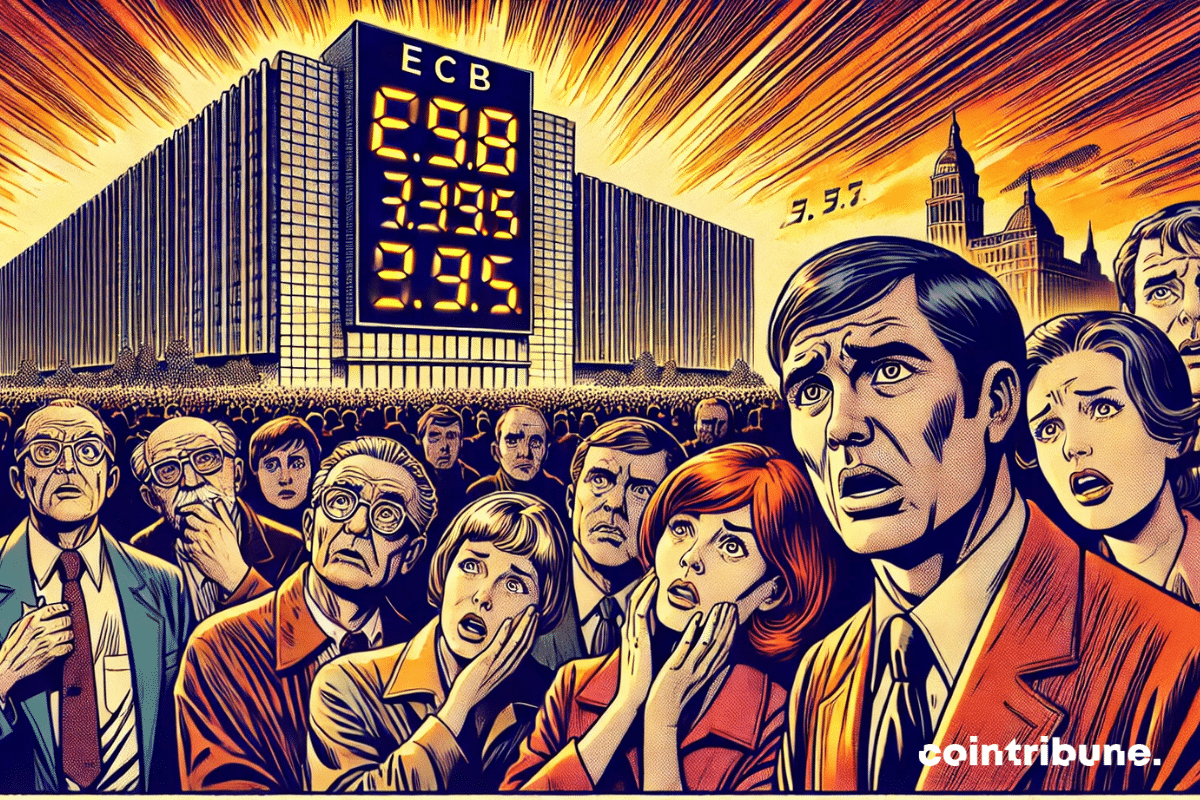
Inflation in the eurozone continues to receive close attention as markets monitor the release of December's figures. According to FactSet estimates, consumer prices are expected to rise by 2.4% year-on-year, up from 2.2% in November. This increase, although moderate, raises questions about the path the European Central Bank (ECB) is set to take. On one hand, some investors are betting on a rapid monetary easing, convinced that inflation will gradually return to the ECB's target of 2%. On the other hand, the sustainability of underlying inflation at 2.7%, fueled by rising prices of services and food products, urges the central bank to exercise caution. As the ECB prepares for its first meeting of the year on January 30, the balance between supporting the economy and controlling prices looks particularly delicate.

The Solana network is undergoing an unprecedented expansion phase, driven by massive adoption of memecoins and a significant rise in speculative activity. However, this dynamics raises questions within the community of project founders on the Blockchain. According to a survey conducted by Blockworks Research, 76% of them believe that memecoins play a beneficial role in the ecosystem, while 16% consider artificial intelligence (AI) agents to be an overrated technology. These results reflect an increasing gap between two major trends: on one side, the enthusiasm for highly volatile assets, and on the other, skepticism regarding new AI applications in Web3.

The center of gravity of the global economy is gradually shifting towards new alliances. In the face of the waning influence of Western institutions, another bloc is consolidating its power. Since January 1, 2025, the BRICS have taken a new step by welcoming nine partner states. This expansion, decided at the Kazan summit in October 2024, reinforces their political and economic weight and broadens their grip on emerging markets. Now, the organization represents 51% of the global population and generates 40.4% of global GDP in purchasing power parity.

As digital innovations profoundly transform our habits, Elon Musk is preparing to take a significant step with the launch of X Money. This payment system, directly integrated into the X platform (formerly Twitter), could redefine the standards in the realm of digital payments. A recent code leak, revealed by a researcher, has reignited rumors of an imminent launch, well ahead of the officially announced date for this year, 2025. If this information is confirmed, X Money promises to introduce unprecedented features, particularly the potential support for cryptocurrencies like Bitcoin and Dogecoin. Through this project, the X platform aims to become a key player in digital transactions, raising questions about its economic and regulatory impact.

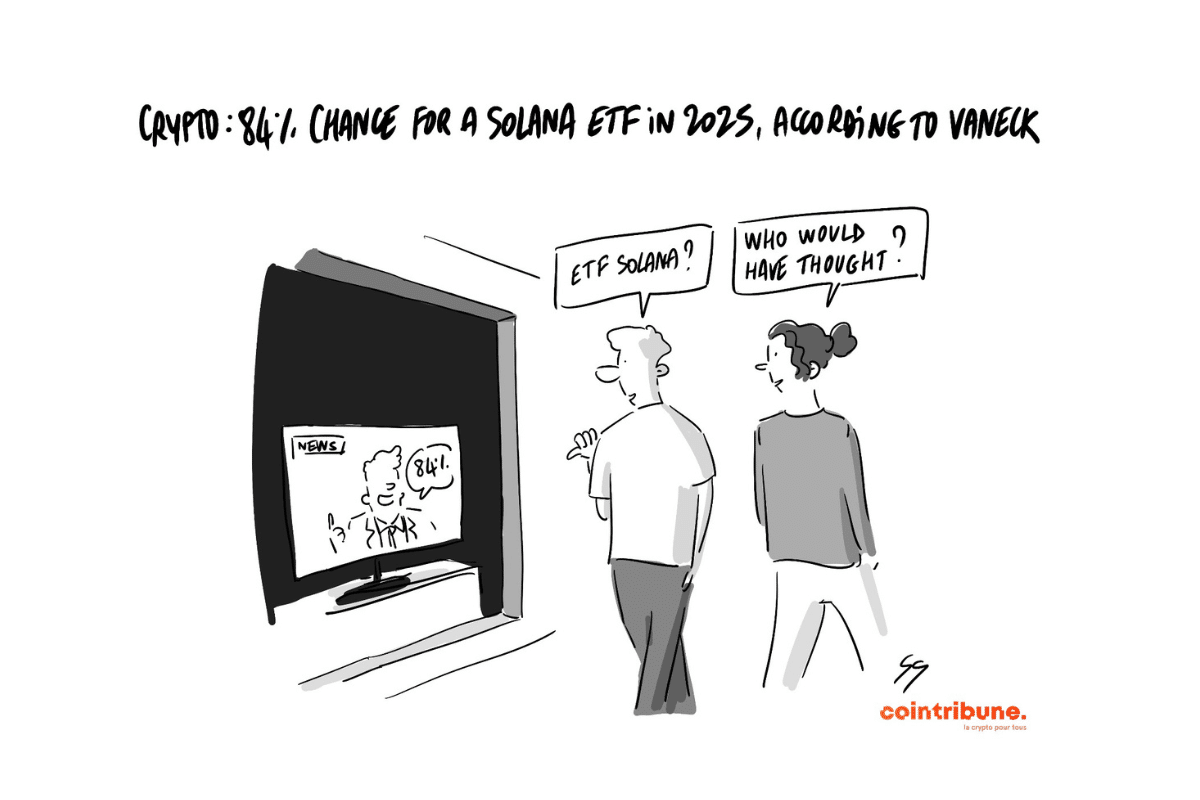
Cryptocurrencies, once considered a marginal phenomenon, have gradually established themselves as a central element of the global financial ecosystem. This major shift is illustrated by a promising new perspective. Matthew Sigel, head of research at VanEck, stated that the likelihood of an ETF (Exchange-Traded Fund) on Solana being approved in the United States during the year 2025 is high, but exceeds current forecasts. Sigel asserts that Polymarket's 77% estimates underestimate this potential, a statement that reignites the debate on the future of crypto derivatives and their role in transforming financial markets. This statement comes as institutional investors and U.S. regulators attempt to balance innovation with legal frameworks. In this context, the eventual approval of a Solana ETF could significantly broaden access to the crypto market, attracting both capital and institutional players. If these projections materialize, they would mark a significant milestone in the integration of these assets within traditional portfolios.

Since January 1, 2025, the French real estate sector is entering a new era. The changes go beyond a simple revision of previous rules. They reflect a political will to strengthen ecological requirements and adapt the tax framework to an uncertain economic context. The ban on renting energy-rated G housing, for example, embodies this priority given to the energy transition. At the same time, major fiscal upheavals, such as the end of the Pinel scheme or the postponement of the Zero-Rate Loan, are redefining incentives for investors and households. Finally, the continuation of the "anti-Airbnb law" and the stability of notary fees complete this picture of reforms, where each measure shapes the delicate balance between the expectations of property owners, the needs of tenants, and environmental imperatives. These adjustments, far from being anecdotal, herald a profound transformation of the real estate market.
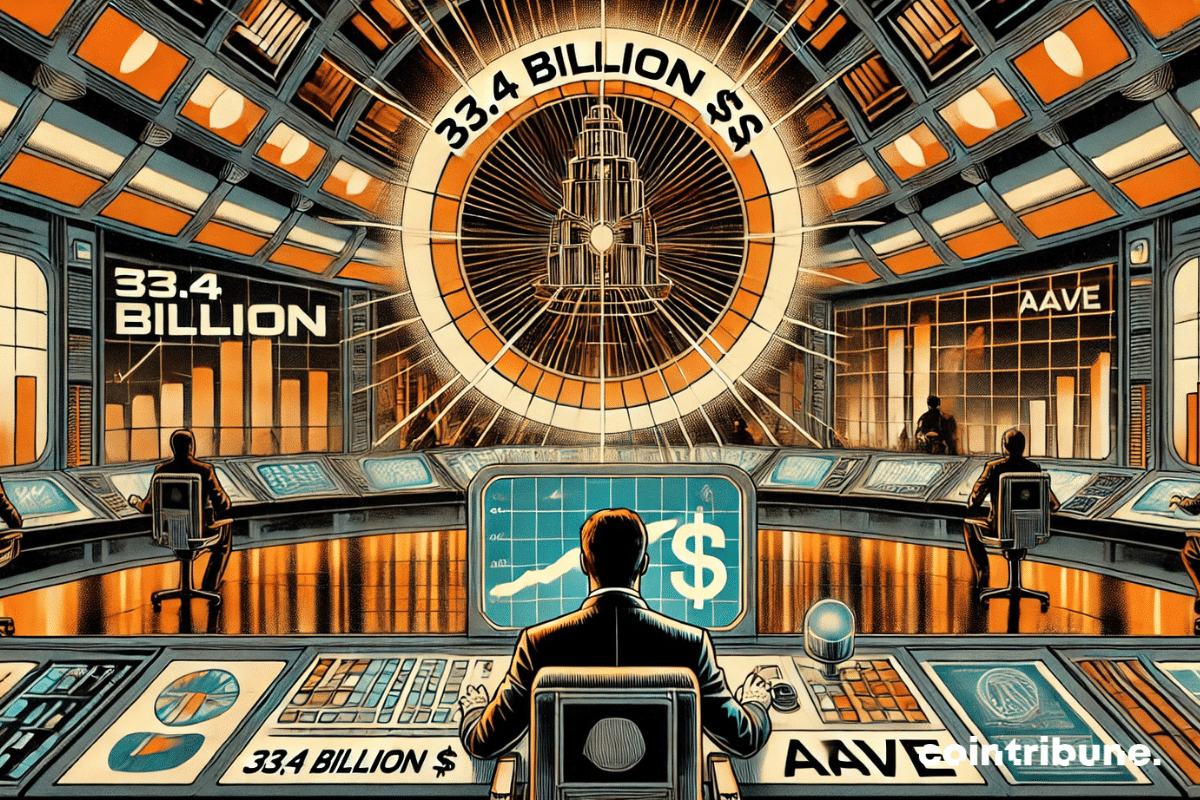
Decentralized finance (DeFi) continues to demonstrate its potential, and Aave is today one of the most eloquent examples of it. Indeed, the platform has reached $33.4 billion in net deposits, surpassing the record levels of 2021, which marked a major turning point for the crypto sector. This staggering figure is not just a simple statistic, but a reflection of an ever-evolving dynamic. The DeFi ecosystem, driven by technological innovations and growing adoption, is transforming into a credible alternative to traditional financial institutions. In this context, Aave is redefining standards by diversifying its markets and strengthening its offerings, attracting both investors and developers. This performance illustrates the platform's robustness, but also the growing maturity of a sector in search of expansion and security.
Experts at Steno Research forecast that 2025 will mark a major milestone in the history of cryptocurrencies. According to their report, Bitcoin could reach $150,000 and Ethereum $8,000, unprecedented levels. These projections are based on an increasingly favorable regulatory framework, coupled with growing institutional adoption. Meanwhile, economic conditions, characterized by falling interest rates and improving liquidity, bolster growth prospects. The introduction of ETFs dedicated to Bitcoin and Ethereum in the United States, which are expected to attract massive investments, illustrates this positive momentum. As the sector moves towards greater recognition, it may redefine its standards and offer new opportunities for innovation.

How to know how much you can earn from BTC mining? Discover the answer in this comprehensive guide to bitcoin mining. Before knowing how much bitcoin mining can yield, one must first understand how this activity works.
Are you interested in bitcoin (BTC) mining but don't know how to get started? Mining can be an effective way to earn cryptocurrency income, provided you have the right hardware. GPUs, or graphics cards, are powerful processors designed to quickly handle complex calculations. Faster than CPUs, they can extract larger amounts of bitcoins. By the end of this article, you will have all the knowledge you need to start mining bitcoins with your graphics card!

Mining involves using powerful computers to solve complex problems and validate transactions on the blockchain. Among the equipment used to mine Bitcoin, ASICs are certainly the most widespread in the industry. Discover everything you need to know to get started with ASIC mining!

Are you interested in mining Bitcoin (BTC) and hesitating to start with a processor (CPU)? Know that it is entirely possible to mine Bitcoin using the processing power of your computer. In fact, it is an easy way to get started in cryptocurrency mining, as you do not need expensive hardware or special knowledge. In this article, we will guide you through your first steps in CPU mining.

Have you ever heard of FPGA? It is a type of hardware used for mining cryptocurrency, whose popularity continues to grow. This article covers all the necessary steps to mine Bitcoin (BTC) with this device. But before diving into the heart of the matter, let’s start by defining the concept and what the advantages and disadvantages of this practice are.

Are you looking for the best software to mine Bitcoin (BTC)? If so, you're in luck! In this article, we will give you an overview of some of the most popular software for Bitcoin mining. We will explain the different features of each solution and discuss the advantages and disadvantages to help you decide which one is best suited to your needs.
The Stratum mining protocol is an essential component of the Bitcoin (BTC) network. It allows mining software to connect efficiently and securely to the blockchain, optimizing the mining process. Developed in 2012, Stratum has since become the most popular protocol used for mining bitcoins. In this post, we will explore the definition of this technology and the reasons why it is so important for Satoshi Nakamoto's network.