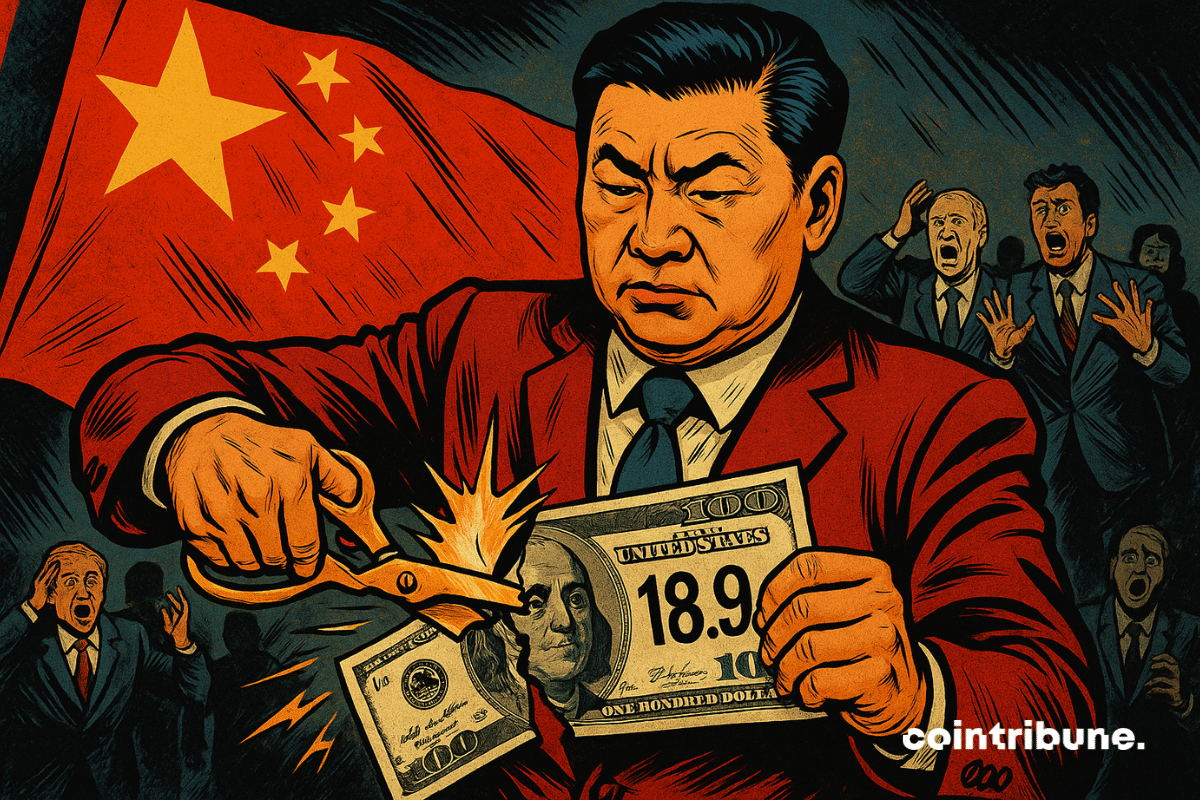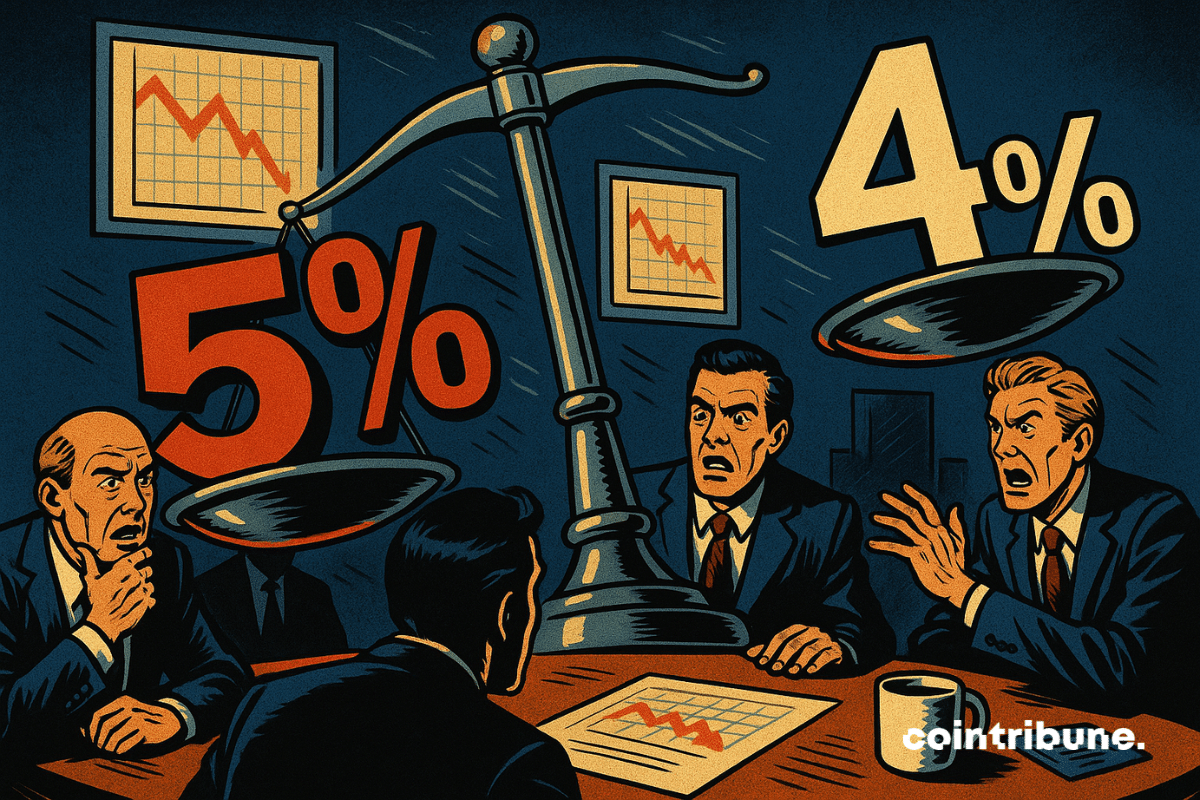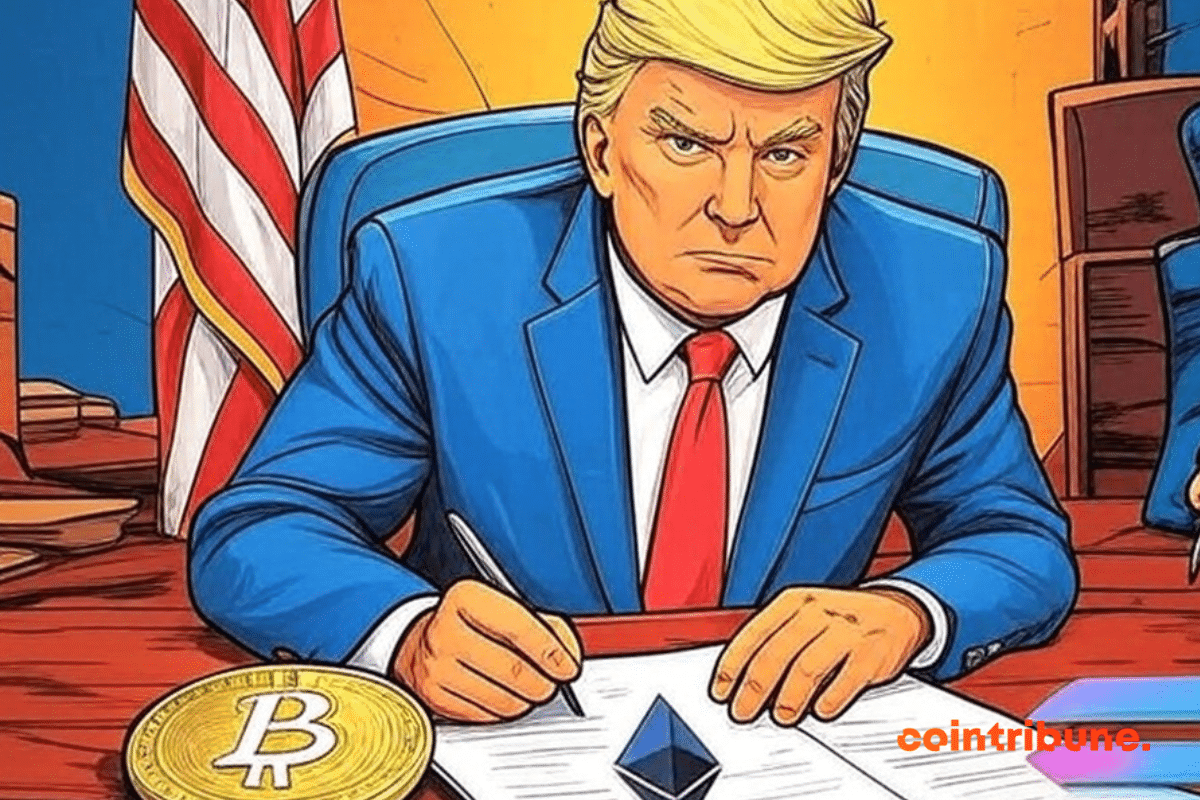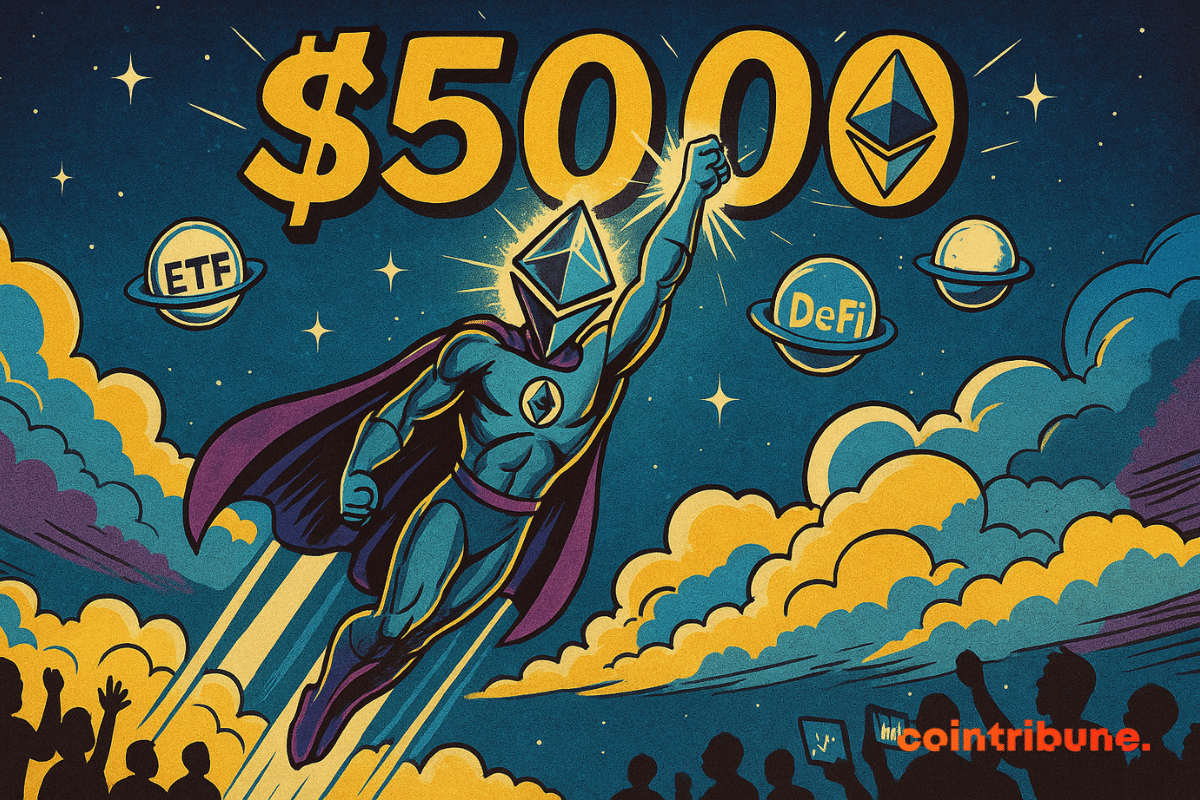
Bayrou, an anxious prophet, portrays a Europe that watches a conquering dollar and a martial Trump, crushing our dreams of independence. The time for denial is over: it's time for a resurgence.
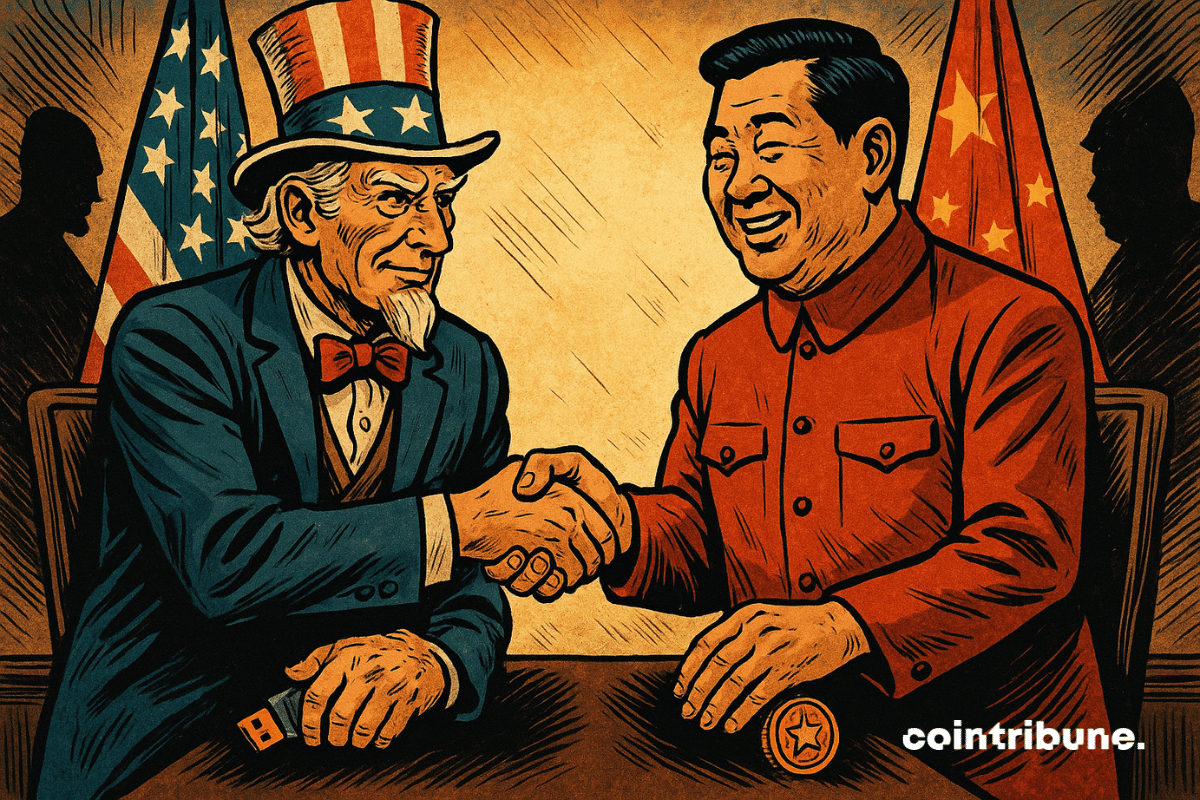
Transatlantic relations are experiencing a period of heightened tensions, marked by Donald Trump's return to the American presidency. In this context, Isabel Schnabel, a prominent member of the Executive Board of the European Central Bank (ECB), has sounded the alarm. She claims that a trade war between the European Union and the United States is "highly probable," due to the protectionist policies already announced by the American administration. If these measures, including high tariffs on European imports, were to materialize, they could destabilize the global economy. This threat, which particularly targets key sectors in the euro area, poses critical challenges for the future of international economic relations.
Amid revolutionary announcements, technological advancements, and regulatory turbulence, the crypto ecosystem continues to prove that it is both a territory of limitless innovations and a battleground for regulatory and economic conflicts. Here is a summary of the most significant news from the past week regarding Bitcoin, Ethereum, Binance, Solana, and Ripple.
In the unpredictable world of cryptocurrencies, a single event can be enough to disrupt the market balance. The recent launch of the memecoin TRUMP, directly supported by the elected President of the United States, is a perfect illustration. Within a few days, Google searches for terms like "buy Solana" and "buy crypto" reached record levels, revealing an unprecedented interest in this universe. Such a phenomenon, at the intersection of politics, popular culture, and blockchain technology, reflects the growing influence of cryptocurrencies on once-distinct domains. How has a simple memecoin propelled Solana to the forefront of the global stage and redefined market dynamics?
Long regarded as a speculative asset, Bitcoin is gradually establishing itself as a strategic element in the management of national reserves. In the face of evolving financial markets and geopolitical tensions, several governments and central banks are considering its integration into their foreign exchange reserves. In the United States, a bill proposes the gradual acquisition of 1 million BTC over five years. In the Czech Republic, the governor of the central bank is exploring the possibility of diversification into crypto. Similarly, in Russia, policymakers are advocating for a strategic reserve in Bitcoin, while in Brazil, a project foresees an allocation of 5% of sovereign reserves to this asset. This movement represents a notable shift in the institutional perception of Bitcoin, which now transcends the framework of private diversification to become an economic and geopolitical issue. While El Salvador has already taken the leap, other countries are proceeding cautiously, hindered by the volatility of cryptocurrencies and regulatory uncertainties. Between experimentation and resistance, a new financial dynamic is emerging, suggesting a potential shift in balance within the global monetary system.
The concept of wealth is complex to grasp, as it varies according to social, economic, and cultural contexts. Nevertheless, it generates constant interest in public debates. At what amount can one be considered wealthy? A recent study, based on data from the Bank of France and the criteria of the Observatory of Inequalities, provides a precise insight. It sets this threshold at 555,000 euros in net assets, far removed from the images of extreme luxury often associated with wealth. In fact, this figure, which concerns about 20% of French households, raises essential questions about wealth distribution and social inequalities. How does this definition influence our perception of wealth? And what are its implications for public policies and social justice?
The BRICS project to create a common currency is generating growing interest among economists and analysts, as it could redefine global financial balances. For decades, the US dollar has dominated as the main reserve currency, giving the United States substantial economic and geopolitical power. During their summit in 2024 in Kazan, Russia, the leaders of the BRICS intensified their discussions on establishing an alternative called "Unit," designed to facilitate exchanges within the bloc. This project fits into a broader strategy aimed at reducing their dependence on the dollar, in the context of increasing geopolitical tensions and economic sanctions. At a time when many countries are seeking to diversify their reserves and bypass the constraints imposed by the current monetary system, can this initiative truly shake the dollar's supremacy?
The United States is facing a historic budget deficit, reaching $711 billion in just three months, an increase of 39% compared to the previous year. This explosion in public spending, coupled with a decline in tax revenues, is straining federal finances. Donald Trump, poised to return to the White House, will have to reconcile his promises of tax cuts with the necessity of controlling the debt. To assist him, Elon Musk has been appointed to lead a commission dedicated to government efficiency. His ambition: to reduce federal spending by $2 trillion, even if a halfway goal would already be a "super result." Between budgetary discipline and economic imperatives, the future administration finds itself faced with a perilous equation, where each decision could redefine the country's financial stability.
After reaching a historic peak in December, Bitcoin is undergoing a brutal correction, losing nearly 10% of its value in just a few weeks. This drop cannot be solely explained by a simple market cycle, but by a tense economic context. Persistently high U.S. inflation reduces the Federal Reserve's (Fed) maneuvering room, delaying hopes for rate cuts. This situation increases the pressure on risky assets, including Bitcoin, which sees its appeal diminish against a rising dollar and increasing bond yields. The imminent announcement of the Consumer Price Index (CPI) on January 15 could further accentuate this trend. According to Steno Research, inflation exceeding expectations could trigger new liquidations, potentially pushing BTC below $85,000. However, the danger does not come solely from macroeconomic data. The Bitcoin derivatives market remains overheated, fueling an excess of leverage that increases volatility. Amid economic uncertainties and the fragility of speculative positions, crypto operates in a zone of instability where each economic announcement could provoke a significant movement.
The year 2025 marks a decisive step for the crypto market. Indeed, regulatory pressure is intensifying, while institutions are strengthening their presence in the sector. In this rapidly changing environment, some projects manage to stand out by combining innovation with strategic adoption. For investors, identifying the most promising altcoins relies on several criteria: scalability, institutional adoption, technological performance, and return potential. Thus, among the most strategic choices for January 2025, Solana (SOL), Cardano (ADA), and Avalanche (AVAX) stand out due to their optimized infrastructures and growing adoption, thereby consolidating their place at the heart of Web3.
While the American economy soars like a star, Europe gets lost in a maze of rules and bitter regrets.
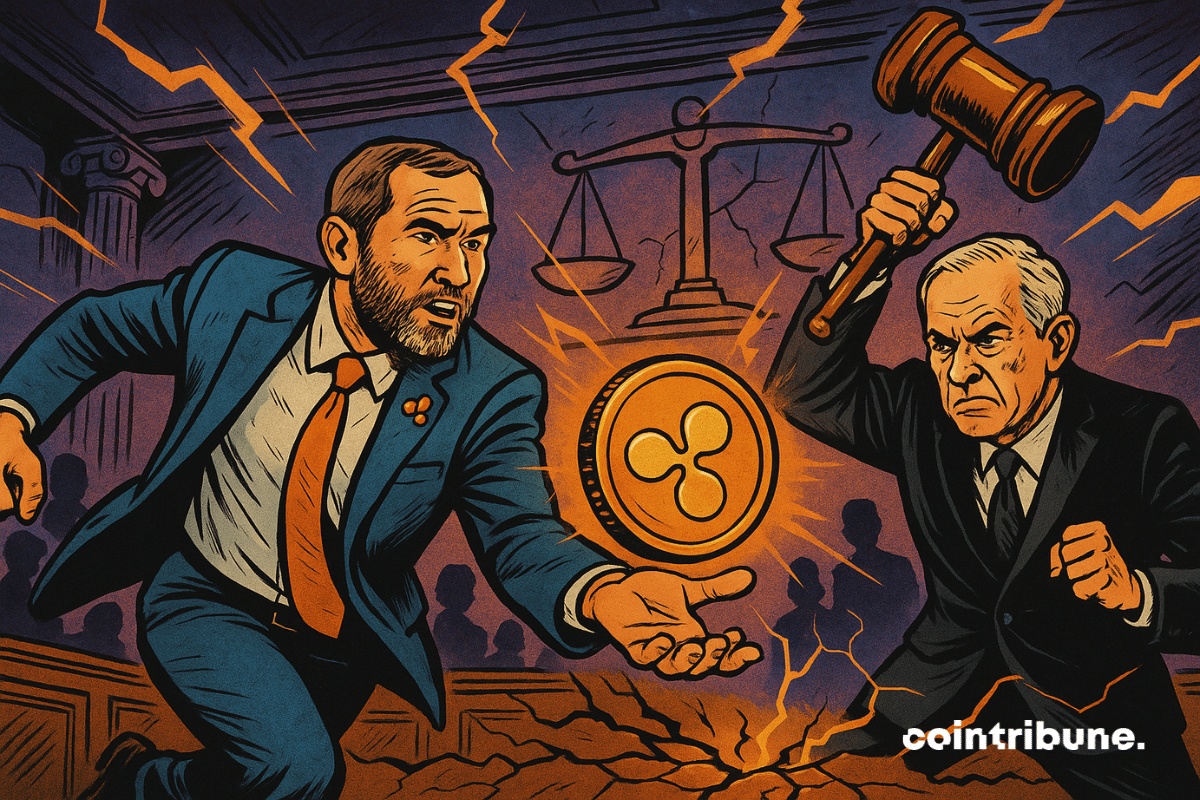
Cryptos have been evolving for years in a regulatory gray area, but the latest decision by the U.S. Supreme Court marks a decisive turning point for Binance. By rejecting the platform's request, the highest American court confirms that securities laws apply to transactions conducted on its servers, even if the company does not have a physical headquarters in the United States. This verdict paves the way for a class action lawsuit initiated by investors, who accuse Binance of selling unregistered cryptos. Already under pressure after a series of lawsuits and a multi-billion dollar settlement with the Department of Justice, the exchange and its former CEO, Changpeng Zhao, are facing intensified legal challenges. This setback raises a key question: Are the United States imposing their authority over the entire global crypto market?
Global economic relations are evolving under the influence of geopolitical tensions and the strategic repositioning of major powers. In this context, China and Russia are strengthening their trade partnership, which is set to reach a historical record of 240 billion euros in 2024. This growth illustrates a strategic rapprochement bolstered by Western sanctions against Moscow and Beijing's desire to expand its influence. More than just an economic alliance, this cooperation sends a clear signal to the United States and the European Union, which aim to limit their dominance on the global stage. Thus, the surge in trade flows, increased use of the yuan in transactions, and the restructuring of international financial circuits now raise the question of the long-term consequences of this Sino-Russian agreement.
The movements of Bitcoin rhythm the markets, between phases of euphoria and brutal corrections. After a record of 108,268 dollars in December 2024, the crypto is undergoing a period of consolidation. However, a major technical indicator, the 52-week Simple Moving Average (SMA), fuels speculation. According to analyst Dave the Wave, Bitcoin could reach a new peak by July 2025, a pattern already observed during previous bullish cycles. Thus, if this prediction is validated, it would mark a key milestone in the current cycle. Nevertheless, the market's evolution remains uncertain, between technical signals and external factors likely to influence price trajectories.
The beginning of 2025 marks a historic turning point for Bitcoin. Technical indicators are looking positive, institutional investors are flocking in massively via ETFs, and macroeconomic prospects are improving. Now, the scenario of $500,000 is highly probable in 2025.
The global economic landscape, long dominated by Western powers and supported by the preeminence of the dollar, seems on the brink of change. In the face of a financial system centralized around the United States and Europe, many nations are expressing a growing desire to turn to alternatives. This trend is accelerating with the recent announcement: more than twenty countries from several continents have officially submitted their candidacy to join BRICS in 2025. If this project comes to fruition, the expansion of the formed bloc could enhance its economic weight but also redefine the balance of power on a global scale.
Amid revolutionary announcements, technological advancements, and regulatory turbulence, the crypto ecosystem continues to prove that it is both a territory of limitless innovations and a battleground for regulatory and economic conflicts. Here is a summary of the most significant news from the past week concerning Bitcoin, Ethereum, Binance, Solana, and Ripple.
Investor appetite for altcoins continues to grow, as evidenced by the spectacular increase in their trading volume on Binance, which now accounts for 78% of the platform's activity. This record level raises questions: is the market on the verge of a new bull run for altcoins? According to Burakkesmeci, an analyst at CryptoQuant, this development is a strong signal that reinforces the hypothesis of a bullish market in 2025. However, despite this enthusiasm, some indicators remain mixed. Bitcoin still dominates the market with 57.74% of the total market capitalization, and the Altcoin Season Index, down to 46 out of 100, does not yet confirm a significant shift towards altcoins. In the face of these contradictory signals, the current dynamics reflect more of a gradual rise in power than a real immediate cycle change.
Under the darkened skies of the budget, the Medef proposes a sharp reform: to withdraw retirees' valuable tax allowance. An idea where the economy dialogues with injustice.
Artificial intelligence is progressing at a rapid pace, making the distinction between humans and machines increasingly difficult. In response to this evolution, Worldcoin, now rebranded as World, aims to establish a universal proof of humanity through a biometric identification system based on iris recognition. The company has just announced that it has surpassed the milestone of 10 million verified users, a benchmark that signifies its massive adoption and fuels growing controversy. Indeed, the project relies on a network of orbs tasked with scanning the users' ocular data to assign them an unforgeable digital identity. According to its creators, this technology would secure digital interactions and ensure that only genuine humans access online services. Nevertheless, several governments and data protection authorities are concerned about the potential pitfalls of this model. Between technological promise and regulatory resistance, Worldcoin is part of a debate on digital identity and personal data governance. Its success or failure could shape the future of online authentication in a world where AI challenges the foundations of digital trust.
Bitcoin has risen by 120% in 2024, significantly outperforming other major asset classes. 2025 is shaping up to be another exceptional year.
Financial markets hate uncertainty, yet the global economy is entering a period of instability. As we approach 2025, fears of economic slowdown, inflationary pressures, and political uncertainties are multiplying. Kristalina Georgieva, Managing Director of the International Monetary Fund (IMF), warns of "headwinds" and "divergences" that threaten global economic balance. Europe is struggling, the United States is surprising with its resilience, China is facing deflationary pressure, and Brazil is battling inflation. Behind these disparities, another concerning factor is the erosion of investments in education, which hampers innovation and long-term growth. As the IMF prepares to release its updated report, one question remains: do these economic fractures create an irreversible divide, or do they foreshadow a new world order?
The history of financial markets is marked by breakthroughs, those moments when an asset or an innovation disrupts established rules. 2024 will be remembered as the year when Bitcoin definitively crossed a milestone with the rise of spot ETFs. Long awaited, these financial products attracted record inflows, with $129 billion in assets under management in less than a year. From their launch, they generated unprecedented enthusiasm, allowing institutional investors to access Bitcoin in a regulated and secure framework. However, the impact goes beyond the numbers. Bitcoin is no longer just a speculative asset. It now competes with gold as a store of value. In November, BlackRock's Bitcoin ETF surpassed its gold-backed equivalent, a strong symbol of the changing perception among investors. As prospects for 2025 take shape, one question dominates: can this momentum be sustained? Between market consolidation, a possible expansion towards other cryptos like Solana and XRP, and the potential entry of new players like Vanguard, the year 2025 could very well redefine the balance of power in the financial markets.
Bitcoin is facing a new setback, shaken by a market that is reevaluating its expectations. Indeed, the publication of a solid economic report in the United States has strengthened the dollar, which reduces the likelihood of an imminent interest rate cut by the Federal Reserve. Such a reaction has led to a correction below $93,000. This has temporarily stalled the bullish momentum of crypto. However, Grayscale remains confident and views this pullback as mere turbulence rather than a reversal of trend. According to Zach Pandl, head of research at the company, the strength of the dollar and the restrictive monetary policy are temporarily weighing on the market, but the fundamentals of Bitcoin remain strong. With rising institutional adoption and a changing regulatory environment, the bullish trajectory seems intact despite short-term fluctuations.
For several years, the BRICS have been seeking to reduce their dependence on the US dollar by developing a monetary alternative. However, at the beginning of 2025, the reality of the foreign exchange market is slipping away from them. The dollar is asserting itself more than ever and reaching new heights while the currencies of the bloc are collapsing. The Indian rupee has plummeted to a historic low of 85.93, the Chinese yuan is weakening, and other local currencies are struggling to hold on. Despite the BRICS' efforts to counter the hegemony of the greenback, the current dynamics expose the limits of their dedollarization strategy and raise the question of the viability of a credible alternative.
A new era seems to be opening up for American financial advisors. According to a recent survey conducted by Bitwise, 56% of them say they are more inclined to invest in cryptocurrencies after Donald Trump's victory. Such enthusiasm is as intriguing as it is fascinating, especially when we know that crypto markets evolve at lightning speed. Some professionals see it as a favorable wind, ready to propel traditional finance towards new horizons. Others, more cautious, detect a landscape still riddled with uncertainties. However, one thing is certain: the dynamics around Bitcoin and other digital assets continue to strengthen.
The Chinese economy is wavering between stagnation and decline, revealing lasting structural flaws. In December, the consumer price index only increased by 0.1% year-on-year, confirming intensifying deflationary pressure despite the government's repeated attempts to revive growth. The drop in food prices (-0.5%) and consumer goods (-0.2%) illustrates the lack of dynamism in domestic demand, as households remain cautious and businesses hesitate to invest. Thus, the real estate crisis, coupled with the ineffectiveness of previous stimulus measures, fuels uncertainties. This slowdown goes beyond a cyclical phase. It calls into question the resilience of the Chinese economic model and its short-term outlook.
The housing credit market in France is undergoing a significant shift. After a period marked by high interest rates, which hindered access to property ownership, the trend is reversing. François Villeroy de Galhau, governor of the Bank of France, announced that mortgage rates fell below 3.4% in November 2024, down from 4% in January. This drop is attributed to a slowdown in inflation, which is expected to reach 1.5% in 2025, after having weighed on the economy in recent years. This development is a relief for borrowers, but its implications go beyond the real estate sector. A relaxation of credit costs generally promotes economic recovery, restoring purchasing power to households and encouraging investment. This dynamic could also impact other asset classes, particularly cryptocurrencies. A more stable economy and smoother access to financing prompt some investors to reassess their strategies. With this drop in rates and the anticipation of possible monetary easing by the European Central Bank (ECB), the real estate market could regain a more favorable dynamic.
Trade tensions between the European Union and China are reaching new heights. Indeed, for several months, Brussels has been targeting Chinese companies accused of benefiting from public subsidies, which distorts competition. Under the Foreign Subsidies Regulation (FSR), the EU has launched several investigations, particularly against CRRC, the Chinese giant in railway equipment, and manufacturers of solar panels involved in European projects. In response to these investigations, Beijing has reacted strongly and denounced discriminatory practices. This standoff, which reflects deep divergences over the rules of international trade, could redefine the balance of power between the two economic powers. While the EU seeks to protect its market, China is concerned about a tightening of regulations that would hinder the expansion of its industrial champions. In this context, investors and companies are preparing for a significant climate of uncertainty, where every political decision can influence the dynamics of exchanges between Europe and the world's second-largest economy.
Artificial intelligence is reshaping the technological and economic power dynamics, propelling certain nations into becoming new nerve centers of innovation. Indeed, India, with its rapidly expanding market and substantial talent pool, is attracting tech giants in a race for sector dominance. Microsoft has recently made a decisive move by announcing a $3 billion investment to develop its cloud and AI capabilities in India. This ambitious initiative includes the construction of new data centers, the deployment of cloud infrastructure, and especially a large training program aimed at 10 million Indians by 2030. Far from being just an economic bet, this investment is part of a long-term strategy to anchor Microsoft at the heart of India's digital transformation. With the support of the government, the multinational aims to stimulate the AI startup ecosystem and accelerate the adoption of cutting-edge technologies on a large scale.