
Wed 26 Mar 2025 ▪
3 min read
▪
by
Nubank adds 4 new assets to its portfolio. A strategic expansion that could be a game changer in the Brazilian crypto market!
Nubank adds 4 new assets to its portfolio. A strategic expansion that could be a game changer in the Brazilian crypto market!
Between ideology and regulation, the debanking war rages: a battle where crypto and "risky" industries fight for their survival.

Farewell obligations, farewell caution! Ricardo Salinas is casting aside traditional finance and wrapping himself in digital gold. 70% of his empire now rests on bitcoin.

Does bitcoin have a place in national reserves? For the Swiss National Bank, the answer is clear: no. Between excessive volatility and lack of liquidity, the SNB rejects the idea of integrating cryptocurrency into its balance sheet, despite pressure from bitcoin advocates.

A European Central Bank (ECB) advisor, Jürgen Schaaf, recently reaffirmed the institution's critical stance on bitcoin, stating that there is "no real economic necessity" for this cryptocurrency. According to Schaaf, unlike strategic reserves of commodities such as oil or gas, BTC does not present any real economic utility or relevant usage.

Financial institutions around the world are scrutinizing blockchain technology, oscillating between skepticism and opportunism. Indeed, the European Central Bank (ECB), after years of analysis, is taking a significant step forward with the announcement of a blockchain-based interbank settlement project. This initiative, which aims to enable banks to settle their transactions in central bank money on a blockchain infrastructure, could mark a decisive turning point in the modernization of payments in Europe.
While the Fed hesitates between caution and action, inflation runs rampant, and crypto wavers, poised for a week of financial roller coasters.

The tug-of-war between the crypto industry and American banking regulators is reaching a decisive turn. For several years, companies in the sector have denounced restrictions that limit their access to traditional banking services. This phenomenon of "debanking," perceived as an unjustified impediment, hampers their development and fuels a climate of uncertainty. In response to this situation, Coinbase is stepping up. In a letter addressed to the Federal Reserve (Fed), the Federal Deposit Insurance Corporation (FDIC), and the Office of the Comptroller of the Currency (OCC), the platform demands the removal of obstacles that prevent banks from collaborating with crypto players. Coinbase is asking for the cancellation of an OCC directive, as the platform believes it imposes an excessive approval process for new banking activities related to cryptos. The company considers this approach contrary to the law and calls on regulators to officially recognize the right of banks to offer custody and execution services for cryptos. This offensive comes as the debate gains political momentum. Under pressure from Republican lawmakers, Congress is holding two key hearings this week, in the Senate and the House of Representatives, to examine these controversial practices. The outcome of these discussions could redefine the regulatory framework of the crypto industry in the United States.

Gold, the euro, stocks... and Bitcoin in the Czech vault? Finance wavers between daring and caution, and Prague dances on a tightrope between volatility and ambition.

The governor of the Czech National Bank, Aleš Michl, recently proposed an ambitious plan to invest up to 7 billion dollars in Bitcoin (BTC) as part of the bank's reserve diversification strategy. This proposal, which will be presented to the bank's board of directors on January 30, 2025, could make the Czech National Bank the first European central bank to invest in Bitcoin.

Bitcoin, this $100,000 digital mirage, attracts Morgan Stanley into a dance where profits skyrocket and sanctions loom.

Long regarded as a speculative asset, Bitcoin is gradually establishing itself as a strategic element in the management of national reserves. In the face of evolving financial markets and geopolitical tensions, several governments and central banks are considering its integration into their foreign exchange reserves. In the United States, a bill proposes the gradual acquisition of 1 million BTC over five years. In the Czech Republic, the governor of the central bank is exploring the possibility of diversification into crypto. Similarly, in Russia, policymakers are advocating for a strategic reserve in Bitcoin, while in Brazil, a project foresees an allocation of 5% of sovereign reserves to this asset. This movement represents a notable shift in the institutional perception of Bitcoin, which now transcends the framework of private diversification to become an economic and geopolitical issue. While El Salvador has already taken the leap, other countries are proceeding cautiously, hindered by the volatility of cryptocurrencies and regulatory uncertainties. Between experimentation and resistance, a new financial dynamic is emerging, suggesting a potential shift in balance within the global monetary system.
Crypto and strained borders: Beijing strengthens its nets. Tracked identities, scrutinized funds, banks become guardians of a game now locked down.
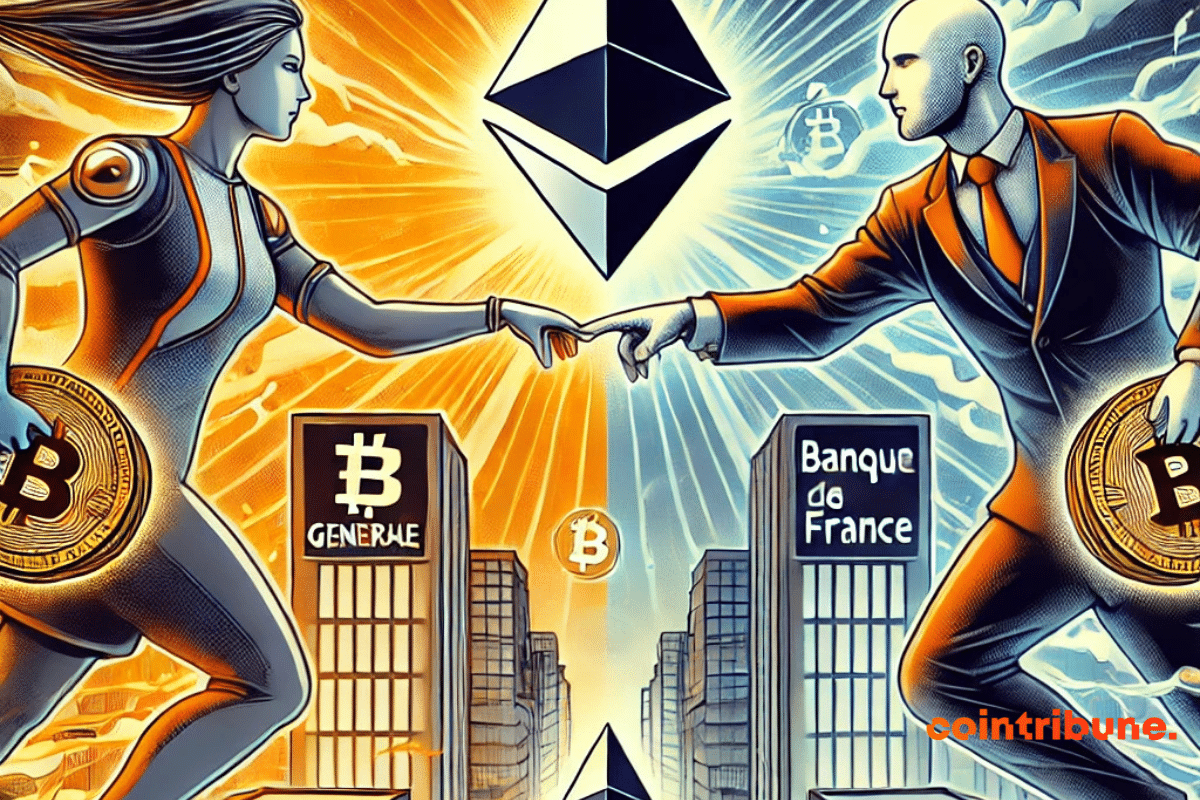
The world of crypto is adding a new historical chapter. Société Générale, through its subsidiary SG-Forge, and the Banque de France have completed a revolutionary transaction based on the Ethereum blockchain. This repurchase of securities (or repo), the first tokenized operation of its kind involving a central bank in the Eurozone, redefines the prospects for integration between traditional finance and digital innovations.

Shaktikanta Das, the outgoing governor of the Reserve Bank of India (RBI), expressed his optimism about the future of CBDC in the Indian economy, stating that the digital rupee could definitively replace the paper-based economy.

Buying Bitcoin in Asia has never been so easy: a major bank opens its digital vaults for you.
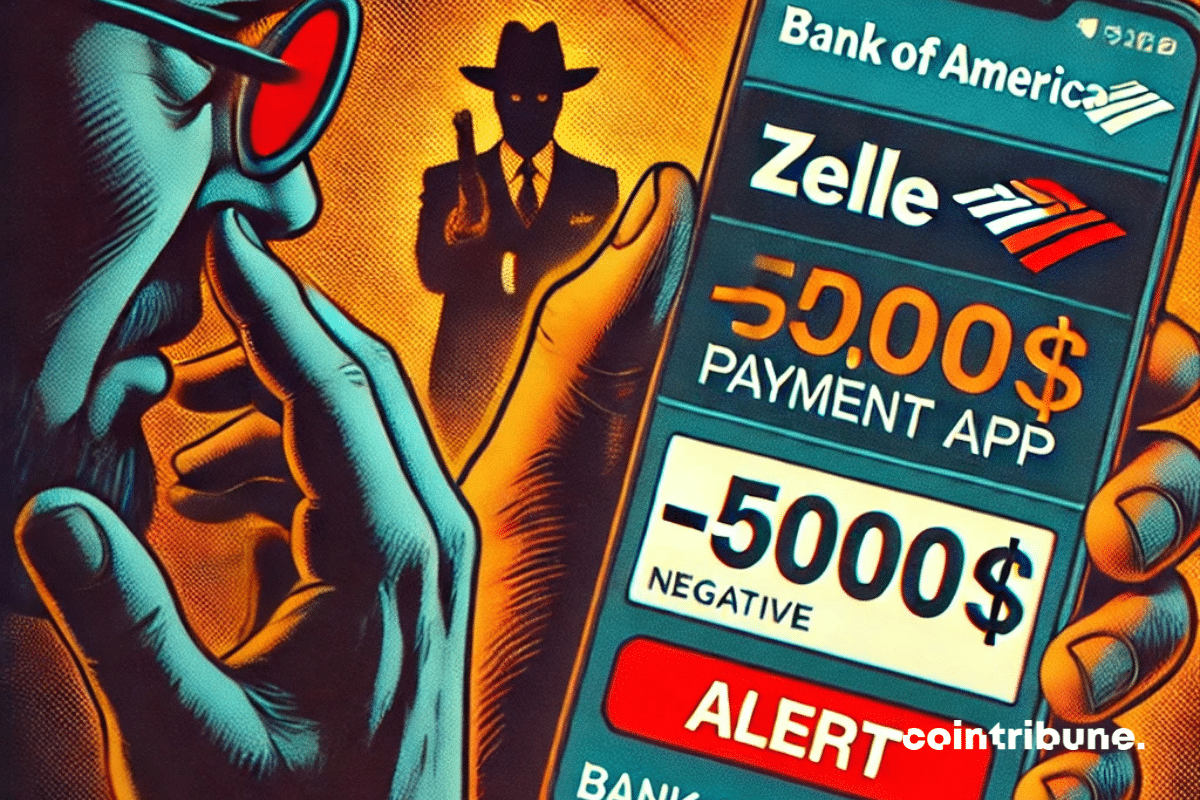
Bank of America, one of the largest American banking institutions, finds itself in the spotlight in a potentially explosive case. Indeed, an $800 million loss looms for the bank, under the threat of a federal investigation related to accusations of non-reimbursement of customers who fell victim to fraud via the Zelle payment network. This case raises further questions about consumer protection practices in the American financial sector, as pressure intensifies on banks to ensure secure transactions and reimbursements in cases of fraud.

Saylor, former preacher of the personal guard, now on a crusade for the banks. The crypto-anarchists sense the institutional conspiracy.

Visa is going green with blockchain! BBVA is already preparing for a pilot in 2025 on Ethereum. The goal? To tokenize everything!

French banks, experts in tax evasion and deforestation, know how to plant the planet and pluck their clients!
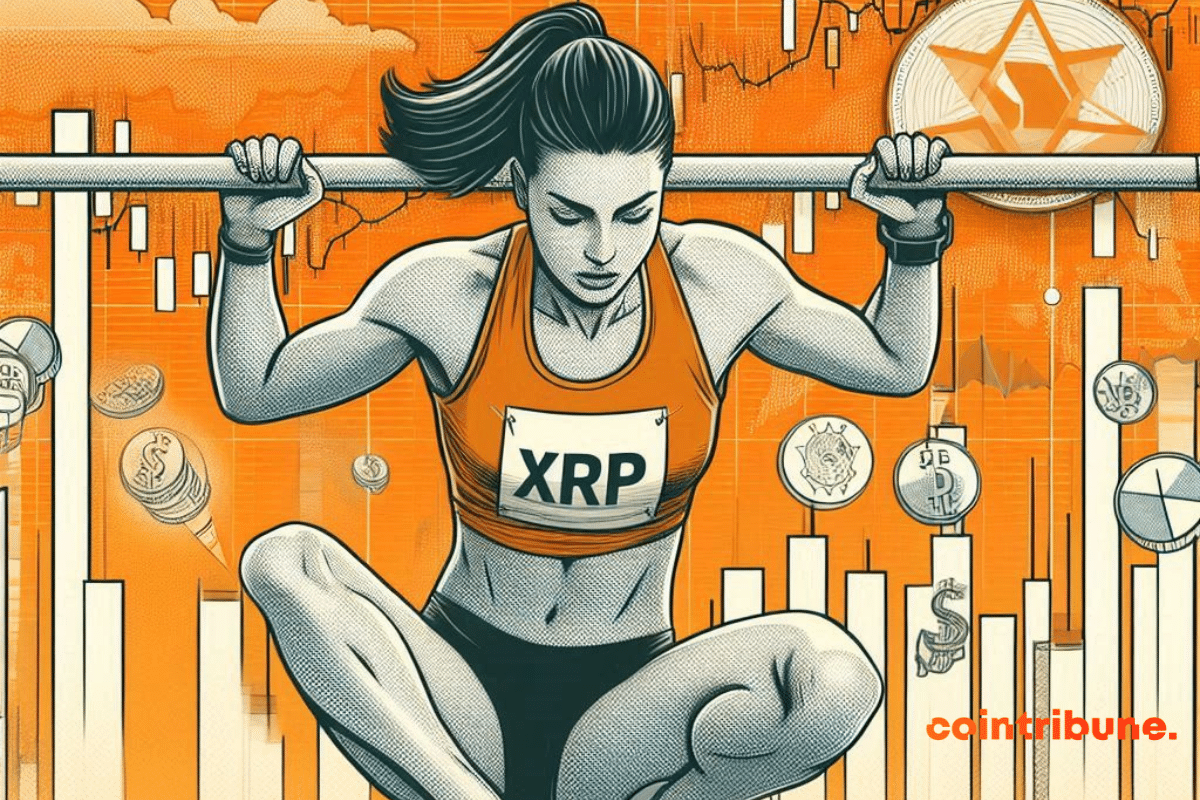
61 Japanese banks and... still nothing! XRP seems to be moving slowly like a tortoise while adoption is speeding along like a hare.

On track! Bitcoin surpasses $62,000 after the Fed's boost. HODLers hold on, traders rejoice!

Bitcoin is breaking records, but the central banks, hesitant, prefer to pile up gold rather than bet on crypto.

The world of finance has once again been shaken by a resounding scandal, this time related to the crypto space. Shan Hanes, former CEO of Heartland Tri-State Bank (HTSB), has been sentenced to 25 years in prison for embezzling $47.1 million from his clients into anonymous crypto wallets.

Banks regret having lent to Elon Musk to acquire X (formerly Twitter), due to huge losses in their finances.

The cryptocurrency market has been booming for some time now. And Bitcoin ETFs are at the heart of this dynamic. Financial giants such as Goldman Sachs and Morgan Stanley are increasingly interested in this new asset class. Discover how these institutions are investing massively in crypto-assets and the implications for the market.
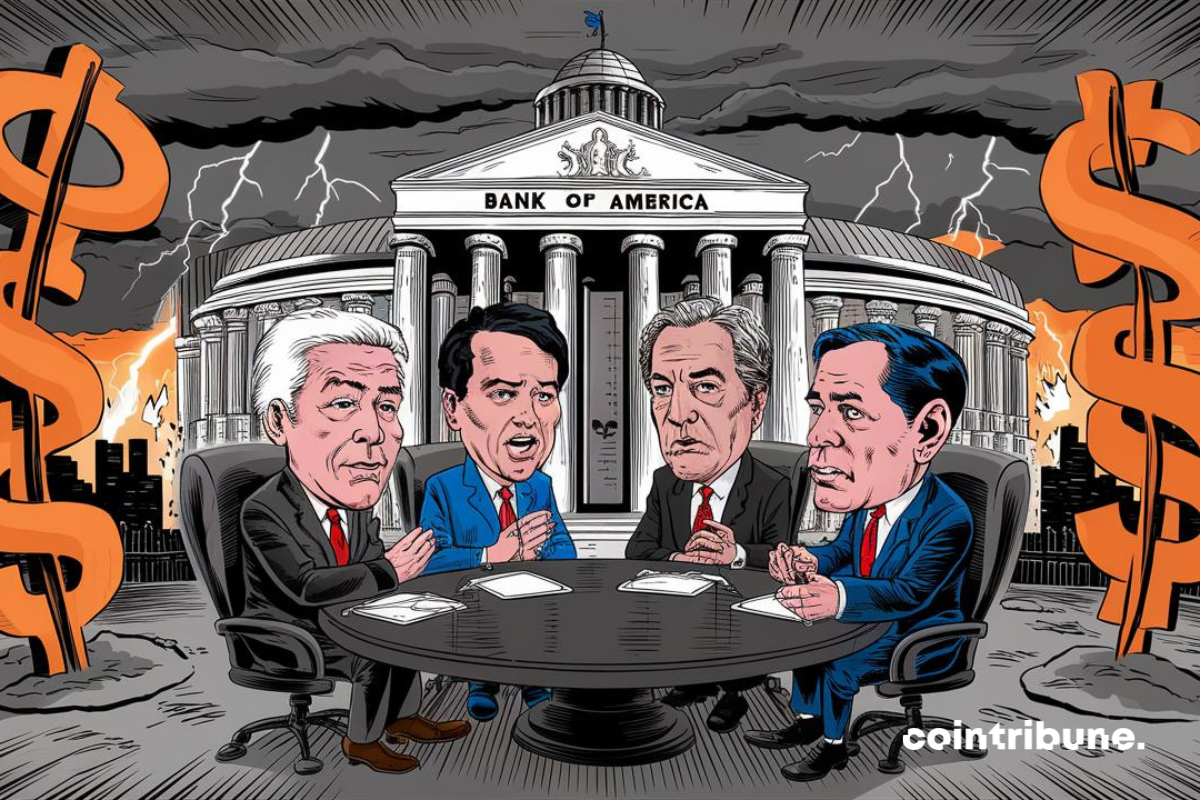
JPMorgan, BoA, Wells Fargo, and Citi predict Fed rate cuts. Discover the potential impact on the U.S. economy.

The ECB must manage political and economic uncertainties to adjust interest rates and satisfy European investors.

3. Political instability causes a fall in BNP Paribas' stock price, dethroned by Santander at the top of the European banking sector.
The global stock market is eagerly awaiting central bank decisions. This necessarily impacts the crypto market.