While bitcoin plunges down the mountain like an old tired gondola, Marathon quietly sells its digital treasure to fuel its artificial intelligence dreams and avoid a nasty industrial slide now visible everywhere.


GameStop dreamed of a masterstroke at 56 billion dollars to acquire eBay. But the categorical refusal of the e-commerce giant abruptly changed the dynamics of the case. Behind this financial battle now lies another question: how far is GameStop willing to go with its bitcoin reserves to finance its ambitions?
A technical signal absent since 2023 on bitcoin has just reappeared. This on-chain crossover, closely monitored by analysts, preceded the last major bullish phases of BTC. As the market tries to regain positive momentum, this return of the golden cross reignites speculation about a possible trend change. Investors are now scrutinizing Bitcoin's next key levels in a climate mixing optimism and caution.
Donald Trump's rejection of an Iranian ceasefire proposal immediately shook global markets. Oil prices crossed the $100 mark, US futures fell, and tensions around the Strait of Hormuz returned to the forefront of concerns. In this nervous climate, Bitcoin nevertheless surprises by its stability around $81,000. Such behavior contrasts with previous geopolitical crises.
Is Bitcoin about to enter the largest bullish phase in its history? Raoul Pal, one of the most respected macro strategists in the industry, is convinced. According to him, the increasing pressure on global debt, massive liquidity injections, and the historic investment boom combine all conditions to trigger a true "supercycle" by the end of 2026.
XRP returns to the spotlight as bitcoin consolidates its dominance above $80,000. Behind this rebound around $2, a signal intrigues the markets. Institutional investors strengthen their positions while retail investors remain largely absent. Supported by the rise of XRP ETFs and a climate once again favorable to risky assets, Ripple's token seems to enter a new phase where speculation gradually gives way to more structured flows.
An old Bitcoin whale has just moved 500 BTC that had been immobile since 2013. At the time, this jackpot was worth about 457,000 dollars. Today, it weighs nearly 40.6 million dollars. This onchain movement recalls a simple reality: in Bitcoin, time can turn a forgotten address into a historical vault.
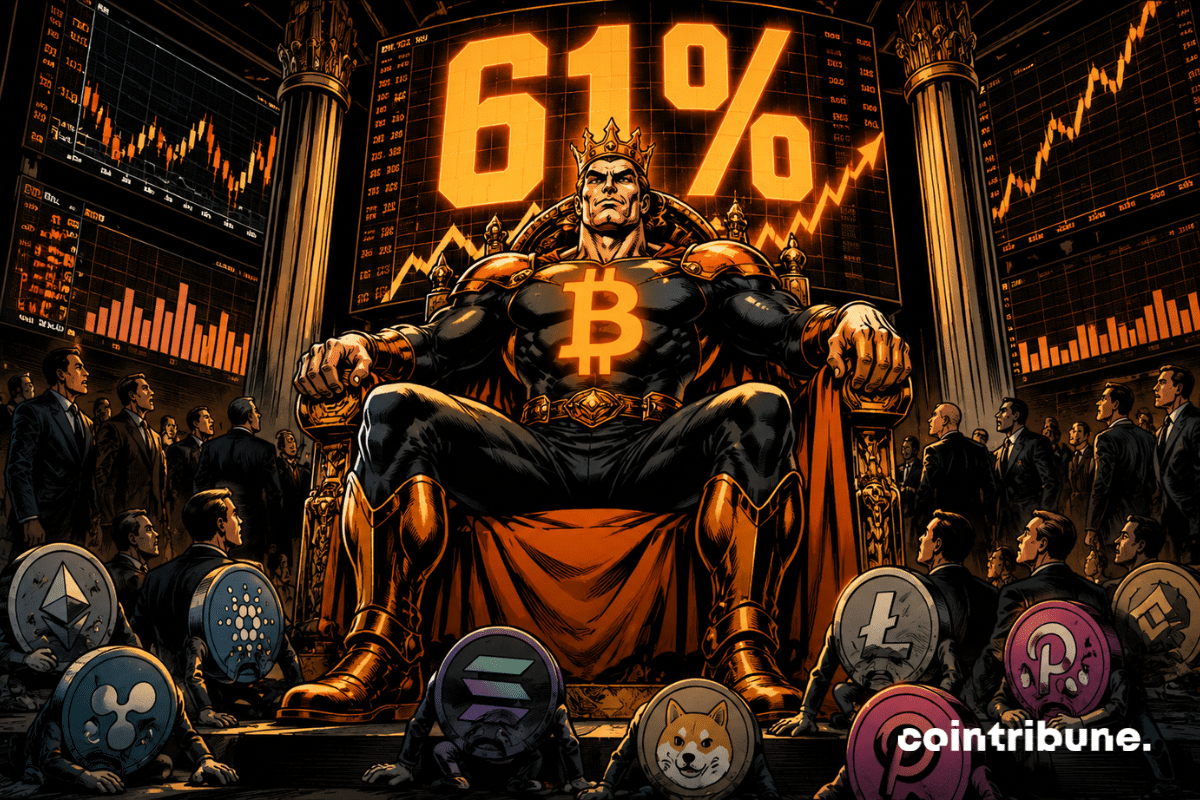
Bitcoin keeps hitting records while Ethereum sinks into a weakness that is starting to seriously worry the market. In one year, ETH has lost more than 35% against BTC, despite the massive return of capital to cryptos. Behind this drop, several alarming signals emerge: increased selling pressure, rising ETH reserves on Binance and growing institutional dominance of bitcoin. This dynamic raises a central question on the market: Is Ethereum definitively losing its status as the leader of altcoins?
Michael Saylor changes the game again. After discussing a possible sale, Strategy seems already ready to buy more bitcoin. The crypto market did not take long to react.
For years, the quantum threat has remained a distant scenario for bitcoin. This perception is wavering. A report from Project Eleven now estimates that the network might lack time to prepare its cryptographic transition before the arrival of quantum computers capable of breaking its current protections. Behind this alert lies a colossal issue: several million BTC could become vulnerable if the ecosystem fails to coordinate its migration in time. Such a prospect brutally revives the debate about bitcoin's future security.
The digital asset market is regaining strength, but the optimism displayed on social networks draws analysts' attention. According to Santiment, this euphoria can weaken the ongoing rise and open the way to a possible pullback of bitcoin to 75,000 dollars. In this contrasting climate, crypto sentiment serves as a barometer to measure the rally's strength and risks of short-term exhaustion.
While investors were watching bitcoin, Nasdaq and oil, a completely unlikely asset posted the best performance of the month. In April, derivatives related to potatoes soared by 705%, benefiting from market nervousness amid geopolitical tensions around Iran. This spectacular rise reveals a global phenomenon: in a climate dominated by global uncertainty, speculative capital is now moving far beyond crypto and technology.
Trump Media & Technology Group starts the year with pressured accounts. Despite nearly $900,000 in revenue, the parent company of Truth Social reports a net loss of $405.9 million in the first quarter. The net loss is largely due to the impact of crypto on Trump Media’s balance sheet, even though Bitcoin remains a pillar of its financial strategy. This discrepancy illustrates the direct impact of digital assets on its results.
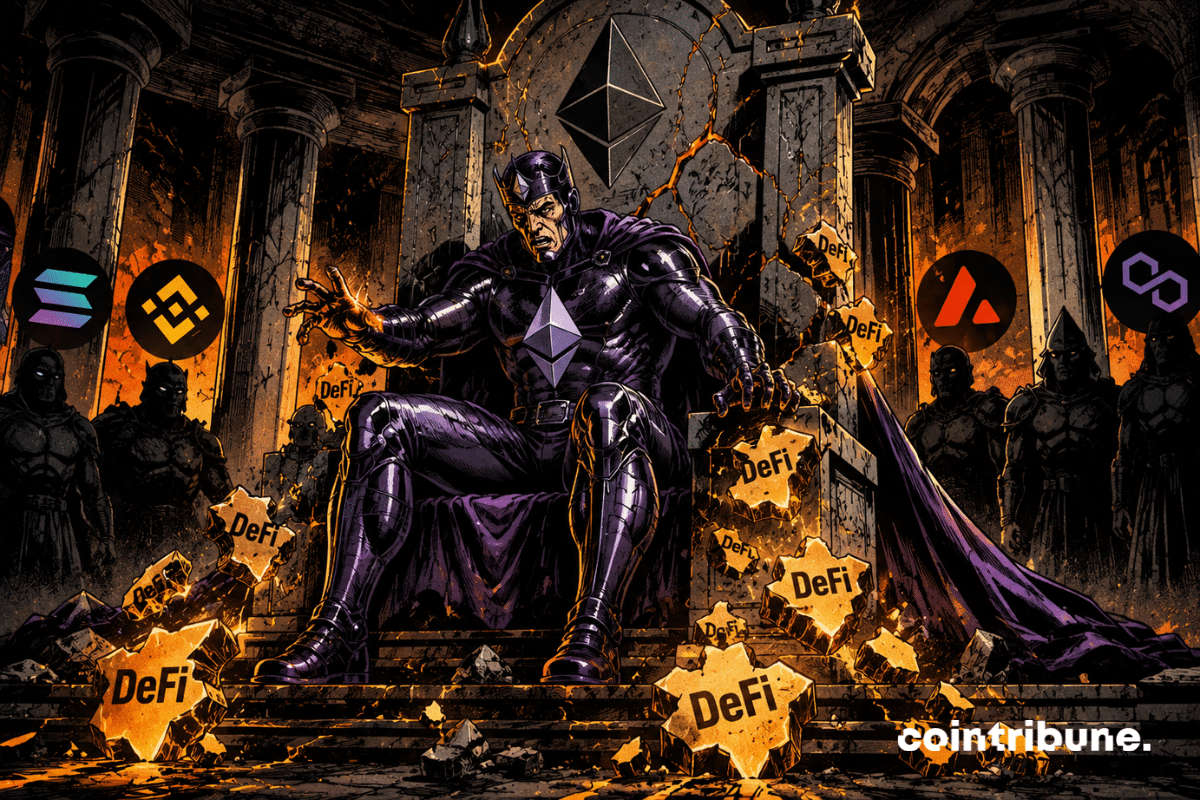
While Ethereum jealously guards its old digital hoard, Solana and Base are quietly nibbling at its pockets. Behind the crypto scenes, some are already nervously recounting the kingdom's tokens.
American spot Bitcoin ETFs have just recorded six consecutive weeks of net inflows. This is a first since August 2025. The signal is clear: institutional funds are returning, but the market remains tense around $80,000.
Bitcoin shows a clear slowdown after several weeks of gains supported by institutional flows. American spot ETFs recorded $268 million of net outflows in one session, while liquidations accelerate in the derivatives markets. This renewed tension comes as investors are already watching another key factor: the future direction of the US Federal Reserve and its potential impact on the crypto market.
After five consecutive sessions of massive inflows, US spot Bitcoin ETFs have just undergone a sharp reversal. While Bitcoin fell back below $80,000 amid high volatility, institutional investors suddenly eased off. Is this a simple market pause or a sign of increased uncertainty?
Bullish projections are multiplying on bitcoin. Supported by flows to US spot ETFs and the return of institutional investors, the market now sees a target of 115,000 dollars before the end of the year. This anticipation is based on several technical and financial signals that fuel traders' optimism. One question now dominates the market: are current data enough to support a new acceleration of bitcoin?
Crypto exchanges are emptying their bitcoins at a pace rarely seen in two years. In less than three months, nearly 100,000 BTC have left Binance, OKX, and Gemini, amounting to over 8 billion dollars withdrawn from the market. While the available supply contracts, long-term investors quietly strengthen their positions. This combination of shrinking reserves and returning demand is beginning to fuel speculation around a possible supply shock on bitcoin.
American crypto is entering a fragile zone. After the GENIUS Act, the advances of the CLARITY Act, and the regulated rise of prediction markets, the 2026 midterms could decide whether this sequence becomes a true regulatory turning point or just a political parenthesis.
BNY strengthens its pivot towards Bitcoin and Ethereum with an institutional custody project in Abu Dhabi. The signal is clear. Crypto no longer advances only through markets. It also advances through banking channels.
Hut 8 reports a net loss of $253 million in Q1 2026, but its stock jumps by +33% thanks to an AI infrastructure contract. Details here!
While bitcoin quietly sucks in crypto liquidity, altcoins wait like tired extras behind the curtain. Yet, some Binance volumes are discreetly starting to flash dangerously again.
Long presented as an unwavering holder of Bitcoin, Strategy Inc. has just reached a historic milestone. Michael Saylor's company now plans to sell part of its BTC strategically, not out of necessity, but to gain a colossal tax advantage.
The crypto market emerges from a long phase of distrust. After more than three months dominated by fear, investor sentiment is evolving while bitcoin is trying to stabilize at a key level. This return to balance remains fragile. Between improved sentiment and conflicting signals on liquidity, the market is entering a pivotal phase.
Strategy, a pillar of institutional bitcoin adoption, has just announced a loss of 12.54 billion dollars in the first quarter of this year. Behind this unprecedented number lies an unyielding mechanism: every BTC fluctuation now directly impacts its accounts. This publication reveals a total dependence on the crypto market, where even the slightest correction immediately reflects in financial results. Such a situation raises questions about the limits of a model fully backed by bitcoin.
A new Bitcoin fork project reignites tensions within the ecosystem. Led by developer Paul Sztorc. The initiative named "eCash" does not just propose a basic parallel chain: it introduces technical and economic choices that directly affect fundamental principles of the network, notably the management of UTXOs and the controversial use of Satoshi Nakamoto’s historical holdings. Between promises of innovation and fears of misuse, the debate intensifies around the project.
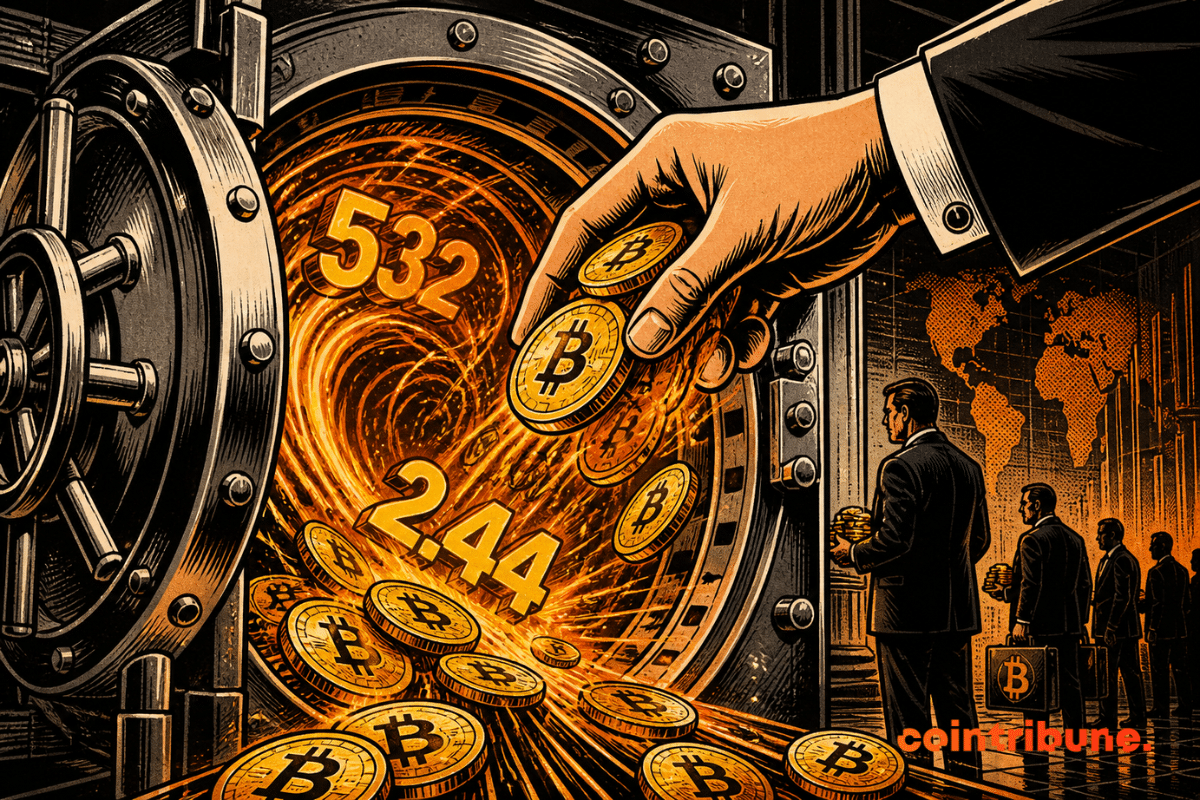
Bitcoin ETFs recorded $532M in net inflows in a single day and $2.44B in April. Institutions are accumulating. Analysis.
Sequans Communications liquidates half of its Bitcoin to cope with a drop in revenue, growing losses, and significant debt, questioning its long-term crypto strategy.
Bitcoin returns to the brink of a decisive threshold. Nearing $82,000, the market slows down and caution signals emerge. Several analysts mention a risk of rejection in a context where macro-economic factors regain weight. This level now focuses attention, between attempts to continue the rise and possible reversal.