
Thu 04 Sep 2025 ▪
4 min read
▪
by
Bitcoin sulks, altcoins stir: 55% dominance and tokens lying in wait... But who will really take the pot by December?
Bitcoin sulks, altcoins stir: 55% dominance and tokens lying in wait... But who will really take the pot by December?

September, long synonymous with a downturn for bitcoin, seems to be losing its curse. This historically unfavorable month for risky assets is starting, for the third consecutive year, a contrary dynamic. Supported by a flexible macroeconomic context and structuring institutional flows, the market is giving signs of maturity. The queen of cryptos no longer suffers the calendar: she redefines it.

Despite the recent bitcoin correction, the institutional rush on bitcoin continues to strengthen.

In August, bitcoin miners generated revenues close to 1.65 billion dollars, a level almost identical to that of July. This maintenance reflects an impressive resilience of the sector, despite a context marked by rising costs and energy pressure. But behind this apparent stability lie structural vulnerabilities that raise questions: can the current mining model really hold in the long term?

Bitcoin’s recent 12% pullback has drawn attention, but on-chain data indicates that this correction is a normal phase in the market. Analysts say the decline is within historical patterns and reflects a healthy reset rather than the end of the ongoing bull cycle.

Since the beginning of September, bitcoin (BTC) and Ethereum (ETH) have captured the attention of a crypto market suspended between hope and concern. While Wall Street falters, the two leaders show intriguing resilience. Yet, behind this apparent calm, technical indicators reveal growing tension. Between contradictory signals and increasingly polarized forecasts, traders are preparing for volatility that could make September a decisive month for the market's future.

While bitcoin melts and shareholders groan, Michael Saylor continues his XXL crypto shopping spree: diluted shares, questionable dividends, and a dream of joining the S&P 500. What a financial farce!
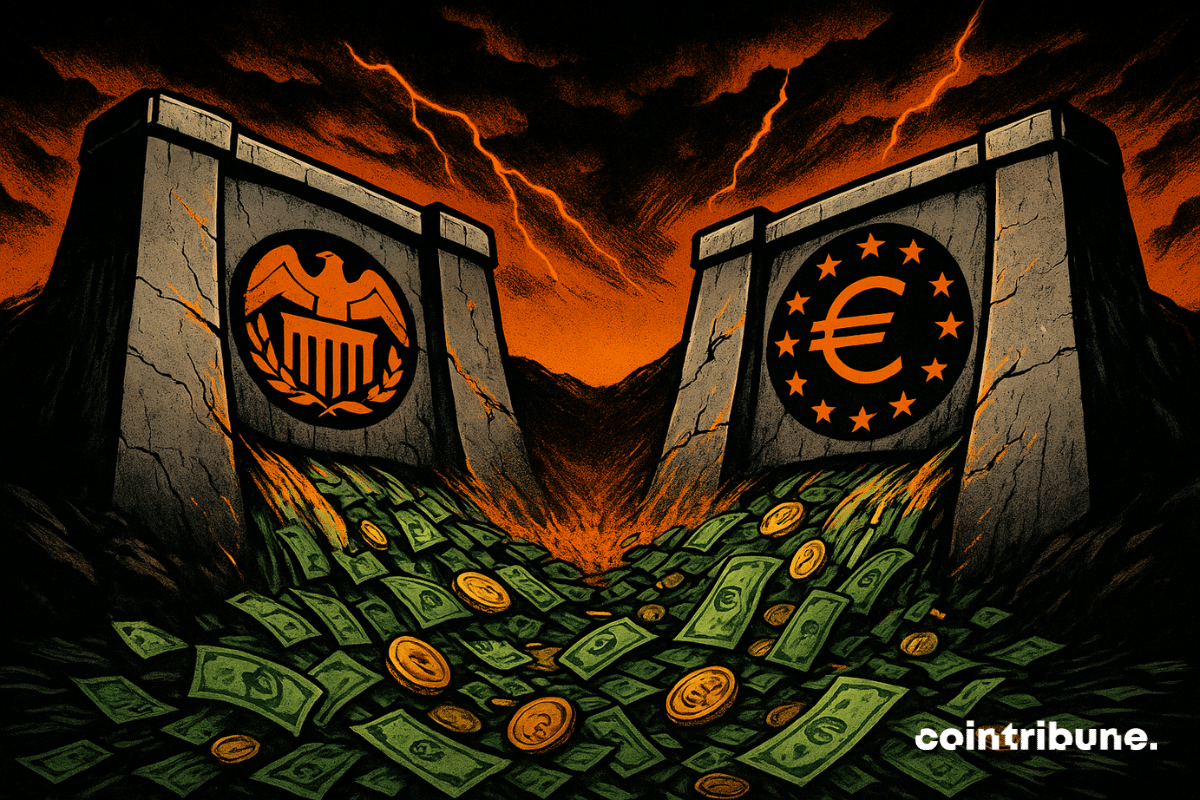
The debt is making headlines again on both sides of the Atlantic. Bitcoin is ready to soar if the Fed and the ECB were to bring back the printing press.

What if the next crypto cycle was not only bullish but a historic turning point? At the WAIB Summit 2025, several experts stated that a single cycle could be enough to increase crypto users from 659 million in December 2024 to 5 billion users within ten years. A global adoption underway, driven not only by speculation but by the rise of concrete use cases, the maturity of blockchain technologies, and renewed interest from individuals as well as institutions.

As September begins, crypto traders approach the market cautiously, with Bitcoin, Ethereum, and XRP showing varied performance.

Ethereum plays the tightrope walker: programmed drop, then theatrical rise. September trembles, October rejoices. Crypto traders? They might applaud... after getting trapped.

Bitcoin wavers below 109,000 dollars, caught between macroeconomic uncertainty and unfavorable technical signals. While investors scrutinize upcoming indicators likely to guide US monetary policy, the pressure intensifies. Institutional capital outflows, tensions in derivatives products, and weakened sentiment indicators increase distrust. The market freezes in anticipation, exposed to latent volatility.

Ethereum takes the prize for the big players, Bitcoin clings to its throne. A duel of numbers, egos and billions: who will emerge victorious from this digital waltz?

While bitcoin's volatility worries some investors, Michael Saylor, a prominent figure at Strategy, is more confident than ever. For him, the crypto winter now belongs to the past and gives way to a new era. Can bitcoin really cross, one day, the mythical one million dollar threshold?

The Japanese company Metaplanet, which holds one of the largest corporate bitcoin reserves in the world, sees its accumulation strategy threatened by the collapse of its stock price. With a 54% drop since June, the company must reinvent its funding mechanism to pursue its crypto ambitions.

Anthony Scaramucci, the founder of SkyBridge Capital, has projected a turbulent path for Bitcoin before it eventually climbs to half a million dollars. Speaking with Coinage, the veteran investor warned that the cryptocurrency could face a sharp decline of up to 40%, even as he maintains confidence in its long-term potential.

August was marked by two opposing signals in the crypto market. Ethereum reached an unprecedented peak of activity, confirming the growing interest of investors in its ecosystem. Conversely, Bitcoin suffered a brutal shock after the massive liquidation of 24,000 BTC by a single actor. This contrast is not just a technical divergence. It illustrates an ongoing rearrangement, between regulatory innovations, strategic repositioning of players, and the evolution of the balance of power between major assets.
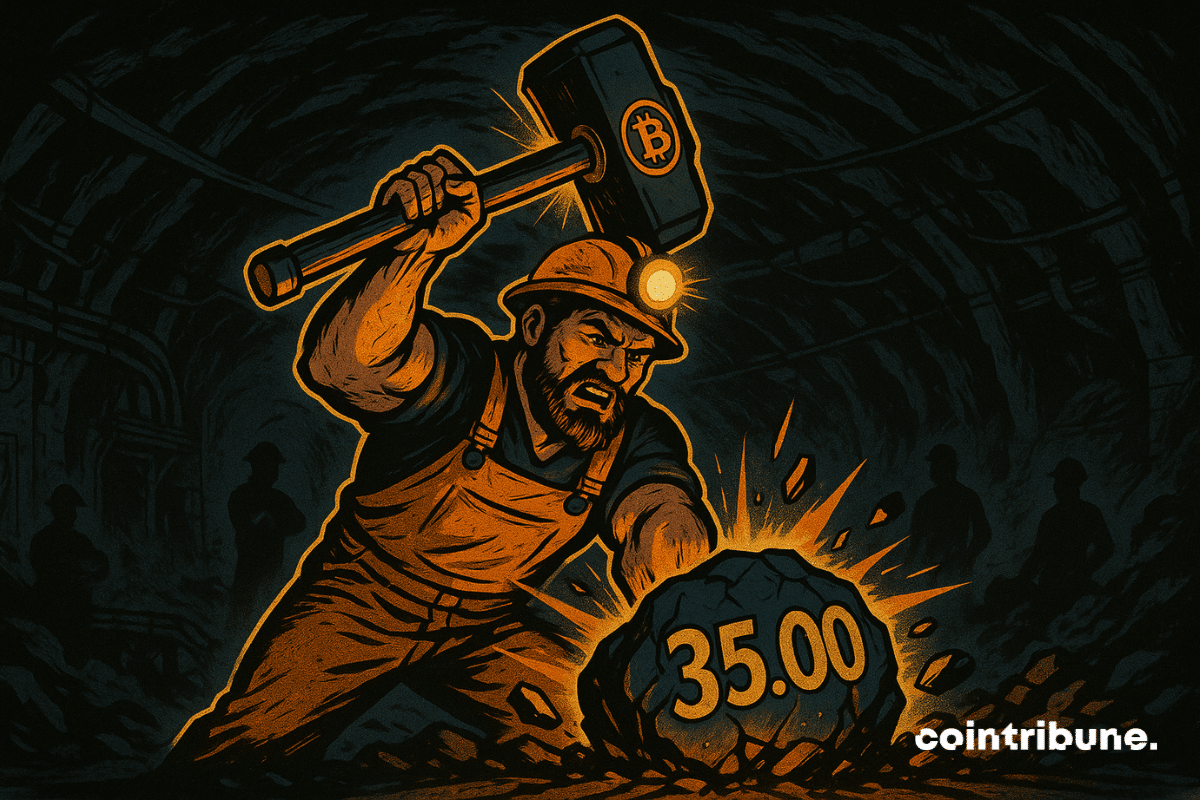
Behind Bitcoin's apparent stability, an imbalance threatens the network's sustainability. Since April, transaction fees have dropped by more than 80%, shaking the remuneration model of mining companies. Amid the rise of ETFs and after a demanding halving, it is Bitcoin's internal economy that is faltering. Lower fees, fewer incentives, more risks to protocol security, the crisis is here, structural, and raises a question the ecosystem can no longer ignore.

When cops play gangsters, even bitcoin becomes ransom money. In India, the Bhatt case reveals crypto-greedy police officers... sentenced to meditate in jail.

On August 30, bitcoin fell below 110,000 dollars, confirming persistent selling pressure. Technical indicators highlight a marked bearish trend, while the market hesitates to find a balance point. Between a critical support at 107,000 dollars and a solid resistance at 114,000 dollars, the next break could guide the trajectory for the coming weeks. In an uncertain economic context, tension rises among investors, divided between the fear of a new drop and the expectation of a reversal.

Driven by euphoria and records beyond $124,000, bitcoin seemed out of reach. However, the sudden break of a major technical support, a pillar of the uptrend, disrupts this picture. False alarm or real reversal signal? The question divides analysts and investors, at a time when certainties waver and volatility returns.

El Salvador has just scattered the bulk of its Bitcoin reserve across 14 new addresses, with a ceiling of about 500 BTC per wallet. The goal: to reduce the attack surface if quantum computing targeted the public keys revealed during on-chain spending tomorrow.

Saylor, former software pope turned bitcoin apostle, escapes justice... for now. But his passion for BTC dangerously flirts with the limits of accounting reality.

United States spot Bitcoin exchange-traded funds (ETFs) are now driving billions in daily trades, rivaling global crypto exchanges. Data from CryptoQuant shows that US Bitcoin ETFs are becoming a major channel for institutional access to Bitcoin.

While cryptos are establishing themselves in the global political and financial agenda, certain statements resonate with particular intensity. In Hong Kong, during the Bitcoin Asia Conference, Eric Trump stated that bitcoin would reach one million dollars. Much more than a publicity stunt, this prediction reflects a strategic vision: that of a market in full mutation, torn between regulation, institutional adoption and geopolitical ambitions, where Asia now plays a central role.

While the market oscillates between technical consolidation and the return of institutional appetite, an extraordinary movement attracts all attention. An actor holding more than 5 billion dollars in bitcoin redirects a major part of its capital towards Ethereum. The scale of the amounts, the transparency of on-chain transactions, and the timing of the operation are striking. More than a simple arbitrage, this strategic repositioning seems to redraw the power relations between the two historical pillars of the crypto universe.

The United States and the presidential circle are all-in on bitcoin while Europe continues to fall behind.
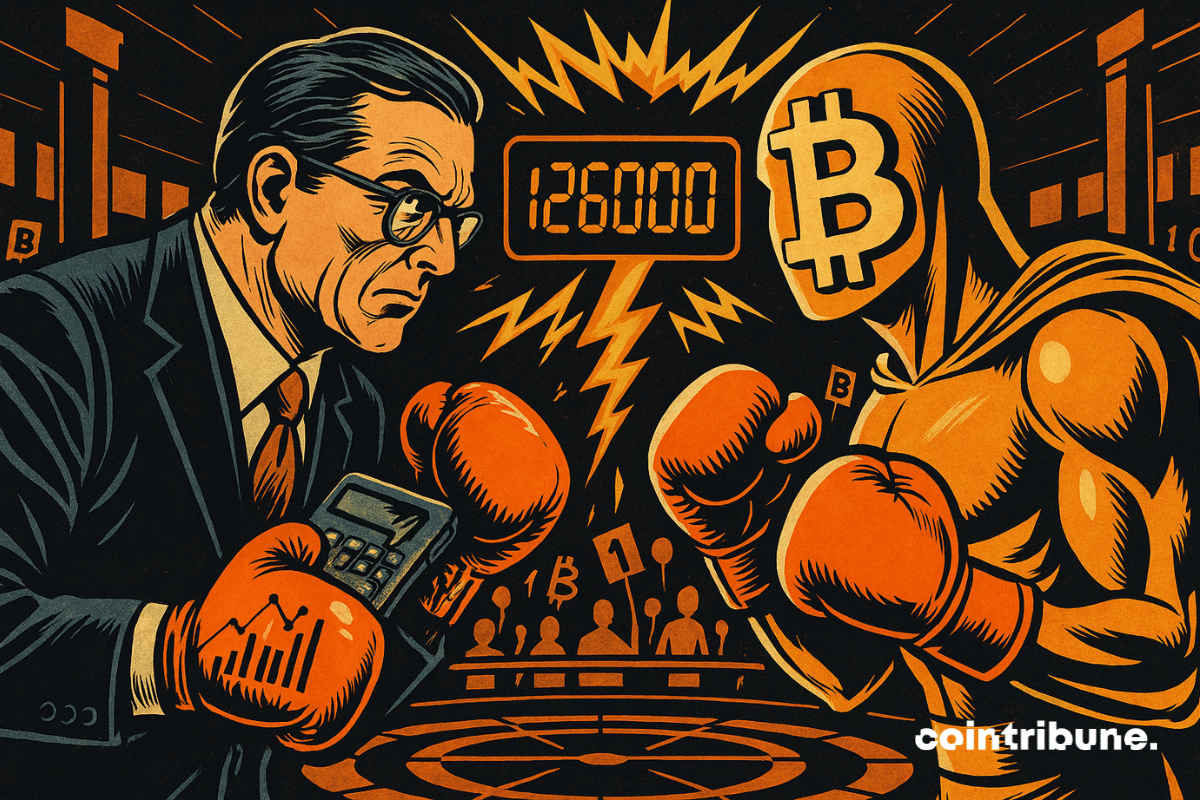
Bitcoin is currently undervalued according to JPMorgan. In a note signed by analyst Nikolaos Panigirtzoglou, the American bank estimates that BTC should reach 126,000 dollars by the end of the year, given its historically low volatility. As its risk-return profile approaches that of gold, bitcoin may be entering the most critical phase of its institutional adoption. This is a projection full of meaning for major capital allocators.

Bitcoin stands at a crossroad as traders anticipate a number of forthcoming macroeconomic announcements. At the time of writing, the flagship cryptocurrency was trading around $112,787, a small gain of 0.30% per day, but a weaker performance over the week. Despite the resilience of Bitcoin, analysts are cautious that the short run direction of Bitcoin will rely on how investors will respond to major levels of support and resistance in the coming days.

The custody of cryptos shifts to a new era. Indeed, exchanges, long dominant, are giving ground to Wall Street giants. BlackRock, through its Bitcoin and Ethereum ETFs, now establishes itself as an essential custodian, directly competing with Coinbase and Binance. This massive asset transfer illustrates the rise of traditional finance in the crypto ecosystem and raises questions about the future of historic platforms, facing a gradual loss of their central role.