While cryptos are in turmoil, Elon Musk moves 133 million in bitcoin without a word: secret plan, space whim or just portfolio management? Mystery at the top.
October often rhymes with "Uptober", the month where bitcoin ignites the markets with spectacular increases. However, this year, the scenario turns to disappointment. After a promising start, the queen of cryptos gets stuck in an unexpected bearish dynamic, reviving fears of a possible "red October". A first since 2018, which tests investors' confidence and questions the market's solidity in the face of an increasingly tense global economic context.
A Ripple co-founder quietly sold $764 million worth of XRP over seven years. The operation, although legal and transparent, reignites tensions within the community. As crypto struggles to keep pace with its competitors, this revelation reopens the debate on the impact of internal sales on the token's performance.
Bitcoin miners are taking on record levels of debt to finance new equipment and expand operations into artificial intelligence (AI) and high-performance computing (HPC). As competition for hashrate intensifies and post-halving profits shrink, miners are increasingly turning to debt markets to maintain an edge in both Bitcoin production and data infrastructure growth.
Stuck in a symmetrical triangle since mid-September, Solana's price reflects a war of attrition between buyers and sellers. Neither side gives up. But technical and on-chain signals converge: this stalemate is coming to an end. The next breakout could well decide SOL's fate for the coming weeks.
In the universe of meme coins, Garth ($GARTH) stands out with a radically different approach. Launched on the Qubic blockchain in July 2025, this project doesn't just exploit the enthusiasm for humorous cryptocurrencies: it builds a complete ecosystem combining DeFi, NFT, and gaming. While the Qubic blockchain displays record performance of 15.5 million transactions per second certified by CertiK, $GARTH aims to become the first highly liquid token on the network.
Hyperliquid shakes the crypto market with a spectacular increase of 11.91%. This surge comes as the company unveils ambitious plans: a Nasdaq IPO and a $1 billion fundraising. Institutional investors are closely monitoring this project that aims to become a bridge between decentralized finance and traditional markets.
In the midst of budget paralysis, the US public debt reaches 38 trillion dollars, a historic record. This threshold, revealed by the Treasury, raises questions about the budget trajectory of the United States, as monetary policy remains under pressure and crypto regulation remains unclear.
Bitcoin resists the storm. Holders continue to buy despite a shaken market. Bounce in sight? Full analysis here!
Russia is preparing new regulations to legalize cross-border cryptocurrency use while tightening oversight of domestic crypto operations. Authorities aim to bring clarity to the market and curb illegal activity.
A Bitcoin wallet untouched since 2011 has moved a small portion of its holdings, ending 14 years of dormancy.
Hyperliquid Strategies is taking a major step to strengthen its presence in the decentralized finance (DeFi) ecosystem. The firm plans to raise up to $1 billion to expand its holdings of the Hyperliquid (HYPE) token, which powers the world’s largest decentralized derivatives platform.
CZ, former CEO of Binance, criticizes Peter Schiff's tokenized gold project by calling it a crypto asset based on trust rather than proof. According to him, tokenization does not make gold truly on-chain and introduces dependence on intermediaries. This remark reignites the debate between two visions: Bitcoin's verifiable transparency and the traditional value of now-digitized gold.
For the first time since the start of the conflict in Ukraine, Washington and Brussels are coordinating a series of major economic sanctions against Russia. Directly targeting the energy sector, these measures aim at Rosneft, Lukoil and gas exports. The objective is to dry up the revenues that fuel the Kremlin's war effort. This financial offensive marks a strategic turning point, with immediate consequences on the markets and expected repercussions on the Russian economy, already weakened by three years of international pressure.
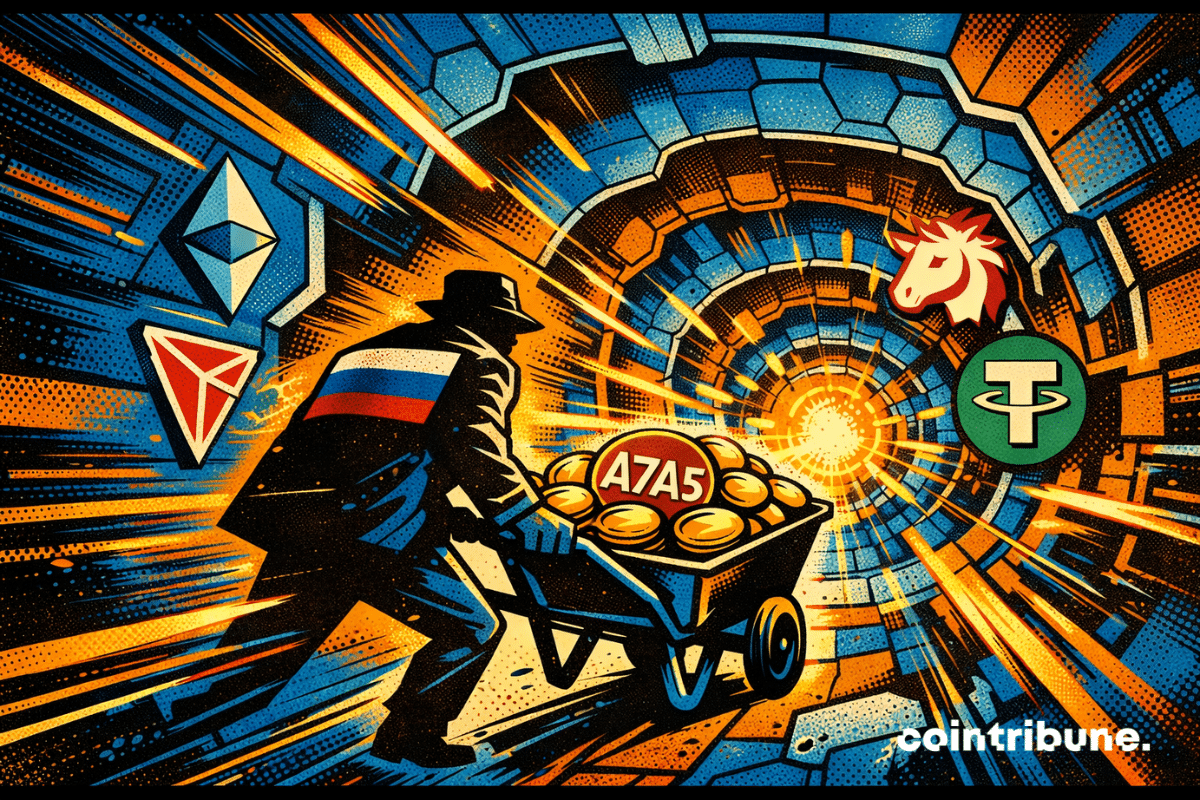
The EU hits Putin where it hurts: unprecedented sanctions against Russian cryptocurrencies, ban on the A7A5 stablecoin, and blocking of complicit platforms. Will the Kremlin retaliate? Discover how these measures could disrupt the economic war and Moscow's circumvention strategies.
Donald Trump granted a pardon to Changpeng Zhao, former CEO of Binance, reigniting debates on the links between political power and the crypto industry. In a context of increased regulation, this act raises questions about the growing influence of platforms in the public sphere. The decision, confirmed by the White House, triggered an immediate market reaction and revived tensions around conflicts of interest between the political sphere and financial technologies.
Revolut, the well-groomed neobank, joins the European crypto dance with the MiCA license in pocket… and a stablecoin behind the scenes? A revolution in a tie that already irritates the old players.
By pardoning Changpeng Zhao, Donald Trump not only signs a legal act but sends a strong signal to the crypto industry. The founder of Binance, convicted in 2023 for violations of anti-money laundering legislation, regains his freedom by a decision that contrasts with the hardline stance of the Biden administration. In a tense climate around crypto regulation, this gesture repositions Trump as a strategic ally of the sector and could breathe new life into Binance’s American ambitions.
After a $619M surge in Bitcoin and Ethereum ETFs on Tuesday, investor caution returned, leading to outflows the next day.
BNB, Binance's flagship crypto, finally makes its debut on two of the largest American platforms: Coinbase and Robinhood. Long excluded from the mainstream US markets, often for compliance reasons, the asset crosses a major strategic threshold. Now listed on platforms accessible to millions of investors, BNB gains formal recognition that contrasts with its past as an asset confined to the Binance ecosystem. This shift says a lot about the evolution of the American crypto market and the gradual normalization of certain long-controversial assets.
American Bitcoin Corp. (ABTC)—co-founded by Eric Trump—has released its October 2025 investor presentation, marking a major milestone in its evolution from a pure Bitcoin miner to a full-scale digital-asset ecosystem. The strategy focuses on building a U.S.-based Bitcoin powerhouse to reinforce America’s leadership in the global Bitcoin market.
Jupiter dives into decentralized betting with its prediction market on Solana, challenging Polymarket. Between innovation, regulatory risks, and technological battle, this project could redefine crypto in 2025. Discover the stakes and challenges of this fierce race – who will come out on top?
Bitcoin’s recent price action is drawing comparisons to one of the most dramatic commodity bubbles in modern history. Veteran trader Peter Brandt says the cryptocurrency’s chart now resembles the 1970s soybean market—an era defined by a sharp boom-and-bust cycle.
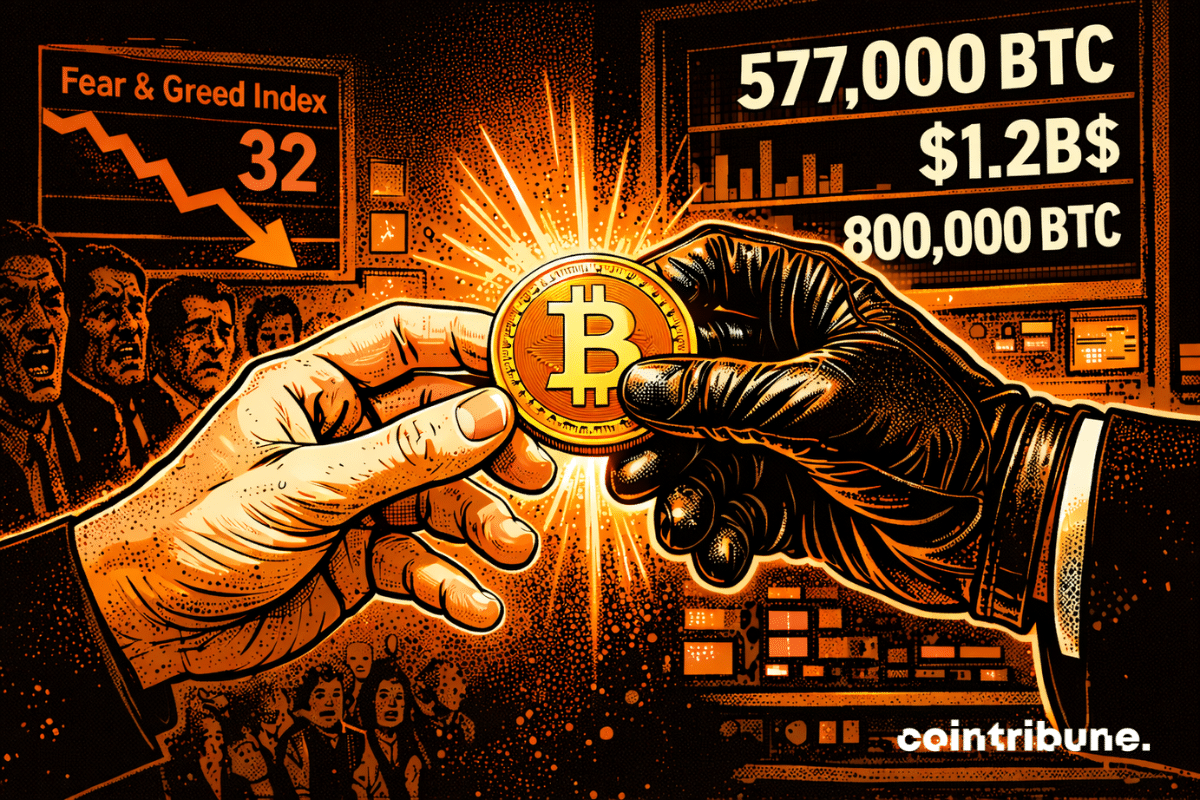
While gold crashes like a soufflé, bitcoin heavyweights enter ETFs. Golden savings melt, crypto heats up... Who stole the cash box?
The $100,000 threshold, long perceived as a strong floor for Bitcoin, is faltering. Falling to $108,938, the asset slips towards a critical zone. Geoffrey Kendrick, analyst at Standard Chartered, now speaks of an imminent break of this symbolic level. The scenario of a drop below $100,000 is gaining ground, reigniting tensions in an already pressured market.
OpenAI’s ChatGPT Atlas is a new browser that lets users interact with AI on any website, streamlining tasks while keeping privacy in mind.
Aave steps up a gear. Its decentralized autonomous organization (DAO) has just unveiled an ambitious buyback program that could redefine its treasury management. The initiative would transform occasional buybacks into a permanent policy, funded by the protocol's growing revenues. But will this strategy be enough to sustainably support the token against fierce competition in DeFi?
Wall Street trembles, BlackRock applauds, and the dollar digitalizes without asking the Treasury's opinion… Stablecoins are taking hold, while crypto weaves its planetary monetary web.
Google claims to have reached a major milestone in quantum computing. Its Willow processor reportedly performed a molecular modeling task 13,000 times faster than a supercomputer. The announcement, supported by verifiable results, reignites the debate on the security of cryptographic systems. As bitcoin and other protocols rely on algorithms vulnerable to quantum computing, this technical breakthrough turns a theoretical threat into a concrete challenge for the entire blockchain ecosystem.
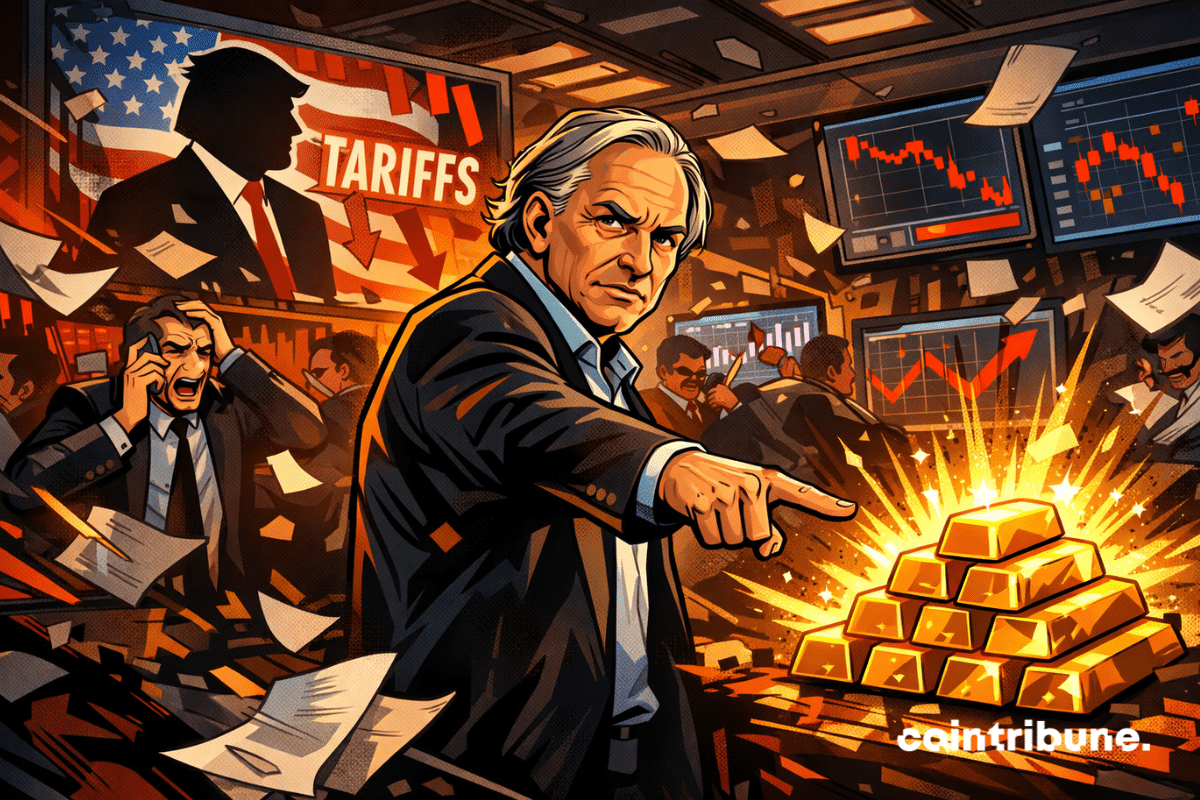
In one day, gold lost 2.1 trillion dollars, more than half of the crypto market capitalization, causing a real financial earthquake. While Bitcoin briefly took advantage of this drop to cross $104,000, its rise was quickly stopped by sales from major holders. In the end, the yellow metal falters, but the queen cryptocurrency still struggles to establish itself as a real safe haven compared to gold.