
Tue 15 Sep 2026 ▪
7 min read
▪
by
Russia is keeping crypto under tight control at home while turning to bitcoin as an alternative rail for selected cross-border transactions.
Russia is keeping crypto under tight control at home while turning to bitcoin as an alternative rail for selected cross-border transactions.
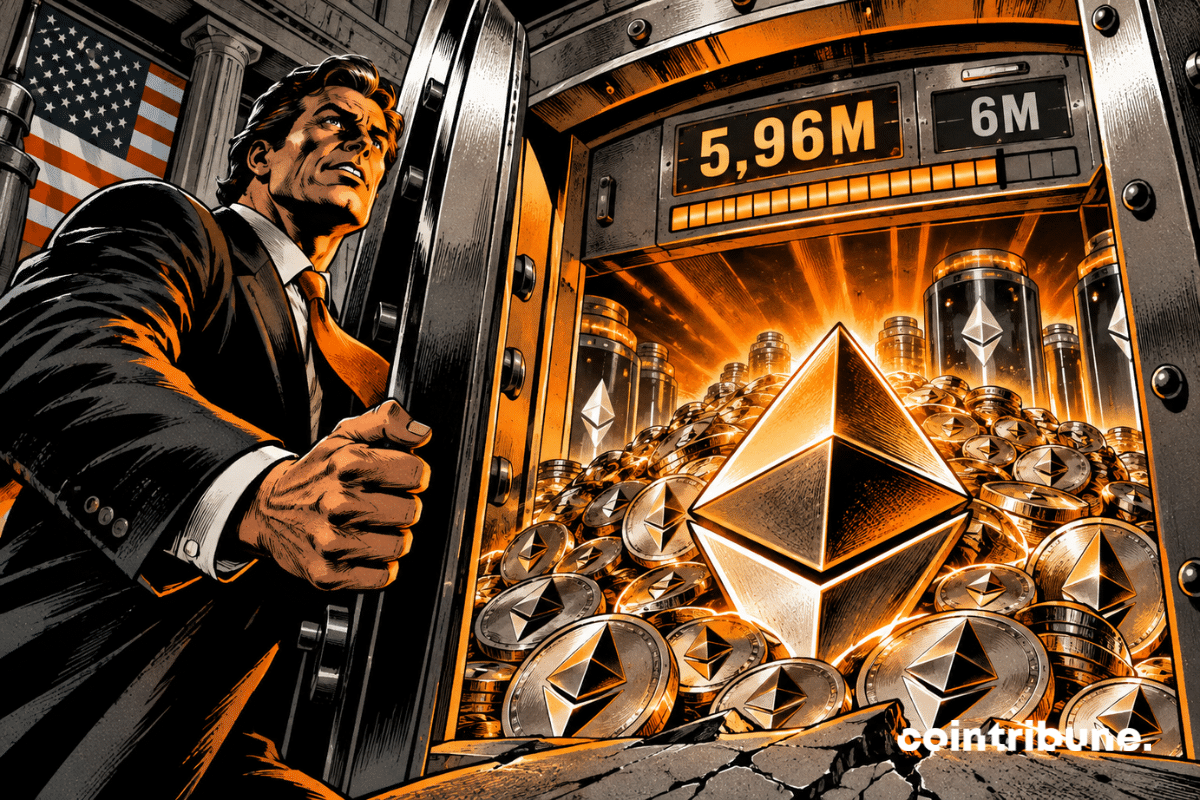
BitMine strengthens its Ethereum reserve with 27,180 ETH. Does this new crypto purchase change the game for ETH? Complete analysis.

During the shortened week of September 8, U.S. crypto ETFs recorded nearly $263 million in net outflows. The positive gathering of products related to Ether, XRP, and Solana was masked by withdrawals concentrated on Bitcoin ETFs.
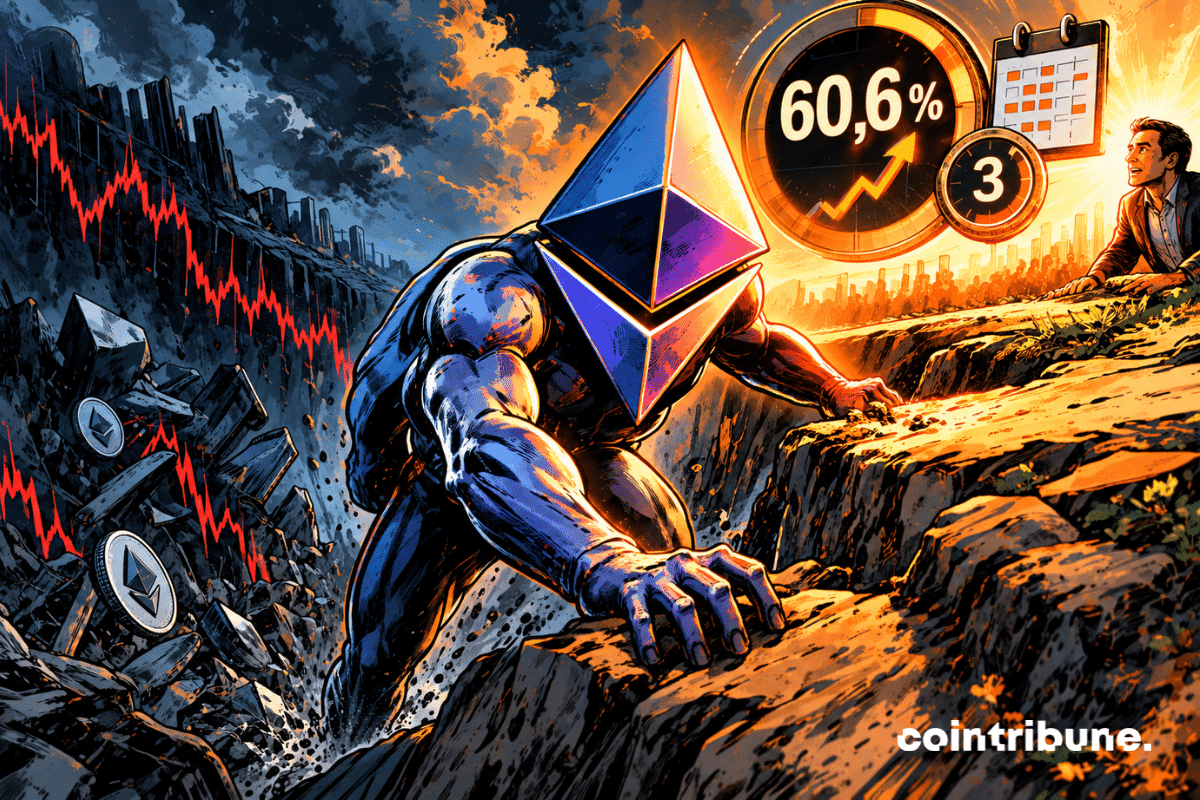
Ethereum’s rally pushes Ether’s growth to nearly 60.6% since July 1st. Only the third quarter of 2025 performed better, yet the ranking remains provisional until September 30th.

American Bitcoin ETFs recorded a fourth consecutive day of net outflows on Friday, September 11, with $13.29M withdrawn. In contrast, ether ETFs attracted $216.41M and mark a fourth positive week. Institutional investors therefore still seem present in the crypto market, but their interest is shifting.

Shiba Inu crosses a new threshold in the crypto ecosystem. SHIB is now associated with around 1.84 million addresses on Ethereum and Shibarium, according to a ShibWallet snapshot shared by Mazrael, a long-standing community member. Ethereum alone concentrates about 1.689 million holder addresses. This total broadens the measure of SHIB adoption, even if it does not correspond to 1.84 million different people.

Ethereum still aims for October 6 at 13:53 UTC to activate Glamsterdam on the Sepolia testnet. The date now appears as the next milestone on Ethereum's official roadmap. But it remains fragile: Glamsterdam has not yet completed any full run on a stable private devnet, and several bugs must be fixed before exposing the update to Sepolia. The mainnet is still planned for the fourth quarter of 2026, with no confirmed date.

Binance now holds more than 693,000 bitcoins, a level unseen in two years. Since the end of April, its balance increased by 77,000 BTC, while bitcoin struggles to stay above 80,000 dollars. On the world's largest crypto platform, these reserves remain potentially available for sale.

The price of Ether jumped 7.46% to 2619 dollars following the release of data on US inflation. Tom Lee mentions the probable start of a "brutal rally", however his projection more broadly concerns risky assets and does not set any specific target for ETH.

Polymarket and Kalshi in ESMA's sights: can the prediction market survive European tightening? Comprehensive analysis.

Thanks to EIP-8288, Ethereum cryptography co-written by Vitalik Buterin and Thomas Coratger could become less costly. This text will have to group post-quantum signatures and STARK proofs, however it remains in draft form.

During the session on September 8, XRP ETFs recorded $1.55 million in net inflows. Such a result places XRP ahead of Bitcoin, Ethereum, and Solana for the day, without questioning the cumulative dominance of Bitcoin funds.

Ethereum: crypto reserves on exchanges collapse to a multi-year low. Will the shortage trigger a price explosion?
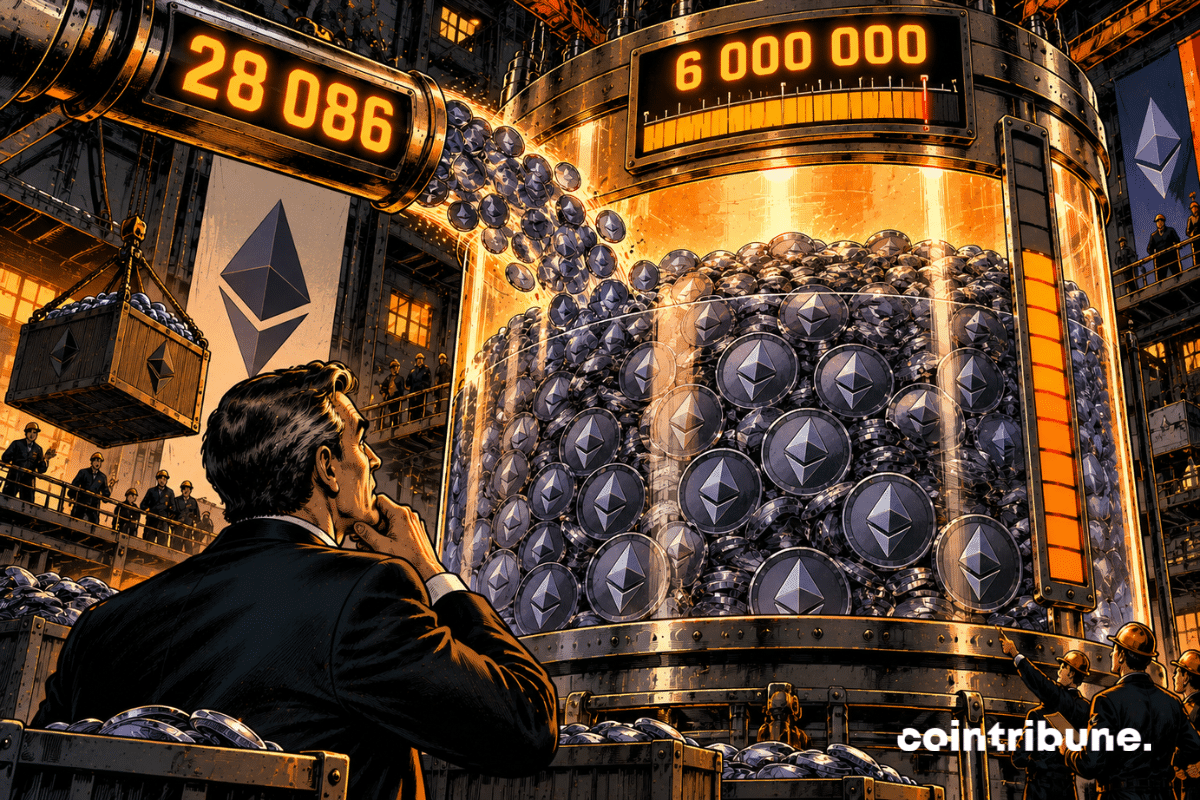
After acquiring 28,086 ETH in one week, BitMine's Ethereum treasury reaches 5.93 million Ether. The company confirms having achieved 97% of its goal to own 5% of the total supply, but this ratio relies on its own count of 122 million ETH.

Solana strengthens its crypto transaction ceiling to catch up with Ethereum on complexity, during the same week Ethereum, on its side, is preparing the end of the obligation to hold ETH to transact. Two competing networks, two opposite strategic projects, and a shifting balance of power quietly taking shape behind the scenes.

Ethereum is preparing Frame Transactions so users can pay gas fees without holding any ETH starting in 2027.

Over the past thirty days, Solana has captured $348 million in net flows towards tokenized real-world assets. The blockchain thus outperforms other networks during this period, according to data provided by the RWA Foundation. This momentum raises the value of RWAs distributed on Solana to $4.23 billion. However, it is not enough to dethrone Ethereum across the entire market.

American Bitcoin ETFs attracted $101.15 million on September 2nd. This rebound comes after an outflow of $236.5 million the previous day. Ethereum and XRP ETFs ended positive streaks that had captured $1.62 billion and $170 million respectively. At the same time, Solana products also closed the session in the red. These movements reveal a temporary rotation of capital towards Bitcoin rather than a general withdrawal by institutional investors.

Ethereum hits an unprecedented blob-per-block record. Rollup activity, fees and network capacity reveal both progress and vulnerability.

Usually, the month of September is a risky period for crypto investments. Historically, Bitcoin shows its weakest monthly performance during this period, while central bank decisions can intensify volatility. This year's context adds many uncertainties, including a probable rate hike in the United States. Despite these threats, three cryptos still have strong arguments to get through the month. These are Bitcoin, Ethereum, and Solana.

The dismantling of Sality ends a long cryptocurrency hijacking operation. This botnet, active since 2003, spent its last eight years stealing bitcoins and Ethers. Its method relied on a simple technique: modifying wallet addresses copied on infected machines. CrowdStrike and the U.S. Department of Justice coordinated the operation. This globally conducted operation isolated more than 15,000 machines across several regions of the world. The crypto phenomenon was at the heart of this activity.

Bitmine never lets up. Tom Lee's company has just added 131 million dollars worth of ETH to its treasury, its biggest weekly purchase since June, bringing its holdings to 4.9% of the total supply. And Tom Lee doesn't intend to stop there... He already sees further for Ethereum.

Grayscale believes that the evolution of US debt would favor Bitcoin, Ether, and Zcash. These three cryptos could benefit from significant demand for assets independent of fiat currencies. Indeed, this theory arises as federal debt has just exceeded 40 trillion dollars. However, it does not represent a current projection. A rate increase triggered by the US financing needs would also penalize the crypto ecosystem in the short term.

After swallowing more than three billion dollars in nine days, Bitcoin ETFs suddenly hit the brakes, leaving the king of crypto stuck below $81,000 while Ethereum and Solana quietly keep marching ahead.
Ethereum specialists issue the proposal to rebuild the contract that gives validators the ability to deposit their ETH. Their intention is to authorize new cryptographic systems to relinquish the BLS signatures currently used. Nearly 42.4 million ETH, valued at nearly 104 billion dollars, depend on this format. The project remains a working document. It does not choose any post-quantum algorithm and does not yet ensure network protection against any attack.

Bitcoin surpasses $80,000, its highest level since mid-May. Complete breakdown and analysis of scenarios to watch.
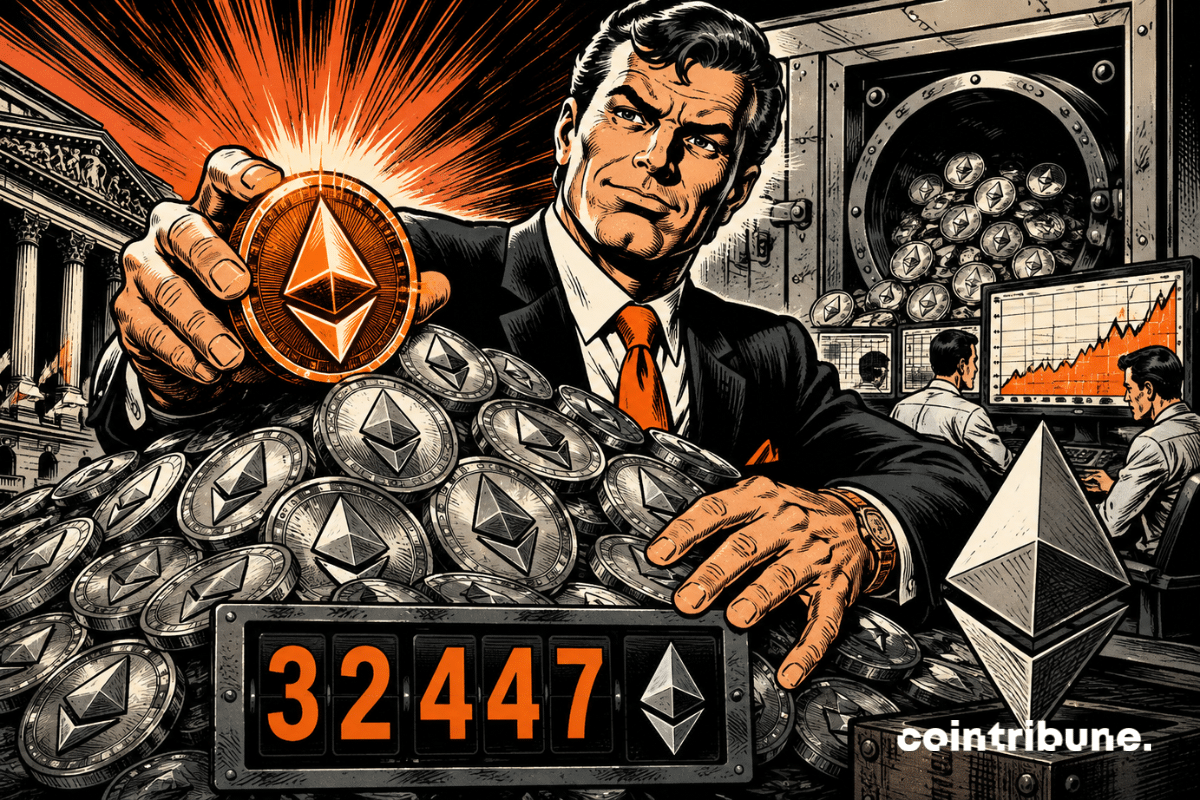
The increase in ETH was expected for a long time, says Tom Lee, as BitMine buys 32,447 more ethers. This statement comes in a context marked by the recent evolution of the Ethereum market. The operation thus parallels two elements: the accumulation of ETH by BitMine and Tom Lee's analysis. His comment sheds light on this progress. With this acquisition, BitMine directly strengthens its exposure to Ethereum, while Tom Lee highlights an increase he considers expected.

Privacy is now an increasingly important area of research in modern cryptography. On Friday, Vitalik Buterin published the third part of his series dedicated to cryptographic obfuscation. This time, he studies "local mixing," a method that abandons lattices and elliptic curves. His approach is rather inspired by hash functions and symmetric cryptography. This approach hides the internal logic of a program while preserving its operation, with implications for privacy on the blockchain.

Ethereum has already won the speed battle on zkEVMs. The security one remains open. A research contest supported by the Ethereum Foundation still shows a gap of 52.14 bits between the currently proven results on a cryptographic component. The network targets a demonstrable security of 128 bits for its zkEVMs by early December. No changes threaten the current consensus for now.

Like many companies, SharpLink Gaming transforms its treasury into a yield machine. Indeed, the Nasdaq-listed firm has just injected an additional 39,319 ETH into staking, approximately 91 million dollars. This new investment thus strengthens its position as the second largest institutional holder of Ether after BitMine. Like a volatile market, the company executives have decided to make their reserves work directly on Ethereum. This maneuver explains the transformation of crypto treasuries, currently developed as productive assets likely to generate on-chain income, rather than as reserves intended to sit idle on a balance sheet.