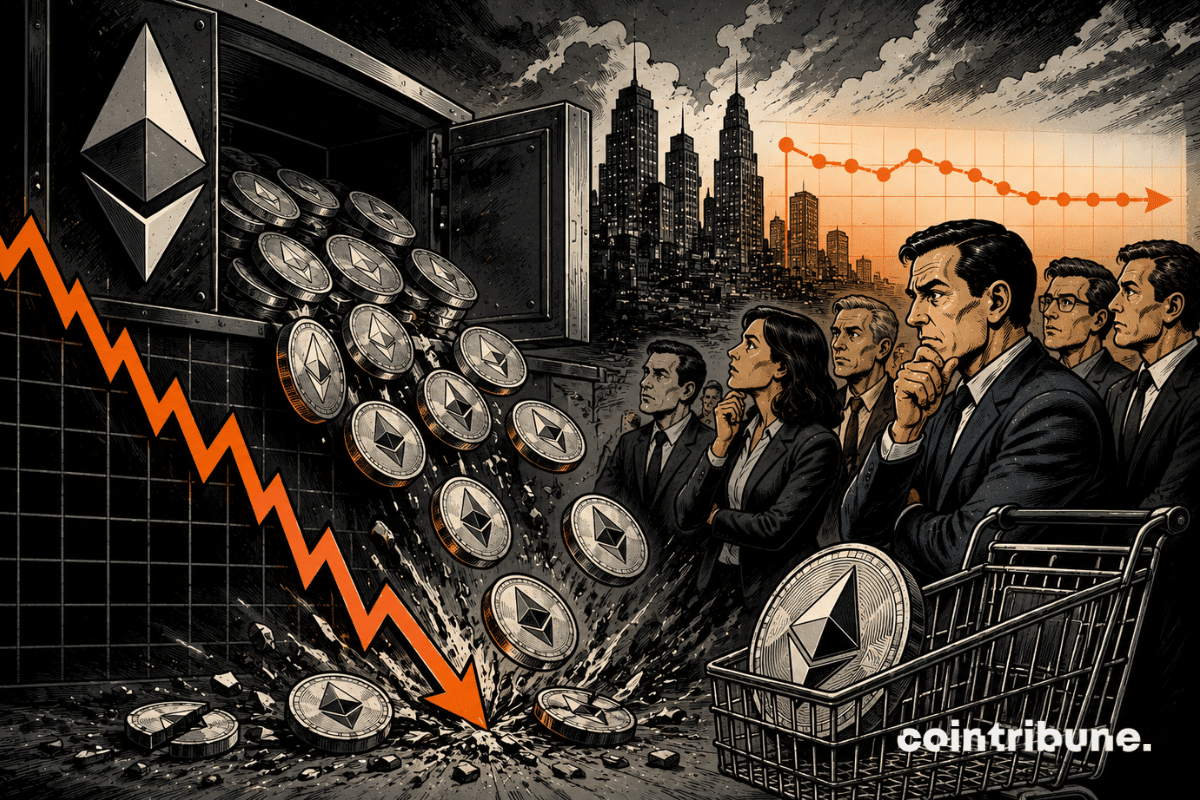
Why does BitMine keep buying Ethereum while Strategy stops buying Bitcoin? Tom Lee demonstrates his unwavering confidence with an additional $43 million investment. An exciting and daring tactic.
Vitalik Buterin promises inviolable crypto votes thanks to obfuscation, a fascinating technical feat. But patience: the technology will take longer than the universe to run. We'll wait patiently.
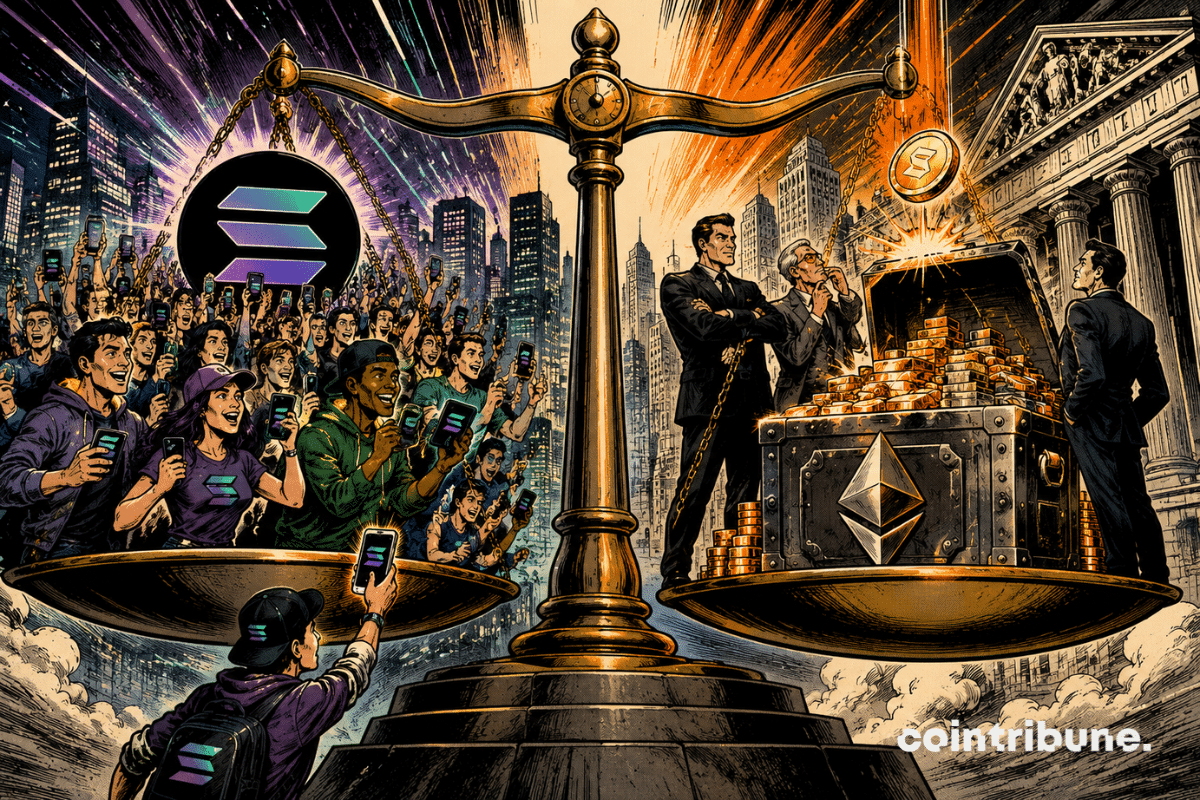
The analysis of weekly flows on spot crypto index funds reveals an unprecedented fracture within the sector, challenging the idea of a monolithic institutional block. This data is important because it shows that professional investors no longer blindly put their money into the two dominant assets, but are starting to choose growth alternatives.
Bitcoin ETFs suffered $1.79B in withdrawals in one week. Analysis of the causes, consequences, and scenarios to watch.
The crypto ranking experienced a rare shift on June 26. Tether's USDT briefly surpassed Ether in market capitalization, becoming the second cryptocurrency in the market behind Bitcoin. This reversal did not come from an increase in the USDT price, but from Ethereum's sharp drop to its lowest level in 2026.
Sharplink pounces on ETH at rock bottom with $1.7 billion in paper losses. Whales buy, analysts choke, and the promised crypto spring is still nowhere to be seen.
Ethereum is taking a serious tumble, but its network runs like a perfect Swiss watch. Whales are buying, traders are crying, and crypto keeps calmly moving forward. What a beautiful financial contradiction.
DeFi TVL has lost 39% since January 2026. Crypto market correction, 121 hacks and capital flight: full analysis.
The crypto market has just experienced one of the most violent shocks of the year, illustrating once again the fragility of positions heavily linked to leverage effects in the face of macroeconomic uncertainties and technological disruptions. In just a few hours, more than 100 billion dollars of global market capitalization disappeared. This massive purge occurs in a context of global technological rout and regulatory tightening and plunged the Crypto Market Fear & Greed index into an "extreme fear" zone, with a score of 23.
Bitcoin ETFs show a negative result of $68M despite combined inflows of $121M from Ark Invest and Fidelity. Full analysis.
The crypto sector is entering a new phase with the arrival of an organization dedicated to the needs of large institutions. Ethereum sees the emergence of Ethlabs, an initiative supported by several major players in its ecosystem to prepare for broader institutional adoption.
The funding of blockchain networks remains a major challenge for decentralized projects. Ethereum is currently facing a new governance proposal that could change validator participation. The mechanism presented aims to redirect part of staking rewards toward ecosystem funding, particularly tools, research, and infrastructures necessary for network development.
The crypto Taiko is undergoing a major crisis after a hack causing approximately 1.7 million dollars in losses. The Ethereum layer 2 network has halted its block production and asks users to withdraw their funds from all its crypto bridges.
The crypto market is shaken by strong macroeconomic turbulence, but a technical anomaly is currently attracting all the attention of fund managers and decentralized finance investors. Ethereum, the world's second largest crypto by valuation, is about to cross a historic threshold that the ecosystem could well have done without. While its price hovers around the 1,714 $ mark, the accumulated downward pressure threatens to break well-established market dynamics.
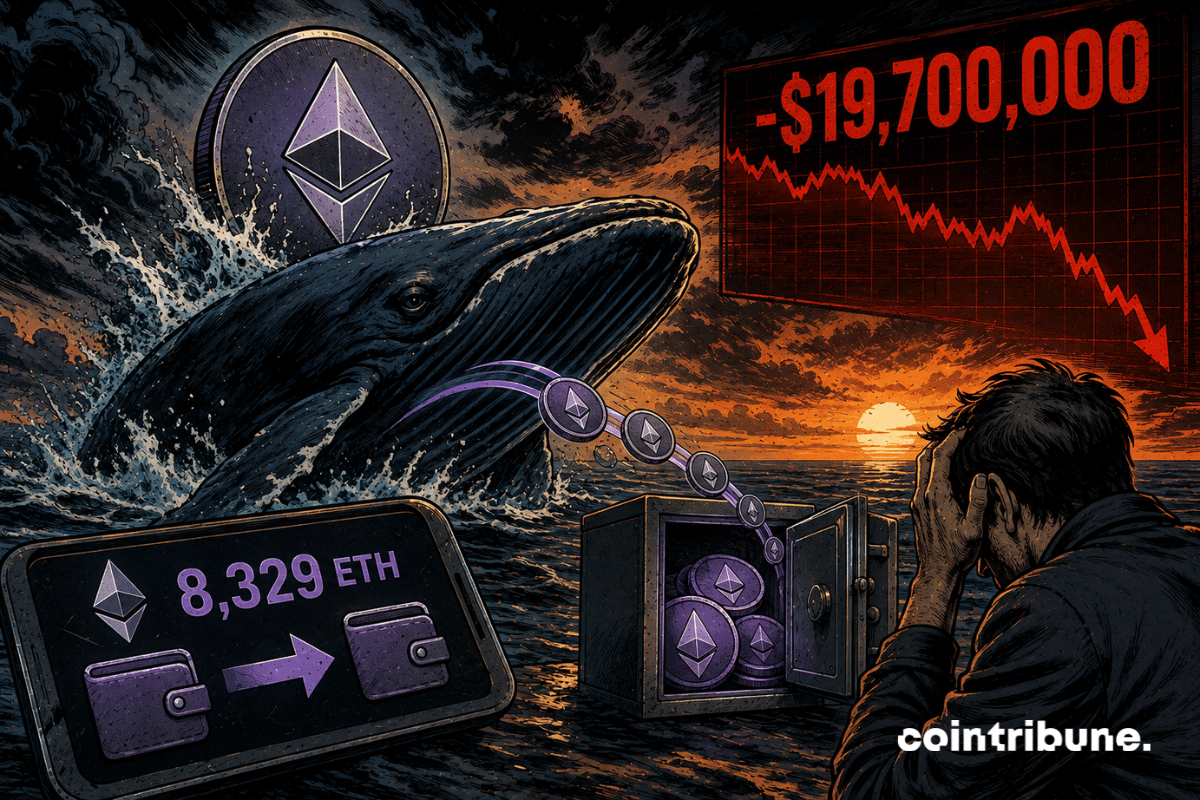
The Ethereum network is currently in a zone of strong turbulence, which is pushing its richest investors, commonly called "the whales," into an almost unprecedented digital lethargy. This mass exodus causes acute concern, as the volume and regularity of movements of these giants of decentralized finance usually serve as a compass for fund managers and traders to anticipate major market trends. It is essential to understand the exact nature of this drying up of on-chain flows in order to determine whether it is a calm before a bearish storm or a phase of strategic accumulation.
Schwab, the finance colossus, is launching into stock betting. After crypto, here come the predictions. Wall Street stirs, regulators frown. The hunt is on.
The digital asset sector faces a new alert after an incident affecting Aztec Network. The network suffered a second hacking within a week, this time via its private routing bridge. The attack resulted in the theft of several digital assets worth over 2 million dollars. This event raises questions about the security of infrastructures used in the crypto ecosystem and the protocols' ability to protect users' funds.
Bitcoin does not need staking, inflation, or an embedded yield in its protocol. Michael Saylor instead advocates a model where bitcoin remains pure digital capital, while financial markets create credit and income around it. In brief Saylor believes Bitcoin doesn’t need to copy Ethereum staking. Yields…
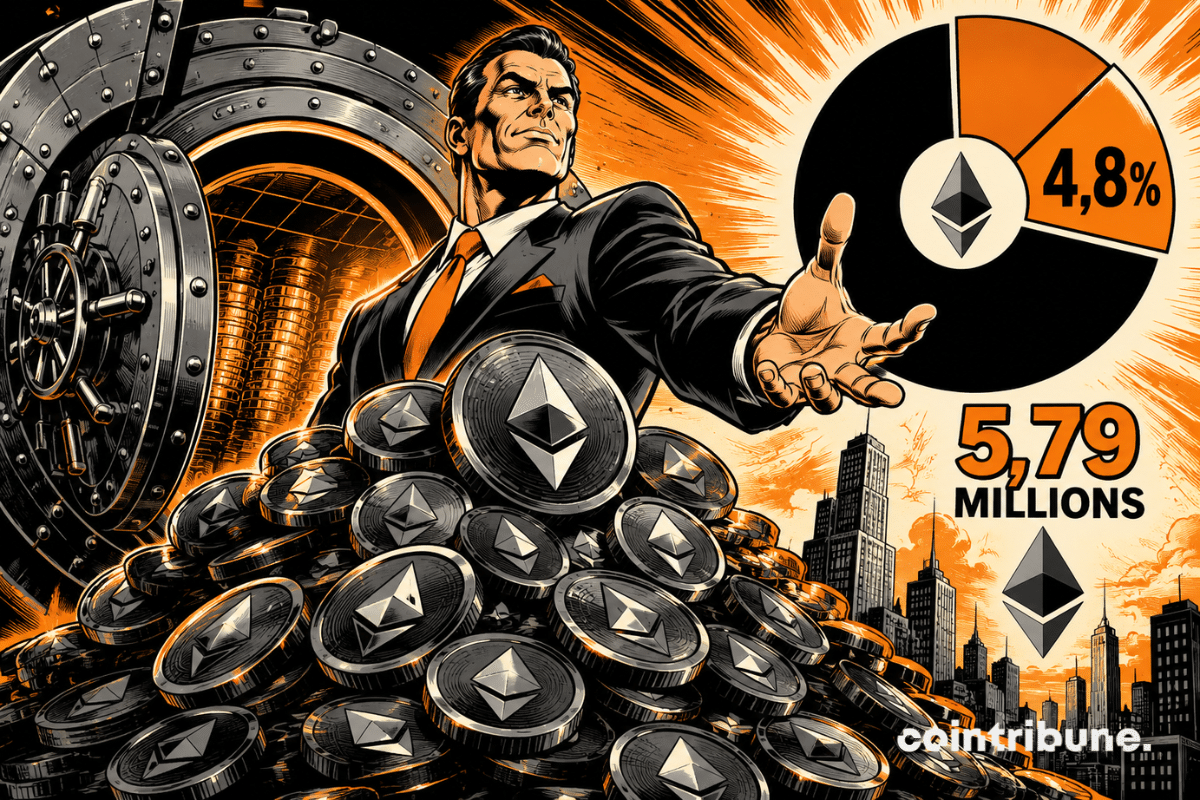
While the market questions Ethereum, some institutional investors have chosen to acquire more. BitMine, clearly, fits into this perspective, with massive accumulations of ETH, aiming for a position contrary to the current trend, to better rebound at the end of the tunnel in an ecosystem more than ever plagued with doubt. This strategy today allows the company to approach an unexpected threshold, with a portfolio valued at over 10 billion dollars and a growing share of the global Ethereum supply under its control.
Ethereum reaches a key moment of the quarter, as ETH risks recording a sequence never seen in its history. The second cryptocurrency on the market remains down, but it still has a window to reverse the trend. Between a more favorable macroeconomic context, mixed technical signals, and an increase in staking, the quarterly close now attracts all attention.
The security of a blockchain relies on a simple promise: making the cost of an attack far greater than the expected benefit. This equation has held for over ten years thanks to cryptographic mechanisms considered solid. Yet quantum computing is beginning to shake everything up. The machines that could threaten bitcoin or Ethereum do not yet exist, but progress already made in this field forces developers to prepare for the future. A proposal presented by Nicolas Consigny, manager of the Kohaku project at the Ethereum Foundation, indicates that Ethereum could start protecting its accounts against quantum attacks today for a trivial amount: only 7 cents per account.
Crypto ETFs are taking on water but not sinking. BlackRock is raising the sails while the small ships return to port. Strange navigation.
Solana falls much faster than Ethereum in June. However, ETFs tell a completely different story than the price. Full analysis!
Tom Lee waters his ethers like a perched gardener, but his beautiful garden suffers 10 billion losses. Crypto no longer understands anything.
The CME Group started trading futures contracts on the Nasdaq CME Crypto index on June 9, covering eight leading digital assets. This product responds to an institutional demand that goes far beyond the bitcoin/ether pair alone. Traditional finance is, once again, setting its milestones in the crypto universe.
The debate on Ethereum's future is accelerating around a major technical goal: making Zero-Knowledge the foundation of its architecture in order to make the protocol faster, more affordable, and more secure. Joseph Lubin, CEO of Consensys, believes this transition could transform the network's base layer and bring layer 2s closer into a more unified ecosystem. According to him, Ethereum could become a protocol entirely based on Zero-Knowledge proofs within the next five years.
Ethereum has lost more than 65% since its August 2025 record. Bitmine already shows about 9 billion dollars in unrealized losses. And yet, Tom Lee's company has just made its biggest weekly ETH purchase of the entire year 2026. A conviction that demands respect, or raises concern.
An exploit on Ethereum threatened the icons of the NFT market. Yuga Labs, creator of the Bored Apes, reacted as a hero, securing more than 60 NFTs worth $570,000. A whitehat operation that reignites the debate on the security and future of Ethereum NFTs.
Criticism surrounding the Ethereum Foundation has been increasing for several weeks. Budget cuts, internal departures, and leadership changes are fueling debates within the blockchain community. However, Joe Lubin refuses to speak of a crisis. According to the network co-founder and CEO of ConsenSys, these adjustments rather reflect a necessary evolution of the foundation's role.
In a crypto market dominated by capital outflows, XRP stands out as an exception. While investment products linked to Bitcoin and Ether experience withdrawals, funds backed by Ripple's token continue to attract new capital. This dynamic contrasts with the overall market sentiment and draws the attention of institutional investors.