Stablecoins move trillions, but JPMorgan cools the champagne. Money spins faster than ever, and that promised jackpot might quietly stay locked behind the curtain.
DeFi hits a wall: JPMorgan warns about a lack of trust from institutions. Detailed explanations in this article!
Tether, the issuer of the world's largest stablecoin, is playing a risky card. The company is trying to close a historic fundraising at a valuation of 500 billion dollars, but time is running out. Investors have two weeks to commit. After this period, the project could be purely and simply postponed.
According to JPMorgan, bitcoin establishes itself as the ultimate safe haven asset, ahead of gold and silver during crises. Rising ETF flows, record liquidity, and massive adoption in Iran. Why are investors abandoning precious metals for BTC?
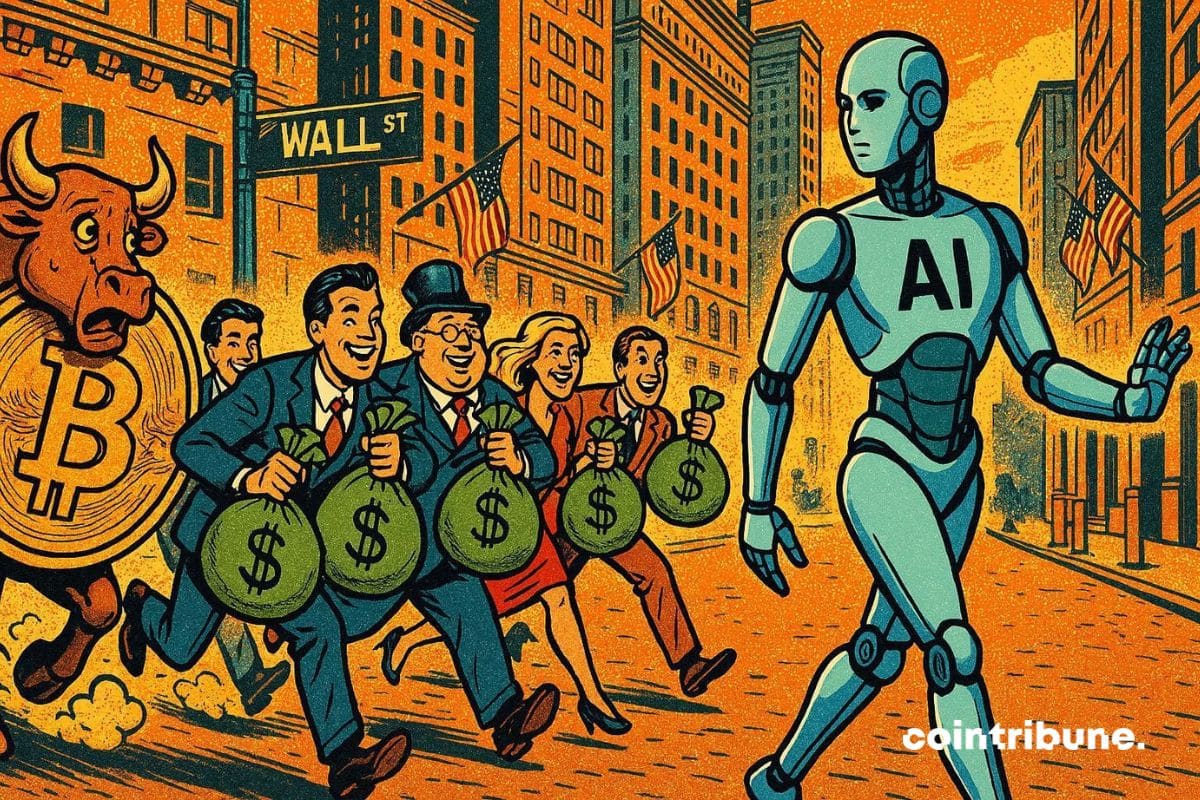
Artificial intelligence no longer only disrupts businesses, but now attacks the labor market. On Wall Street, concern is rising. Jamie Dimon, head of JPMorgan, openly acknowledges that AI threatens jobs and calls for an immediate response. His assessment contrasts with dominant technophile speeches and confirms a reality already underway. Between productivity gains and social risks, the AI revolution enters a concrete phase, where political decisions become inevitable.
The largest American bank reaches a decisive milestone. JPMorgan Chase now allows its institutional clients to pledge bitcoin and Ethereum to obtain loans. A decision that, seemingly technical, sends a strong signal to the entire global financial sector.
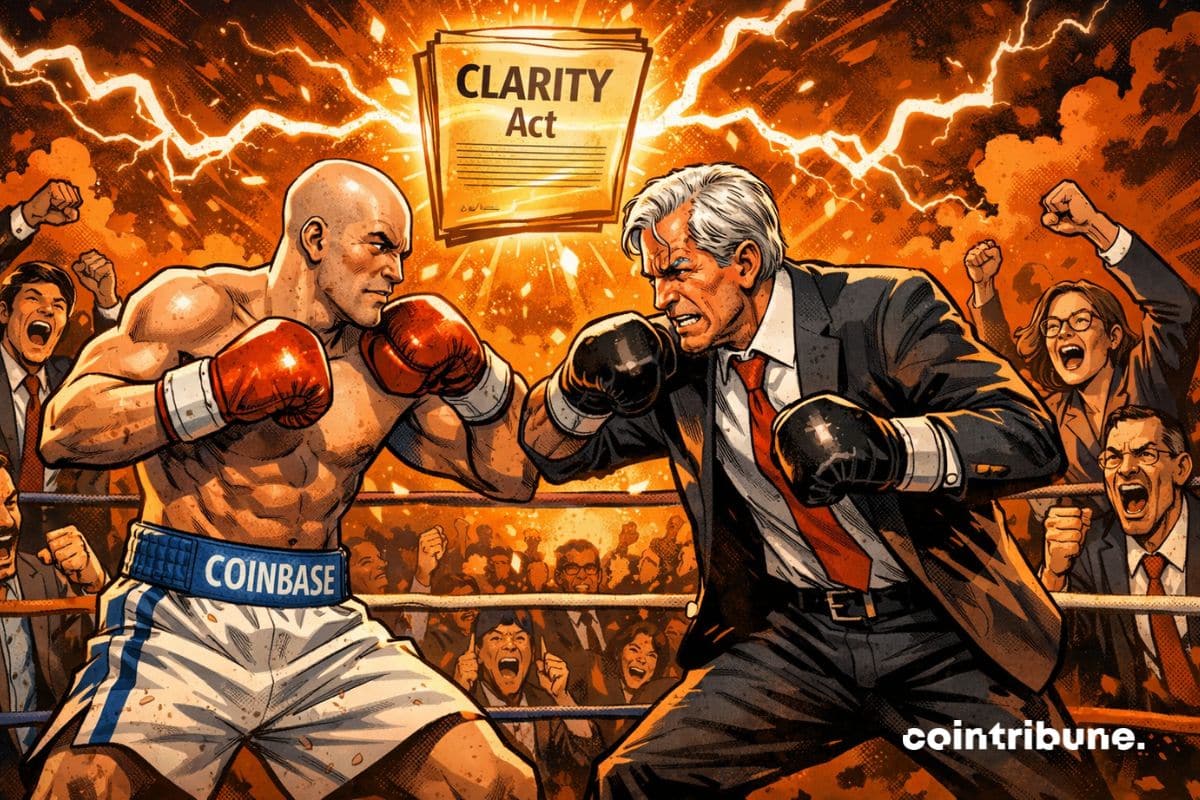
The son of the American president spares no words. In a series of explosive posts on X, Eric Trump accuses JPMorgan, Bank of America, and Wells Fargo of actively sabotaging crypto yield products to better protect their colossal margins. An open war between Wall Street and the crypto world has reached a new level.
The Clarity Act could mark a historic turning point for the crypto market. According to JPMorgan, its adoption by mid-2026 would act as an unprecedented accelerator for the market, with 8 catalysts capable of redefining the ecosystem.
Despite recent volatility and bitcoin falling below its production cost, the American investment bank maintains an optimistic outlook for crypto assets. Institutional flows are expected, according to it, to revive the market this year, provided the regulatory framework clears up. Will these expected flows be enough to reverse the trend?
Gold recovered to 5,000 per ounce after a historic drop, with major banks including J.P. Morgan forecasting further gains later in 2026.
In 2026, family offices massively bet on AI, leaving crypto behind. With 89% of them having no exposure to digital assets, the gap widens. Why such an imbalance? What are the risks and opportunities for investors?
Investors are turning away from Bitcoin, driving strong demand for gold and silver. JPMorgan highlights potential gold prices of $8,500 as metals attract new inflows.
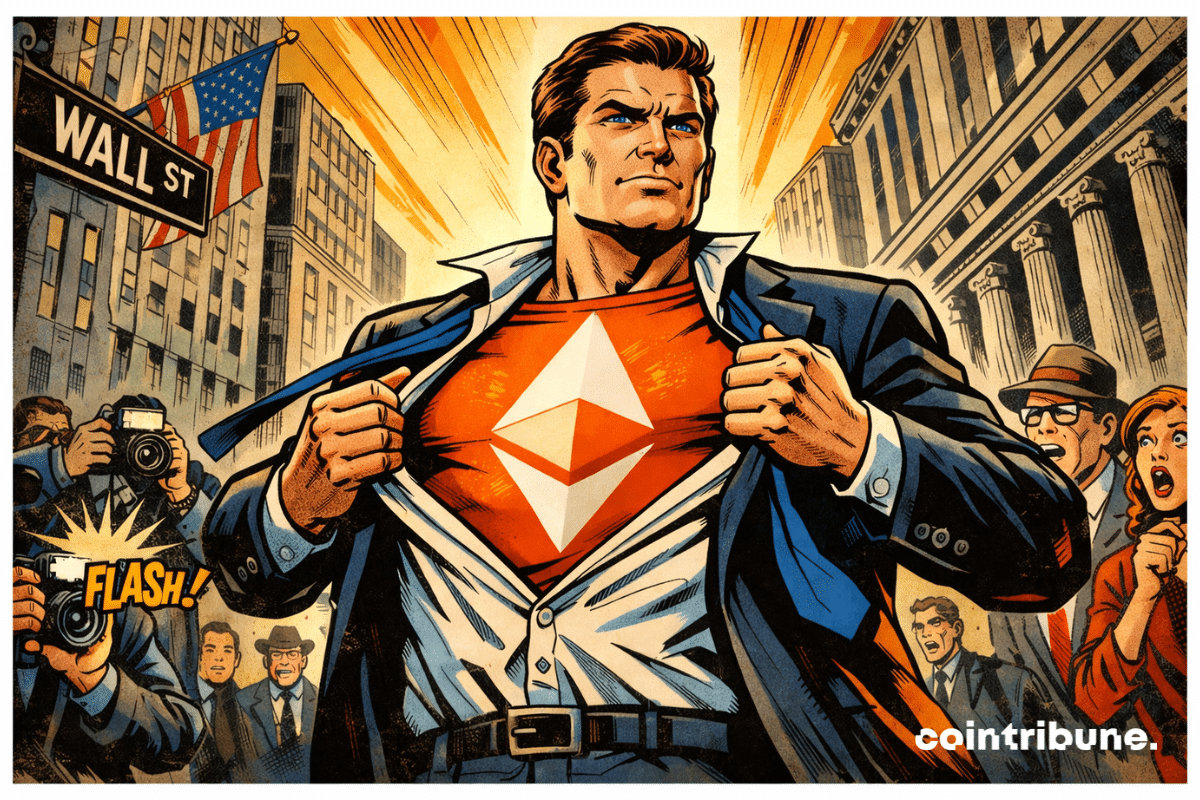
Ethereum may have chained updates, but doubt persists about its ability to generate sustainable activity. In a report published this Wednesday, JPMorgan analysts question the real effects of the Fusaka update, which nevertheless caused an immediate surge on the network. Behind the technical gains, the question of economic viability remains unresolved. The blockchain co-founded by Vitalik Buterin faces limits that even its latest advances do not seem able to correct.
Donald Trump accuses JPMorgan of having closed his accounts for political reasons and demands 5 billion dollars before the Florida courts. By directly targeting CEO Jamie Dimon, the president reignites the explosive debate on "debanking," a practice that fuels tensions between the political and financial spheres. This case questions the neutrality of major American banks. While Trump denounces ideological exclusion, JPMorgan, on its side, rejects any accusation of discrimination.
The so-called Ethereum Killer blockchains are stirring to nibble away market shares and gain media spotlight. But deep down, in reality as in collective perception, there is only one master. Its name comes up in every conference, every strategic plan, every institutional tweet. Ethereum is no longer just a technology…
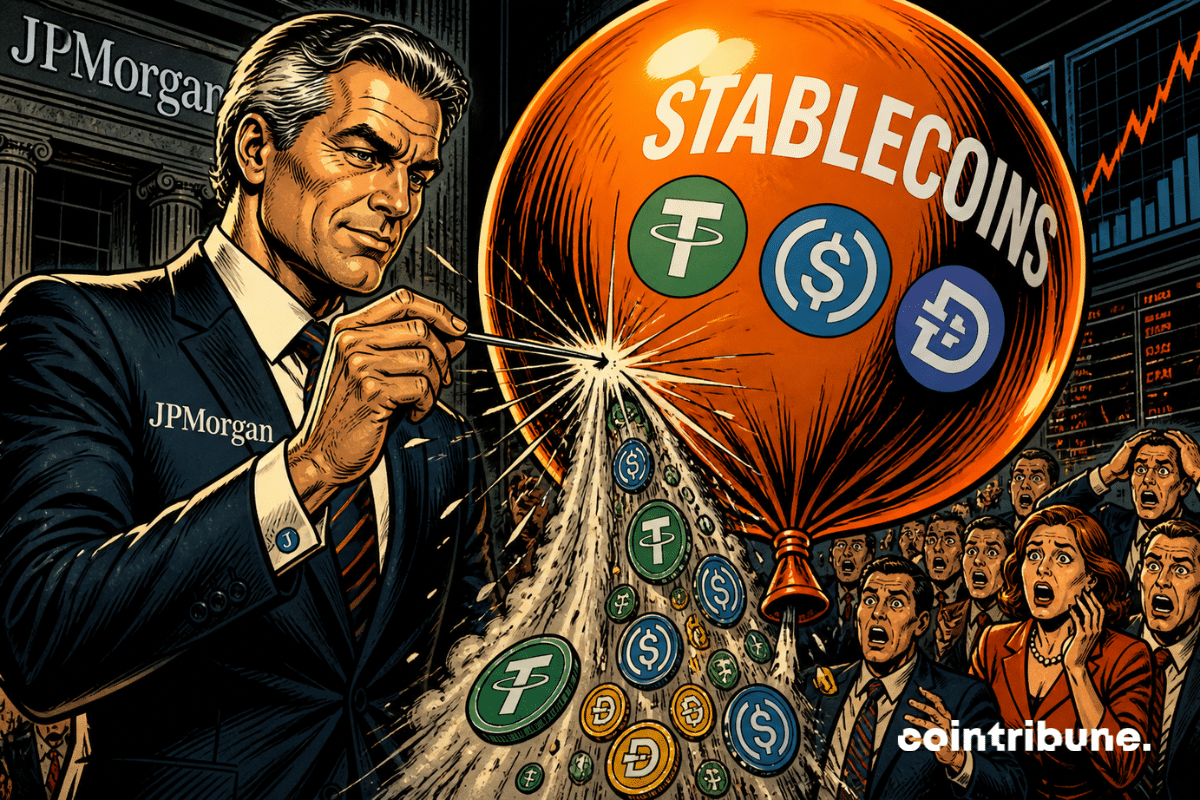
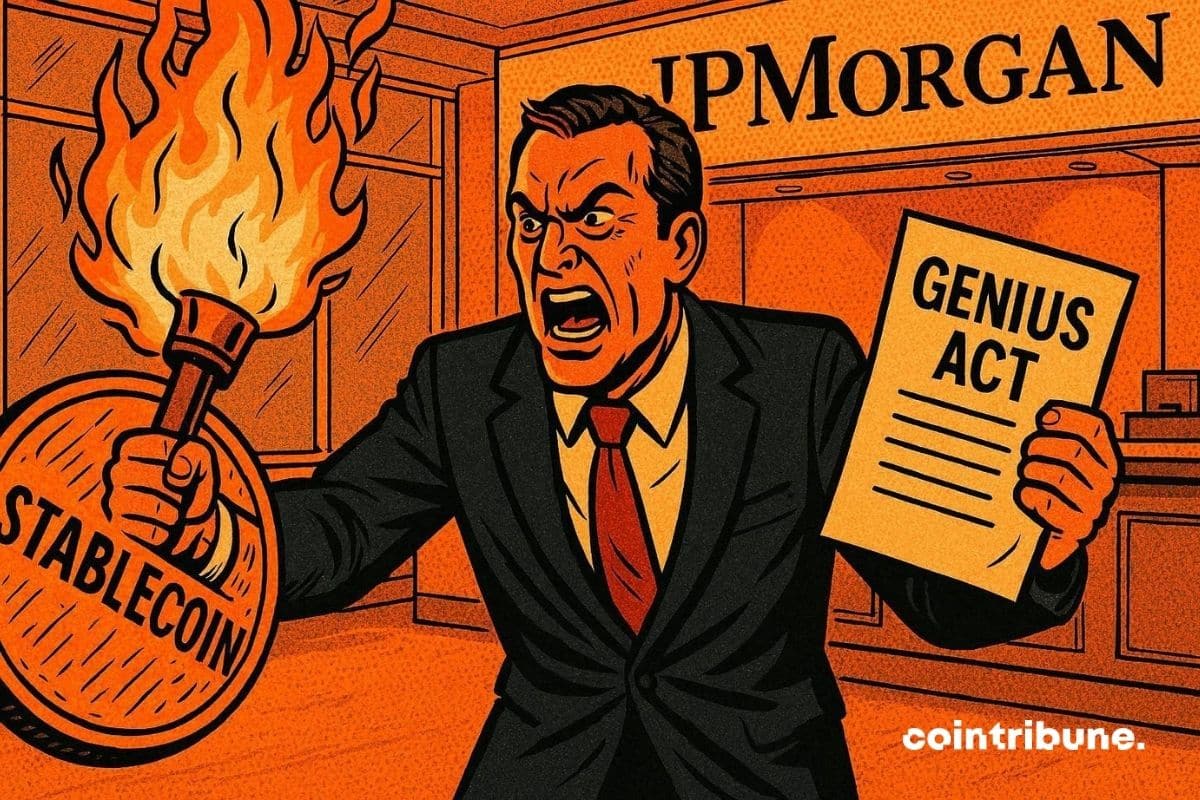
Yield stablecoins are shaking up the crypto universe and worrying JPMorgan. The GENIUS Act could become the key to strict regulation. Between innovation and the threat of a parallel bank, the future of stablecoins is being decided now. Dive into the analysis of the issues and discover why this debate is crucial.
Stablecoins have long been the discreet plumbing of crypto. Nobody applauds them, but without them, part of the market seizes up. Today, they are coming out of the shadows for a very concrete reason: savings and bank deposits. In the United States, local bank leaders are pressing the Senate to tighten certain points of legislation on stablecoins. Their fear: seeing part of the deposits migrate to dollar tokens, attracted by “rewards” that increasingly look like a yield. On the other side, JPMorgan refuses to give in to alarmism. The bank sees it rather as a new brick in a monetary system already composed of several layers. And this reading gap says a lot about the battle underway: financial stability, competition, or a simple war of models?
JPMorgan plays the bankers of the future: its JPM Coin infiltrates Canton, the blockchain of the big players. It smells like crypto fragrance on Wall Street, with more control than utopia.
JPMorgan freezes BlindPay and Kontigo accounts over Venezuela links as stablecoins gain a key role in the country’s economy.
JPMorgan Chase, one of the world's largest banks, takes a bold step towards crypto by exploring the introduction of trading services for its institutional clients. This development comes amid regulatory changes in the United States, even prompting the most conservative financial institutions to reassess their approach to these assets. Such a decision could well redefine the relationship between traditional finance and this ecosystem.
Six years after launching its own private blockchain, JPMorgan Chase is radically changing strategy. The bank has just transferred its digital deposit token, the JPM Coin, to Base, Coinbase's public network. A major turning point for an institution that until now had exclusively relied on its closed ecosystem Kinexys.
JPMorgan Chase is expanding its blockchain strategy with the launch of a tokenized money-market fund on Ethereum. The product is backed by $100 million in internal capital and targets qualified investors seeking daily yield through an on-chain structure backed by short-term debt. Market observers say the move reflects clearer regulation, rising client demand, and growing interest in tokenized real-world assets.
Markets are watching closely as the race to lead the US Fed continues, with political pressure on interest rates building. Recent comments from Jamie Dimon and Donald Trump suggest the outcome remains uncertain, with potential consequences for monetary policy and risk assets, including crypto.
JPMorgan, one of the largest American banks, has just completed a historic transaction: a 50 million dollar commercial paper fully managed on the Solana blockchain. Galaxy Digital, Coinbase, and Franklin Templeton participated in this pioneering operation settled in USDC.
Crypto markets have started coughing again. No spectacular crash this time, but a slow loss of breath: crypto trading volumes are declining, prices are correcting, and even spot bitcoin ETFs are turning red. For JPMorgan, the picture is clear: the appetite for risk is fading, and the market stalls just as it was supposed to confirm its strong comeback.
Accused of closing crypto accounts linked to Trump, JPMorgan denies and denounces unfair rules. All the details here!
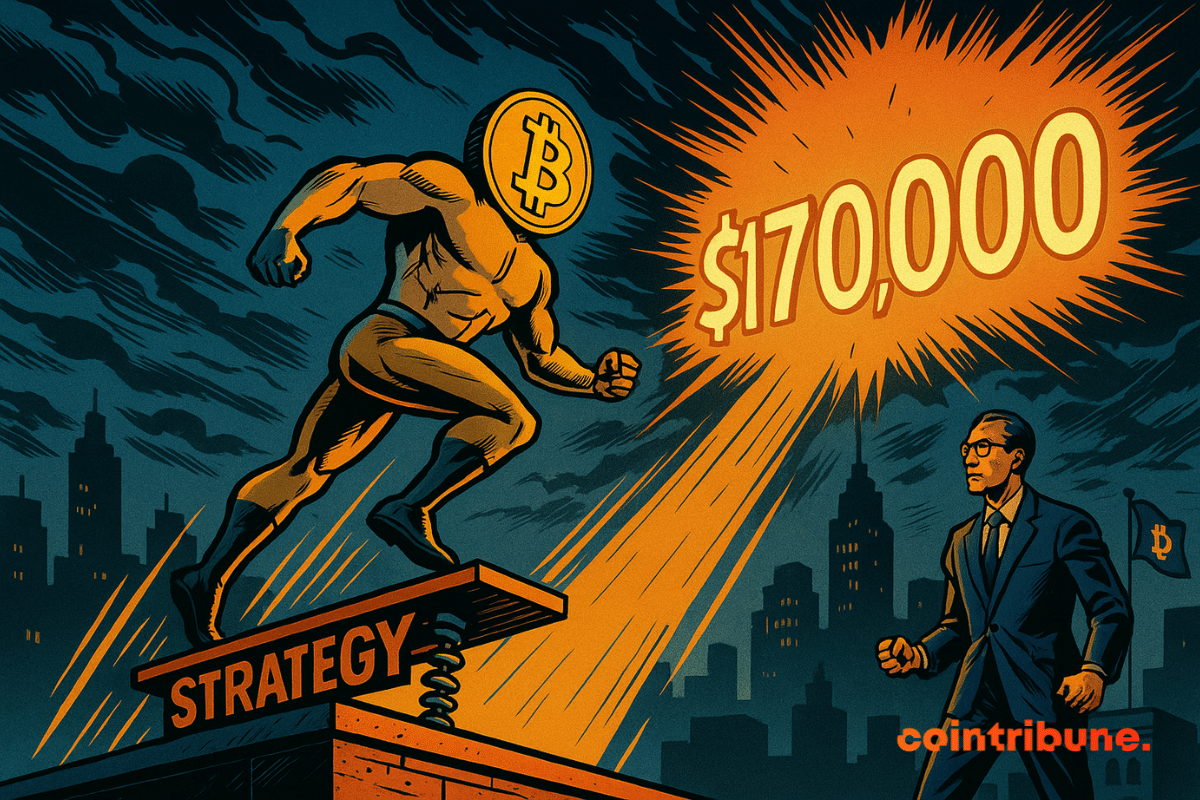
When a company named Strategy becomes the compass of bitcoin, even JPMorgan takes out its calculator. Bull run or crash? The answer lies between MSCI, reserves, and a few well-placed billions.
Flash crashes, digital dominos and states lying in wait: the IMF sees tokenization less as a revolution than as an explosive cocktail ready to blow up finance... but hush, it's bubbling.
The imminent launch of a structured product on bitcoin by JPMorgan is causing reactions. For part of the crypto community, this is not just a simple financial innovation, but a targeted offensive against actors like Strategy. As bitcoin gains ground as a reserve asset, the divide between traditional finance and pro-BTC strategies becomes clearer. Behind the apparent neutrality of the markets, some denounce an attempt to influence aimed at weakening the companies most exposed to the asset.
JPMorgan Chase has just filed an application with the SEC for an innovative financial product that could radically transform the way investors are exposed to Bitcoin. The stake? Potentially massive returns by 2028. But at what cost?