When a former politician buys a medical company to stack Bitcoins, crypto becomes a politico-financial novel where health and speculation share the same digital core.
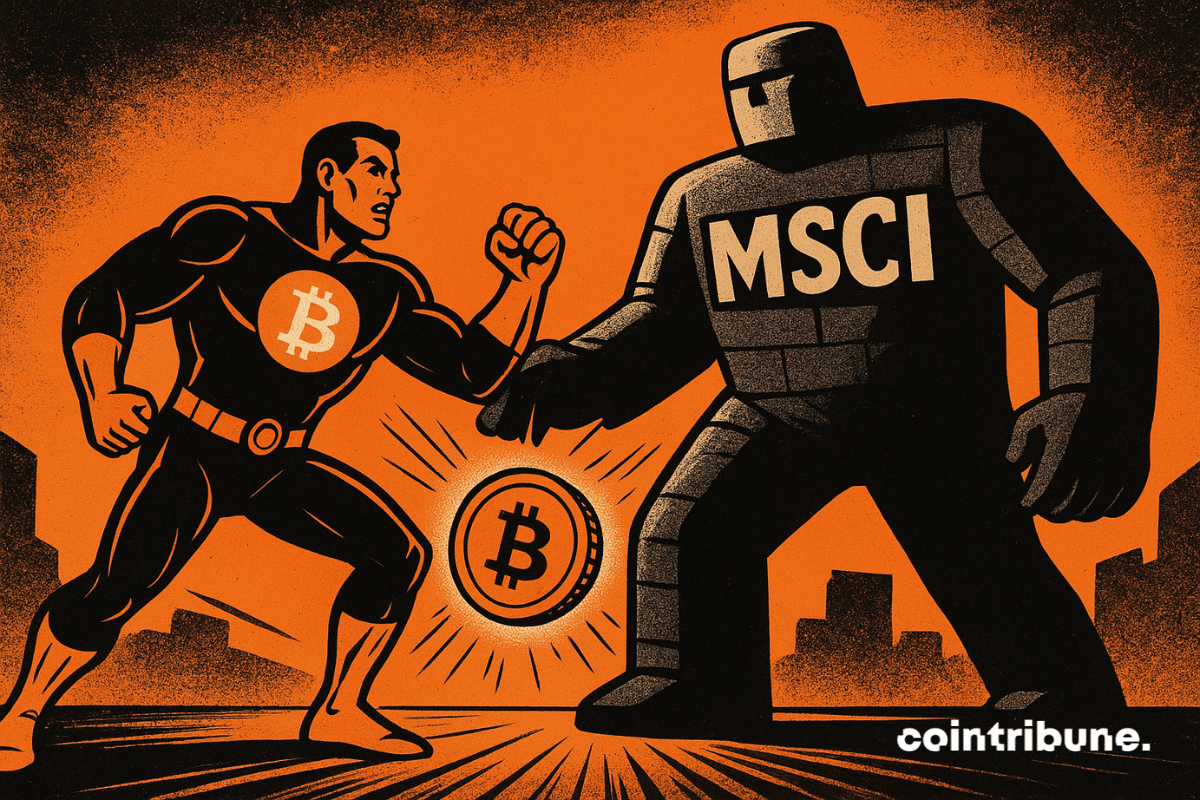
Under regulatory pressure, MSCI makes a decisive choice. The index issuer announced on January 6 that it would maintain companies with significant crypto treasury in its global indices. A temporary decision, while the status of these companies, including Strategy, remained uncertain. This signal stabilizes their exposure in institutional portfolios and extends their integration into traditional markets, at a time when the gap between traditional finance and crypto continues to narrow.
Despite an accounting loss of $17.4 billion in Q4 2025, Strategy kicks off 2026 by purchasing 1,283 bitcoins for $116 million. As a global leader among institutional BTC holders, the company persists in its aggressive accumulation strategy, defying classic financial logic. This striking contrast between record loss and reaffirmed confidence raises the question: how far is Michael Saylor willing to push his bet on Bitcoin?
When the yen drowns, Metaplanet rows towards bitcoin: a strategy that makes Tokyo smile... except creditors. While Japan goes into debt, others stack BTC.
Metaplanet just signed an end-of-year move that looks less like a "trade" and more like a statement. The Tokyo-listed company added 4,279 bitcoins for an acquisition cost of about $451 million, bringing its treasury to 35,102 BTC, around $3 billion at the current rate.
Michael Saylor's company Strategy resumes its weekly bitcoin purchases at a time when the markets are doubtful. Details here!
In an unstable crypto market, Strategy, one of the largest holders of Bitcoin, raised $747.8 million by selling shares, while suspending its BTC purchases. This decision highlights a desire to secure its finances amid market volatility. A strong signal for the crypto ecosystem, which could influence other companies adopting similar strategies.
Michael Saylor rekindles the suspense: a new bitcoin purchase is looming, while MSTR is collapsing and regulators threaten Strategy. With 671,000 BTC at stake, can this bold strategy withstand market pressure? Analysis of the stakes, key figures, and risk scenarios for 2026.
Kindly MD thought it could reinvent itself with bitcoin. Listed on the Nasdaq, the company refocused its strategy around the flagship asset after its merger with Nakamoto Holdings. However, the initial euphoria gave way to a sharp drop in the price, resulting in a formal warning from the American stock exchange. Without a rapid recovery, the company now risks delisting.
Bitcoin made no noise. It simply resisted. In a crypto market that crumbled silently, the leading crypto fell, yes, but it fell less than the rest. And in this kind of quarter, "less worse" becomes a performance. The data cited by Glassnode mention a persistent relative weakness in almost all segments against BTC, as if liquidity, instead of exploring, had regrouped around the main mast.
Bitcoin falls, Saylor buys. Two billion injected in two weeks, while the market panics. What if, after all, the crypto oracle wore a tie and sold shares?
There are companies that enter an index like entering a club. And others that enter like triggering an awkward conversation at the table. Strategy clearly belongs to the second category: a listed company, ex-MicroStrategy, becoming primarily a bitcoin accumulation machine. However, during the annual Nasdaq 100 rebalancing announced on December 13, 2025, it did not drop out. The first real test passed since its arrival last December.
Bitcoin pauses in the balance sheets, but some actors buy more than ever. Here are the numbers worrying analysts.
Michael Saylor’s company, Strategy, is facing growing pressure as it challenges MSCI’s plan to exclude crypto-treasury firms from major stock indexes. Strategy, which holds the world’s largest corporate Bitcoin reserve, warned that the proposal misjudges how digital-asset treasuries operate. More so, the plan risks distorting fair index standards.
What if bitcoin became the foundation of the future global banking system? Michael Saylor, executive chairman of Strategy, now urges nation-states to create digital banks backed by bitcoin. Far from an isolated provocation, this proposal fits into a climate of financial market shifts, marked by growing distrust of traditional banks and a global search for more profitable and resilient solutions against economic uncertainties.
While bitcoin hovers around $91,000 after its October peak, Strategy surprises the markets with a massive purchase of over 10,000 BTC. This billion-dollar bet, amid a prolonged downturn, reignites debates on the viability of the "Bitcoin treasury" model. The move fascinates as much as it worries: should it be seen as a strategic conviction or a major financial risk for an already pressured company?
These companies thought they were riding the bitcoin wave, but they are drowning in their own debts. The crypto king is nosediving, and the kings of leverage are getting slapped.
Cantor Fitzgerald shakes the markets by lowering its target for Strategy (MSTR) by 60%. However, the bank dismisses fears of forced liquidation and maintains its confidence in bitcoin. An analysis that unpacks the stakes behind this surprise decision and its impact on crypto investors. Is MSTR's future being decided now?
What if everyone was wrong about Strategy? While speculation is rife about a potential bitcoin sale by the company led by Michael Saylor, Bitwise's Chief Investment Officer, Matt Hougan, steps up to methodically dismantle this panic scenario.
When a company named Strategy becomes the compass of bitcoin, even JPMorgan takes out its calculator. Bull run or crash? The answer lies between MSCI, reserves, and a few well-placed billions.
Strategy, the Bitcoin giant, has suddenly slowed its purchases: only 130 BTC in December 2025, compared to 134,000 in 2024. A worrying turnaround or a brilliant tactic? After a last massive purchase of 8,178 BTC in November, the market wonders: should we fear a collapse or prepare for a historic rebound?
As Bitcoin passes through a new turbulence zone, Michael Saylor finds himself at the heart of a decisive showdown with MSCI. Threat of exclusion from indices, pressure from institutional investors, and massive exposure to the king asset: his bet on Bitcoin is more tested than ever.
Strategy launches a giant dollar reserve to support its Bitcoin bet. Discover all the details in this article.
Strategy, the Bitcoin giant will only relinquish its precious reserves under one condition, which one? A condition that may reveal dark days ahead for BTC.
The imminent launch of a structured product on bitcoin by JPMorgan is causing reactions. For part of the crypto community, this is not just a simple financial innovation, but a targeted offensive against actors like Strategy. As bitcoin gains ground as a reserve asset, the divide between traditional finance and pro-BTC strategies becomes clearer. Behind the apparent neutrality of the markets, some denounce an attempt to influence aimed at weakening the companies most exposed to the asset.
Bitcoin crash: Strategy reassures investors with a 70-year plan. New era or last gasp? Analysis of a risky bet.
As bitcoin tries to recover after its plunge below $81,000, Strategy, one of the largest institutional accumulators of BTC, has chosen silence. For the first time in weeks, the company did not release any announcement on Monday regarding its weekly acquisitions. An unusual behavior that raises many questions.
The crypto community is igniting after the announcement that Strategy and other cryptocurrency-holding companies could be excluded from major stock indices. A boycott movement is gaining momentum. Will JP Morgan be the next target of the Bitcoin revolution?
While bitcoin falters, a company makes the opposite bet. Strategy, the largest corporate holder of BTC, continues to buy massively in the midst of turmoil, where others flee. Its radical strategy, often criticized, could nevertheless open the doors of the very selective S&P 500 as early as December. A possibility that, until recently, was still financial science fiction. This scenario, unthinkable a few years ago, crystallizes a major shift between institutional finance and cryptos.
Michael Saylor does not mince his words. In an interview given Tuesday to Fox Business, the executive chairman of Strategy dismissed concerns about Wall Street's impact on Bitcoin with a wave of the hand. For him, the arrival of traditional financial institutions did not weaken the digital asset. On the contrary, it would have stabilized it.