AI agents enter a new phase: they can now pay for digital services themselves. With Pay.sh, Solana and Google Cloud want to make stablecoins a native payment layer for the artificial intelligence economy.
Western Union accelerates in digital payments. The group announced USDPT, a US dollar stablecoin based on the Solana blockchain and issued by Anchorage Digital Bank NA. This initiative aims to integrate a regulated digital dollar into an already well-established global network. Through this project, Western Union seeks to improve international settlements while relying on a large-scale existing infrastructure.
The crypto market is once again eyeing Solana. A technical signal identified on its weekly charts, previously observed during strong upward phases, has just been confirmed. This return occurs in a still fragile environment where investors are seeking benchmarks. Between historical precedent and critical price levels, the asset finds itself at a pivotal moment in its trajectory.
Crypto trading leaves traditional platforms to infiltrate daily uses. With the arrival of XRP on WhatsApp via the Solana ecosystem, a new gateway to DeFi opens, directly from a simple conversation. Behind this innovation, bots capable of executing orders from text messages redefine the user experience. This convergence between messaging and decentralized finance raises questions: is this a major turning point or an underestimated risk?
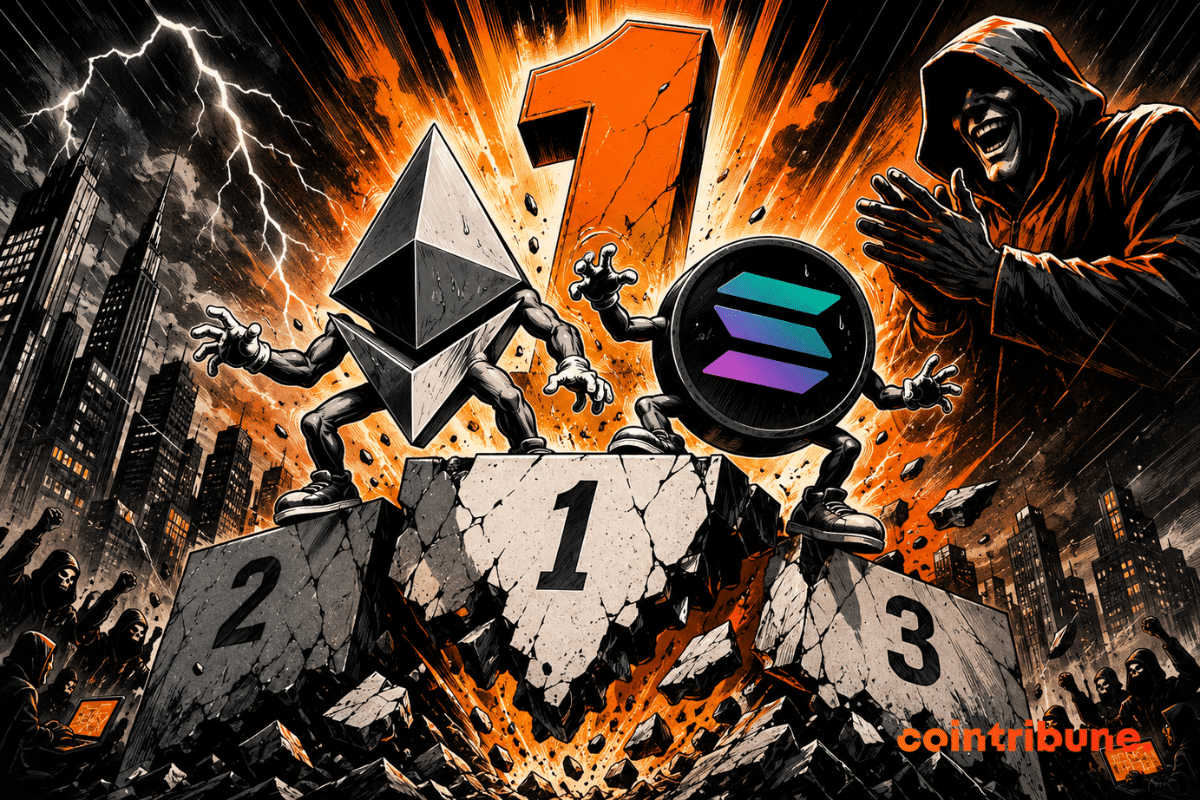
Solana leads Ethereum in decentralized applications revenue for five consecutive weeks. This indicator, focused on actual user activity, reveals a shift in power dynamics between the two blockchains. The now established trend draws the attention of market players.
Interest in Solana derivatives products has risen sharply in recent days, accompanied by an increase in the crypto's price. This renewed activity raises a market question: is a return to 100 dollars possible in the short term? Behind this dynamic, indicators send mixed signals, between rising leverage and persistent investor caution.
Crypto news: $471M net flows on Bitcoin ETFs in one day. Here is what this institutional signal really means.
While the heavyweights Bitcoin and Ethereum take a breather, Solana and XRP pick up the stakes, and crypto plays its old sleight of hand again.
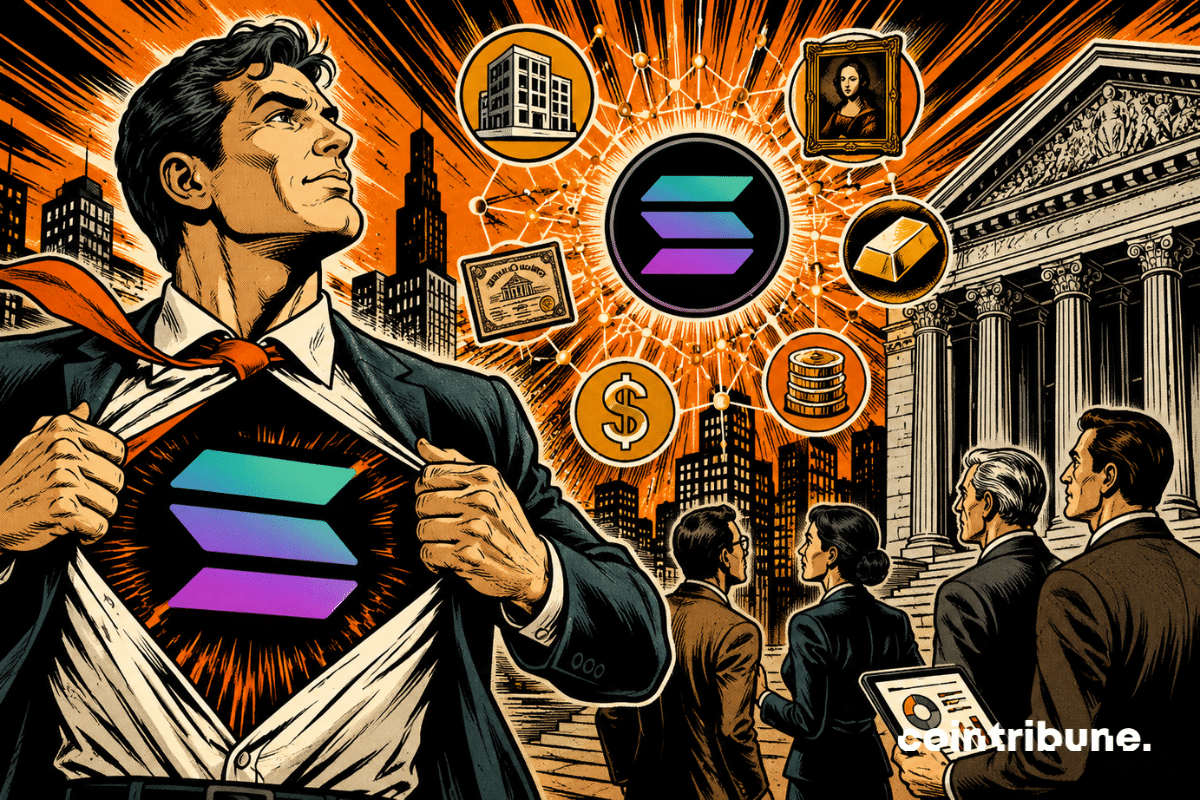
The Solana Foundation has just reached a decisive milestone. It is launching a platform dedicated to financial institutions, with three heavyweights from the sector on board: Mastercard, Western Union and Worldpay. Blockchain, long seen as a field reserved for insiders, is now entering the corridors of major banks and payment companies.
A whale just unlocked $163 million worth of SOL from staking, a rare move that could shake the crypto market. Yet, the price remains stable... for now. Is this massive unlocking a threat or an opportunity for Solana?
Forward buys back its shares through a loan secured by SOL. A strategy that divides crypto investors. Details in this article!
The SEC clears Solana, ETFs rake in a billion, price remains steady. Whales quietly accumulate before the explosion. Wake up, it's going to shake!
Every morning at 10 AM, bitcoin was sinking. Suspicions about Jane Street, trading giant. A lawsuit arrives, the dump stops. Coincidence? Traders cry victory.
An AI project victim of a token rug pull scam. Result: the word "bitcoin" becomes taboo on its Discord. Crypto, please don't talk about it.
Grayscale Investments has increased Cardano’s ADA weighting in its Smart Contract Fund to 20.12%, up from 19.50%, marking another consecutive allocation boost. ADA now accounts for more than one-fifth of the portfolio, reinforcing its role as a core holding within the multi-asset vehicle. The move comes during a period of sustained price weakness for the token. Even so, the portfolio positioning suggests continued conviction in Cardano’s long-term role among leading smart contract networks.
Warning signals are multiplying around Solana. While SOL struggles to stabilize above a key technical threshold, derivatives market data show a clear retreat of bullish positions. Meanwhile, on-chain activity is slowing down and network revenues are eroding. As the 80 dollar level, now closely watched by investors, approaches, the question is no longer about a simple technical rebound, but about the very solidity of market support.
Memecoins were dying. Pump.fun got scared. No more parasitic creators, room for traders. Cashback galore. Volumes soar, millionaires cry. The circus continues.
Crypto markets are going through a turbulence zone. For the fourth consecutive week, specialized funds record massive withdrawals. Bitcoin stumbles and falls below the symbolic 70,000 dollars mark.
The crypto market has just received a strong signal from traditional finance. By sharply revising its forecasts for Solana, the Standard Chartered bank caused a shock in the ecosystem. While SOL remains one of the most watched assets by institutional investors, the lowering of the target for 2026 contrasts with a spectacular long-term projection. This decision reveals a much more nuanced reading of the future of blockchain than simple price movements suggest.
Solana (SOL) flirts again with the critical threshold of 100 dollars, its lowest in 10 months. For some analysts, this level marks a possible floor, signaling a rebound of +150%. For others, it is just a stage in a still fragile trend. Between hopes for a recovery and technical doubts, the market hesitates. Are the current signals really enough to reverse the momentum?
Crypto investment products suffered steep losses on Thursday as a broad sell-off swept through global markets. The total crypto market value fell roughly 6%, prompting one of the largest single-day fund outflows of the year. Bitcoin and Ether investment products bore the brunt of the decline as investors moved decisively to reduce risk.
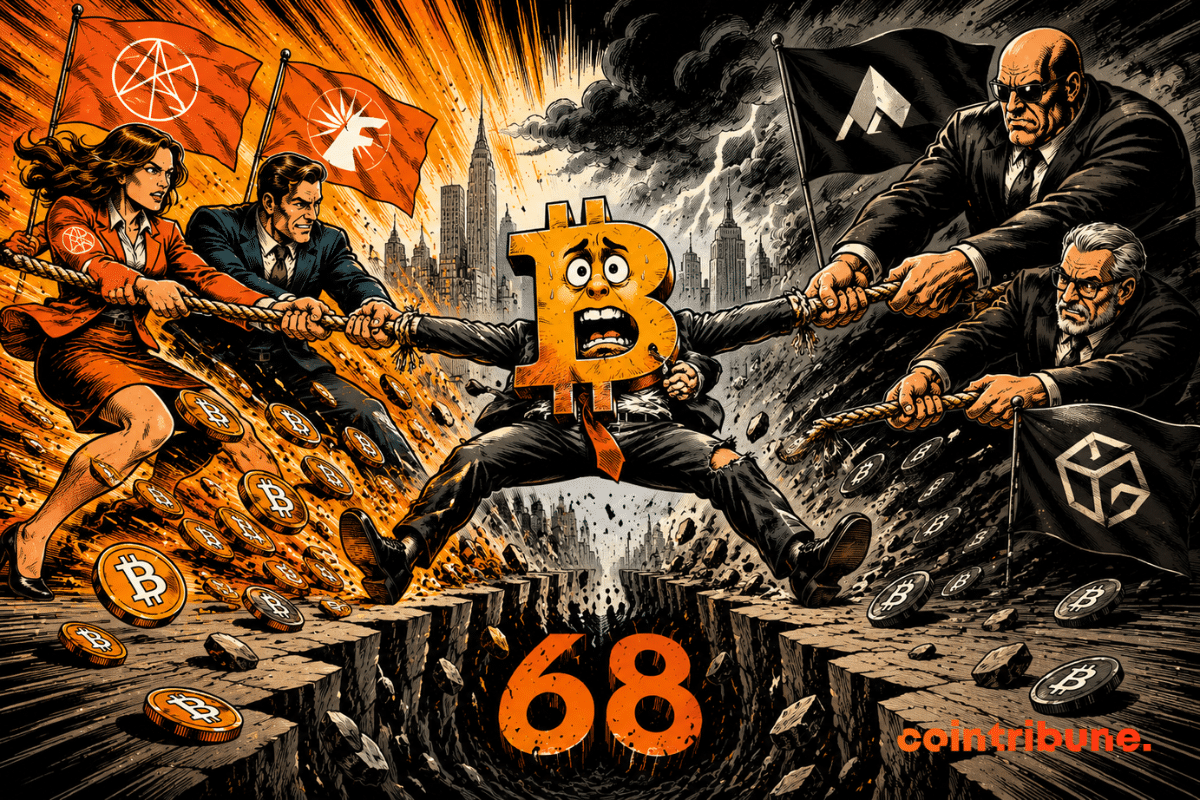
Solana sees its validators disappear at an alarming rate, 68% of them have thrown in the towel since 2023. Behind this hemorrhage lies a crucial dilemma: how to reconcile performance and decentralization when costs crush small operators? Between transaction records and growing centralization, the crypto network is betraying its promises.
Solana is taking a new bet: making hardware a driver for crypto adoption. And, this week, the scenario took an unexpected turn. The token linked to the Seeker smartphone, $SKR, jumped more than 200% in a few days, according to CoinGecko data. The movement followed the TGE and the airdrop associated with Solana Mobile's second phone: a $500 Android, designed from the start for on-chain uses. Everyone expected volatility. But the speed and magnitude of the increase clearly awakened the market.
For years, the narrative has been well-oiled: Bitcoin as the ultimate reserve, the rest of the market playing more or less exotic satellites. Yet, some lines are starting to crack. According to crypto analyst and YouTuber FireHustle, the next wave of institutional adoption could well be built elsewhere. More precisely around Solana. A bold hypothesis, almost uncomfortable for maximalists, but deserving more than a shrug.
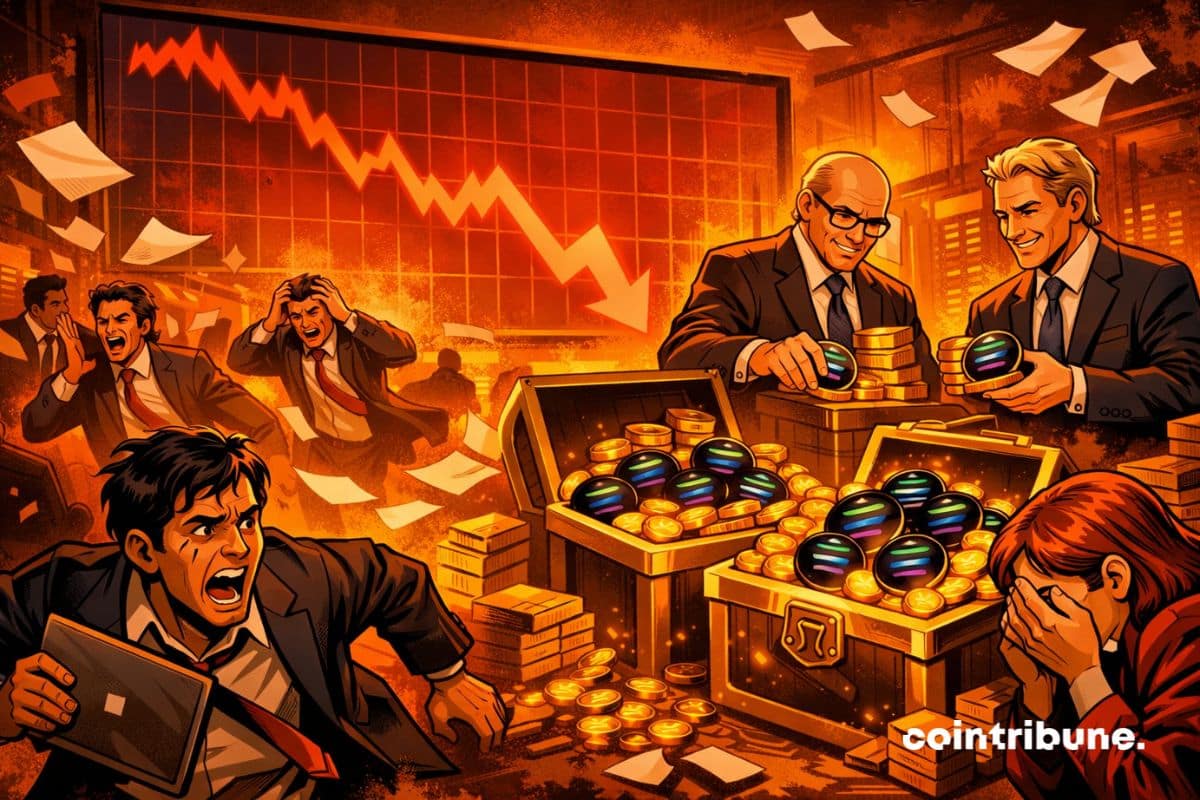
While the crypto market is going through a downturn phase, Solana (SOL) drops below $130, sowing doubt among investors. However, behind this sharp drop, the on-chain data outline a very different scenario. Whales buying, supply free-falling on exchanges, network activity booming: the fundamentals remain solid. A marked divergence between price and network reality, which could reshuffle the cards faster than imagined.
While the crypto ecosystem oscillates between uncertainty and consolidation, Solana attracts an unexpected wave of users. In the space of 24 hours, more than 8.9 million new addresses were created on the network, a record that reignites attention on this blockchain known for its speed and efficiency. Behind this sudden enthusiasm lies a more nuanced reality, where the enthusiasm of newcomers clashes with fragile technical signals.
Memecoins live at a strange pace. Everything goes very fast, then nothing. On Solana, Pump.fun has been one of the main accelerators of this dynamic. But when a platform grows, every setting becomes political. Even a simple fee.
Pump.fun has just made crypto history by exceeding 2 billion dollars in daily volume thanks to Solana memecoins. Between rapid opportunities and legal risks, this explosion raises questions: sustainable revolution or bubble ready to burst?
A crypto user known as “The Smart Ape” lost about $5,000 from a hot wallet during a short hotel stay. No phishing links were opened, and no fake sites were used. Instead, a chain of small missteps created the conditions for a delayed wallet drain. Security researchers say the case shows how everyday actions, both online and offline, can combine into a serious loss.
Solana is changing its status. Long perceived as a fast alternative to Ethereum, the blockchain now attracts leading institutional investors. This rise comes as the network consolidates its technical fundamentals. The accumulation of SOL by specialized funds fuels a new dynamic, at the crossroads of real uses and financial flows. At the start of this year, Solana no longer just promises: it establishes itself as a structuring player in the ecosystem.