Crypto in orbit? Not so fast! Three grains of sand could well jam the rocket... What if Wall Street or the US Congress hit pause?


Bitcoin ended 2025 down 6.36%. A modest performance, but enough to revive a statistical pattern observed for nearly a decade. After every negative year, the crypto has systematically rebounded. As 2026 begins, this statistical regularity intrigues. Can past data still guide the market's future?
At the beginning of this year, a technical indicator draws attention: liquidation data on Bitcoin futures contracts reveal a marked imbalance. This signal, rarely observed at this level, suggests that a simple price movement could trigger a series of chain liquidations. For some analysts, this configuration could propel BTC towards 100,000 dollars.
Under regulatory pressure, MSCI makes a decisive choice. The index issuer announced on January 6 that it would maintain companies with significant crypto treasury in its global indices. A temporary decision, while the status of these companies, including Strategy, remained uncertain. This signal stabilizes their exposure in institutional portfolios and extends their integration into traditional markets, at a time when the gap between traditional finance and crypto continues to narrow.
Telegram begins 2026 with mixed financial results. The messaging service records 870 million dollars in revenue in the first half of 2025 and targets 2 billion dollars for the year. However, these ambitions come with net losses and an unstable crypto environment. Between economic growth, the fall of Toncoin, and regulatory pressures, the platform is at a strategic crossroads, while an initial public offering is still under consideration.
Bitcoin reaches 94,000 dollars, driven by the momentum of financial markets. The movement, clear and rapid, suggests a renewed confidence. However, fundamentals struggle to keep up. Volumes collapse, liquidity remains low. This rise intrigues as much as it reassures.
While crypto markets struggle to find direction, a key indicator has crossed a symbolic threshold: the Fear & Greed Index returns to the neutral zone for the first time since October. This reversal in investor sentiment follows months of extreme fear, marked by a violent crash and persistent volatility. In a still tense global climate, this signal could mark a psychological respite... but certainly not yet a recovery.
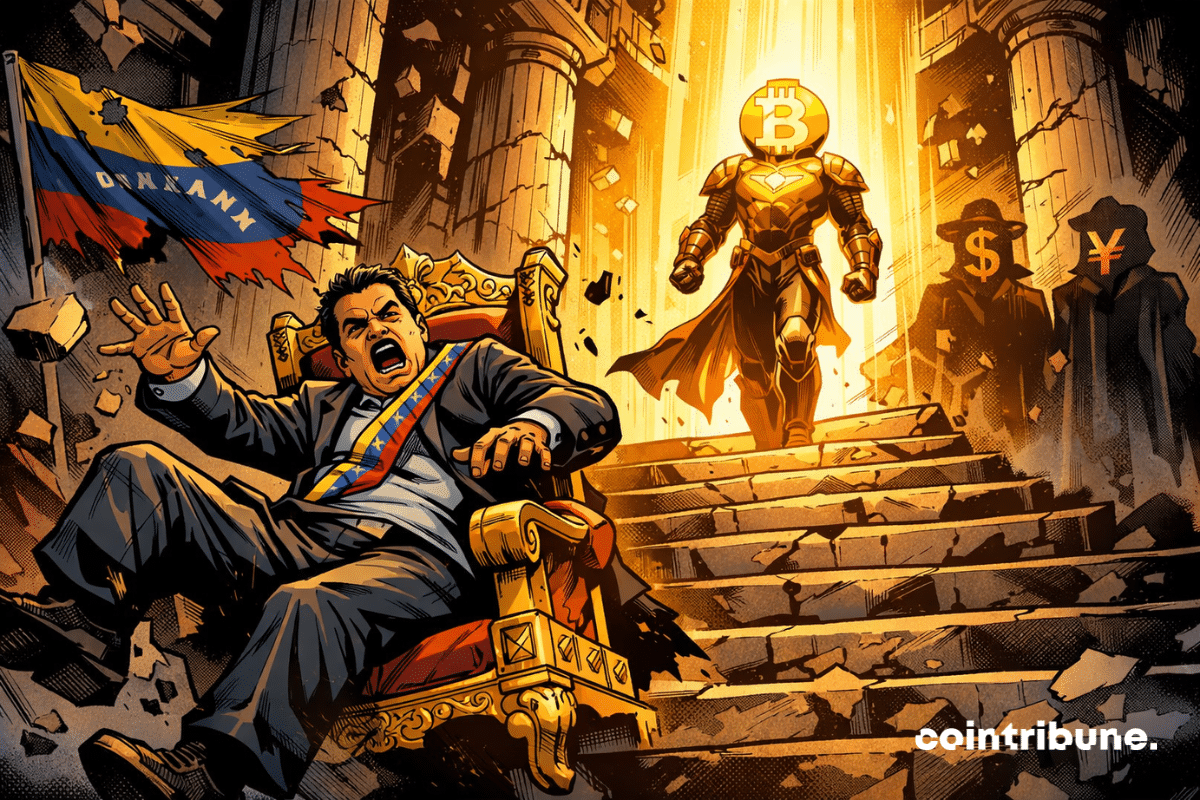
The dollar pulls the strings, Maduro falls, Kiyosaki philosophizes... and bitcoin rises! Simple coincidence? Not sure, but it's worth a little tour behind the scenes of oil.
Bitcoin has just crossed $91,000, driven by a wave of political instability in Venezuela. The arrest of Nicolás Maduro and Donald Trump's announcement that the United States intends to lead the country have revived speculation about the economic and energy future of the region. In a crypto market always hypersensitive to geopolitical tensions, this sharp price increase reflects both the ambient uncertainty and investors' appetite for decentralized assets.
Bitcoin and Ethereum ETFs attracted 645.8 million dollars on January 2. In a still hesitant market, this volume is surprising. It marks the strongest day of inflows in over a month for Bitcoin products and an unprecedented peak since December for Ether. While 2025 ended on a decline, this surge is striking.
BitMine stock jumped 14% after an announcement described as "spectacular" by its chairman, Tom Lee. Indeed, the company is seeking shareholder approval to significantly increase the number of authorized shares. This strategic move comes as BitMine strengthens its position on Ethereum, of which it holds 3.41% of the circulating supply. In a market where crypto treasuries are growing, this initiative marks a key step for one of the largest institutional holders of ETH.
While bitcoin remains above $89,000 at the start of 2026, many analysts claim that whales are beginning a powerful accumulation movement. A signal perceived by some as the prelude to a new bull run. However, behind this optimistic reading, on-chain data tells a very different story. Far from a massive return of large holders, the current market dynamic seems driven by other actors, much more discreet… and probably more decisive for what comes next.
For the first time in over 400 days, a major technical support for XRP has broken. Under pressure below 2 dollars, Ripple's crypto operates in a critical zone. The market is holding its breath, as the bullish structure falters, and what follows depends on the next moves.
The current stability of bitcoin may conceal a sudden reversal. While the asset opened 2026 at $87,500, rarely combined technical signals, bullish divergence of the RSI, extreme compression of Bollinger bands, indicate an imminent volatility surge. Several analysts mention a possible rebound. However, attention also focuses on another breaking point: the announced end of the four-year cycle, a historic pillar of crypto strategies, now challenged by influential market voices.
While stablecoins have gained more than $100 billion in 2025 to peak at $307 billion according to DefiLlama, India is taking the opposite direction. The Indian central bank (RBI) states that only a sovereign digital currency guarantees monetary stability. In a global landscape where CBDCs struggle to impose themselves, New Delhi erects the e-rupee as a bulwark against the privatization of money.
While the market remains struggling, another transformation, more discreet but decisive, is taking shape. In this new year, bitcoin will no longer seek to charm traders. It will integrate, step by step, into the real economy. If the price falls, usage, however, progresses. A pivotal year is opening, where the price drop contrasts with the silent rise of payment technologies. BTC no longer waits for the next bull run to exist: it finally becomes a daily tool.
In 2025, the crypto market reminded its ruthless nature. While bitcoin briefly crossed 126,000 dollars, a brutal correction wiped out several major fortunes in the sector. Even the most influential figures were not spared, losing billions in a few weeks. From Michael Saylor to CZ, the year left behind a fractured landscape dominated by losses.
Warren Buffett turns a page in history. This December 31, 2025 marks the end of his reign at the head of Berkshire Hathaway, after more than 60 years of exemplary management. An iconic figure of the markets, "the Oracle of Omaha" embodied a vision of investing based on discipline, duration, and consistency. His departure is not just a change of leadership, but a strong signal addressed to the global markets, at a time when an emblematic era of American capitalism is closing.
The supply of XRP on exchange platforms has fallen to its lowest level in eight years. This liquidity contraction coincides with a massive disengagement of short-term investors and a retreat to custody solutions. Thus, the prospect of a rally in 2026 reemerges, without a clear consensus.
While the market watches the price of crypto, another indicator emerges. Ethereum recorded a record 8.7 million smart contracts deployed in the fourth quarter, according to Token Terminal. This peak in activity, reached despite a price drop, confirms the strength of network usage. Far from cyclical effects, the on-chain dynamics outline a discreet but structuring underlying trend.
Bitcoin and Ether are showing early signs of a shift in investor behavior, even as broader market conditions remain weak. Long-term Bitcoin holders are easing selling pressure, while large Ether holders are adding to their positions. Prices, however, remain under pressure amid caution, macro risks, and year-end positioning.
As the crypto market closes a year under high tension, XRP takes a sharp turn. After riding a wave of optimism fueled by institutional flows and regulatory hopes, Ripple's asset faces increasing selling pressure. The reversal is clear, technical signals turn red, and investor sentiment flips. This downturn could well mark a new chapter in the trajectory of one of the most watched tokens on the market.
Ethereum is taking a strategic turn in 2026, with two major updates planned within a few months: Glamsterdam in the first half, followed by Hegota at the end of the year. Long criticized for the slowness of its development, the blockchain is now opting for a faster schedule, aligned with the growing demands of its ecosystem. This acceleration marks a turning point in the protocol's governance and opens a new technical phase for Ethereum, as the sector enters an era of consolidation.
Bitcoin is playing big at the end of this year. For the first time since its creation, the flagship crypto could close a post-halving year in the red. An unprecedented scenario that would call into question one of the historic pillars of crypto analysis: the famous 4-year cycle theory. While BTC stagnates below $88,000, investors and analysts hold their breath. A bearish close would mark a symbolic and potentially structural turning point for the entire market.
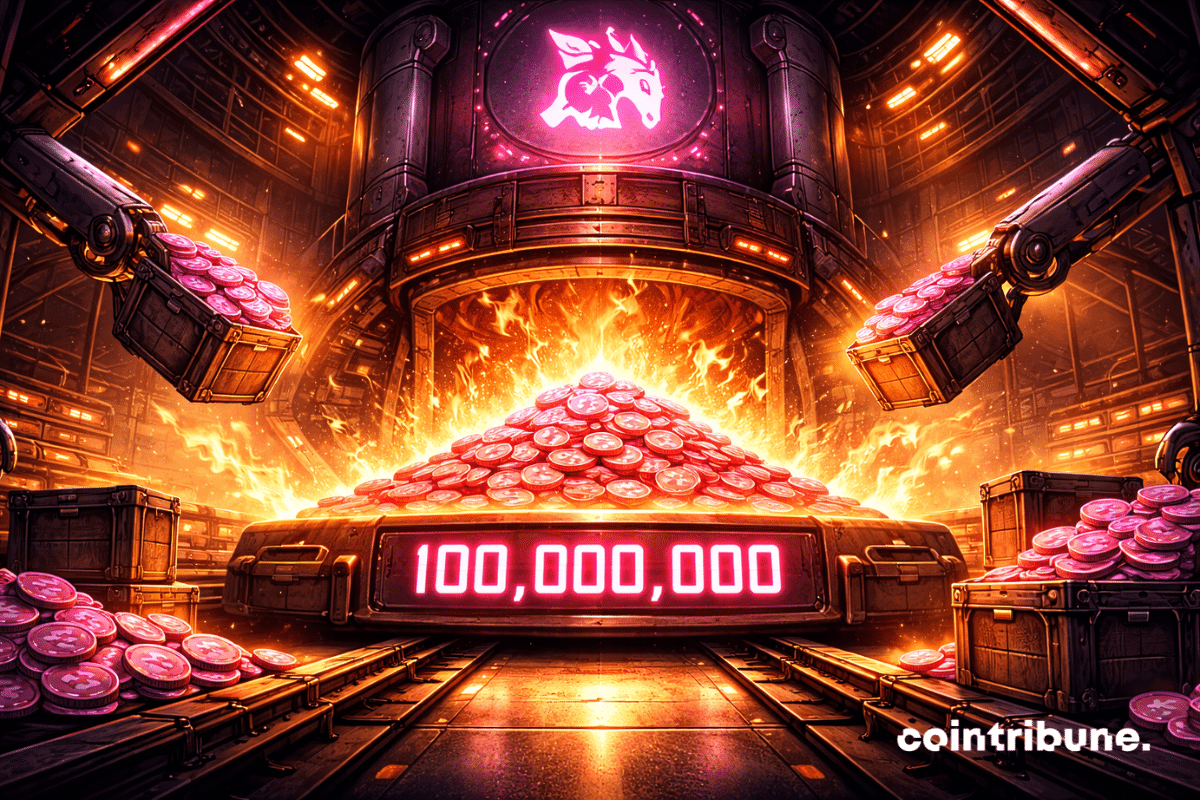
On December 28, Uniswap carried out the destruction of 100 million UNI tokens, worth nearly 596 million dollars. This decision, validated by a massive community vote, marks the entry into force of a new economic framework called "UNIfication." It inaugurates a structural change in the governance of the protocol, based on the activation of protocol fees and a sustainable burn mechanism. Uniswap thus initiates a new phase of its evolution, focused on active management of the value created.
Bitcoin lost momentum during U.S. trading hours, keeping the broader crypto market confined to a narrow range. XRP followed the same pattern, slipping to $1.86 even as demand through spot exchange-traded funds remained steady. The gap between rising ETF assets and muted price movement suggests the market is still absorbing supply near key levels.
What if 2025 was not the beginning of a long decline, but the end of a bearish cycle? While fear settles on the markets and bitcoin remains far from its peaks, Samson Mow, founder of Jan3, challenges certainties. According to him, the bear market is already behind us, and what many fear for 2026 could actually mark the start of a historic bull run... lasting ten years.
While the asset oscillates around 87,000 dollars, the derivatives markets send a clear signal: open interest on Bitcoin futures contracts has dropped to its lowest level in eight months. This decline marks a net disengagement from leveraged positions, revealing a tactical withdrawal of speculative capital, in a context where the bullish momentum seems to be fading without an immediate catalyst.
After siphoning off millions for a month, the XRP ETF coughs one day, stops... and everyone holds their breath: simple cold or crypto liver crisis?
Kalshi saw a sharp rise in trading activity last week, pushing weekly volume to a new high. Data shows the prediction market processed more than $2 billion in trades, placing it well ahead of Polymarket over the same period. Increased demand for sports contracts and broader blockchain access supported the growth.