Michael Saylor highlights Bitcoin as a superior store of value while the cryptocurrency climbs above $120,000 amid growing institutional interest.
Ethereum saw the biggest short liquidation in the crypto market on Friday, wiping out $105 million in bearish bets as the price surged past $4,000 for the first time in eight months. The move drew reactions from high-profile figures, including Eric Trump, who warned traders against betting against Bitcoin and Ethereum.
Altcoins are no longer a fleeting bubble. Their presence is consolidating to the point of attracting the biggest names in traditional finance. BlackRock, a Wall Street giant, is now opening up to leading cryptos like ether. This institutional shift changes the game in the crypto ecosystem. However, for Michael Saylor, a leading figure of MicroStrategy, a hierarchy is imposed: bitcoin remains the benchmark. And even if Ethereum shines, he refuses to grant it the same status.
After reaching an unprecedented high of $123,000, bitcoin begins a clear slowdown. The euphoria of recent weeks gives way to a consolidation phase, where every market movement is closely scrutinized. The latest Institutional Insights report from CryptoQuant reveals tangible signs of exhaustion: momentum decline, liquidity slumps, and sustained profit taking. This cocktail places the flagship asset at a crucial moment, between technical pause and correction risk.
The meteoric rise of Ether propels Vitalik Buterin back into the exclusive circle of on-chain billionaires. The co-founder of Ethereum sees the public value of his holdings exceed one billion dollars, driven by an ETH crossing $4,000 for the first time in eight months. This resurgence occurs in a boiling market, fueled by massive institutional flows and renewed confidence in the Ethereum ecosystem.
On the chessboard, two visions of AI faced each other. Sam Altman, head of OpenAI, and Elon Musk, founder of xAI, crossed their models in a chess tournament organized by Google. For three days, OpenAI’s o3 and xAI’s Grok 4 competed without any specialized assistance. Much more than a simple exhibition match, the event turned into a revealing moment: behind the final score was the real gap between two artificial intelligences, and two strategies, which came to light.
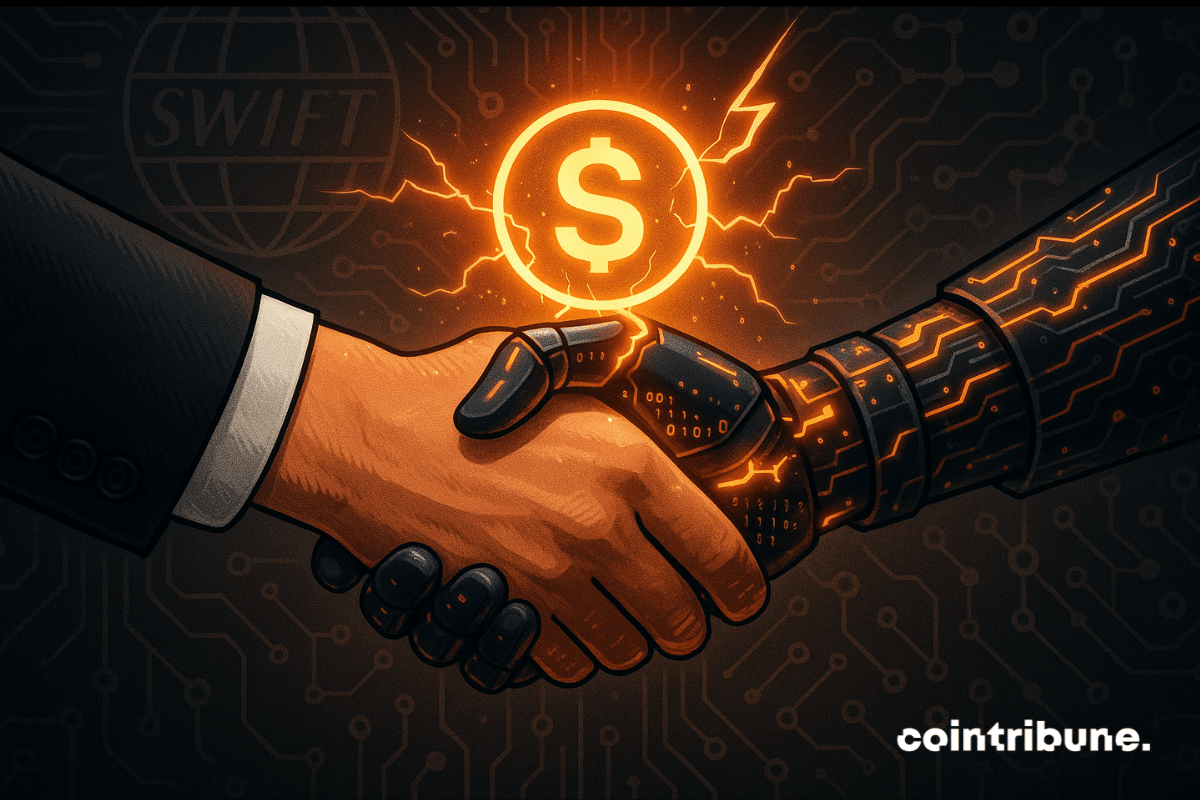
The asset tokenizer Brickken and the decentralized credit protocol Credefi announced, on July 28, 2025, a strategic partnership marking a major breakthrough in the convergence between regulated tokenization and decentralized finance. From now on, holders of shares or bonds tokenized via Brickken can use these securities as collateral to borrow USDC directly on Credefi, through a permissionless, peer-to-peer, and non-custodial mechanism.
Following a drop towards the end of July, the crypto market witnessed a fresh injection of optimism over the past week. Artificial intelligence (AI) assets also leveraged this market wave, with many experiencing a strong northward push, as the sector crossed $34 billion in valuation.
Bitcoin’s record-breaking rally above $123,000 in mid-July has given way to a choppy and uncertain phase. The price has slipped to $116,191 as of press time, showing minimal change over the past 24 hours but up 0.65% over the week.
Between boldness and stubbornness, Bukele launches his "Bitcoin banks": one foot in global finance, the other in crypto, and the IMF coughing in its tie.
When a crypto token starts to challenge Nike and DBS Bank, it signals a major reshuffle in the ranking of power players. And to think this is just the beginning...
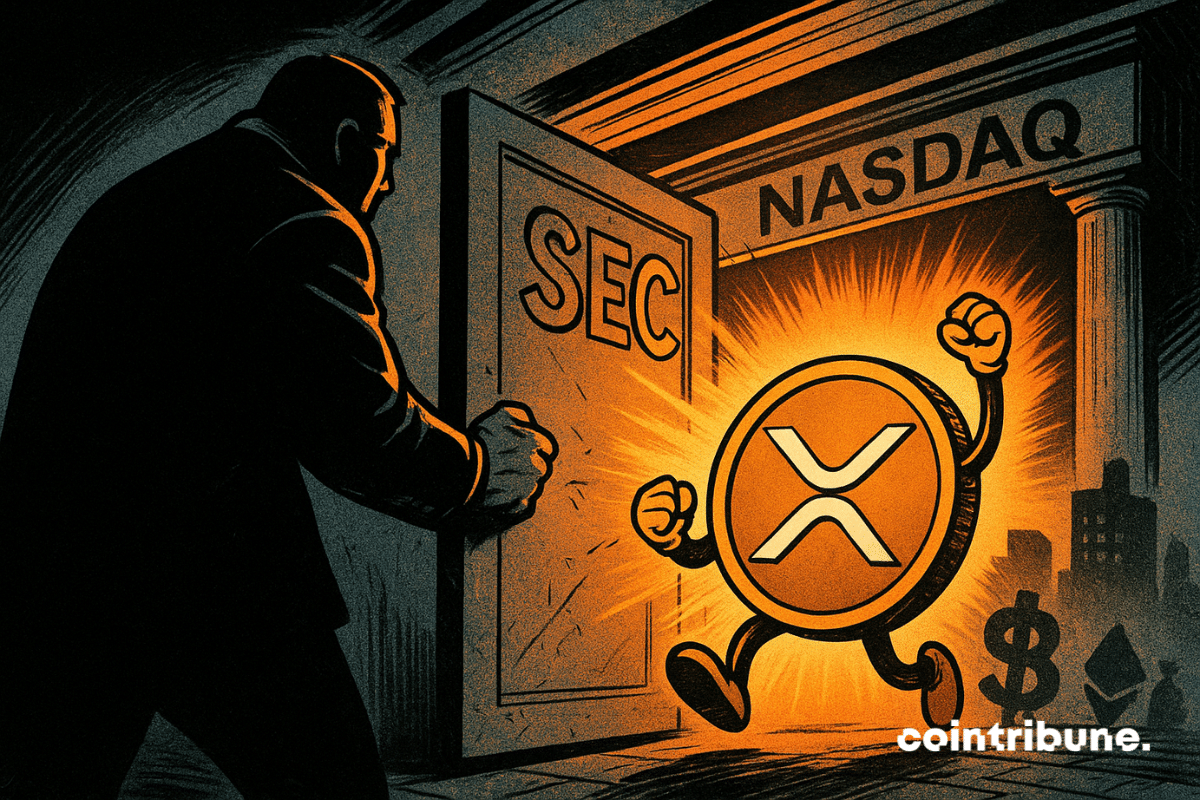
After its historic victory against the SEC, XRP attracts millions in corporate treasuries. Between institutional adoption, record investments, and ETF potential, this crypto could disrupt global finance. Discover why giants are betting on XRP.
In a few days, Arthur Hayes, co-founder of BitMEX, made a turn that is making the entire crypto sphere react. After selling several million dollars worth of Ether, he returned to the market... at a significantly higher price. An unexpected choice, in the middle of Ethereums bullish rally, which intrigues as much as it raises questions about his real motivations and the future of the market.
In Washington, crypto policy loses one of its most prominent faces. Bo Hines, propelled at the end of 2024 to the head of the Presidential Council of Advisers for Digital Assets, leaves his position after only a few months. A key figure in the system wanted by the Trump administration to make the United States a global blockchain hub, he moves to the private sector. His departure raises a central question: will the White House be able to maintain the momentum given to its crypto strategy?
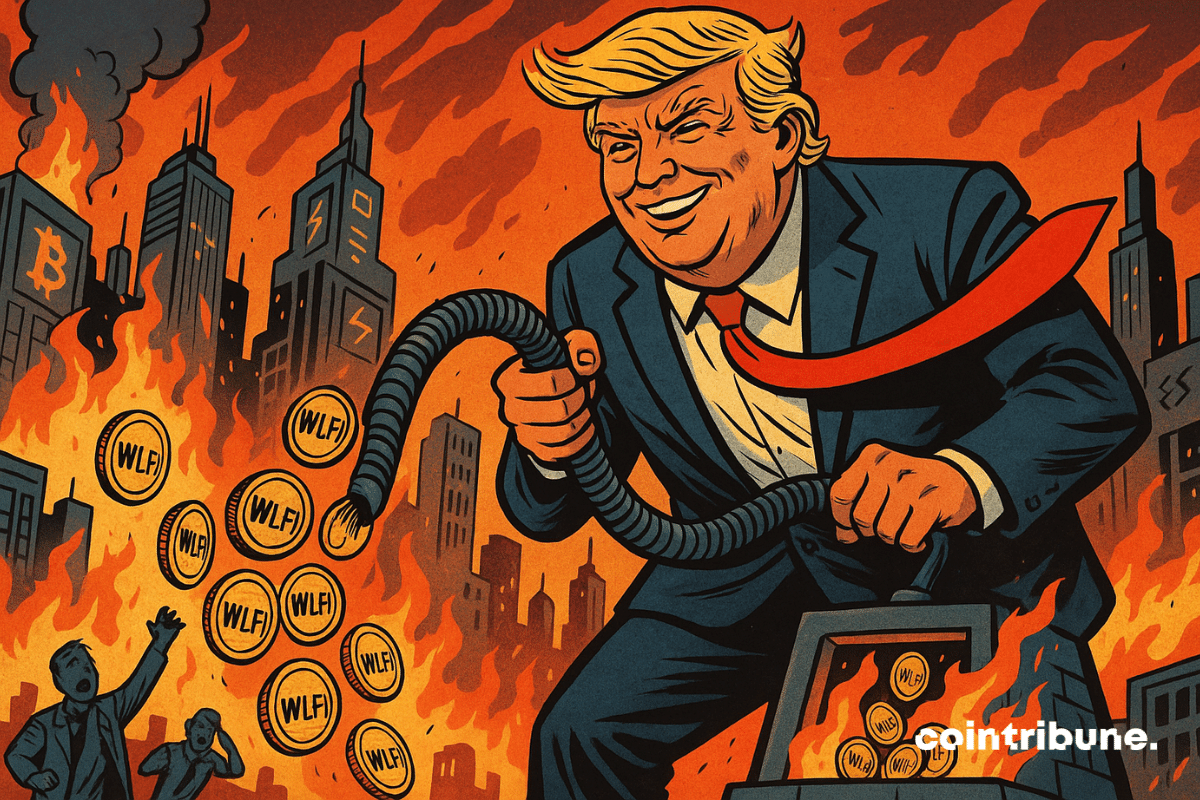
World Liberty Financial, supported by the Trump family, is preparing to create a Nasdaq-listed company to hold its WLFI tokens. This project inspired by MicroStrategy's pioneering strategy could open a new chapter at the crossroads of politics, financial markets, and cryptos.
The next weeks could decide the market's future, as bitcoin trades above 117,000 dollars. Indeed, legendary trader Peter Brandt warns that the crypto queen approaches a pivotal moment, possibly a temporary peak. With over ten years of post-halving cycle analysis, he cautions against a scenario that could surprise even seasoned investors. This alert comes as some experts doubt the relevance of bitcoin's historical cycle.
The U.S. Securities and Exchange Commission’s (SEC) statement regarding liquid staking has, as expected, drawn different views and opinions across all corners of the crypto space. Although some believe that this nonbinding guidance could help drive institutional and retail adoption, others have raised concerns over the risk, potential challenges and key legal hurdles.
Chainlink has officially launched a dedicated LINK reserve, attracting $1 million worth of the token in its first days. The reserve will be funded by the project’s on-chain and off-chain revenue streams and is intended to enhance the growth, security, and long-term sustainability of the network.
Beijing is tightening its grip on stablecoin activity, directing top financial institutions to halt all promotion of the digital asset class. In a bid to curb rising hype and possible speculative risks, regulators have ordered brokerages, think tanks, and research groups to cancel stablecoin seminars and stop publishing related content.
They were thought buried under the dust of the bear market… NFTs re-emerge, stealing the spotlight from DeFi. A plot twist or the beginning of a new crypto empire?
The announcement sent shockwaves through the traditional finance world. Harvard's prestigious endowment fund, with 53.2 billion dollars, revealed it had invested 116 million dollars in BlackRock's Bitcoin ETF. While Harvard had already shown a timid interest in crypto in the past, this operation marks a symbolic step: the largest American university now officially backs the locomotive of the crypto market.
The highly anticipated launch of ChatGPT-5 turned into a disaster on social media. Presented by Sam Altman as the smartest AI ever created, the new model is accused by a large portion of users of degrading the experience compared to its predecessors. This backlash breaks out as rivals like DeepSeek quickly gain ground. Did Sam Altman offer a dream... for a harsh awakening?
The tokenization of real assets (RWA) is no longer a laboratory experiment: it is a global undertaking that, quietly, is rewriting the way we own a building, a government bond, or a corporate debt. The idea is simple: to represent an economic right (rent, coupon, dividend) by a token registered on a blockchain, exchangeable at any time and, above all, programmable. But behind the apparent simplicity hides a legal, technical and financial mechanism that is refined month after month.
DeFi platform CrediX Finance has disappeared from the web following a $4.5 million exploit that drained its liquidity pools, prompting suspicions of a coordinated exit scam. The incident was first flagged on Monday by blockchain security firms, who found that the attackers gained control of the protocol’s multisig admin and bridge wallets six days prior. Using this access, they minted new tokens, posted them as collateral, and then siphoned liquidity from CrediX’s pools.
While the trade war intensifies, Beijing and Moscow show their determination. In July, their exchanges jumped to $19.14 billion, an annual record that contrasts with the gloom of the first half of the year. This rebound occurs as Donald Trump threatens China with new tariffs, after sanctioning India for its Russian oil purchases.
Turning a few tens of dollars invested in bitcoin into billions: the scenario is a dream. However, behind this simplistic equation, trader Techdev recalls a much less glamorous reality. In a viral post, he points out that achieving such a result would have required unwavering conviction and exceptional psychological resilience in the face of market shocks. A message that resonates as bitcoin has just crossed a new ATH above $123,000 on July 14, reigniting myths and speculation.
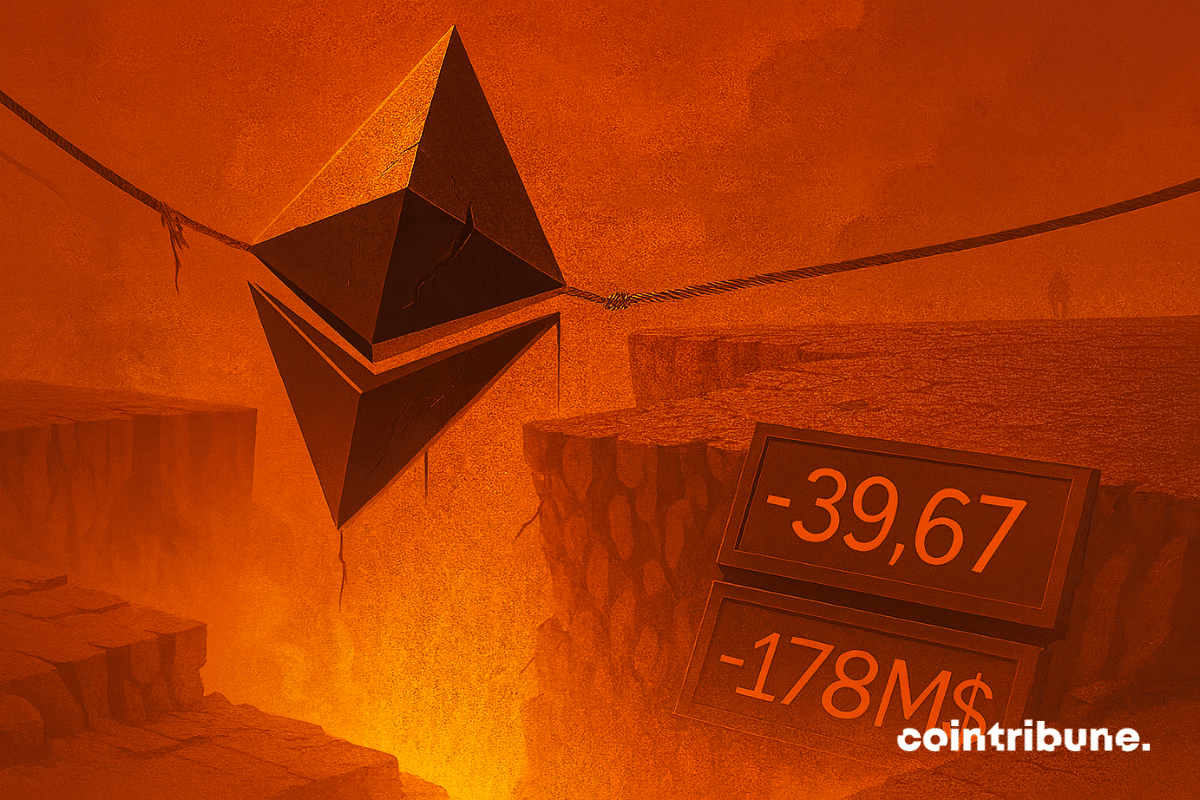
For the first time in eight months, Ethereum has crossed the symbolic $4,000 mark. Between massive inflows on its ETFs, accelerated institutional adoption, and upcoming technical reforms, ETH seems more determined than ever to nibble away at Bitcoin's ground. The trend could well mark a strategic turning point for the crypto market.
The XRP Army, Ripple's true secret weapon, influenced the outcome of the standoff against the SEC. This historic mobilization could now propel XRP to the forefront of the global crypto scene, driven by adoption and international expansion.
The demand for computing power, autonomous agents, and open markets for models is exploding, while centralized players (Big Tech & Clouds) concentrate the supply. The crypto market tries to respond with decentralized architectures that reward resource contributions (GPU, models, data, security) and align incentives via a token.
Is bitcoin undervalued? A key indicator, the "Energy Value" from Capriole Investments, estimates that its "fair value" reaches 167,800 dollars, 45% above its current price. Designed by Charles Edwards, this model is based on the energy power used by the network. The unprecedented gap it reveals revives the debate about the true valuation of the asset and the market's ability to close this gap in the coming months.